Spider Mites on Calathea Warscewiczii: Causes, Checks &
Quick answer
Spider mites on Calathea Warscewiczii show as pale pinpricks that flatten the velvet sheen on large lance-shaped blades and fine webbing tucked along fuzzy undersides when winter heating drops humidity. First step: isolate the plant and rinse every leaf underside—including the wide velvety midrib—with lukewarm water before any spray.
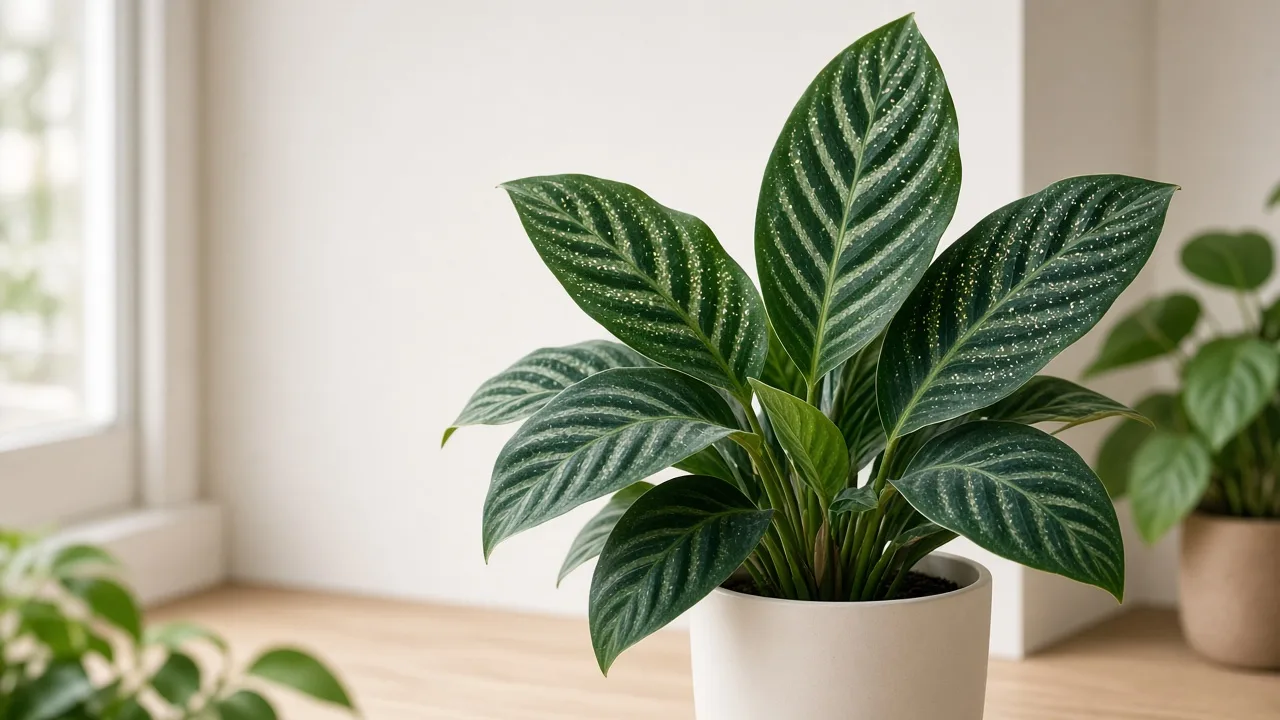
Spider Mites on Calathea Warscewiczii: Causes, Checks & Fixes
This guide covers spider mites on Calathea Warscewiczii. See also the general Spider Mites guide, watering, and light pages for this plant.
Spider Mites on Calathea Warscewiczii: Causes, Checks & Fixes
Quick answer
Spider mites on Calathea Warscewiczii (Goeppertia warszewiczii, Jungle Velvet) show as pale yellow or tan pinpricks across large velvety lance-shaped blades, with fine webbing tucked on fuzzy leaf undersides and at petiole bases. They thrive in hot, dry indoor air—especially when winter heating pulls humidity far below the 60%+ RH this velvet prayer plant needs.
First step: isolate the plant and rinse every leaf underside with lukewarm water. Move the pot away from other prayer plants, shower or hose from below so water hits fuzzy reverses and the wide feathery midrib on each blade, then let foliage drain in bright indirect light before choosing sprays. If margins are uniformly crisp with no dots underneath, check low humidity before you treat for mites. See our Calathea Warscewiczii overview for filtered water, humidity, and placement basics.
For mite life cycles, why broad-spectrum insecticides can backfire, and when oils help in general, see our spider mites pest guide. On Jungle Velvet, the tell is stippling that dulls the velvet sheen plus webbing on fuzzy undersides—not cottony wax in crown axils (mealybugs), fluoride brown tips without moving specks, or yellow lower leaves on wet mix (overwatering).
What spider mites look like on Calathea Warscewiczii
Early damage is easy to miss because mites feed on leaf undersides while the velvety upper surface still looks acceptable from across the room. Warscewiczii’s large lance-shaped blades and soft fuzzy texture make stippling show as a flat, dusty patch that breaks up the peacock-feather midrib pattern before heavy webbing appears at the upright crown.
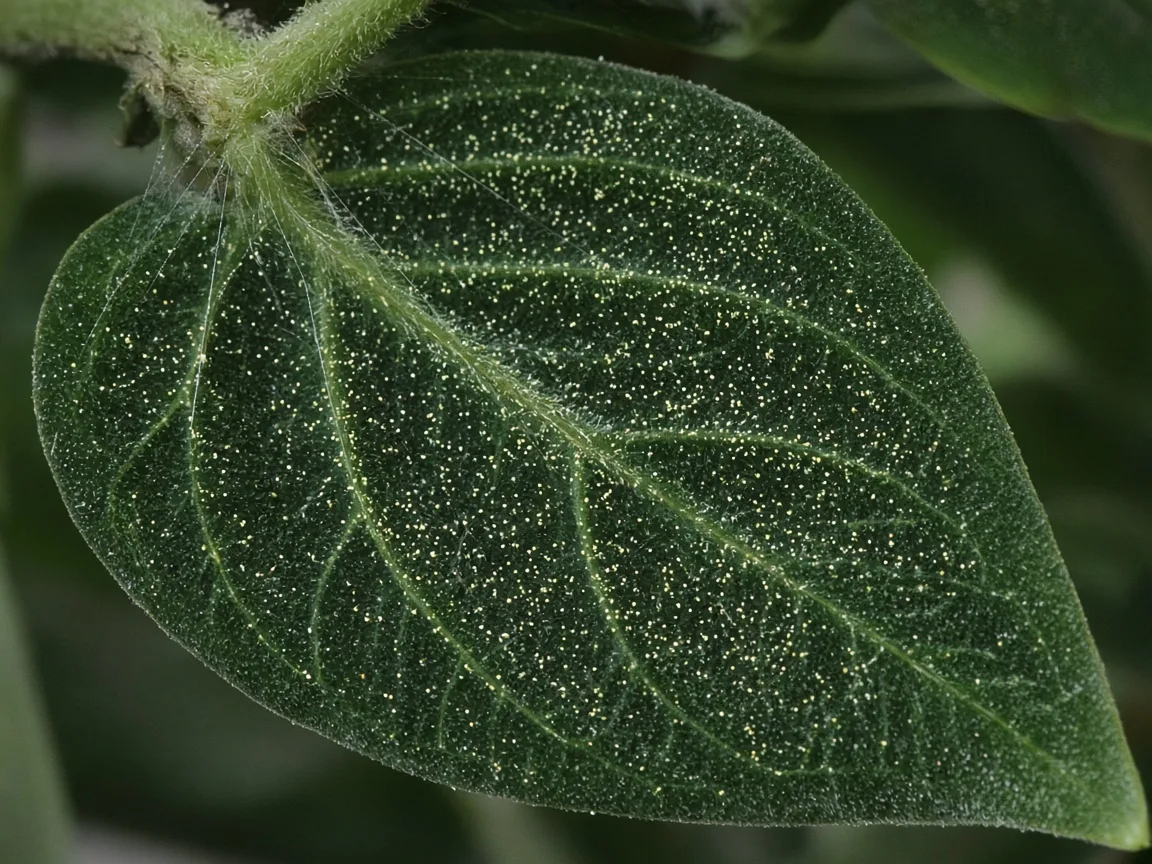
Spider mite stippling on Jungle Velvet — compare pinpricks on the fuzzy reverse with clean velvet on the same blade.
Stippling on velvety foliage:
- Pinhead yellow, tan, or bronze dots scattered across the fuzzy leaf face, dulling the normal soft sheen
- Dull patches where the feathery midrib pattern loses contrast against the velvety background
- Damage often worse on outer upright blades facing a heater, sunny winter window, or forced-air vent
- Gritty texture on fuzzy undersides when you run a finger along the wide central rib
Underside and crown signs:
- Tiny moving specks—barely visible without a hand lens
- Fine silk threads where the wide blade meets the petiole on Warscewiczii’s upright clump
- Webbing tucked under overlapping velvet leaves at the central crown, especially around a rolled unfurling spear
- Amber eggs and whitish cast skins on fuzzy reverses in moderate infestations
Plant-level clues:
- Newest unfurling spear shows dots or stuck edges while older velvet blades still look partly clean
- Several large leaves yellowing within weeks despite normal watering rhythm
- Symptoms worsening in January and February when heating runs continuously and humidity crashes
Velvet sheen vs mineral dust (do not misread either)
Jungle Velvet accumulates white mineral spots from tap water on the fuzzy surface—especially along the midrib after overhead watering. Those deposits are static, wipe off with a damp cloth, and do not move on a paper tap test.
Spider mite stippling is embedded in the leaf tissue: the velvet looks thinned or bronzed in scattered clusters, and fuzzy undersides feel gritty. If you see both crisp margins and dots, you may have low humidity and mites—fix isolation and rinsing first, then raise RH with a humidifier rather than misting wet velvet overnight.
Daytime curl vs Warscewiczii’s normal evening prayer fold
Jungle Velvet is a true prayer plant: many calatheas raise or lower leaves on a day–night rhythm called nyctinasty. Large lance-shaped blades standing more upright in the evening and lowering by day is normal, not a pest sign.
Suspect spider mites or severe dry air when you see stippling or webbing together with limp petioles and rolled blades during daylight, while soil moisture matches your usual watering guide. Persistent daytime curl plus dot patterns on fuzzy reverses fits mites; crisp margins without specks fits low humidity or brown tips from tap water.
Why Calathea Warscewiczii gets spider mites
Spider mites are arachnids, not insects. The common indoor species, twospotted spider mite (Tetranychus urticae), pierces individual leaf cells and sucks contents, creating the stippled pattern. Warm, dry conditions shorten their life cycle—mite outbreaks on houseplants frequently spike when furnaces switch on and indoor air dries.
Warscewiczii’s normal indoor setup often creates exactly that environment:
Winter heating and dry vents. NC State Extension recommends humidity above 60% for Goeppertia warszewiczii and notes that velvety leaves show stress quickly in dry air. Mites colonize those same stressed blades along fuzzy undersides where the plant already struggles to hold moisture.
Velvet leaf architecture. Each wide lance leaf has a prominent feathery midrib and trichome-covered surface. Mites shelter in the fuzzy grooves on reverses where spray runoff misses, especially on the tight upright clump Jungle Velvet forms compared with spreading zebrina types.
Unfurl-stage vulnerability. New leaves emerge as a large rolled velvet spear from the crown over several days. Mites feeding during unfurl cause permanent stippling or torn margins on that blade even after you clear the colony—the same unfurl risk applies to low humidity alone.
Crowded Marantaceae collections. Warscewiczii sits beside Maranta, Stromanthe, and other calatheas on shared humidity trays. Mites move on fine webbing and spread on tools or clothing—one infested Jungle Velvet can seed an entire prayer-plant grouping before you notice dots on the velvet pattern.
Stress does not cause spider mites, yet a plant already struggling with dry air, fluoride-heavy tap water, or recent overwatering has fewer resources to outgrow feeding damage. Treat the mites first, then address separate care stress once the population is under control.
Lookalike symptoms to rule out
| What you see | Likely cause | Key difference on Warscewiczii |
|---|---|---|
| Pinhead yellow dots with fine silk on fuzzy undersides | Spider mites | Moving specks on paper-tap test; webbing at petiole bases |
| Dull velvet, crisp edges, no dot pattern | Low humidity | Flat sheen on whole blade; no moving specks |
| Brown tips on newest blades, normal humidity | Tap-water brown tips | Margin burn from fluoride; no webbing or grit |
| Silvery streaks on young leaves, no webbing | Thrips | Thrips jump when disturbed; mites crawl slowly |
| White cottony wax in crown axils | Mealybugs | Waxy tufts smear pink when crushed; sticky honeydew |
| Yellow lower leaves with wet heavy soil | Overwatering | Base-up yellowing, sour mix—no stippling or webbing |
If only leaf edges are crisp with no stippling, grit, or webbing, check low humidity and brown tips before you treat for mites.
How to confirm the cause
Work through these checks in order before you spray anything:
- Isolate first — Move Jungle Velvet away from other Marantaceae before handling. UMN Extension recommends isolating infested plants so mites do not spread on contact, webbing, or tools.
- Paper tap test — Hold a stippled blade over white paper and tap the fuzzy underside sharply. Moving specks confirm live mites; static dots may be dust or pollen.
- Webbing search — Lift overlapping velvet blades and inspect petiole bases and the central crown with a hand lens. Fine silk at one joint usually means more colonies under neighboring leaves.
- Unfurl spear check — Inspect the newest rolled leaf at the center. Stippling or webbing on a spear that is still opening confirms active feeding at Warscewiczii’s most vulnerable growth point.
- Pattern vs. humidity — Crisp uniform margins on multiple blades without dots underneath fit dry air. Scattered pinhead dots across the velvet face with gritty fuzzy reverses fit mites—even when the room also runs dry.
- Location audit — Note heat vents, radiators, sunny glass, and forced-air paths within arm’s reach. Mites plus hot dry placement fit together on humidity-sensitive Jungle Velvet pots.
- Neighbor scan — Inspect Maranta, Stromanthe, and other calatheas on the same shelf. Shared stippling suggests contagious mites rather than a one-off cultural issue.
If you find moving specks or webbing, the diagnosis is confirmed. If margins are uniformly brown with firm petioles, normal soil moisture, and no speckling, route to low humidity or brown tips instead.
First fix for Calathea Warscewiczii
Isolate the plant and rinse all foliage—especially fuzzy undersides and midrib grooves—with a steady stream of lukewarm water.
Move Jungle Velvet away from other plants immediately. Shower the pot in a sink or bath, spraying each wide blade from below so water hits fuzzy reverses, petiole bases, and the central unfurling spear. Support large lance-shaped leaves from underneath to avoid creasing velvet tissue. Let foliage drip dry in bright indirect light the same day—do not leave the plant in direct sun while leaves are wet, because velvet blades scorch easily.
This single rinse knocks down adults, disrupts egg-laying webs, and gives you a clean baseline to see whether mites return. Do not jump to oils or miticides before this step—you need to confirm the population dropped and avoid stacking treatments on saturated foliage.
Repeat rinse and spray schedule
Most miticides and contact sprays do not kill eggs. UF/IFAS recommends two or more applications at five-day intervals in summer or seven-day intervals in cooler conditions because new hatchlings emerge continuously.
A practical Warscewiczii schedule:
- Day 1 — Isolate and thorough underside rinse.
- Day 3–5 (warm rooms) or Day 7 (cooler rooms) — Rinse again, then apply insecticidal soap or horticultural oil labeled for spider mites. Coat both sides of every velvet blade and petiole base per label rates—typically 1–2% oil or ready-to-use soap.
- Repeat the rinse-and-spray cycle on the same interval for at least two to three weeks.
- Stop when you record two consecutive clean paper-tap tests on separate weeks.
UMN Extension lists insecticidal soap and plant oil extracts as effective against spider mites on indoor plants, with repeat applications necessary because sprays must contact live mites directly.
Indoor spray safety: When applying soap or oil indoors, spray in a well-ventilated area—open a window or run an exhaust fan, follow the product label exactly, and keep the plant out of direct sun until leaves dry. Never use homemade soap mixes; commercial products labeled for plants reduce phytotoxicity risk on Warscewiczii’s velvety blades.
Light vs. moderate vs. heavy infestation
Light — Stippling on a few outer blades, no webbing on the central spear: isolation plus rinse schedule alone may clear the colony if you start before heating season peaks.
Moderate — Webbing at multiple petiole bases, dots on fuzzy undersides across several blades: add labeled soap or oil on the repeat schedule above; raise humidity toward 60–75% with a humidifier to slow new reproduction.
Heavy — Webbing spanning the crown, stippling on the unfurling spear, mites on neighboring pots: prune the worst webbed leaves at the crown base per our pruning guide, bag and discard trimmings, continue the full rinse-and-spray cycle for three weeks minimum, and inspect the entire Marantaceae grouping weekly. If more than half the foliage is webbed and new spears stall, discarding may be more practical than months of treatment on a severely weakened clump.
Recovery timeline
Stippling stops spreading within one to two weeks once you isolate, rinse on schedule, and keep humidity stable. Damaged chlorophyll on mature velvet blades does not green up again—the fuzzy tissue stays marked.
Judge recovery on Jungle Velvet by new growth, not old blades:
- 1–2 weeks — No fresh dots on fuzzy undersides after a rinse; webbing stops appearing at petiole bases
- 2–4 weeks — Central spear opens without new stippling if humidity holds near 60% per Goeppertia warszewiczii cultural guidance
- 4–8 weeks — One or two clean large lance-shaped blades unfurl with soft velvet sheen and intact feathery midrib pattern
A leaf that opened damaged during infestation never repairs itself—wait for replacement foliage from the crown. Do not fertilize heavily during active treatment; resume modest feeding only after two clean tap tests and normal watering rhythm return.
What not to do
- Do not assume insecticides kill mites. Few insecticides are effective on spider mites; many worsen outbreaks. Use products labeled for mites—soaps, horticultural oils, or specific miticides.
- Do not apply oil or soap in direct sun. Velvet foliage burns easily when wet treatments sit on large blades in strong light. Treat in bright indirect light and let leaves dry the same day.
- Do not soak the crown overnight. Rinse thoroughly, then let wide blades and the central spear dry before evening. Wet velvet in stagnant air invites fungal spotting unrelated to the mites.
- Do not compensate for mites by overwatering. Soggy rhizomes plus pest stress compound damage—check soil moisture per our watering guide before changing the drink schedule.
- Do not return Jungle Velvet to the display shelf after one rinse. A single pass rarely clears eggs; premature reunion spreads mites to Marantaceae neighbors.
- Do not confuse dry-air dull velvet with mite stippling. Treating humidity alone will not clear a confirmed colony; treating mites alone will not fix fluoride edge burn—use the lookalike table above.
How to prevent spider mites on Calathea Warscewiczii
Prevention on this species is mostly humidity stability plus early inspection on large velvet blades:
- Run a humidifier targeting 60% or higher at leaf height before winter heating starts—not after stippling appears
- Keep the pot away from radiators, fireplaces, and AC vents; see low-humidity prevention for placement detail
- Rinse dust and mineral film from velvet blades with filtered water monthly—clean fuzzy surfaces make early dots easier to spot
- Inspect fuzzy undersides weekly during dry months; mites colonize reverses days before webbing shows on the upper velvet
- Quarantine new plants two weeks with at least one paper-tap test before placing them beside Jungle Velvet on a shared tray
- Group Marantaceae thoughtfully—shared humidity helps, but overlapping leaves transfer mites quickly; leave airflow gaps between pots
Raising humidity does not cure an active infestation, but dry conditions favor spider mite reproduction while stressing Warscewiczii’s velvet sheen. Stable 60%+ RH at the crown is the best long-term prevention for this species.
When to worry or escalate
Treat as urgent if:
- Webbing reaches the central unfurling spear—damage on that leaf will be permanent once it opens
- Stippling spreads to multiple new upright blades within a week despite two rinse cycles
- Mites appear on neighboring prayer plants in the same room
- The plant loses several velvet blades while the crown stays wet and soil smells sour—suspect root rot alongside pests
Escalate or discard if:
- After three weeks of scheduled rinse-and-spray treatment, paper-tap tests still show moving specks every pass
- More than half the foliage is webbed and no clean spears have opened in a month
- The clump is small, recently purchased, and heavily infested—replacing may cost less than months of treatment
For genus-level mite biology shared across calatheas, see spider mites on Calathea. This page focuses on Jungle Velvet morphology—large velvety lance blades, fuzzy undersides, prayer-plant movement, and winter heating risk.
Related Calathea Warscewiczii problems
- Calathea Warscewiczii overview — baseline humidity, water quality, and room placement
- Low humidity — primary lookalike for dull velvet and crisp edges without stippling
- Brown tips — tap-water and fluoride margin burn vs. mite dots
- Mealybugs — white wax clusters in the crown
- Pruning — removing heavily webbed leaves at the crown
- Watering — moisture balance during pest recovery
When to use this page vs other Calathea Warscewiczii guides
- Calathea Warscewiczii watering guide — Use for routine moisture checks before assuming spider mites is the main issue.
- Calathea Warscewiczii problems hub — Browse all common issues on this species.
- Low humidity on Calathea Warscewiczii — Different entry point when symptoms overlap with spider mites.
- Slow growth on Calathea Warscewiczii — Different entry point when pests are ruled out but growth stays weak.