Low Humidity on Calathea Warscewiczii: Velvet Curl, Edge
Quick answer
When Calathea Warscewiczii loses its soft velvet sheen, shows brown margins on large new spears, or holds a tight daytime curl while the top 2 cm of mix stays moist, dry air is the likely cause. First step: log relative humidity beside the foliage and run a humidifier until readings hold 60–75% before you water more or repot.
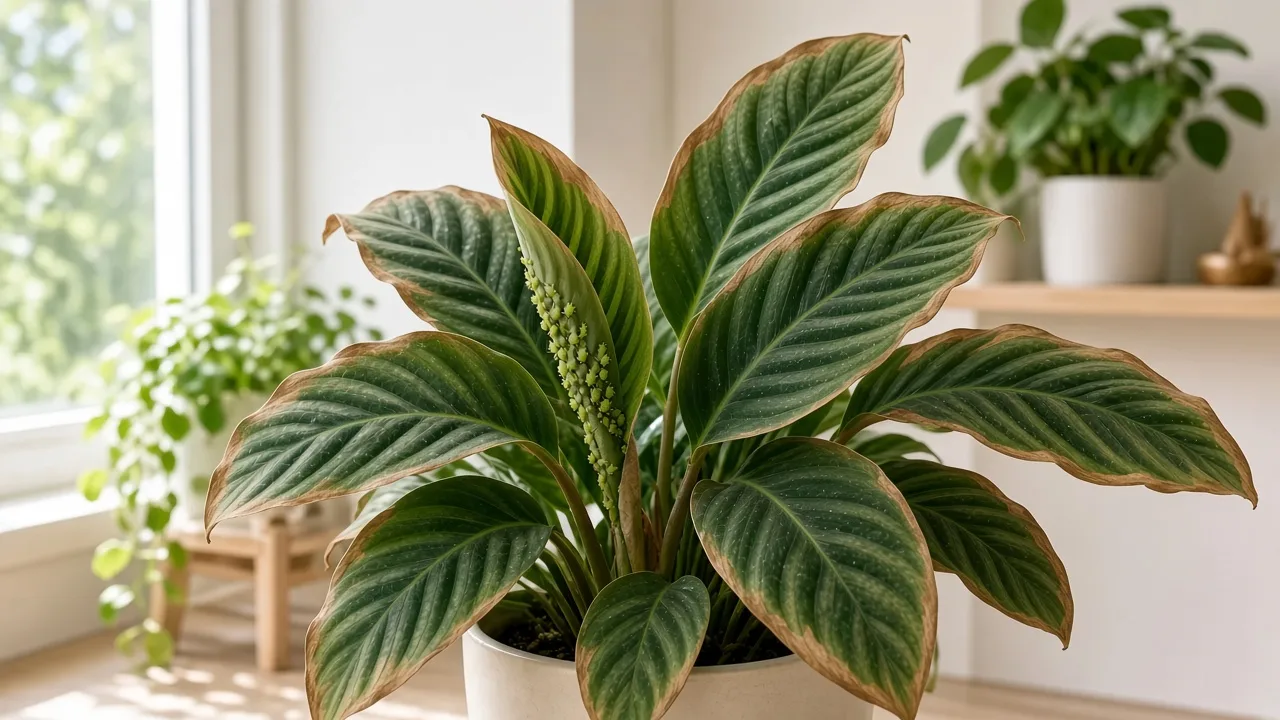
Low Humidity on Calathea Warscewiczii: Causes, Checks & Fixes
This guide covers low humidity on Calathea Warscewiczii. See also the general Low Humidity guide, watering, and light pages for this plant.
Low Humidity on Calathea Warscewiczii: Causes, Checks & Fixes
Quick answer
Use this page when Calathea Warscewiczii (Goeppertia warszewiczii, Jungle Velvet) shows dull or flat velvet texture, crispy margins on large lance-shaped leaves, or center spears that stick while unfurling—but the top 2 cm of mix still feels evenly moist and rhizomes stay firm under the crown. That pattern means raise humidity, not water more.
For how dry air pulls moisture from foliage in general, see our low humidity hub. On Jungle Velvet, the velvet surface tells the story first: the fuzzy leaf face loses its soft sheen and the feathery midrib pattern looks washed out at the thin margins before the whole upright clump collapses, because this species’ large velvety blades transpire quickly in heated winter air even when peat-perlite mix stays damp.
First step: place a hygrometer within 30 cm of the canopy and run a humidifier until readings hold 60–75% at leaf height. Move the pot off heating vents, radiators, and cold window glass while you humidify. Do not keep soil soggy to compensate for dry air—that invites root rot on Calathea Warscewiczii on an already stressed prayer plant.
What low humidity looks like on Calathea Warscewiczii
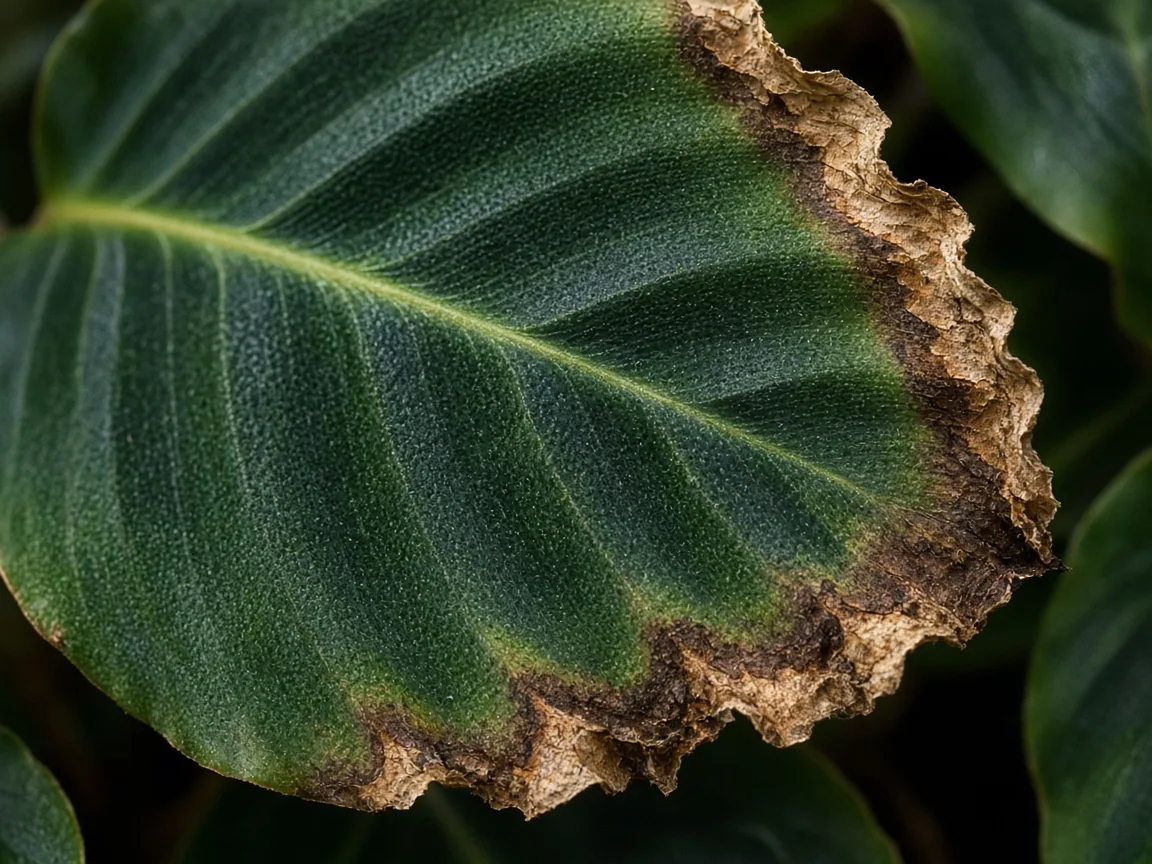
Low humidity on Jungle Velvet—tan crispy margins on wide velvety blades while mix may still feel moist.
Jungle Velvet is an upright Goeppertia with large lance-shaped leaves, a soft velvety surface, and a feathery midrib pattern that reads like peacock feathering on each blade. The thinnest tissue along each wide margin is the first to desiccate when relative humidity drops—often before you notice wilt on such a big plant.
Typical dry-air signs on Warscewiczii:
- Tan or brown crispy edges along wide leaf margins, often on the newest unfurling spear
- Flat or dusty-looking velvet — the fuzzy surface loses its soft glow and feels papery to the touch
- Faded feathery midrib contrast — dark green pattern looks muddy instead of crisp against the velvety field
- Tight daytime inward curl on moist soil, beyond normal nyctinastic folding at night
- New center spears that open slowly, stay small for this species, or show brown creases along the roll
- Damage worse on the leaf side facing a radiator, heat vent, or cold window pane
- Wilting look on heavy, moist pots—the classic humidity signature that mimics thirst on statement-sized foliage
What humidity stress usually is not:
- A dramatically light pot with dusty dry mix pulled from the pot wall — see underwatering on Calathea Warscewiczii
- Yellow lower leaves with soggy mix, soft stems, and fungus gnats — see overwatering on Calathea Warscewiczii
- Isolated brown tips on older leaves with white crust on the pot rim — often tap-water minerals overlapping dry air; see brown tips on Calathea Warscewiczii
- Fine stippling with webbing on undersides — spider mites on Calathea Warscewiczii, often invited by dry air but a separate treatment
Damaged brown tissue on existing velvet leaves will not revert to green. Judge recovery by the next large blades that unfurl with soft texture and a sharp feathery midrib pattern.
Jungle Velvet velvet-sheen check
Warscewiczii’s size can hide early humidity stress until margins brown on a spear half the length of your hand. Use this quick visual:
- Healthy: leaves feel softly fuzzy under your fingertips; feathery midrib lines read clearly; blades reopen relaxed by mid-morning on moist soil
- Dry air: velvet looks matte or slightly gray; margins papery; the latest spear shows brown before it fully opens
- Pot check: mix at 2 cm still cool and damp on your normal watering rhythm while symptoms spread — humidity, not drought
Case example: A room hygrometer read 52% in a heated January living room, but 38% RH beside Warscewiczii’s canopy on a floor vent. Two newest leaves showed tan margins while the pot felt heavy. After shifting the plant 1.5 m from the vent and running a humidifier on a 65% target for two weeks, canopy RH held 68% and the next spear opened with intact velvet—old brown edges stayed, but midrib contrast looked sharp again.
Why Calathea Warscewiczii struggles in dry air
Goeppertia warszewiczii evolved in warm, humid forests of Central America where large velvety leaves lose water quickly when vapor pressure deficit rises. NC State Extension on Jungle Velvet specifies humidity above 60%, stable 65–75°F room temperatures, and notes that low humidity and fluoride from tap water can cause leaf edges and tips to brown, while leaves can curl from lack of water and low humidity.
Indoors, central heating and air conditioning can leave winter rooms far drier than rainforest floors. The Spruce recommends humidity levels of 50% and higher for indoor calatheas, with humidifiers or pebble trays as practical boosts. Jungle Velvet’s larger leaf area and velvety surface mean visible edge stress often appears sooner than on compact striped cultivars, even when roots are fine.
Heat and airflow amplify the problem. A tall Warscewiczii beside a vent transpires through wide margins faster than roots can replace moisture from an already-moist peat-perlite mix. Dry air also weakens pest defenses; chronically low humidity invites spider mites on prayer-plant foliage, though raising RH alone will not cure an active infestation.
Large velvet unfurl vs humidity stall
Jungle Velvet unfurls large rolled spears that can take days to open in good conditions. Humidity stress shows up as a stuck or torn unfurl:
- Normal slow unfurl: the spear lengthens steadily; velvet stays soft; only the very tip may look slightly paler before opening
- Dry-air stall: the roll browns along crease lines, opens partway and stops, or tears at the margin while soil stays moist
- Size clue: a half-open spear smaller than your palm on an otherwise mature plant often means air moisture failed during the roll—not that the rhizome is dead
If older blades look fine but the latest velvet spear is the only casualty near a heat source, log RH at leaf height before you soak the pot.
Nyctinastic fold vs humidity curl on Warscewiczii
Warscewiczii leaves rise at night and lower by day as part of normal prayer-plant movement on large lance-shaped blades. Humidity stress adds a different signal:
- Normal nyctinasty: smooth fold along the midrib; blades reopen relaxed by mid-morning on moist soil
- Dry-air curl: tight inward roll during the day on a heavy pot; wide margins crisp while the center velvet band still looks green; fold does not fully relax overnight
If only the evening posture changes, you may be watching healthy Marantaceae rhythm. If blades stay rolled through afternoon on damp mix, log RH at leaf height before you water again.
Low humidity vs underwatering vs brown tips
| Signal | Low humidity | Underwatering | Tap-water brown tips |
|---|---|---|---|
| Pot weight | Normal to heavy | Noticeably light | Normal to heavy |
| Soil at 2 cm | Cool, moist on schedule | Dusty dry | Evenly moist |
| Leaf pattern | Margin crisping; dull velvet; faded midrib | Whole-blade thin curl | Tip burn on older leaves |
| Texture | Papery velvet face | Limp, thin blades | Usually intact fuzz |
| Timing | Worsens when heat runs | Worsens after skipped watering | Builds slowly over months |
| First fix | Humidifier to 60–75% RH | Bottom-water once | Switch to filtered water |
If soil is moist and wide margins keep crisping near a radiator in January, treat humidity—not drought. Cross-check brown tips when only leaf tips brown but midrib pattern stays sharp.
How to confirm low humidity
Work through these checks before repotting, fertilizing, or watering more:
- Hygrometer at leaf height — Desk readings can run 10–15 points higher than air around Warscewiczii’s tall canopy. Below 50% with crisp velvet margins strongly suggests dry air. Log morning readings at both heights for three days.
- Placement audit — Note distance from radiators, forced-air vents, fireplaces, and cold window glass. RHS notes browning of leaf tips and edges is usually a result of low humidity (dry air) on calatheas.
- Pot weight and soil moisture — Lift the container. Heavy pot with cool damp top 2 cm makes thirst unlikely on your watering schedule.
- Newest-spear pattern — Humidity damage usually hits the latest center roll first on Jungle Velvet. Older blades with isolated tip burn may be legacy salt or fluoride damage.
- Water quality cross-check — NC State recommends distilled or rainwater because fluoride in tap water can brown leaves even when humidity is adequate. If RH is already above 60% and only tips brown, prioritize filtered water before a second humidifier.
- Pest check — Tap a suspect leaf over white paper; look for moving specks or webbing on undersides.
If humidity reads low, placement is harsh, soil moisture is normal, and new velvet edges crisp, treat dry air as the primary issue.
First fix for Calathea Warscewiczii
Move the pot away from heating vents and cold drafts, then run a humidifier beside the plant until a hygrometer at leaf height reads 60–75% consistently.
This single step addresses the environmental trigger without stacking repotting, fertilizer, or extra watering. Set the humidifier within about 1 m of the canopy so Warscewiczii benefits—not a distant corner of a dry living room. Keep the pot base above any pebble-tray water line so roots do not wick standing water.
Hold your existing watering rhythm: water when the top 2 cm begins to dry per the Calathea Warscewiczii watering guide. Jungle Velvet does not need wetter soil to compensate for dry air. Soggy mix in a humidified room still promotes root rot.
Do not rely on once-daily misting. NYBG notes misting alone does not supply the extraordinary humidity Marantaceae relatives need. The Spruce suggests humidifiers, pebble trays, or naturally humid bathrooms for calatheas—sustained RH beats brief leaf wetting on velvety surfaces that hold water droplets.
Step-by-step recovery
After the humidifier runs and placement is corrected:
- Hold humidity steady for two weeks before judging results. Brief spikes from showers do not count; look for sustained 60–75% at the plant.
- Group prayer plants modestly if you grow other calatheas or marantas nearby. Shared transpiration raises local moisture slightly per RHS calathea guidance.
- Add a pebble tray only as a supplement under the pot—not touching the water surface.
- Gently wipe dust from velvet leaves with a damp cloth when RH is stable—NC State notes dust can slow photosynthesis on this species; do not scrub fuzzy tissue when leaves are stressed.
- Trim fully brown margin sections with clean scissors if unsightly. Leave partially green tissue intact.
- Inspect weekly for spider mites while air was dry. Rinse undersides with lukewarm water if you see stippling; isolate heavily infested plants.
- Maintain Calathea Warscewiczii light so new spears have energy to unfurl cleanly—medium to bright indirect, never direct sun that bleaches velvet.
- Resume light feeding only after new leaves open cleanly for several weeks per the fertilizer guide. Fertilizer on stressed tissue can worsen edge burn when salts accumulate in moist mix.
Hold off on repotting until Warscewiczii pushes stable new growth. Rhizome disturbance plus humidity stress slows recovery on this moderate-to-slow upright grower.
Recovery timeline
Humidity corrections show up on the next one or two large leaves that unfurl, typically within three to five weeks of stable conditions—Jungle Velvet’s spears are bigger than Freddie’s, so unfurling can feel slow even when RH is fixed. Old crispy margins remain brown permanently—expect soft velvet and sharp midrib pattern on new foliage, not a full cosmetic reset of existing blades.
If edges keep browning on successive spears after five weeks with canopy RH above 60%, revisit light intensity, watering consistency, filtered water use, and pest checks before assuming humidity alone is solved.
Improvement signs: new leaves open with soft velvet texture, unfurling speeds up, and stem bases stay firm. Worsening signs: spreading brown into green tissue on new spears, soft stems with wet soil, or mite webbing despite humidification.
Lookalike symptoms to rule out
Underwatering — Whole blades curl inward and feel thin; soil pulls away from the pot wall. Edge crisping is more uniform than margin-only browning on moist soil.
Overwatering and root stress — Yellow lower leaves, soft stems, sour-smelling soil, and limp foliage despite damp mix. See wilting and drooping leaves when wilting appears on wet soil.
Tap-water mineral burn — Brown tips on older leaves with white crust on the pot rim. Switch to filtered or rainwater rather than only humidifying.
Heat or draft scorch — Uneven crisping on the side facing a vent or hot window. Soil may be moist; fix placement before adding more room humidity.
Spider mites — Stippled yellowing with fine webbing on undersides. Dry air invites mites; treatment is separate from humidifying.
Normal nyctinasty — Warscewiczii leaves rise at night without tight daytime rolling or crispy margins. Check soil and RH before reacting to evening fold alone.
What not to do
Do not compensate for dry air by watering more often. Wet roots in a stressed Jungle Velvet invite rot faster than crisp edges harm the plant cosmetically.
Do not place the humidifier across a large dry room and assume the floor plant benefits. Measure at the canopy.
Do not mist heavily at night or in cold drafts—water sitting on velvety leaves can cause spot decay when air circulation is poor.
Do not move Warscewiczii daily between rooms hunting humidity. Stability matters more than perfect placement for one afternoon on a large prayer plant.
Do not prune heavily while humidity is still low. Each cut loses moisture through wounded tissue on a plant already struggling.
Do not ignore spider mites because you raised humidity. Treat active infestations separately.
Do not assume every brown edge is humidity. If you water with hard tap only, rule out fluoride burn on the brown tips page before buying a second humidifier.
Calathea Warscewiczii care cross-check
Low humidity rarely exists in isolation. Confirm these basics while you humidify:
- Light — Medium to bright indirect per the overview. Direct sun bleaches velvet and increases water loss.
- Water — Top 2 cm dry before watering; moisture-retentive but well-drained mix per the soil guide.
- Water quality — Filtered or rainwater reduces mineral edge burn that overlaps with humidity damage.
- Temperature — Roughly 18–24°C (65–75°F); protect from cold glass and sudden swings.
- Airflow — Gentle circulation is fine; constant hot or cold blasts from vents are not.
Because Calathea Warscewiczii is non-toxic to cats and dogs per ASPCA listings, toxicity is not a crisis concern here—still keep humidifiers on stable surfaces pets cannot knock into standing water.
How to prevent low humidity next time
Run a humidifier from early fall through heating season rather than waiting for dull velvet. Set a weekly hygrometer reminder when furnaces cycle.
Place new Jungle Velvet purchases away from vents for the first month while you learn dry-down speed in your home. Quarantine and watch center spears before clustering with other prayer plants.
When buying in winter, transport wrapped and avoid leaving the plant in a cold car. Chilling plus dry air compounds margin burn on large velvet leaves.
Choose a stable bright corner rather than rotating the pot between rooms. Warscewiczii adjusts slowly to environmental swings even when roots are healthy.
When to worry
Treat as urgent when every new spear emerges mostly brown despite corrected humidity, growth stops for more than a month in warm weather, or spider mites spread webbing across multiple stems. Those patterns suggest combined stress—not cosmetic winter edge burn alone.
You do not need to discard a plant over old crispy margins if stems are firm and new growth is improving. Jungle Velvet can look dramatic while rhizomes stay sound.
Chronic wet soil combined with aggressive humidification is more dangerous than dry air alone. If you humidify heavily and soil stays soggy, back off watering immediately and check roots before adding more moisture to the room.
Conclusion
Crispy margins and flat velvet on Calathea Warscewiczii usually mean the air around the leaves is too dry—not that you failed at watering. Measure humidity at the plant, move it off vents, and run a humidifier to the 60–75% range before repotting or feeding. Old brown edges will not heal, but new large blades should open with soft texture within a few weeks once conditions stabilize.
Related Calathea Warscewiczii problems
- Brown tips — tap-water burn overlapping with dry-air crisping
- Underwatering — drought curl when mix is bone dry
- Spider mites — dry-air pest risk on large leaves
- Wilting — limp leaves on wet soil, not margin-only crisping
- Calathea Warscewiczii overview — baseline humidity targets and filtered water
When to use this page vs other Calathea Warscewiczii guides
- Calathea Warscewiczii watering guide — Use for routine moisture checks before assuming low humidity is the main issue.
- Calathea Warscewiczii problems hub — Browse common issues on this species.
- Brown tips on Calathea Warscewiczii — Different entry point when symptoms overlap with dry air.
Related Calathea Warscewiczii guides
- Calathea Warscewiczii overview
- Calathea Warscewiczii watering
- Calathea Warscewiczii light
- Calathea Warscewiczii soil
- Brown tips on Calathea Warscewiczii
- Calathea Warscewiczii problems
- Yellow leaves on Calathea Warscewiczii
- Root rot on Calathea Warscewiczii
Related tool
Use the Humidity Calculator to narrow causes for low humidity on this plant before changing multiple variables at once.