Overwatering on Calathea Warscewiczii: Causes, Checks &
Quick answer
Overwatering on Calathea Warscewiczii means the rhizome sits in airless, constantly wet peat—not that velvety leaves need another drink. First step: stop watering, press your finger into the top 2 cm of mix, and empty any saucer or cachepot water before you repot or fertilize.
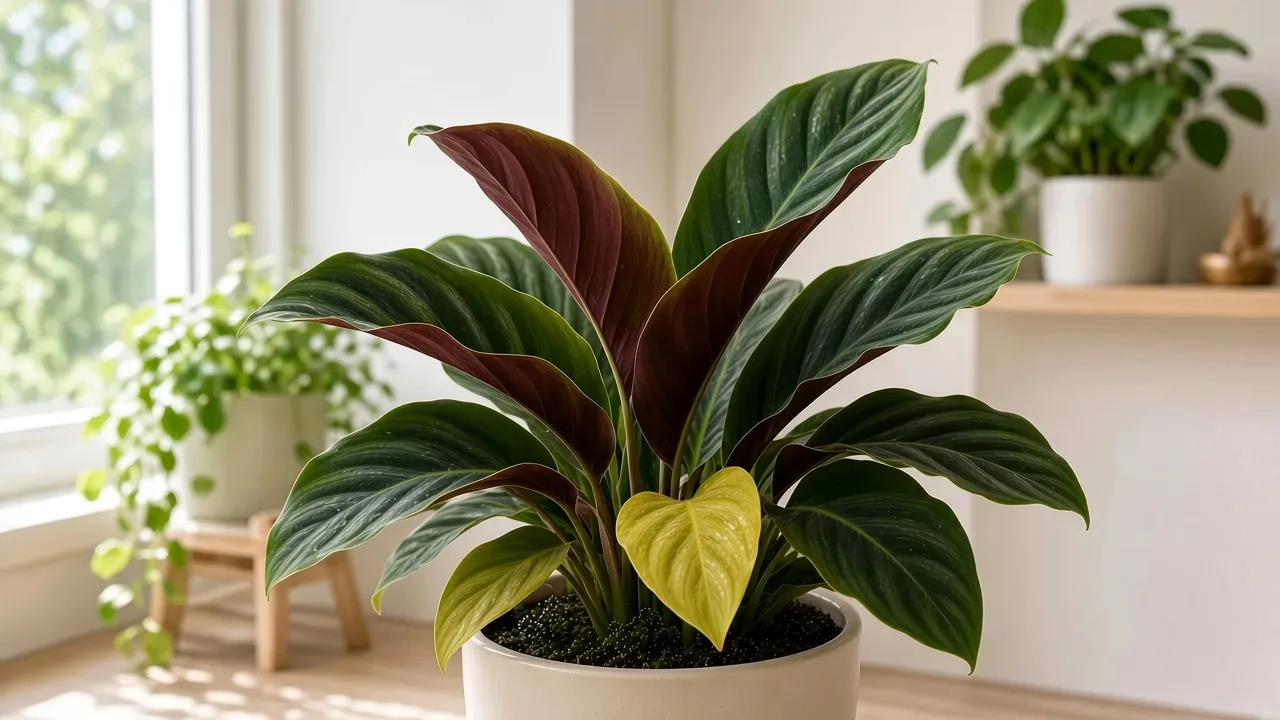
Overwatering on Calathea Warscewiczii: Causes, Checks & Fixes
This guide covers overwatering on Calathea Warscewiczii. See also the general Overwatering guide, watering, and light pages for this plant.
Overwatering on Calathea Warscewiczii: Causes, Checks & Fixes
Quick answer
Overwatering on Calathea Warscewiczii (Goeppertia warszewiczii, jungle velvet calathea) means the rhizome and roots sit in airless, constantly wet peat—not that the velvety prayer-plant leaves need another round from the watering can. Warscewiczii wants moist, well-drained, peat-based potting mix and humidity level above 60%, but the top layer still has to dry slightly between drinks. When growers water on autopilot to protect fuzzy foliage, wide arching leaves shade the pot, cachepots trap runoff, and the mix stays saturated for days while Overwatering can cause root rot on this species.
First step: stop watering, press your finger into the top 2 cm of mix, lift the pot for weight, and empty every saucer or cachepot. If the surface is cool and clinging and the container feels heavy days after the last drink, you are in overwatering territory—not underwatering. For how saturated soil starves roots in general, see our overwatering hub. On Jungle Velvet, the tell is often yellow soft lower leaves and limp velvety blades through bright hours while soil at 2 cm depth never dries.
What overwatering looks like on Calathea Warscewiczii
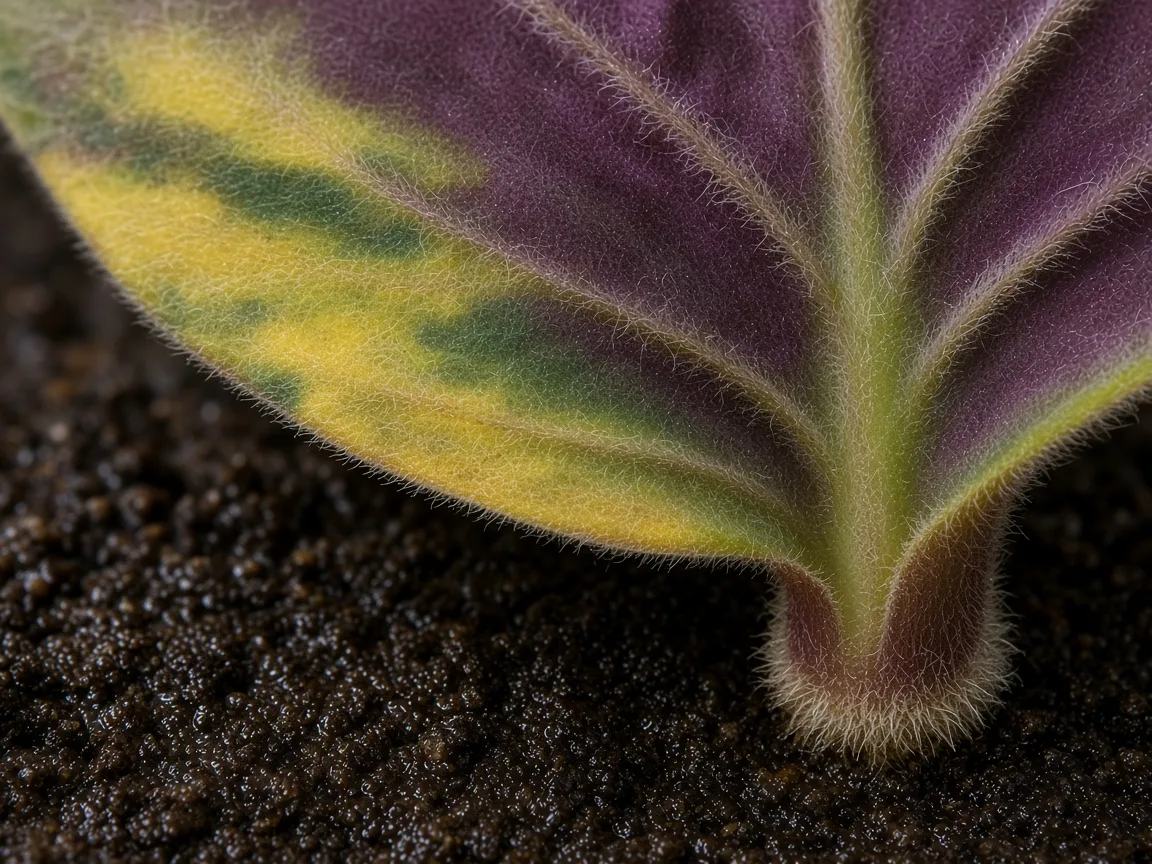
Overwatering on Jungle Velvet—yellowing lower leaves and persistently damp peat while upper velvety blades stay structurally intact.
Healthy Warscewiczii shows firm lance-shaped leaves with a soft fuzzy upper surface, purple undersides, and nightly upward folding when stems stay stiff. Overwatering stress usually starts at the root zone and lower canopy, not as random spots on the velvet face.
Soil and pot signals:
- Top 2 cm stay cool, dark, and clinging for five or more days after watering in a normal indoor room
- Pot feels heavy when lifted; skewer pulled from depth comes out dark and smeared, not lightly moist
- White fuzzy mold on the surface, or tiny flies when you disturb the rim—see mold on soil and fungus gnats
- Sour, musty, or rotten odor from drainage holes after the mix should have aired
Leaf and stem signals:
- Yellow lower leaves that soften and hang while newer upper leaves still look velvety—Yellow leaves are a common symptom of overwatering on this calathea when soil stays soggy
- Daytime limp petioles and drooping arching blades—not just the normal night fold
- New rolled spears brown or stall before unfurling on wet mix
- Soft, spongy tissue at the soil line on the purplish-green stems
What overwatering usually is not on Warscewiczii:
- Crisp brown tips only, with firm stems and soil drying on schedule—often low humidity or tap water
- Webbing or stippling on undersides—spider mites
- Cottony tufts in axils—mealybugs
Why Jungle Velvet is easy to overwater
Warscewiczii is marketed as a moisture-loving tropical, and extension guidance backs evenly moist but well-drained compost in growth. That sentence is where most indoor failures start: owners hear “moist” and skip the “well-drained” and dry-down half.
Large leaves, slow rim dry-down. Mature jungle velvet can reach 3 to 4 feet tall and wide indoors over time. Wide arching blades hang over the pot and shade the soil surface more than a compact Freddie clump, so the rim stays damp while a quick poke in one spot misleads you.
Rhizome in peat, not a desert root. NC State describes an upright plant with a rhizomatous root system that needs oxygen between drinks. Peat that never dries at the top collapses into an anaerobic zone—roots stop working even though the pot holds gallons of water.
Velvet texture triggers panic watering. Fuzzy leaves show low humidity stress as edge curl faster than smooth calatheas. A dull, slightly rolled blade sends owners back to the tap when the real issue is wet roots—or dry air with soil already saturated.
Oversized pots and cachepots. Nursery repots and decorative outer pots leave a ring of unused wet peat around a small rhizome clump. That margin breeds gnats and mold while the center feels “okay” to a shallow finger test.
Winter schedule drift. In cooler, darker months Warscewiczii uses less water, but many growers keep summer volume. The RHS notes compost should stay moist in growth yet the surface can dry slightly in winter—a pattern indoor growers often ignore.
Low light slows uptake. Dim corners extend wet time after each drink; pair dry-down discipline with not enough light correction when the pot stays heavy for weeks.
How to confirm overwatering (not thirst or humidity)
Run these checks in order before you repot, fertilize, or soak the plant “to perk it up.”
- Weight test — Lift the pot after you think it should have dried. Light and dusty at 2 cm depth suggests underwatering; heavy and cold suggests overwatering.
- 2 cm finger probe — Same depth as our Calathea Warscewiczii watering guide. Wet at 2 cm after a week indoors strongly favors overwatering.
- Daytime posture — If blades hang limp through bright hours on wet soil, roots may not be taking up water. Wilting may occur even though the soil is wet when roots cannot absorb water properly.
- Night fold check — Normal prayer-plant folding at night with firm stems is not overwatering. Limp all day on saturated mix is.
- Drainage audit — Confirm holes are open, cachepots are not holding stale runoff, and the plant never sat in a filled saucer for days.
- Root sniff test (optional) — Slide the plant partway out. Healthy Warscewiczii rhizomes feel firm; sour smell and mushy brown roots mean escalation toward root rot.
| Pattern | Likely cause | Quick check |
|---|---|---|
| Light pot, dry 2 cm, crisp curl | Underwatering | Soak with full drain once |
| Heavy pot, yellow lowers, gnats | Overwatering | Dry-down first |
| Firm roots, dry 2 cm, brown tips only | Low humidity / water quality | Humidifier, filtered water |
| Limp on wet soil 48+ hours | Overwatering / root failure | Inspect rhizome |
| Only night fold, firm stems | Normal nyctinasty | No extra water |
The first fix to try
Pause all watering until the top 2 cm of mix feel dry to your finger—then water lightly at the soil line only, with full drainage.
That single dry-down is the first fix, not repotting on day one. Overwatering suffocates roots; giving the mix time to exchange air often stops yellowing from spreading before you disturb a large velvet calathea.
Same-day actions:
- Move the pot to bright indirect light (not direct sun) so the plant uses water at a realistic pace
- Empty saucers and cachepots; never let Warscewiczii sit in stale runoff hidden under arching leaves
- Remove fallen velvety leaf bits from the soil surface—they hold moisture and feed fungus gnat larvae
- Stop misting onto the crown if water runs into saturated peat
After the top 2 cm dry:
- Water until a little runs from holes, then discard excess within an hour
- Follow top inch of soil has dried out as a minimum bar before the next major drink—on Warscewiczii we standardize that as 2 cm for consistency with sibling guides
- Use filtered or rainwater when tap minerals mar velvet
Do not fertilize, repot, or prune half the clump on the same day as your first dry-down—you need to see whether firm new growth returns.
Step-by-step recovery when yellowing has started
Week 1 — Stabilize moisture
- Dry the top 2 cm fully between drinks even if lower leaves look sad
- Yellow sticky traps at the soil line if gnats were present
- Run a humidifier for leaves without rewetting the surface—pebble trays beside the pot, not waterlogged saucers
Week 2–3 — Read the crown
- Success: new spears push up firm; yellowing stops at lowest leaves
- Warning: more yellow climbs the stem, or spears die on wet mix—slide out and inspect rhizomes
When to repot
Repot only if rhizomes are mushy, smell sour, or mix is decomposed into mud—not because gnats or surface mold appeared alone. Reuse the same pot or downsize if the rhizome is small; fresh well-draining peat-based mix with perlite, trimmed rotten roots, and no fertilizer for four weeks.
When to trim
Remove fully yellow or soft leaves at the base with clean scissors after the plant stabilizes—old velvet will not re-green. Keep as much photosynthetic area as roots can support.
Recovery timeline
Mild overwatering caught early—firm rhizome, no sour smell—often stops spreading within one to two watering cycles once the top 2 cm dry reliably. Lower yellow leaves may stay yellow; judge by new unfurling blades.
Moderate cases with several yellow lowers and gnats commonly need three to six weeks of strict dry-down before new growth looks normal.
Severe mushy roots need repot rescue and may take two to three months for a confident new spear; some clumps lose outer stems permanently.
Signs you are winning: top layer dries on schedule, pot weight drops between drinks, gnats fade, firm night folding returns, new velvet unfurls without brown edges.
Signs you are losing: soft crown, spreading yellow on wet soil, sour odor, new spears collapsing—shift to root rot on Calathea Warscewiczii workflow.
Lookalike symptoms on Warscewiczii
Underwatering — Light pot, dry 2 cm, sometimes crisp edges; soaking once with drainage often re-stiffens leaves within a day. See underwatering.
Low humidity — Brown tips and edge curl with firm stems and soil drying normally. Humidity fix, not more water. See low humidity.
Drooping from prayer-plant rhythm — Upright by day, more folded at night on schedule. See drooping leaves when limp persists in bright hours.
Root rot (advanced overwatering) — Mushy rhizomes and sour mix on top of every symptom here. Root rot needs inspection, not only dry-down.
Mistakes to avoid
Do not water because leaves curl without a 2 cm check—curl on wet soil means drowning roots, not thirst.
Do not mist heavily onto velvety foliage so runoff pools at the crown; NC State warns leaf spot can occur from wetting the leaves while watering.
Do not upsize the pot hoping fresh soil fixes soggy habits—a bigger wet zone around a rhizome extends dry-down time.
Do not leave the plant in a filled cachepot; roots may rot if plants stand in water.
Do not fertilize a yellowing clump on wet mix—salts add stress when roots are already impaired.
Do not confuse night folding with wilt—only daytime limp on saturated soil is the overwatering emergency.
How to prevent overwatering next time
Water by dry-down, not calendar. Check the top 2 cm before every major drink—the same protocol in our watering guide.
Match volume to season. Reduce how much you pour in late fall and winter when the large pot dries slowly in cooler rooms.
Right pot, right mix. Container sized to the rhizome clump, not the leaf span; moisture-retentive but airy soil with perlite.
Light and airflow. Bright indirect light so the plant transpires predictably; gentle air movement around the upright clump helps the shaded rim dry.
Quality water. Filtered or rainwater reduces tip burn that tricks growers into overcompensating with the can.
Drainage ritual. Saucers emptied within an hour; cachepots used only if runoff never sits.
Conclusion
Overwatering on Calathea Warscewiczii is a root-zone oxygen problem disguised as a leaf problem—yellow lowers, gnats, and daytime limp on heavy wet peat tell you the jungle velvet rhizome is suffocating, not that fuzzy leaves need more water. Dry the top 2 cm, empty trapped runoff, and watch for firm new spears before you repot or feed. When wet soil, sour smell, and mushy rhizomes align, treat root rot—not just the calendar.
When to use this page vs other Calathea Warscewiczii guides
- Calathea Warscewiczii watering guide — Routine moisture checks before assuming chronic overwatering.
- Calathea Warscewiczii problems hub — Browse all common issues on this species.
- Root rot on Calathea Warscewiczii — When rhizomes fail firmness tests after dry-down.
- Drooping leaves on Calathea Warscewiczii — When limp blades are the main symptom but soil moisture is unclear.
- Fungus gnats on Calathea Warscewiczii — When flies, not yellow leaves, are the first clue.
Related Calathea Warscewiczii guides
- Calathea Warscewiczii overview
- Calathea Warscewiczii watering
- Calathea Warscewiczii light
- Calathea Warscewiczii soil
- Underwatering on Calathea Warscewiczii
- Yellow leaves on Calathea Warscewiczii
- Wilting on Calathea Warscewiczii
- Mold on soil on Calathea Warscewiczii
- Calathea Warscewiczii problems
Related tool
Use the Root Rot Risk Checker to narrow causes for overwatering on this plant before changing multiple variables at once.