Mold on Soil on Calathea Warscewiczii: Causes, Checks &
Quick answer
White or gray fuzz on Calathea Warscewiczii soil is usually harmless saprophytic mold on damp peat—not a disease of the velvety leaves. First step: scrape off the top 1–2 cm of mix and let the top 2 cm dry before you water again.

Mold on Soil on Calathea Warscewiczii: Causes, Checks & Fixes
This guide covers mold on soil on Calathea Warscewiczii. See also the general Mold on Soil guide, watering, and light pages for this plant.
Mold on Soil on Calathea Warscewiczii: Causes, Checks & Fixes
Quick answer
White or gray fuzz on Calathea Warscewiczii (Goeppertia warszewiczii, Jungle Velvet) soil is almost always a moisture and hygiene signal, not a fungus attacking the large velvety blades. The growth is typically saprophytic fungus breaking down organic matter in potting mix that has stayed damp on the surface too long. For how surface mold works on any houseplant, see the general mold on soil guide. On Jungle Velvet, the pattern often appears while broad leaves still fold at night—do not assume the plant is dying just because the peat looks fuzzy.
First step: scrape off the top 1–2 cm of affected soil and discard it, then pause watering until the top 2 cm feels beginning-dry—the same dryness check Warscewiczii uses before every drink in the Calathea Warscewiczii watering guide. Do not spray fungicide, repot, or drench roots on day one.
What mold on soil looks like on Calathea Warscewiczii
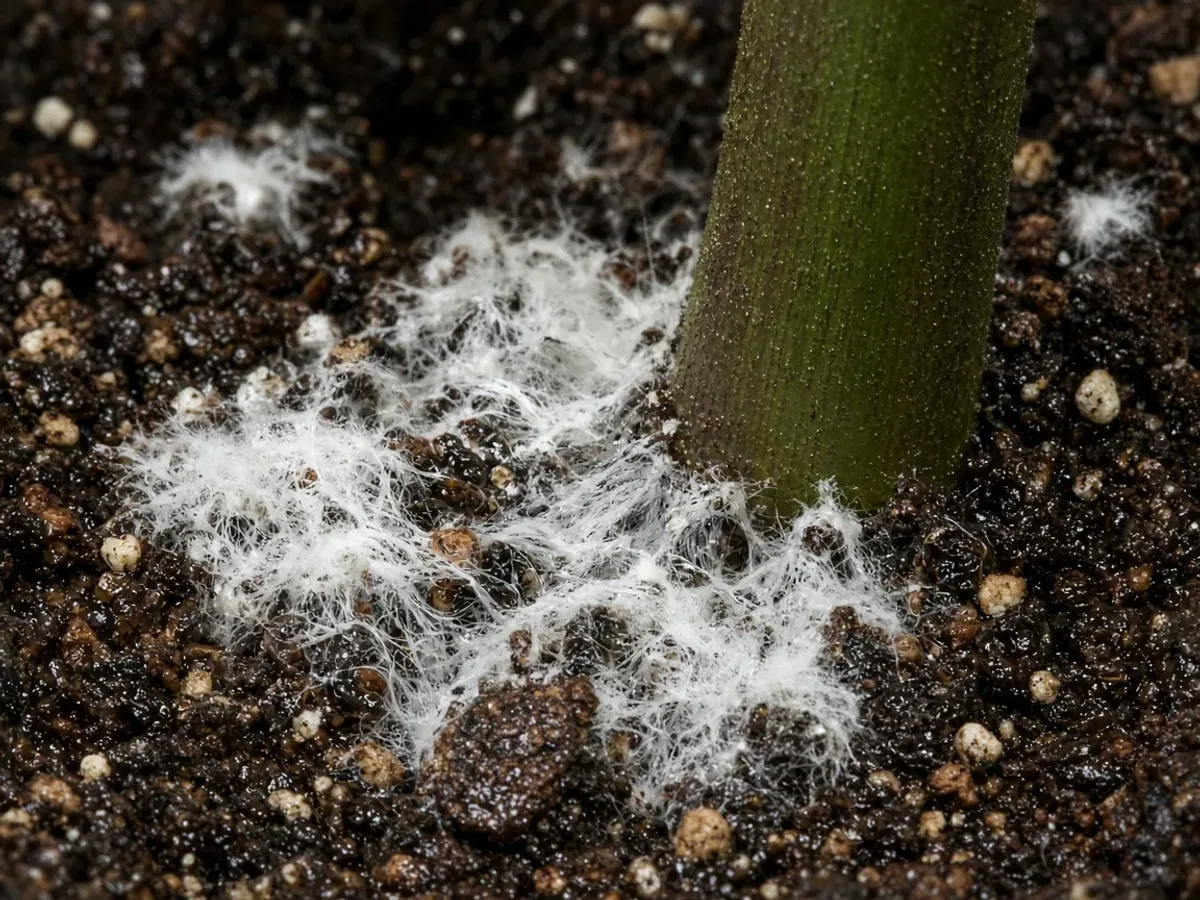
Mold on soil on Jungle Velvet—harmless saprophytic fuzz on a wet surface layer.
Jungle Velvet holds large, soft, velvety leaves with a peacock-feather pattern on top and dense woolly purple undersides on long purplish-green petioles. The plant may still fold upward at night while the soil surface tells a different story. Common patterns:
- White, gray, or occasionally yellow-green fuzz on the top of the mix, sometimes on the pot rim or around drainage holes
- Soil that stays dark and cool at the surface for many days after you water
- Cottony thread-like mycelium when you poke the surface with a finger
- Decaying velvety leaf bits from outer Warscewiczii blades that dropped onto the mix and now mold on the surface
- Small fungus gnats on Calathea Warscewiczii associated with overwatered houseplants that fly up when you water or move the pot
The upright clump may still hold leaves out horizontally, fold at night normally, and push new rolled spears from the center. Worry more when lower leaves yellow while soil is wet, petioles feel soft at the base, or the pot smells sour—those point past cosmetic mold toward root stress.
Not the same thing: a slick green film is usually algae, not white mold. Both mean a wet surface. Powdery mildew on velvety leaf blades is separate and rarely starts on potting mix alone.
Use nightly folding as Jungle Velvet’s health check
Prayer plants in the Marantaceae family, including Warscewiczii, show nyctinasty—leaves that fold upward at night like hands in prayer. That rhythm is a useful mold diagnostic:
- Firm velvety leaves that still fold and reopen with only fuzzy soil → surface mold on wet peat; scrape and dry the top layer.
- Large blades stay curled or limp through the day on wet soil → possible root stress or overwatering on Calathea Warscewiczii—probe deeper before assuming mold is cosmetic.
- New center spears collapse while the surface is moldy → escalate to rhizome and root inspection; do not water to “fix” curl on already-saturated mix.
Warscewiczii’s velvety foliage can look stressed from dry air or hard tap water without mold being the cause. Pair leaf checks with the top 2 cm soil probe, not leaf curl alone.
Why velvety leaves and wet soil collide on Warscewiczii
Jungle Velvet is a larger upright prayer plant that wants moist, well-drained, peat-based mix—not a constantly wet surface. NC State Extension notes that Goeppertia warszewiczii needs bright indirect light and a moist, well-drained peat-based potting mix, and warns that overwatering can cause root rot. Growers aiming for “moist roots” and humidity above 60% sometimes keep the surface saturated, which is where saprophytic fungi colonize.
Warscewiczii-specific triggers include:
Watering over velvety foliage. Extension guidance for this species flags leaf spot from wetting leaves while watering. Overhead splashing drops organic debris onto the mix, wets woolly leaf surfaces, and slows evaporation from the pot rim—mold often starts where decaying tissue meets damp peat.
Oversized pots for a rhizome clump. Jungle Velvet can reach several feet tall in ideal conditions, but indoor pots are often much wider than the rhizome mass. A ring of unused wet peat around a small clump is a common hidden overwatering trap—and mold grows on that unused margin first.
Humidity without airflow. Pebble trays, humidifiers, and tight plant shelves keep velvety leaves happy but slow surface evaporation. Humidity supports leaf texture; it does not replace letting the top layer dry between drinks.
Calendar watering through winter. Many owners keep the same five-to-seven-day schedule while Warscewiczii uses less water in dim, cool months—the surface stays wet for days and fuzz returns.
Cachepots and full saucers. Decorative outer sleeves trap runoff and wick moisture back to the surface fine roots never needed.
Surface fungi are usually not pathogenic—their growth isn’t usually detrimental to plants. The risk is indirect: chronic wetness invites fungus gnats and can precede root rot on Calathea Warscewiczii in mix that cannot drain fast enough.
How to confirm the cause
Work through these checks before Calathea Warscewiczii repotting or spraying:
- Spear and petiole health — Are newest center leaves firm and unfurling? Does Jungle Velvet still fold at night? Is the rhizome base hard when you press near the soil line?
- Surface moisture — Does the top 2 cm stay cool and damp five or more days after watering?
- Smell — Musty surface odor fits harmless mold. Sour, swampy smell from deeper in the pot suggests anaerobic wet mix.
- Debris scan — Remove fallen velvety leaves on the soil. Mold often starts where decaying tissue meets wet peat.
- Gnat check — Tap the pot. Flies emerging mean a shared wet-soil habitat.
- Light and season — In low light or winter rest, stretch intervals toward seven to ten days per the watering guide if the surface stays wet.
If the plant is firm, leaves fold normally, and only the top layer is fuzzy, treat as confirmed surface mold. If petioles are mushy or yellowing spreads on wet soil, unpot and inspect roots.
First fix for Calathea Warscewiczii
Scrape off the top 1–2 cm of moldy mix and discard it in the trash—not the compost pile.
Use a spoon or fork, remove the fuzzy layer plus visible decaying leaf bits, and expose fresh mix below. Then stop watering until the new surface feels beginning-dry at about 2 cm depth.
That single action removes active spores and starts drying the environment mold needs. Do not repot the whole plant, fertilize, or mist velvety leaves on the same day.
Step-by-step recovery
After the first scrape and dry-down:
- Refresh the top layer — Replace scraped soil with a thin layer of dry, similar Calathea Warscewiczii soil blend. Do not pack it down hard.
- Adjust watering — Water thoroughly at the soil line when the top 2 cm begins to dry, then empty the saucer within 30 minutes. In winter, stretch intervals if the surface stays wet too long.
- Bottom-water if the surface molds again — Soak from a saucer for 20–30 minutes so roots drink while the top stays drier; wipe the rim dry afterward.
- Remove debris weekly — Pull spent velvety leaves from the pot before they mold.
- Improve airflow — Space pots on the shelf or run a gentle fan so humid air does not stagnate over wet mix.
- Brighten indirect light slightly — If Jungle Velvet sits in deep shade, move toward medium Calathea Warscewiczii light so the pot dries more predictably. Avoid direct sun, which scorches velvety blades.
- Address gnats — Allow the top inch of soil to dry and use yellow sticky traps while you fix moisture.
- Repot only when chronic — If mold returns within days after repeated scrapes, repot in spring into fresh mix in a pot sized to the rhizome clump.
Skip cinnamon, hydrogen peroxide, and fungicide drenches unless mold keeps returning after moisture correction.
Recovery timeline
Cosmetic mold should stop reappearing within one to two weeks once the top layer dries between waterings.
Fungus gnat counts often drop over two to four weeks as dry surfaces break egg cycles.
Plant recovery is judged by new center spears, not old foliage. Expect stable or improving new rolls within two to three weeks after watering correction. Existing yellow or crisp velvety edge damage will not reverse.
Worsening signs: mold returns within 48–72 hours of scraping, lower leaves yellow on wet soil, or petioles soften—schedule a root inspection within the week.
Lookalike symptoms
| What you see | Likely cause | First action |
|---|---|---|
| White fuzz on damp soil; firm petioles; nightly folding normal | Surface saprophytic mold | Scrape top layer → dry top 2 cm |
| Mold + hovering flies | Wet soil + fungus gnats | Dry surface; sticky traps |
| Yellow lower leaves on heavy wet pot | Overwatering | Pause water; check roots if sour smell |
| Wilting with wet soil | Possible root rot | Unpot and inspect |
| Daytime curl only, dry top 2 cm | Underwatering or low humidity | Probe soil before adding water |
| Green slick on soil | Algae on constant moisture | Scrape, dry, slightly brighten light |
What not to do
Do not keep the surface wet because Jungle Velvet “likes humidity.” Avoid overhead soaking that leaves puddles on the mix and wets velvety foliage. Do not repot into a larger container to fix mold. Do not fertilize while correcting wet soil. Do not ignore gnats—they signal the same moisture mistake. Do not water on calendar autopilot when winter growth slows.
How to prevent mold on soil next time
- Check before watering — Top 2 cm beginning-dry in growth; slower in winter.
- Size the pot to the rhizome clump — Avoid wide wet margins roots never reach.
- Ensure drainage — Open holes, empty saucers, no standing cachepot water.
- Clean the surface — Remove fallen velvety leaves promptly.
- Pair humidity with airflow — Especially near humidifiers and pebble trays.
- Water at the soil line — Keeps woolly leaf surfaces dry and reduces debris on the mix.
Calathea Warscewiczii care cross-check
| Checkpoint | Target for Jungle Velvet | Mold link if wrong |
|---|---|---|
| Water trigger | Top 2 cm beginning-dry | Surface never dries → mold |
| Mix | Moisture-retentive but well-drained peat/coco + perlite | Heavy soggy peat → slow surface drying |
| Light | Medium to bright indirect | Deep shade → slow evaporation |
| Humidity | 60%+ with airflow | Stagnant humid air → wet surface |
| Pot | Sized to rhizome clump | Oversized pot → chronic wet margin |
Compare against the Calathea Warscewiczii overview if mold keeps returning.
When to worry
Surface mold on firm plants is low urgency. Escalate when mold returns within days after repeated scrapes, mix smells sour, petioles soften at the soil line, lower leaves yellow on wet soil, or wilting happens despite moist mix.
When to use this page vs other Calathea Warscewiczii guides
- Watering — Routine top-2-cm checks before assuming mold is the main issue.
- Fungus gnats — When flies, not fuzz, are the entry symptom.
- Overwatering — Chronic heavy pots and yellow lower leaves on wet mix.
- Root rot — Mushy roots, sour smell, wilt on wet soil.
- Problems hub — Browse all Jungle Velvet issues.
Related Calathea Warscewiczii guides
Related tool
Use the Plant Problem Diagnosis Tool to narrow causes for mold on soil on this plant before changing multiple variables at once.