Fungus Gnats on Calathea Warscewiczii: Causes, Checks &
Quick answer
Fungus gnats on Calathea Warscewiczii mean the top of the mix stays damp too long—not that velvety leaves caught a foliar pest. First step: pause watering until the top 2 cm feel dry to your finger, then empty any saucer or cachepot water.
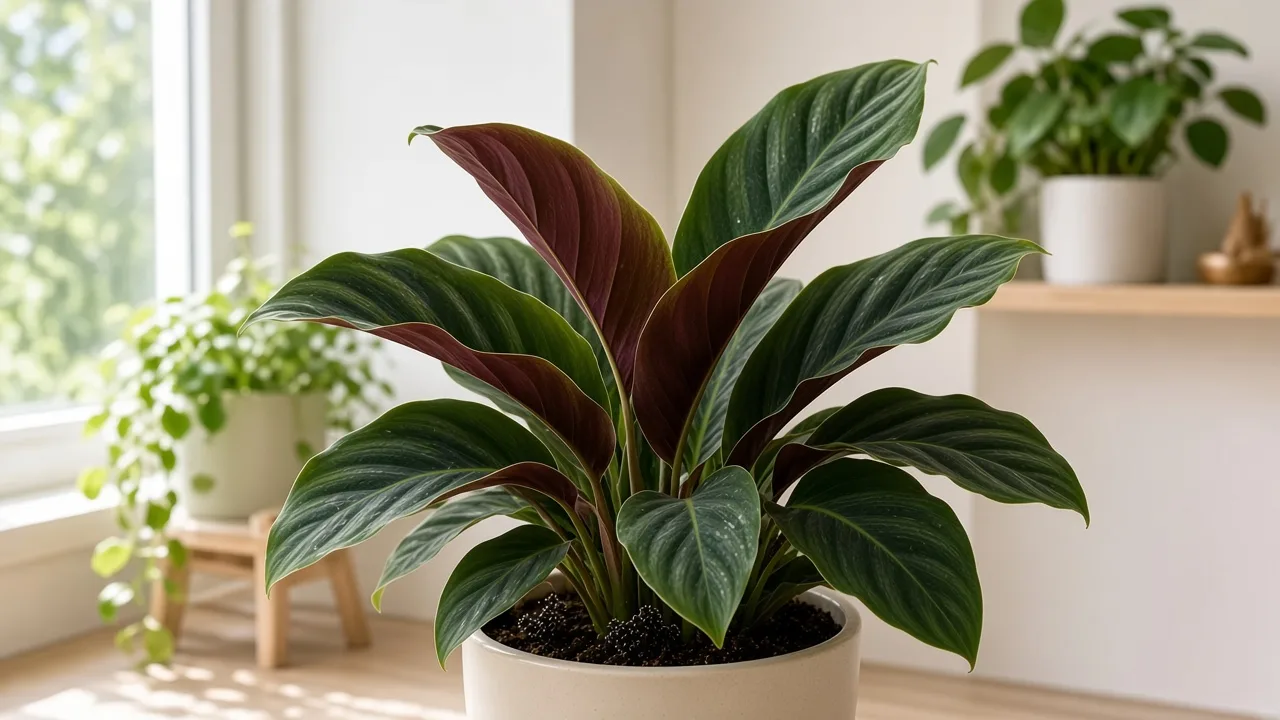
Fungus Gnats on Calathea Warscewiczii: Causes, Checks & Fixes
This guide covers fungus gnats on Calathea Warscewiczii. See also the general Fungus Gnats guide, watering, and light pages for this plant.
Fungus Gnats on Calathea Warscewiczii: Causes, Checks & Fixes
Quick answer
Fungus gnats on Calathea Warscewiczii (Goeppertia warszewiczii, often sold as jungle velvet calathea) almost always mean the top of the potting mix stays wet too long—not that your fuzzy prayer plant leaves caught a random flying pest. Warscewiczii needs evenly moist, well-drained mix around its rhizome, but the surface should still dry slightly before the next drink. When owners water on autopilot to protect velvety foliage from crisping, the rim can stay damp for days while wide arching leaves shade the pot and slow evaporation in dim corners.
First step: stop watering until the top 2 cm of mix feel dry to your finger and any standing water is emptied from saucers or cachepots. That single dry-down breaks the habitat adult females need for egg-laying and reduces larval survival in the surface layer. For how fungus gnats breed in wet organic soil in general, see our fungus gnats pest guide. On Warscewiczii, the pattern usually shows up as flies under large velvety blades while the crown still looks structurally fine.
What fungus gnats look like on Calathea Warscewiczii
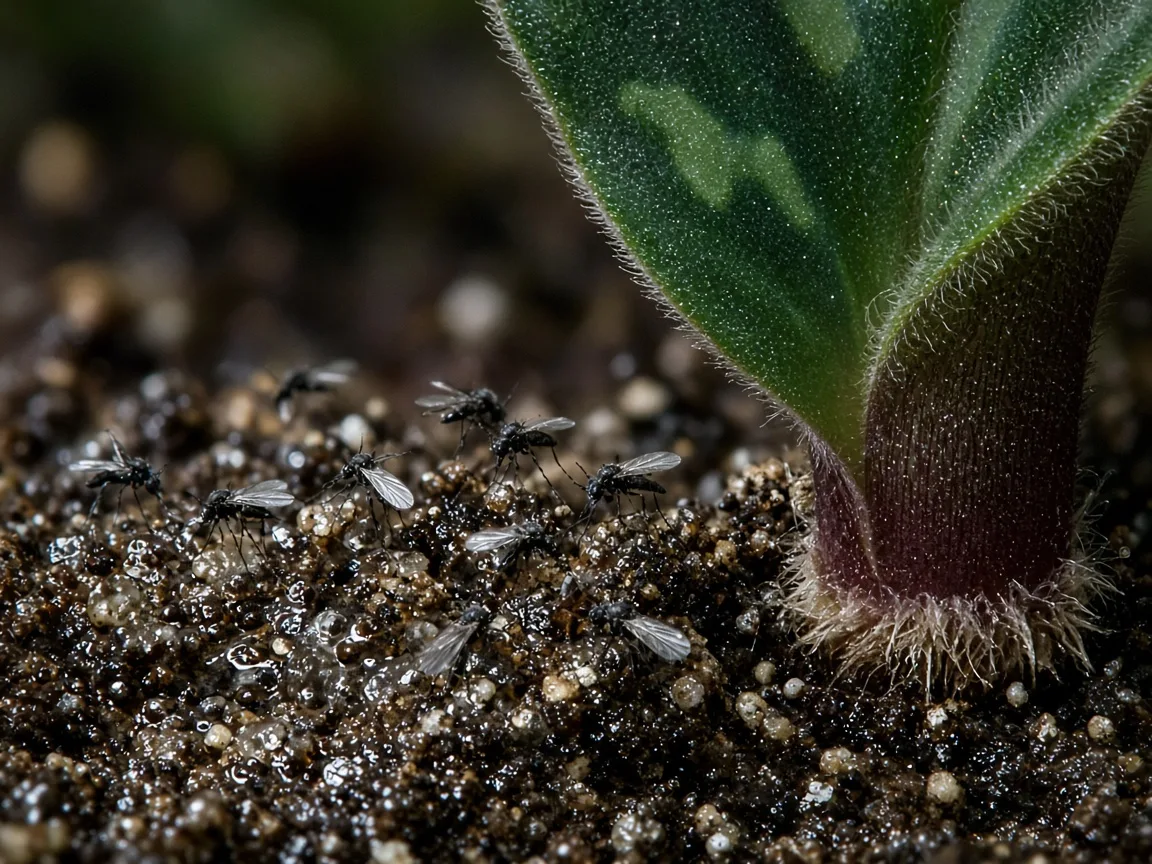
Fungus gnats on Jungle Velvet—adults and larvae concentrate at the wet soil surface, not on velvety blades.
Healthy jungle velvet foliage should still show firm lance-shaped leaves with a soft fuzzy upper surface and clean purple undersides unless a separate stress is active. Gnats themselves live at the soil line, not on the velvet.
Adult flies:
- Tiny dark flies, roughly 1/8 inch long, with long legs and antennae
- Weak fliers that rise in short bursts when you water or brush the soil under Warscewiczii’s upright clump
- Often seen at the pot base, on yellow sticky traps, or at nearby windows—not coating the fuzzy leaf face
- Distinct Y-shaped wing veins when viewed with a magnifying glass—different from fruit flies
Larvae in the mix:
- Pale, translucent wormlike maggots with dark head capsules in the top 2 to 3 inches of mix
- Visible when you scrape the surface or flip a potato slice test wedge
- Feed on fungi, algae, and decaying organic matter in the mix, and fine roots when numbers are high
What you usually will not see on Warscewiczii leaves:
- Webbing (spider mites on thin calathea tissue—see spider mites)
- White fuzzy clusters (mealybugs in leaf axils)
- Sticky honeydew (aphids or scale)
- Chew holes from gnat feeding—damage happens below soil
Velvet leaves versus wet soil: where gnats actually live
Jungle velvet’s fuzzy surface holds ambient moisture and shows low humidity stress as edge curl faster than smooth calatheas. That texture makes owners reach for the watering can or mister when leaves look dull—but fungus gnats are a root-zone moisture signal, not a sign you need to wet the pot again.
Gnats breed in the top inches of organic mix. Velvety blades above can look perfect while larvae feed under the rim. If you only inspect the leaf face, you miss the problem. Run your dry-down check at 2 cm depth per our Calathea Warscewiczii watering guide before linking every velvet blemish to pests.
Wide canopy and slow rim dry-down
Warscewiczii carries large arching leaves that hang over the pot edge. That canopy shades the soil surface more than a compact Freddie clump, so the rim can stay cool and damp even when the center feels acceptable to a quick finger poke at one spot.
In medium or low indirect light—common when growers tuck jungle velvet away from harsh sun—the whole container dries slowly if watering volume stays on a summer schedule. See not enough light when dim placement extends wet surface time. Pair light correction with dry-down discipline; brighter indirect light alone does not kill larvae without drying the mix.
Cachepots and full saucers compound the issue: runoff wicks back into peat while wide leaves hide a full saucer from view. Roots lose oxygen while the surface never dries enough to break the gnat cycle.
Night folds versus limp overwatering when gnats are present
Calathea Warscewiczii is a true prayer plant: large velvety leaves fold upward at night and reopen by morning. That nyctinastic movement is normal when stems stay firm and the top 2 cm of mix dry on schedule.
Overwatering adds a different picture on the same plant:
- Daytime limp with heavy, soft petioles while the pot feels waterlogged
- Yellow lower leaves on mix that has not dried for a week or more
- Gnats rising from the soil line whenever you water
If velvet looks intact and only the soil flies, treat moisture at the pot—not the folding habit. If leaves stay limp through the day on a heavy wet pot, read overwatering on Calathea Warscewiczii before adding more water to “perk up” the plant.
Why Calathea Warscewiczii gets fungus gnats
Fungus gnats are small flies whose larvae live in the top inches of consistently moist organic potting mix. On Warscewiczii, they are a watering and drainage signal, not a leaf disease attacking velvet above.
Moist rhizome versus wet surface. Warscewiczii wants moisture around its rhizome, but you should still water only when the top 2 cm begin to dry—about every 5–7 days in active growth and longer in winter per plant-detail guidance. Watering every few days without checking lets the surface stay soggy while roots sit in stale peat. That is exactly where fungus gnat adults lay eggs in moist growing media rich in decaying organic matter.
Peaty mix and broken-down soil. Warscewiczii performs best in moisture-retentive, well-draining peat- or coco-based mix per our soil guide. As organic matter ages, it holds water longer in the center and feeds larvae with decomposing particles. Gnats often appear months after repotting when the same calendar schedule no longer matches how fast the pot dries.
Humidity habits that keep the surface wet. Running a humidifier is appropriate for velvet leaves, but pairing it with frequent top watering without dry-down keeps the rim saturated. Low humidity on Calathea Warscewiczii is a separate leaf-edge issue—do not solve gnats by soaking the mix to compensate for dry air.
Cool winter rooms. When day length drops and growth slows, Warscewiczii uses less water per week. If you keep summer watering volume through January, mix stays wet for two weeks while fungus gnat populations peak indoors during cooler months when watering is not reduced.
Overlap with mold and overwatering. Gnats frequently share the same wet habitat as mold on soil and early overwatering. All three point to surface moisture outlasting what this rhizome can tolerate—not three separate mysteries.
How to confirm gnats versus other pests
Work through these checks before spraying foliage or repotting on day one:
- Flight pattern — Gnats hover near damp soil when you water. Fruit flies congregate around kitchen fruit, compost bins, or open drains—not exclusively under a Warscewiczii pot.
- Potato slice test — Bury 1/4-inch slices of raw potato just below the surface. Check the underside after two to three days. Larvae migrate to potato and feed within a few days—confirming active larvae in the mix.
- Surface moisture at 2 cm — Press a finger to the depth Warscewiczii uses for normal watering checks. If it stays cool and clinging many days after watering, overwatering is driving both gnats and potential root stress.
- Pot weight — A heavy pot a week after you thought it dried confirms hidden saturation—common with bottom-watering overuse or cachepot trapping under a wide-leaf canopy.
- Sticky trap count — Place a yellow sticky card at soil level under the leaf arch. Catching small dark flies over 24 to 48 hours confirms active adults breeding in that pot.
- Dry-down confirmation — If flies disappear after the surface stays dry for seven to ten days and return only after the next heavy soak, gnats are confirmed and watering rhythm is the primary fix.
If adults appear but the top 2 cm are genuinely dry and the pot is light, look for another wet pot nearby or decaying organic matter in the saucer before treating Warscewiczii aggressively.
Check rhizome health before you treat
Gnats do not always mean rot—but chronic wet soil can progress to root damage while flies are still the only visible sign.
Slide the rhizome partly out of the pot after a dry-down test (never pull a soggy plant apart on day one):
- Firm pale roots and a tight crown — Gnats are likely a surface-moisture problem. Dry-down plus traps or BTI should suffice.
- Mushy brown roots, sour odor, soft base — Escalate to root rot care. Trimming bad roots and refreshing mix matters more than sticky traps alone.
- Firm rhizome but yellow lower leaves on wet soil — Stop all watering until the top 2 cm dry, then reassess. Lower yellow tissue may not re-green; watch for clean new spears unfurling from the center.
Press gently at the soil line where new velvety leaves emerge. A spongy crown on damp mix is urgent regardless of gnat count.
First fix: dry the surface and break the life cycle
Pause watering until the top 2 cm of mix feel dry to your finger and the pot feels noticeably lighter than right after a thorough drink.
This is the one action that helps every other step work:
- Dry growing medium decreases survival of eggs and larvae and makes the surface less attractive to egg-laying females
- Matches the dry-down trigger Warscewiczii uses for normal watering checks
- Empty saucers and lift cachepots to drain any trapped runoff before the dry-down clock starts
During the dry-down window:
- Remove fallen velvety leaf bits from the soil surface—they feed larvae and hold moisture under the canopy
- Improve air movement slightly at the pot base without blasting heat directly on fuzzy leaves
- Place yellow sticky traps just above the soil line to catch adult females and monitor population drop
Do not compensate for dry soil by misting foliage heavily onto the rim—that adds water to the surface larvae need. Allowing soil to dry between waterings is the primary fungus gnat management tactic.
When to escalate: BTI, traps, and top-layer refresh
If adults still appear two weeks after consistent dry-down and saucer discipline, target larvae directly while keeping the surface dry between drinks.
Bacillus thuringiensis israelensis (BTI) is a biological control that kills fungus gnat larvae in soil without harming people, pets, or the plant when used as directed. Products containing Bti applied as a soil drench filter through the mix to reach larvae; they do not affect eggs, pupae, or adults. Apply with enough water to move the treatment through the top inches, then repeat every five to seven days for three to four weeks to catch newly hatched larvae across overlapping generations.
Yellow sticky cards placed at the soil line catch adults and reduce the next generation, but traps alone never replace drying the mix.
Top-layer refresh — Scrape off the top half-inch of soggy peat, discard it, and replace with a thin layer of fresh dry mix if algae, mold, or decomposing debris fed the infestation. Pair with dry-down; do not water immediately after scraping unless the deeper mix is genuinely dry.
Skip hydrogen peroxide drenches and broad pesticide sprays as a first response—they stress Warscewiczii roots without fixing the wet habitat that brought gnats back.
Recovery timeline and what success looks like
Adult counts on traps should drop within one to two weeks once the surface stays dry between waterings and standing water is eliminated.
Full larval control often takes three to four weeks because fungus gnat life cycles can complete in three to four weeks at room temperature with continuous reproduction on indoor plants. BTI repeats across that window catch each hatching wave.
Signs the fix is working:
- Fewer flies when you water or disturb the soil
- Top 2 cm dry to your finger test within the expected 5–14 day window for your season
- Firm crown and new velvety leaves unfurling without widespread yellowing
- Sticky traps catching fewer adults each week
Signs the problem is worsening:
- Gnat clouds increase while soil never dries
- Yellow lower leaves multiply on heavy wet pots
- New center spear softens or stalls on damp mix
- Sour smell from drainage holes despite “cutting back” on water volume without checking depth
Old damaged lower leaves may not re-green. Judge recovery by reduced fly counts, appropriate dry-down rhythm, and clean new growth—not by every yellow blade reversing.
Lookalike symptoms to rule out
| What you see | Likely cause | Next step |
|---|---|---|
| Flies only at wet Warscewiczii pot | Fungus gnats | Dry surface; traps |
| Flies near fruit bowl | Fruit flies | Kitchen cleanup |
| Webbing on leaf undersides | Spider mites | Rinse; humidity |
| White fuzz on soil | Mold on soil | Dry surface; scrape top layer |
| Crisp dry pot, curled velvet edges | Underwatering | Water when top 2 cm dry |
| Limp all day on wet mix | Overwatering | Dry-down; inspect rhizome |
| Yellow lower leaves, wet mix | Yellow leaves | Moisture + light check |
Fruit flies hover near food waste and ripening fruit, not consistently at a Warscewiczii pot. Vinegar traps catch fruit flies; they do not work for fungus gnats.
What not to do on Calathea Warscewiczii
Do not keep the soil constantly moist to “help” limp jungle velvet when gnats are present—limp foliage on a heavy wet pot means root stress, not thirst.
Do not spray pyrethroid or oil products on velvety blades as a first response. Short-persisting foliar sprays do not control larvae in the mix and can mar fuzzy leaf surfaces in bright light.
Do not repot into a much larger container hoping fresh soil alone fixes gnats. A bigger wet zone around a rhizome extends dry-down time and invites gnats back.
Do not ignore gnats when white mold covers the surface—the same moisture drives both.
Do not bottom-water by leaving the pot submerged for hours. Brief bottom soaks with full drainage afterward work; standing water at the saucer re-wets the surface larvae need.
How to prevent fungus gnats next time
Water by dry-down, not calendar. Check the top 2 cm with finger, skewer, or pot weight before every major drink—the same protocol in our Calathea Warscewiczii watering guide. Use filtered or rainwater when tap minerals mar velvet.
Match volume to season. Reduce how much you pour in late fall and winter when the pot dries slowly in cooler, darker rooms.
Use appropriate mix and pot size. Fresh well-draining peat-based mix in a container sized to the rhizome—not an oversized decorative pot holding excess wet soil under a wide leaf canopy.
Empty saucers and cachepots within an hour of watering. Never let Warscewiczii sit in stale runoff hidden under arching leaves.
Remove debris weekly. Fallen velvety fragments on wet soil feed larvae and hold moisture at the soil line.
Keep yellow sticky traps at the soil line during recovery and for a month after flies disappear—early warning if surface moisture slips again.
Raise humidity without rewetting soil — Humidifier or pebble tray at the pot side supports velvet leaves while the top 2 cm still dry between drinks.
When gnats mean root rot
Gnats alone on a firm crown and neutral-smelling mix are a moisture-habit problem. Escalate to root rescue when you also see:
- Clusters of yellow limp lower leaves while soil stays wet for ten or more days
- Soft petioles at the base or a spongy crown at the soil line
- Sour or rotten odor when you lift the pot
- Mushy brown roots on inspection after dry-down
- New spears dying before unfurling on heavy mix
Those patterns overlap root rot on Calathea Warscewiczii more than a standalone gnat infestation. Dry the surface first, inspect rhizomes if multiple warning signs align, and repot into fresh mix only when roots—not just flies—fail the firmness test.
Conclusion
Fungus gnats on Calathea Warscewiczii tell you the soil surface is staying wet longer than this moisture-sensitive prayer plant can tolerate—not that you need to shower velvety leaves or spray the fuzzy surface. Let the top 2 cm dry, empty trapped runoff, and monitor with sticky traps while the life cycle breaks. Firm rhizomes and clean new jungle velvet leaves mean you fixed the real problem; gnats plus sour soil and yellow lower leaves mean the root zone—not just the flies—needs deeper correction.
When to use this page vs other Calathea Warscewiczii guides
- Calathea Warscewiczii watering guide — Use for routine moisture checks before assuming fungus gnats is the main issue.
- Calathea Warscewiczii problems hub — Browse all common issues on this species.
- Overwatering on Calathea Warscewiczii — Different entry point when symptoms overlap with fungus gnats.
- Mold on soil on Calathea Warscewiczii — Different entry point when surface fuzz, not flies, is the main symptom.
- Root rot on Calathea Warscewiczii — Different entry point when rhizomes fail firmness tests despite gnat treatment.