Underwatering on Calathea Warscewiczii: Dry Velvet, Curl &
Quick answer
Underwatering on Calathea Warscewiczii shows as a light pot, dry mix 2 cm down, drooping velvety lance leaves with daytime curl, and stalled large spears—not limp stems on heavy wet soil. First step: bottom-water with room-temperature filtered or rainwater until the top 2 cm feels evenly moist, then drain fully.
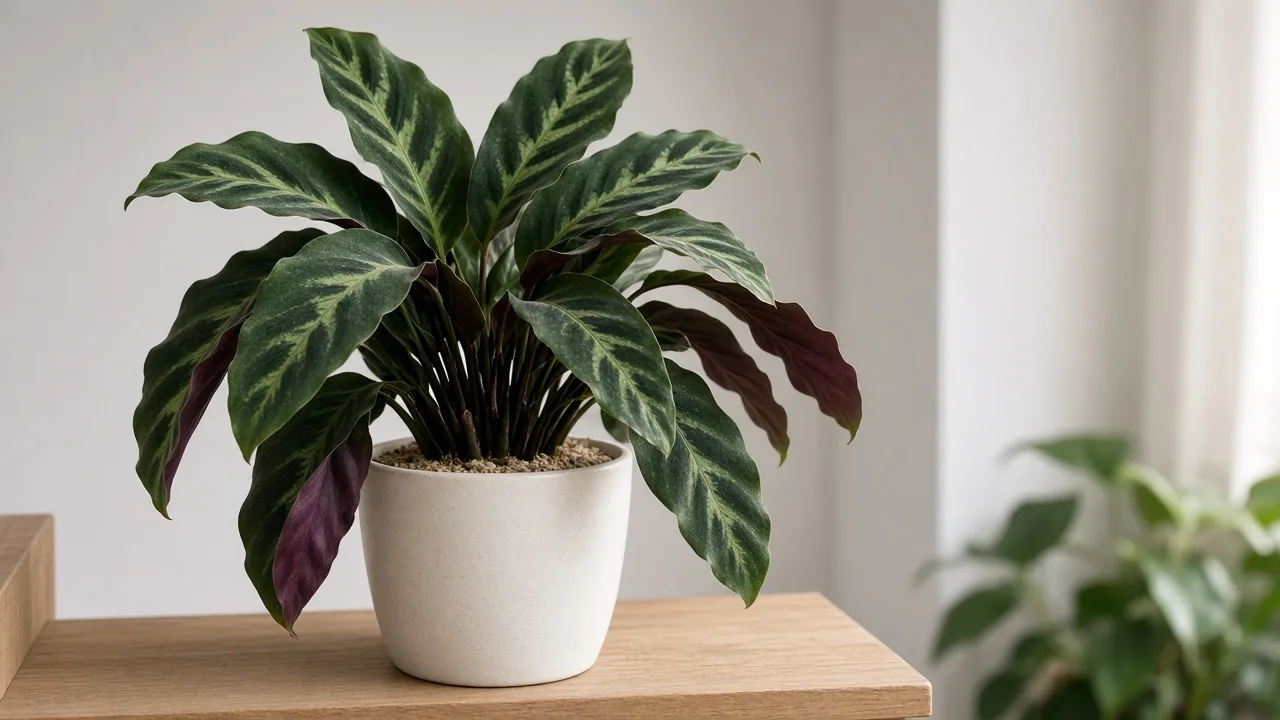
Underwatering on Calathea Warscewiczii: Dry Velvet, Curl & Recovery
This guide covers underwatering on Calathea Warscewiczii. See also the general Underwatering guide, watering, and light pages for this plant.
Underwatering on Calathea Warscewiczii: Dry Velvet, Curl & Recovery
Quick answer
Underwatering on Calathea Warscewiczii (Goeppertia warszewiczii, Jungle Velvet) is a timing and volume problem in a large-leaved, humidity-sensitive prayer plant—not a mystery disease. Warscewiczii’s soft velvety lance blades with burgundy-purple undersides lose turgor fast when the root ball stays dry too long, especially in a bright room with dry winter air.
For how chronic dryness damages roots and leaves in general, see our underwatering guide. On Jungle Velvet, the pattern is a light pot, dusty dry mix 2 cm down, wide leaves drooping with daytime curl, and new spears stuck half-unfurled—not yellow lower leaves on heavy sour wet soil.
First step: bottom-water with room-temperature filtered or rainwater until the top 2 cm of mix feels evenly moist, then let the pot drain completely. One thorough rehydration tells you whether roots can still take up water before you change light, humidity, or pot size.
When to use this page vs other Calathea Warscewiczii guides
| What you see | Start here instead |
|---|---|
| Leaves limp with light pot and dry top 2 cm | This page |
| Limp foliage but several possible causes | Drooping leaves |
| Rapid whole-plant collapse after heat or chill | Wilting |
| Heavy pot, dark damp soil, fungus gnats | Overwatering or root rot |
| Crispy margins with otherwise moist mix | Brown tips or low humidity |
| Routine moisture rhythm after thirst is fixed | Calathea Warscewiczii watering |
| Cluster navigation | Overview and problems hub |
What underwatering looks like on Jungle Velvet’s velvety lance leaves
Warscewiczii is not Freddie’s narrow zebra stripes or Musaica’s fishnet—it is a tall clump of large, fuzzy green blades that can reach several feet indoors when happy. Thirst shows on that wide surface area before the plant looks “dead.”
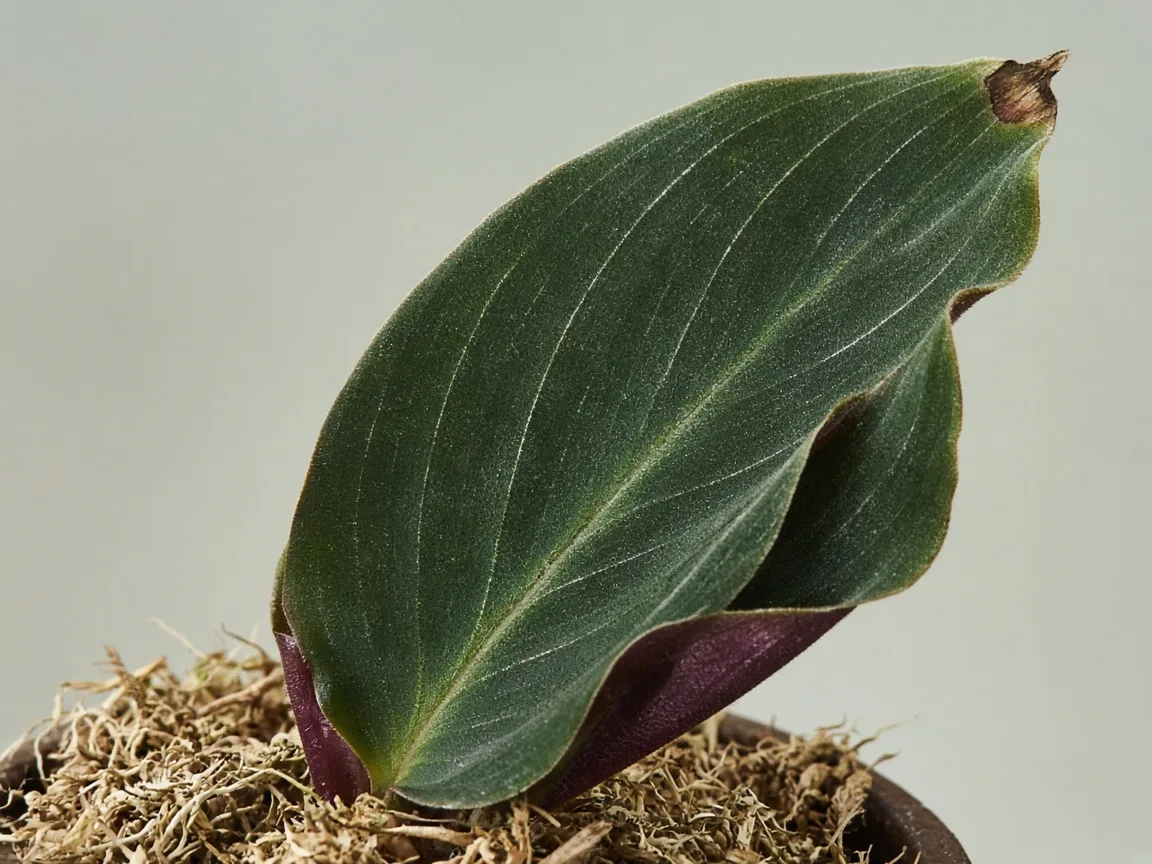
Stress on Jungle Velvet—velvety lance leaf rolled and dull with lost turgor and pale dry mix at the crown; compare with firm blades after a thorough bottom soak.
Early thirst shows subtly dull velvet pile, stems hanging lower than usual during the day, and mix that looks pale or dusty in the top 2 cm while the pot feels lighter than after your last full drink. A large new spear may pause without obvious pest damage.
Established drought brings inward curl or droop on multiple wide leaves—the plant is reducing exposed surface to slow water loss. NC State notes that on G. warszewiczii, leaves can curl from lack of water and low humidity. Dry peat may shrink and pull away from the pot wall. Soil at the drainage hole feels as dry as the surface.
Advanced dry-down includes widespread limp blades, brown crispy margins on older leaves, and new lance spears stuck half-unfurled because the plant lacks moisture to expand them. Water poured from above may run down the sides and out the bottom while the core stays dry (hydrophobic peat).
What underwatering is not: sour-smelling wet mix, yellow lower leaves on a heavy pot, fungus gnats over constantly damp soil (overwatering), or stippling with fine webbing (spider mites).
Daytime droop vs nyctinastic prayer fold (Warscewiczii-specific)
Warscewiczii is a Marantaceae prayer plant: large leaves stand more upright at night and lower by day in response to light and temperature—normal nyctinasty, not a diagnosis by itself.
The underwatering tell is daytime behavior on dry mix:
- Normal: Leaves may hang at a lower angle in bright afternoon light but feel firm; soil at 2 cm is still slightly cool or just beginning to dry.
- Thirst: Leaves stay tightly curled or limp through the morning, the velvety surface looks flat or gray, and the pot is light with dusty dry soil 2 cm down.
If leaves firm up overnight but collapse again every afternoon on moist mix, suspect heat near glass or a heating vent before you soak again—cross-check the light guide.
Large velvet blades vs dry air (the Warscewiczii overlap)
Jungle Velvet’s fuzzy pile holds surface moisture differently from smooth calatheas. Low humidity can crisp margins while soil is still slightly moist, which feels like underwatering but is really transpiration winning.
| Signal | True underwatering | Low humidity on moist mix |
|---|---|---|
| Pot weight | Light | Moderate to heavy |
| Top 2 cm | Dry, dusty | Cool, slightly damp |
| Leaf feel | Thin, limp, dull velvet | Firm blade with crisp edge only |
| Night fold | May stop if severely dry | Often still moves on schedule |
When in doubt, probe soil and lift the pot first. If mix is dry and light, treat thirst; if mix is damp and only margins crisp, start with low humidity and water quality before another soak.
Why Calathea Warscewiczii gets underwatered
Warscewiczii evolved as a tropical forest floor perennial with a moisture-retentive root zone. NC State recommends a moist, well-drained, peat-based potting mix—not a desert schedule. The RHS Calathea growing guide advises keeping compost evenly moist in spring and summer and, in autumn and winter, letting only the surface dry before rewetting while never letting compost dry out completely.
Fear of overwatering is the top indoor trigger. Calatheas have a rot reputation, so owners skip drinks until wide leaves collapse. Severe underwatering also kills fine roots; the plant may then wilt even after you water—symptoms blur with rot unless you check soil weight first.
Jungle Velvet accelerators:
- Large leaf area — Each wide lance blade transpires heavily in bright east or south rooms; the RHS notes that when air humidity is low, plants risk wilting if roots cannot keep up.
- Winter calendar watering — Mix may look fine on top while the core dries in a heated room; NC State lists humidity above 60% as a target—dry air shortens the interval between drinks.
- Peat-heavy mix gone hydrophobic — Dry coir or peat repels water; surface sprinkling does not rewet the rhizome zone under a tall clump.
- Waiting for distilled water — Delaying a soak while mix goes bone dry still counts as underwatering; use filtered or rainwater when you can per NC State’s distilled or rainwater preference.
How to confirm the cause
Work through this sequence on one visit:
- Soil at 2 cm depth — Dusty dry throughout confirms drought. Cool, damp soil at depth means do not add more water yet.
- Pot weight — A light pot with curled velvety leaves strongly suggests underwatering; a heavy pot with wilt points to saturated roots.
- Leaf pattern — Daytime curl or limp blades on dry mix fits thirst. Crispy edges alone on moist mix may be low humidity or tap-water minerals (brown tips).
- Recent watering history — When did you last give a full drink? Did water run through in seconds without darkening the surface?
- Drainage-hole probe — Dry at the bottom as well as the top confirms the whole root ball dried, not just the surface crust.
- Environment — Heating vents, fan blast, or hot glass accelerate drying on Warscewiczii’s wide leaves.
| Signal | Underwatering (this page) | Overwatering / rot |
|---|---|---|
| Pot weight | Light | Heavy, wet days |
| Top 2 cm mix | Dry, pale, may pull from sides | Dark, cold, waterlogged |
| Leaf curl | Daytime curl on dry mix | Curl/wilt on wet mix |
| Smell | Dry or neutral | Sour, anaerobic |
| After proper soak | Perks within hours if roots live | Stays limp, more yellow |
If mix is dry and the pot is light, treat underwatering as confirmed and proceed to the first fix.
First fix for Calathea Warscewiczii
Bottom-water the pot in filtered or rainwater until the top 2 cm feels evenly moist, then drain fully.
Set the container in a basin filled with water to roughly halfway up the pot. Bottom-water in a tray for 20–45 minutes—longer if mix was completely dry—until the surface darkens and feels soft. Remove the pot, let excess run out at least 15 minutes, and empty any cachepot.
Do not fertilize, repot, mist heavily onto half-open spears, or prune wide blades on day one. One proper rehydration is the diagnostic test: Jungle Velvet often lifts noticeably within hours when thirst was the only problem.
Step-by-step recovery
After the first bottom soak:
- Stable placement — Bright indirect light per the light guide; keep 18–24°C (65–75°F) and away from cold drafts per NC State’s temperature range.
- Raise humidity — Humidifier or pebble tray; dry air re-crisp edges on velvety margins even after soil is wet.
- Resume Warscewiczii rhythm — Water when the top 2 cm begins to dry in growth season; stretch toward 7–10 days in cooler months per the watering guide.
- Fix hydrophobic mix — Repeat bottom soaking until uptake is even; refresh overly old peat at the next planned repotting or when the soil guide says the blend has collapsed.
- Trim only dead tissue — Snip fully brown crispy sections once leaves firm up.
- Hold fertilizer — Wait until new spears unfurl cleanly for two to three weeks before feeding at half strength per the fertilizer guide.
If leaves perk after one soak but wilt again within two days on moist soil, roots may have died back during the dry spell—inspect before the next heavy drink.
Recovery timeline
Hours to one day: Wilted leaves may perk within hours after a thorough bottom soak when roots are healthy.
One to three weeks: New large lance spears should roll up from the crown with firm edges. Judge recovery by turgid new growth, not old brown margins on wide outer blades.
Worsening signs: Continued collapse despite moist soil, blackening stems at the soil line, or sour smell—stop soaking and inspect for root rot.
Mistakes to avoid
- Misting instead of rewetting the root ball when the pot is light and mix is dusty.
- Drenching daily after one dry period—that swings care toward overwatering.
- Fertilizing drought-stressed Jungle Velvet before moisture is stable.
- Repotting the same day unless mix cannot be rewet; add shock on top of thirst.
- Assuming every curl needs water when the pot still feels heavy—check soil first.
How to prevent underwatering next time
Match watering to how fast your Warscewiczii pot dries. During active growth, check every few days and water when the top 2 cm begins to dry—typically every 5–7 days in warm bright rooms, less often in winter. Use filtered or rainwater when you can (NC State — G. warszewiczii), and empty saucers after every drink.
Learn the pot’s weight after a soak so you notice a light container before spears crisp. Pair checks with humidity above 60% when possible (NC State — G. warszewiczii). Review yellow leaves only after you rule out simple thirst on a light pot.
Related Calathea Warscewiczii guides
Use drooping leaves when limp foliage could be wet or dry—start with probe and lift. Use this page when the pot is light and the top 2 cm are dry. Use overwatering when mix stays saturated. Use wilting for sudden collapse after heat or chill. Use slow growth when spread resumes only after moisture is fixed.
Related tool
Use the Plant Watering Calculator to narrow causes for underwatering on this plant before changing multiple variables at once.