Mealybugs on Calathea Warscewiczii: Velvet Axils & Alcohol
Quick answer
Mealybugs on Calathea Warscewiczii show as stationary white cottony wax tucked into leaf axils, along the midrib groove on velvety undersides, and around unfurling spears—not as moving insects on the fuzzy upper leaf pile. First step: isolate the plant and dab every visible cluster with a cotton swab soaked in 70% isopropyl alcohol before showering the whole plant.
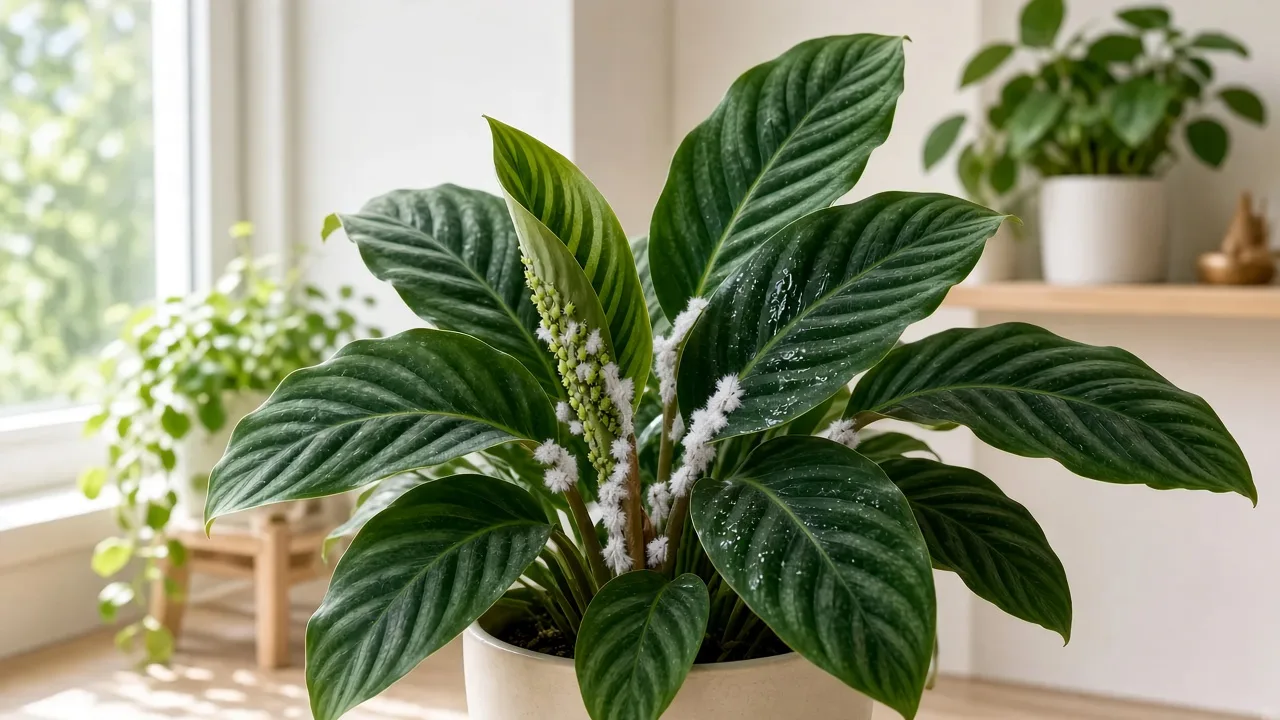
Mealybugs on Calathea Warscewiczii: Causes, Checks & Fixes
This guide covers mealybugs on Calathea Warscewiczii. See also the general Mealybugs guide, watering, and light pages for this plant.
Mealybugs on Calathea Warscewiczii: Causes, Checks & Fixes
Quick answer
Mealybugs on Goeppertia warszewiczii (Calathea Warscewiczii, jungle velvet) are small, soft, wax-covered insects that look like tiny cotton balls tucked into leaf axils, the crown around unfurling spears, midrib grooves on velvety undersides, and sometimes where stems meet moist peaty mix. They suck sap, leave sticky honeydew that can feed sooty mold, and hide in protected pockets where large fuzzy blades fold at night.
For how mealybugs reproduce, why ants defend them, and when alcohol dabs work in general, see our mealybugs pest guide. On Warscewiczii, the practical pattern is stationary wax against deep green velvet (easy to confuse with lime dust or dried water spots until honeydew dulls the pile), colonies on the soft tissue of a new spear, and extra caution because this species already flags stress through edge curl and matte patches long before pests kill the plant.
First step: isolate the plant away from other calatheas and moisture-loving houseplants, then dab every visible cottony cluster with a cotton swab soaked in 70% isopropyl alcohol—then re-check the newest spear in three days before coating the whole plant with soap or oil.
Wilting with constantly wet mix and a soft stem at the soil line is a different emergency—see overwatering on Calathea Warscewiczii before you treat pests.
When to use this page vs other Calathea Warscewiczii guides
This page is the pest-first entry for wax-covered sap feeders on large velvety prayer plant foliage.
- Calathea Warscewiczii watering — Use when limp leaves and wet or dry mix suggest moisture stress, not insects.
- Low humidity on Calathea Warscewiczii — Use when velvet edges crisp and blades curl at dusk without cottony wax or honeydew.
- Spider mites on Calathea Warscewiczii — Use for fine stippling and webbing in dry air, not white cotton in axils.
- Aphids on Calathea Warscewiczii — Use for soft pear-shaped insects on new growth tips, not stationary wax tufts.
- Brown tips on Calathea Warscewiczii — Use when newest unfurls brown from fluoride or dry air without sticky residue.
- Calathea Warscewiczii problems hub — Browse all common issues on this species.
Why Calathea Warscewiczii gets mealybugs in axils and on new spears
Indoor prayer plants are documented hosts. NC State lists aphids, scale, mealybugs, and spider mites among potential insect problems on Goeppertia—Warscewiczii shares that upright rhizomatous habit with tight leaf bases and a crown that pushes large velvety spears.
Warm, stable room conditions favor colonies. Mealybugs thrive on houseplants in mild climates and often feed in somewhat protected areas such as the crown, branch crotches, and stems near soil. A bathroom or humidifier setup that keeps jungle velvet crisp also keeps mealybug generations cycling year-round indoors.
Soft new spears are prime real estate. When a velvety spear unfurls, the tissue stays tender for days—exactly where over-applied nitrogen combined with regular irrigation stimulates growth where mealybugs prefer to lay eggs. Heavy feeding during active growth per the Calathea Warscewiczii fertilizer guide can produce succulent axils that hide larger colonies.
Ants and honeydew keep colonies alive. Glasshouse mealybugs weaken plants and excrete honeydew that allows sooty mould growth. Sticky cachepot rims and dull, tacky lower blades are common first clues on Warscewiczii before you spot white wax against the green velvet.
Hitchhikers from new plants and shared humidity trays. Inspect plants thoroughly before bringing them home—retail calatheas with stressed velvet in dry displays are weakened, but wax on undersides is still the pest signal, not a care shortcut.
What mealybugs look like on Calathea Warscewiczii
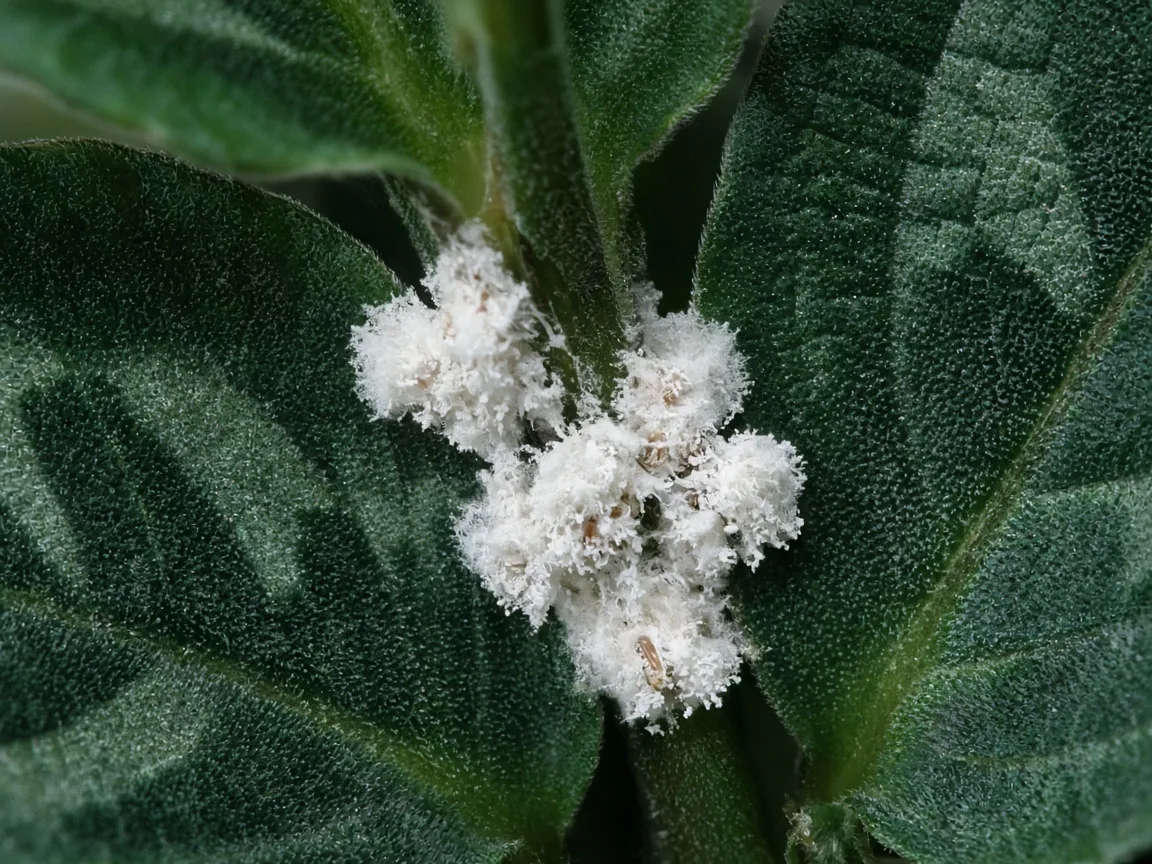
Mealybugs on Jungle Velvet—stationary white wax tufts in protected axils and crown spears.
- White to gray cottony wax tufts in leaf axils, crown crotches, and along midrib grooves on velvety undersides—not moving pear-shaped insects on the fuzzy upper pile
- Colonies on unfurling spears where large lance-shaped leaves are still rolled tight
- Sticky honeydew on lower leaf surfaces or on the pot rim; velvet may show honeydew as a greasy dulling of the pile
- Ants traveling up the main stem toward protected axils
- Yellowing or limp upper leaves on heavily fed tissue while the rhizome still feels firm in the pot
- Sooty mold on untreated honeydew in humid rooms
- Flattened, slow insects if you wipe wax away—often pink-orange when crushed with an alcohol swab
Mealybugs on Warscewiczii often sit where the petiole meets the velvety blade—cottony wax stays put when you blow on it, unlike mineral dust from unfiltered tap water.
Where to inspect on a potted Warscewiczii (plant-specific order)
Calathea Warscewiczii is an upright jungle velvet prayer plant with large lance-shaped blades, a fuzzy upper surface, and purple-toned undersides—not a vining aroid or succulent rosette. Mealybugs use angles a quick upper-leaf wipe misses. Work through this order:
- Newest unfurling spear — Peel back the roll slightly with gentle fingers; wax hides in the spiral before blades separate.
- Leaf axils on the upper half — Where petioles meet velvety blades; use sidelight so white wax contrasts with deep green pile.
- Underside midrib and primary veins — Protected groove where honeydew collects and sooty mold starts near humidifiers.
- Crown at soil line — Mealybugs sometimes hide on stems near soil; lift lower leaves without snapping spears.
- Cachepot gap and outer pot rim — Ant trails and honeydew drips often start here before you see wax on foliage.
- Neighboring plants on the same pebble tray — Crawlers spread to other moisture-loving houseplants in warm rooms.
This inspection path is specific to Warscewiczii’s large velvety morphology—it would be wrong for pad cactus or snake plant rosettes.
Velvet pile, lime dust, and cottony wax
Warscewiczii’s fuzzy leaf surface holds moisture and shows water-quality mistakes fast—filtered or rainwater is standard care because mineral films can look like pale specks on velvet. That overlap trips owners into misting or switching water when the real issue is wax in axils.
| Signal | More likely cause | Quick check |
|---|---|---|
| Even pale dusting on upper pile, no stickiness | Hard water or fluoride per watering guide and brown tips | Wipes off dry; no pink smear with alcohol |
| Velvet dulls on edges only, no ants | Low humidity | No cotton in axils; RH below 60% |
| Local yellowing, sticky lower blade, ants on pot | Mealybugs | Alcohol swab smears orange in axil |
| Evening leaf fold (nyctinasty) with firm mix | Normal prayer-plant movement | Check soil moisture; no wax |
| Daytime limp with wet mix, no wax | Overwatering / root rot | Soft stem base; sour soil |
Confirmed diagnosis — Cottony wax plus honeydew or ants in axils with a firm rhizome. Suspected — Sticky blades without visible wax need a hand lens on every upper axil and the unfurling spear before treating.
Evening prayer arch vs pest stress on jungle velvet
Warscewiczii raises and lowers large blades with the light cycle like other Marantaceae. At dusk, upright folding can look like wilt—but healthy plants reopen by morning with evenly moist (not soggy) mix per the Calathea Warscewiczii watering guide.
Mealybug stress adds stickiness, ants, and wax in axils while daytime posture stays limp even when the top 2 cm of mix is correctly dry. If blades stay collapsed through the day with cotton in the crown, treat pests first; if they perk after a measured drink with no wax, suspect underwatering instead.
Confirm mealybugs vs aphids, mites, scale, and care stress
| What you see | Likely cause | Key check |
|---|---|---|
| Stationary white cottony wax in axils | Mealybugs | Swab smears pink-orange; wax does not walk when disturbed |
| Soft pear-shaped insects on fresh shoot tips | Aphids | Colonies move; heavy tip clustering |
| Fine webbing and yellow stippling in dry heat | Spider mites | Dry air; mites on undersides, not cotton in axils |
| Hard brown disks glued to petioles | Scale (treat like wax pests) | Does not smear with alcohol like mealy wax |
| Evening curl, light pot, dry top 2 cm | Underwatering | No cottony clusters |
| Yellow lower leaves, wet mix, soft crown | Overwatering | No wax tufts; soil never dries at 2 cm |
First fix: isolate and alcohol-dab visible clusters
Move the plant away from other calatheas, ferns, and fittonias for at least two weeks after you last see live mealybugs.
Dab every visible cluster with 70% isopropyl alcohol on a cotton swab. UC IPM recommends dabbing with a solution of 70% (or less) isopropyl alcohol and water on houseplants, testing a small area first for leaf burn. UW-Madison Extension describes wiping insects with a cotton swab or cloth dipped in rubbing alcohol—the same motion reaches Warscewiczii axils where sprays never penetrate. Epic Gardening suggests dipping a swab in rubbing alcohol to remove cottony material before a broader wipe.
Work cluster by cluster in upper axils, the crown, and velvety midribs. The wax coating on adults makes contact sprays less effective until crawlers or exposed tissue are treated—physical dab removes the worst pockets first.
Alcohol patch-test on velvety calathea blades
Dab one older lower axil and wait 24 hours before treating the whole plant. Fuzzy foliage can show phytotoxicity from alcohol as pale spots that mimic sun bleach on velvet. If the test leaf looks scorched, dilute to 50% alcohol and dab only—skip oil sprays that week.
Humidity-safe rinses after dabs
If dabs clear visible wax but honeydew returns within a week, follow with a brief lukewarm stream on undersides to knock crawlers—then repeat alcohol on any new cotton. NC State notes airborne fungal infections such as gray mold on Goeppertia when ventilation is poor, so rinse in the morning, keep the crown from staying soaked, and run a fan or open ventilation until blades dry. Do not leave Warscewiczii dripping overnight in a closed terrarium.
When to add soap or horticultural oil
If colonies remain after two or three weekly dab-and-rinse cycles, apply insecticidal soap or narrow-range horticultural oil labeled for houseplants, per label directions. UC IPM lists insecticidal soaps, horticultural oils, and neem oil applied directly to immature mealybugs. Epic Gardening notes that soap treatments may need repeat applications if populations persist.
Critical rules for Warscewiczii:
- Spray morning so velvety blades dry before cool evening temps in humid rooms.
- Coat protected axils and the unfurling spear, not only upper pile surfaces.
- Patch-test one leaf before whole-plant spray.
- Avoid stacking repotting, heavy pruning, or extra fertilizer the same week you start spray.
Warscewiczii is pet safe per ASPCA Calathea listings on the plant hub—still keep pets away from wet soap residue on blades until dry.
What not to do the same day
Do not increase watering because leaves look limp—check whether the top 2 cm of mix is actually dry first. Do not blast cold tap water on spears to “wash pests away”—fluoride and wet crowns stress velvet calatheas independently of mealybugs. Do not ignore ants—they protect colonies from lady beetles and other natural enemies. Do not reach for systemic insecticides on a single pet-safe houseplant until contact dabs and labeled soaps have failed twice.
Recovery timeline and the next clean spear
Visible cottony clusters should shrink within one to two weeks of consistent dabbing and targeted rinses. Expect a clean unfurling spear with intact velvet sheen within three to six weeks when bright indirect light and 60–75% humidity stay stable. Yellowed or puckered blades will not fully regain perfect pile texture once they harden. Judge success by the next spear and firm rhizome push, not by old tissue flattening.
Firm lower petioles and steady new spears are good signs. Softening at the crown on sour, wet mix means rot—not mealybugs—and needs a different response immediately.
How to prevent mealybugs on Calathea Warscewiczii
Quarantine every new prayer plant for two weeks before placing it on a shared humidity tray. Inspect axils and spears weekly—white wax shows early against Warscewiczii’s green velvet if you look with sidelight.
Keep care aligned with the Calathea Warscewiczii overview—filtered or rainwater, evenly moist peaty mix, and humidity in the 60–75% band. Avoid excess nitrogen while pests are active; tie feeding to the fertilizer guide instead of chasing leaf size.
Manage ants on pot rims before they establish mealybug “farms” in upper axils. Wipe blades monthly with a damp cloth—early pest scouting doubles as dust removal on fuzzy leaves. Watch for fungus gnats as a separate signal of wet mix—not mealybugs, but a sign to fix drainage before crown stress stacks with sap feeding.
When to escalate
Escalate if new axils repeatedly fill with wax after three full dab-and-soap cycles, if sooty mold covers most blades, or if ants make colonies impossible to reach in the crown. Chronic sap feeding during slow winter growth can stall the next spear even when the rhizome is healthy.
For heavy recurring infestations, a local extension office can confirm the species and discuss label-legal options. Mealybugs alone rarely kill a mature Warscewiczii with a firm rhizome, but they can ruin the next velvet flush and invite secondary stress if you respond with extra water or fertilizer instead of pest removal.
Related Calathea Warscewiczii guides
- Calathea Warscewiczii overview
- Calathea Warscewiczii watering
- Calathea Warscewiczii light
- Calathea Warscewiczii soil
- Drooping leaves on Calathea Warscewiczii
- Wilting on Calathea Warscewiczii
- Slow growth on Calathea Warscewiczii
- Calathea Warscewiczii problems
Related tool
Use the Pest Identifier Tool to narrow causes for mealybugs on this plant before changing multiple variables at once.