Aphids on Calathea Warscewiczii: Causes, Checks & Fixes
Quick answer
Aphids on Calathea Warscewiczii cluster on soft new spears and the velvety backs of large lance leaves, leaving honeydew that dulls the fuzzy surface. First step: isolate the plant and rinse aphids off undersides with lukewarm water—keep the rhizome crown dry—before any spray.
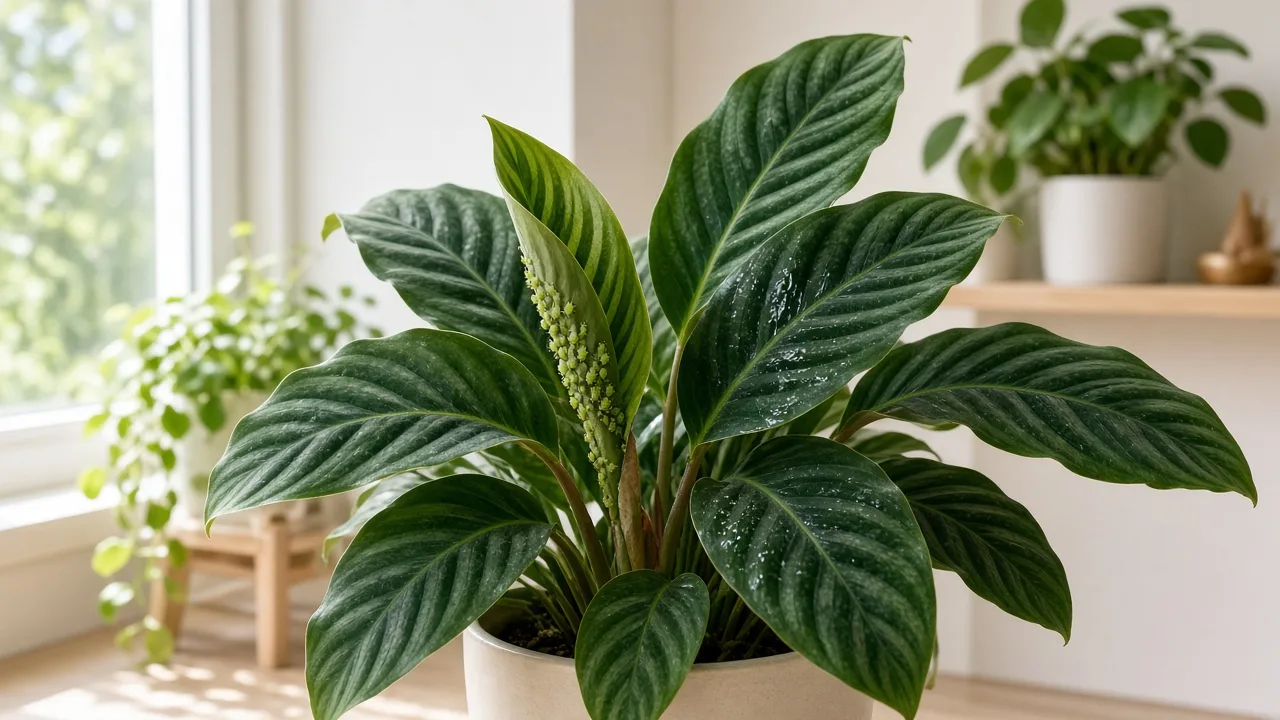
Aphids on Calathea Warscewiczii: Causes, Checks & Fixes
This guide covers aphids on Calathea Warscewiczii. See also the general Aphids guide, watering, and light pages for this plant.
Aphids on Calathea Warscewiczii: Causes, Checks & Fixes
Quick answer
Aphids on Calathea Warscewiczii (Goeppertia warszewiczii, often sold as jungle velvet) almost always settle on tender new spears and the velvety undersides of large lance-shaped leaves. Soft-bodied insects pierce tissue as it unfurls, leaving curled tips, sticky honeydew that mats the fuzzy surface, and sometimes ants on the pot rim. Established Warscewiczii plants rarely die from aphids alone when you catch colonies early.
For how aphids behave on houseplants in general, see our aphids guide. On jungle velvet, the decisive check is pear-shaped insects and stickiness on the newest spear and velvety leaf backs—not whether older broad leaves still look fine from across the room.
First step: isolate the plant and rinse aphids off leaf undersides and new spears with lukewarm water. Hold petioles gently, spray from below, tip the pot so water runs away from the rhizome crown, and let foliage dry in bright indirect light the same day. Only after a thorough rinse should you consider insecticidal soap on persistent colonies.
When to use this page vs other Calathea Warscewiczii guides
- Calathea Warscewiczii watering — Use when soil moisture or mineral edge crisping is the main question, not visible insects.
- Calathea Warscewiczii problems hub — Browse all common issues on this species.
- Mealybugs on Calathea Warscewiczii — Cottony white clusters in leaf joints instead of pear-shaped aphids.
- Spider mites on Calathea Warscewiczii — Stippling and webbing in dry winter air, not sticky new spears.
Aphids vs. mealybugs vs. spider mites
Jungle velvet pests are easy to mix up because all three can distort new growth on humid shelves.
| What you see | Likely pest | Next step |
|---|---|---|
| Pear-shaped insects on newest spear undersides; sticky honeydew; ants on pot rim | Aphids (this guide) | Isolate, rinse undersides, repeat before spray |
| White cottony masses in leaf axils and stem joints | Mealybugs | Mealybugs on Calathea Warscewiczii |
| Fine stippling, webbing, dry velvety edges; worse in heated winter rooms | Spider mites | Spider mites on Calathea Warscewiczii |
| Large leaves lift at night with no stickiness, insects, or daytime distortion | Healthy nyctinasty | No pest treatment needed |
If honeydew is present but you cannot find insects, check ants first—they often farm aphids or mealybugs on the plant above.
What aphids look like on Calathea Warscewiczii
Warscewiczii pushes new leaves from short rhizomes near the soil line. Those unfolding spears are softer than hardened velvety foliage—exactly where aphids feed on soft, new plant growth per UC IPM. UC IPM describes aphids as small, soft, pear-shaped insects that may be green, yellow, brown, red, or black and often feed in dense groups.
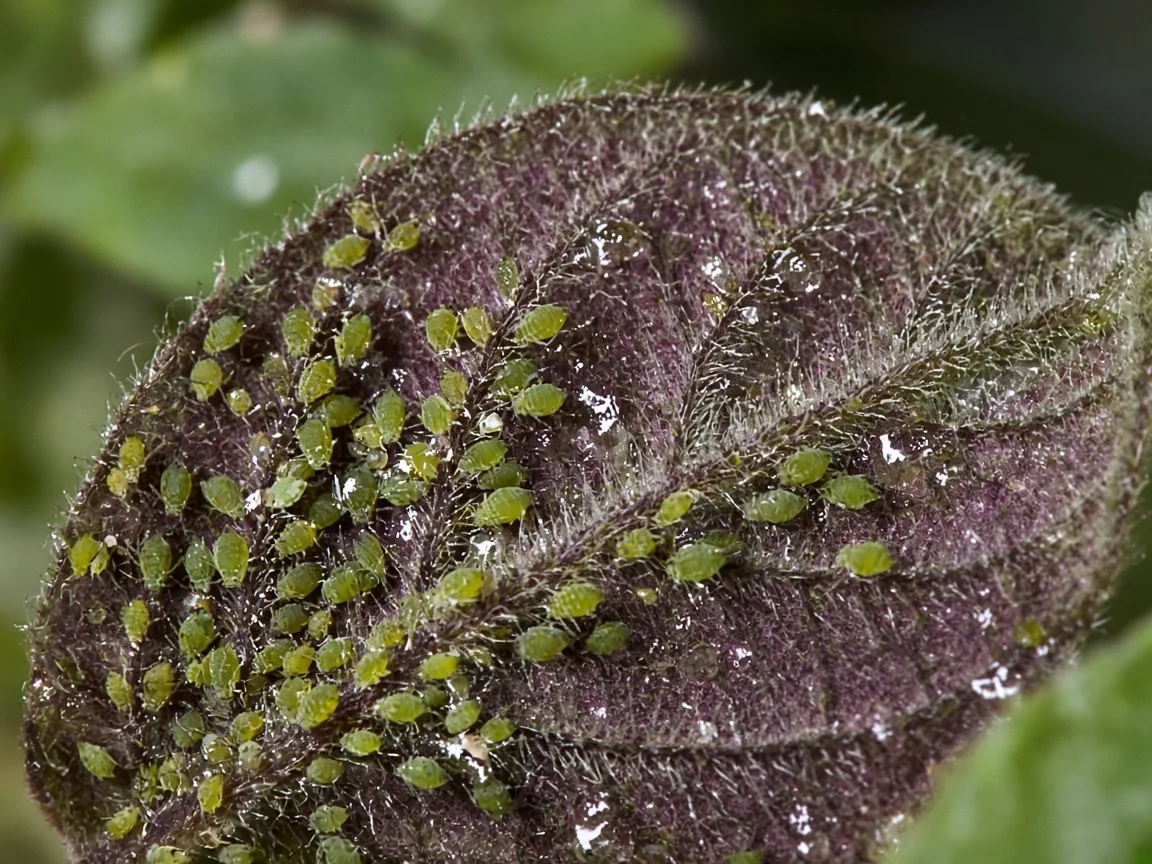
Green aphid cluster on the velvety underside of a jungle velvet spear—compare with clean fuzzy texture on the same plant.
On Calathea Warscewiczii, expect:
- Soft clusters on the newest spears and velvety purple-green leaf undersides
- Curled or puckered tips on shoots still opening—distinct from healthy nightly leaf lift
- Shiny, sticky honeydew on the fuzzy upper surface or the pot saucer
- Ants on the container exterior, farming honeydew below
- Sooty black mold growing on dried honeydew—the velvet can look dusty or dull when honeydew mats the hairs
- Slowed spear extension when feeding is heavy, while older leaves may look fine
Velvety leaf texture vs. aphid-stuck curl
Calathea Warscewiczii is a prayer plant relative: large leaves lift at night and lower by day when the plant is healthy. RHS notes aphids can cause curled or distorted leaves alongside honeydew.
Aphid damage is different: affected new spears stay distorted during the day, feel tacky, and carry visible insects when you flip velvety undersides up. If lift-and-lower still looks normal on clean mature leaves but one spear is sticky and curled, treat that shoot—not the whole watering routine.
Low humidity can crisp velvety edges on this species, but that damage is dry and papery, not sticky. Compare low humidity on Calathea Warscewiczii if edges brown without insects.
Where aphids hide on jungle velvet spears
Warscewiczii’s broad lance leaves fold tightly as spears open. Aphids shelter in those folds where rinses miss on the first pass—similar to how UC IPM warns that aphids hidden within curled leaves will not be affected by contact pesticides.
Inspection order that works on jungle velvet:
- The tip spear still rolled like a cigar
- Velvety backs of the top three leaves—tilt the pot toward a window; the fuzzy surface catches light and reveals clusters
- Leaf axils where the wide blade meets the petiole
- Soil line and outer rhizome—root aphids are uncommon indoors but check if ants trail into the mix
Use a hand lens. Mealybugs look cottony; scale looks like fixed bumps; spider mites leave stippling without stickiness.
Why Calathea Warscewiczii gets aphids
Aphids are not a Warscewiczii-specific weakness—they exploit conditions Marantaceae already provides when the plant is growing well.
Constant soft new growth. Happy jungle velvet plants in bright indirect light with evenly moist, humidity-friendly culture per The Spruce produce fresh spears regularly. UC IPM notes that over-fertilization pushes tender shoots aphids prefer. Warscewiczii fertilized heavily in spring can push lush, aphid-friendly tissue faster than you notice.
Humid indoor shelves. Jungle velvet is often grouped with other calatheas on a humidifier tray. That environment suits velvety foliage but also keeps colonies comfortable on sheltered undersides.
Introduction routes. Most indoor infestations arrive on new nursery plants, cuttings, or plants that summer outdoors. Populations can build quickly on a single new spear before the broad upper leaves show symptoms.
Ant protection. When ants tend aphids for honeydew, natural predators have a harder time. UC IPM emphasizes that keeping ants off plants helps beneficial insects control aphids.
Stress without drought. Unlike spider mites, which surge in hot dry air, aphids often appear on Warscewiczii that is otherwise well watered but recently moved, repotted, or pushed with fertilizer—so confirm insects before blaming humidity alone.
How to confirm the cause
Work through these checks before you spray:
- Location on the plant — Aphids concentrate on newest spears and undersides. Damage only on old lower leaves with no insects points elsewhere.
- Hand lens inspection — Confirm pear-shaped bodies with cornicles on the rear.
- Sticky test — Honeydew feels tacky and may grow wipe-able sooty mold per RHS. Normal velvety leaves are not sticky unless pests or residue are present.
- Ant check — Ant trails on the pot or shelf strongly suggest aphids or other honeydew producers.
- Shake test — Gently tap an infested leaf over white paper. Aphids fall as live insects; dust does not.
- Neighbor scan — Inspect plants on the same humidifier tray for early colonies on soft growth.
- Care cross-check — If you find no live insects and no honeydew, review watering and light before treating for pests.
First fix for Calathea Warscewiczii
Isolate the plant and rinse aphids off with lukewarm water, targeting velvety undersides and new spears.
Move Warscewiczii away from other houseplants. In a sink or shower, use moderate water pressure to dislodge colonies from leaf backs and spear tips. UC IPM recommends knocking aphid populations off with a strong stream of water on sturdy plants—use enough force to dislodge insects but not so much that large velvety leaves tear. Tip the pot so water runs away from the rhizome crown; do not let water pool in the stem base.
Let leaves dry in bright indirect light the same day. Repeat every two to three days until inspections show no live aphids.
Do not reach for insecticide on day one if a rinse removes the colony. Do not fertilize a pest-hit plant hoping to replace damaged spears—that produces more soft tissue aphids prefer. Do not repot unless you also find root aphids in the soil.
Step-by-step recovery
After the initial rinse:
- Repeat water dislodging every two to three days until two inspections a week apart find no live aphids.
- Apply insecticidal soap if colonies persist. Use a product labeled for houseplants, coat tops and undersides thoroughly, and repeat weekly because soap has no residual activity and must contact insects directly. Test a small leaf area first; velvety calathea foliage can mark under soap plus strong light.
- Wipe sooty mold off upper velvety surfaces with a damp cloth once honeydew production stops. RHS notes sooty mould is harmless but can be wiped off.
- Trim badly distorted spears only after pests are gone and only if folded tissue still harbors hidden colonies you cannot rinse out.
- Manage ants on pot rims or shelves with barriers or baits so predators can reach aphids.
- Inspect neighbors that shared the same window or humidifier tray for two weeks before mixing the collection again.
Because Calathea is non-toxic to cats and dogs per the ASPCA, rinsing and labeled soap treatments are practical in pet homes—still keep pets away until sprays dry.
The Spruce lists aphids among common calathea pests often managed with horticultural oil or insecticidal soap after identification—identify first, then treat.
Recovery timeline
A moderate colony often clears within three to seven days of repeated rinsing. Soap cycles may take two to three weeks with weekly repeats to catch newly hatched nymphs. UC IPM notes that aphids hidden in curled leaves are harder to reach with contact sprays—expect slower recovery when spear distortion is severe.
Judge success by clean new spears with intact velvety texture, not by old curled foliage flattening. Old yellowed patches rarely revert. New growth arriving without stickiness or insects means you won.
Worsening signs: colonies on every new spear despite rinses, spreading sooty mold, stunted rhizome growth with persistent ants, or widespread yellow leaves from combined pest and care stress.
Lookalike symptoms to rule out
Mealybugs form white cottony clusters in leaf axils. They also produce honeydew but look woolly, not pear-shaped. See mealybugs on Calathea Warscewiczii.
Spider mites cause fine stippling and webbing, especially when humidity drops in heated winter rooms. See spider mites on Calathea Warscewiczii.
Normal Warscewiczii movement — Large leaves lifting at night without stickiness, insects, or daytime distortion is healthy nyctinasty, not pest damage.
Low humidity crisping — Brown dry edges from dry air do not come with honeydew or soft insect clusters. Compare low humidity on Calathea Warscewiczii.
Overwatering yellowing — Lower leaves yellow with wet soil and no pests on undersides. See overwatering and root rot.
Fungus gnats — Small flies above moist mix, not sticky spears. See fungus gnats on Calathea Warscewiczii.
Mistakes to avoid
Do not spray insecticide before confirming live aphids—you may burn delicate velvety foliage without fixing the real problem.
Do not drench the rhizome crown when rinsing. Water sitting in the stem base invites rot on calatheas.
Do not stop after one treatment. Contact sprays miss hidden nymphs in rolled spears—plan repeats.
Do not return an isolated plant to the shelf after a single clean day. Hold it two weeks with weekly checks.
Do not increase fertilizer during recovery. Soft nitrogen-rich shoots invite reinfestation.
Do not ignore ants. Controlling aphids alone is harder while ants protect colonies.
Calathea Warscewiczii care cross-check during treatment
While treating aphids, keep baseline care steady—swinging watering or light mid-infestation adds stress.
- Light: Medium to bright indirect light; direct sun bleaches velvety surfaces. See the light guide.
- Water: Keep mix evenly moist with filtered or rainwater; see the watering guide.
- Humidity: Target 60–75% RH; steady humidity supports recovery without the dry air that favors spider mites.
- Soil: Moisture-retentive but draining mix; see the soil guide.
- Crowns: When rinsing, tipping the pot beats overhead soaking that pools at the rhizome.
Aphids are the primary issue to solve first; fixing humidity alone will not dislodge an active colony.
How to prevent aphids next time
Scout velvety undersides weekly, especially on the newest Warscewiczii spears after spring growth starts. UC IPM recommends checking plants at least twice a week during rapid growth.
Quarantine new calatheas and cuttings two weeks before placing them on a shared humidifier tray.
After summer outdoors, rinse and inspect before the plant re-enters your home.
Use balanced fertilizer at half strength in active growth—not heavy nitrogen that pushes soft shoots. See the fertilizer guide.
Preserve beneficial insects by avoiding broad-spectrum sprays unless necessary. Lady beetles and lacewings consume aphids when ants do not interfere per UC IPM.
Keep ant barriers on shelves where you have had honeydew problems before.
When to worry
Escalate when aphids cover most new growth despite a week of rinsing, when sooty mold blocks most of the velvety leaf surface, or when new spears stay stunted and distorted while the crown softens. A handful of aphids on one new spear is manageable with isolation and rinsing. A colony on every unfurling spear with ants and mold needs soap repeats and possibly removing the worst stems if rhizome health is failing.
Conclusion
Aphids on Calathea Warscewiczii target the same soft new spears that show off this species’ jungle velvet texture. Confirm them on velvety undersides, isolate, rinse before you spray, and repeat until new growth comes in clean. Steady humidity, crown-dry rinsing, and weekly scouting during your watering routine prevent small colonies from becoming sticky messes across your whole tropical shelf.
Related Calathea Warscewiczii guides
- Calathea Warscewiczii overview
- Calathea Warscewiczii watering
- Calathea Warscewiczii light
- Calathea Warscewiczii soil
- Mealybugs on Calathea Warscewiczii
- Spider mites on Calathea Warscewiczii
- Yellow leaves on Calathea Warscewiczii
- Calathea Warscewiczii problems
Related tool
Use the Pest Identifier Tool to narrow causes for aphids on this plant before changing multiple variables at once.