Yellow Leaves on Calathea Warscewiczii: Causes, Checks &
Quick answer
On Calathea Warscewiczii, yellow leaves usually trace to soil that stays wet too long, fluoride-heavy tap water, dry air below 60% RH, or one spent lower velvety leaf—not a missing nutrient. First step: feel whether the top 2 cm of mix is beginning to dry or still damp, and note whether only the oldest wide outer leaf is fading while new spears stay deep green.
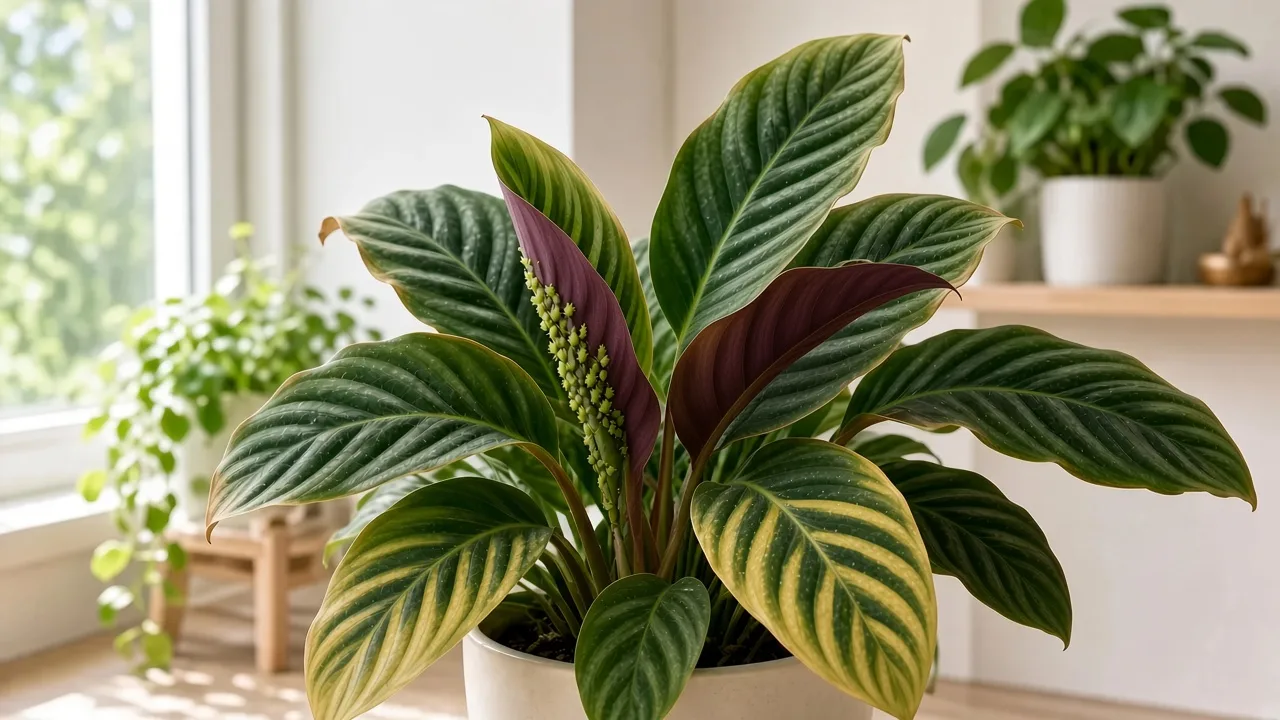
Yellow Leaves on Calathea Warscewiczii: Causes, Checks & Fixes
This guide covers yellow leaves on Calathea Warscewiczii. See also the general Yellow Leaves guide, watering, and light pages for this plant.
Yellow Leaves on Calathea Warscewiczii: Causes, Checks & Fixes
Quick answer
Yellow leaves on Calathea Warscewiczii (Goeppertia warszewiczii, Jungle Velvet) are a stress signal, not one diagnosis. This Marantaceae prayer plant carries large, soft, velvety lance-shaped leaves with a peacock-feather pattern and dense purple undersides—foliage that flags watering, water-quality, and humidity mistakes faster than many smooth-leaved houseplants. Yellowing most often means soil stayed wet too long, tap water stressed the velvet, winter dry air damaged margins, light was too dim for the pot to dry, or one spent outer leaf is aging out naturally.
First step: check moisture through the top 2 cm (about ¾ inch) of mix before you change anything else. Push your finger to that depth—the dry-down trigger in our watering guide. Cold, heavy, wet mix means pause watering, not fertilizer. Dust-dry mix with a lightweight pot points toward underwatering on Calathea Warscewiczii instead. See the Calathea Warscewiczii overview for baseline humidity and filtered-water guidance.
For how chlorophyll loss works on houseplants in general, see our yellow leaves hub. On Jungle Velvet, the velvet pile and wide blade fail first: margins wash out or whole lower leaves turn uniform yellow before the crown collapses, because each leaf has a long petiole and a large surface area that cannot hide root or air stress for long.
What yellow leaves look like on Calathea Warscewiczii
Warscewiczii’s signature is upright growth on long purplish-green petioles with thick, fuzzy green blades—deep green velvety tissue with lighter feather-like markings from the midrib and a striking purple, woolly reverse. Yellowing appears in patterns that point to different causes:
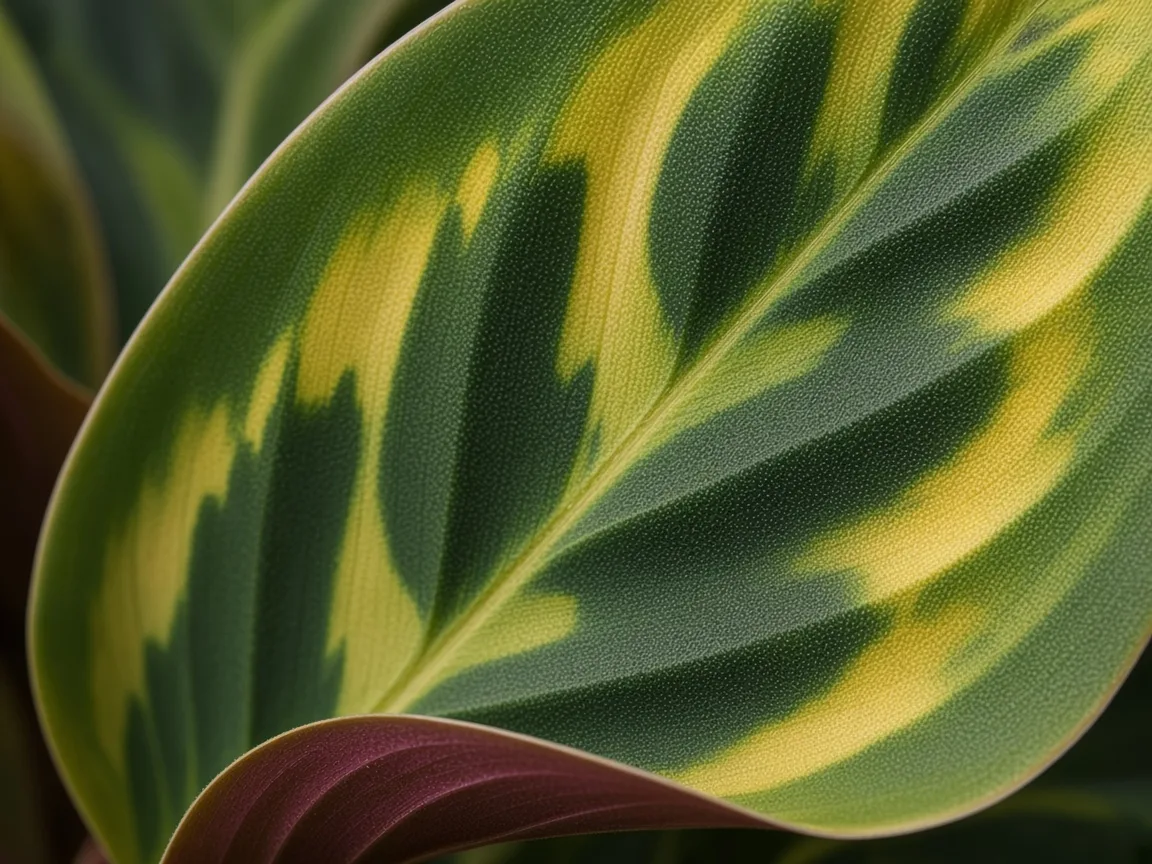
Yellow leaf symptoms on Jungle Velvet—compare fading velvety tissue with healthy peacock-patterned blades on the same plant.
- Normal aging - One or two oldest outer wide leaves at the base fade from green to yellow over weeks or months while new spears stay firm with even velvet pile and vivid purple undersides.
- Overwatering stress - Multiple lower leaves turn uniform yellow or pale green. Petioles may feel limp even though soil is wet. The pot stays heavy days after watering, and you may notice a sour smell from the mix.
- Tap-water / mineral stress - Yellow-green or pale margins on newer velvety leaves, often with brown tips on the same blade. Damage spreads slowly on leaves formed while you water with straight tap water—distinct from sudden whole-leaf collapse.
- Low humidity / dry air - Dull, flattened velvet with yellow-tan margins on the central unfurling spear or outer edges while petioles stay firm and soil dries on a normal schedule. Damage clusters near vents, radiators, or sunny winter windows.
- Low light fade - Smaller, paler new leaves with weak peacock contrast; soil stays wet longer because the plant uses less water in deep shade. Yellowing may climb from lower leaves while the crown looks weak.
- Spider mite stippling - Fine yellow or tan speckles on the velvety surface, often with gritty texture or fine webbing on purple undersides. Mites exploit warm, dry air and stressed Jungle Velvet foliage.
- Underwatering - Less common on this species, but chronic drought yellows margins first, then whole blades. Soil pulls from pot sides and feels bone-dry through the top half; the pot feels noticeably light.
Worry when yellowing climbs toward the center, pairs with wet soil and soft tissue, or strips pattern contrast from new spears—not when one spent outer leaf with a still-vivid purple reverse fades slowly on an otherwise firm plant.
Velvet pile vs whole-leaf yellow (plant-specific read)
On narrow-leaved Freddie, zebra bands wash out first. Jungle Velvet’s fuzzy surface makes stress visible in three ways:
- Pile dulling - The soft velvet looks flat or gray-green while the leaf is still partly green; margins may yellow before the midrib zone. That often tracks tap-water minerals, low humidity during unfurl, or slow drought—not instant root death.
- Base-up yellowing - Several lower wide leaves turn solid yellow while upright new growth still opens with peacock patterning. That pattern fits wet rhizomes on this upright clump former more often than a single missed watering.
- Spear failure - A new leaf sticks halfway unfurled, yellows, or shows crisp edges while older blades look fine. That points to dry air at the crown or fluoride on tender tissue, not generic “needs fertilizer.”
If pattern fades on new growth but soil is soggy, fix drainage and dry-down before you chase humidity gadgets alone.
Night fold vs base yellow on Jungle Velvet
Warscewiczii is a prayer plant: large leaves stand more upright at night and lower by day. Daytime curl or droop on long petioles can mean the top 2 cm dried too far or air is too dry—especially near heating vents. That posture often recovers after one balanced drink or after humidity rises.
Base yellowing with wet mix is different: leaves may look limp and yellow at the lowest tier while the pot stays heavy and soil smells off. Do not water a curled Jungle Velvet at bedtime without checking depth; do not dismiss multiple yellow lower leaves as “just prayer-plant movement.” Cross-check drooping leaves on Calathea Warscewiczii when posture and color change together.
Why Calathea Warscewiczii gets yellow leaves
Overwatering is the leading indoor cause
Jungle Velvet prefers moist, well-drained, peat-based mix—not constant sogginess. NC State notes that overwatering can cause root rot on this species. When the root zone stays saturated, roots lose oxygen and the plant sheds older leaves first, which shows up as lower velvety leaves turning yellow while the crown still looks intact. The Goeppertia genus guide links overwatering to rotting stems and drooping leaves across prayer plants.
This pattern worsens in cool, dim winter rooms where evaporation slows. Watering on the same summer schedule in January keeps rhizomes wet for days—a common path from yellow leaves to root rot. Heavy mix, blocked drainage holes, oversized pots, and saucers left full of runoff all extend wetness beyond what large Warscewiczii leaves can tolerate.
Tap water and fluoride sensitivity
Marantaceae foliage is sensitive to fluoride and harsh minerals in tap water. NC State recommends distilled or rainwater for G. warszewiczii because tap water can cause brown edges and tips on velvety leaves. UF/IFAS lists fluoride toxicity among physiological problems that cause dead spots near Calathea leaf margins. Chronic exposure often precedes broader yellow-green fading on new growth. On Jungle Velvet, tap-water stress often overlaps with brown tips—edge yellowing and tip burn on the same wide blade—while roots remain firm and soil moisture is normal.
Low humidity and winter heating
NC State calls for humidity above 60% and stable room temperatures between 65 and 75°F for Jungle Velvet. RHS calathea guidance links browning of leaf tips and edges to dry air. Dry forced-air heat can pull ambient moisture far below what velvety Marantaceae leaves tolerate. Dry air rarely yellows whole blades overnight; it produces crisp margins and stuck unfurling spears that can look like general decline if you do not inspect the crown.
Do not compensate for dry air by watering more—soggy rhizomes plus dry vents is a common double stress. See our low-humidity guide for the full dry-air pattern.
Low light slows dry-down
In very dim placement, Warscewiczii produces pale, smaller new leaves with weak peacock contrast and uses less water—so mix that would dry in a week under bright indirect light may stay damp for two weeks in a dark corner. That makes a normal watering habit effectively become overwatering. Pair any light correction with a moisture check per our light guide. NC State notes that leaf patterns can fade from inadequate light and that too much direct sun can scorch foliage.
Spider mites on stressed velvet
Warm, dry winter air plus stressed Jungle Velvet leaves invites stippling that progresses to yellow patches. NC State lists spider mites among common houseplant pests to monitor on this species. Mites are a confirmed-cause branch, not the default for plain lower-leaf yellowing—inspect purple undersides before spraying. See spider mites on Calathea Warscewiczii when webbing appears.
Natural lower-leaf senescence
Because new leaves emerge as rolled spears from the upright crown, the oldest wide blades at the base eventually yellow and drop. On a healthy Jungle Velvet, this happens gradually—one leaf at a time—with firm new growth showing clear peacock patterning above.
Underwatering and cool drafts (less common)
The Goeppertia genus guide notes that curling or yellow leaves may result from underwatering. NC State warns against sudden temperature changes and cold drafts on Jungle Velvet; sustained cold plus wet soil can yellow tissue quickly.
Lookalike symptoms to rule out
Before repotting or spraying, rule out these common misreads on Warscewiczii’s velvety foliage:
| Pattern | Likely cause | Key differentiator on Calathea Warscewiczii |
|---|---|---|
| One bottom wide leaf yellowing slowly, firm new spears | Normal aging | Purple woolly underside still vivid; months-long fade |
| Multiple lower leaves yellow, wet heavy soil, limp petioles | Overwatering / root stress | Pot stays damp days; see overwatering |
| Yellow-green margins + brown tips, normal soil moisture | Tap-water / mineral burn | Newest velvety leaves affected |
| Crisp edges on unfurling spear, firm petioles, near vents | Low humidity | Crown damage before older blades; see low humidity |
| Fine stippling + webbing on purple undersides | Spider mites | Gritty texture on pile; see spider mites |
| Pale small new leaves, wet soil in dim corner | Not enough light | Pattern fade plus slow dry-down; see not enough light |
| Limp leaves, bone-dry mix, light pot | Underwatering | Whole-plant droop; recovers after one full drink |
| Soft crown, sour soil, collapsing petioles | Advanced root rot | Escalate same week; see root rot |
If wet soil and multiple yellow lower leaves appear together, treat watering and drainage first—not humidity gadgets alone.
How to confirm the cause
Work through this inspection in order:
- Moisture through the top 2 cm - Damp upper layer means pause watering. Dust-dry with a lightweight pot suggests underwatering. Cold, soggy mix at depth confirms overwatering risk.
- Pot weight and drainage - Lift the pot before and after watering. A heavy pot many days later confirms slow dry-down. Check that drainage holes are open and saucers are empty within 30 minutes of watering.
- Which leaves are affected - Bottom only, slowly = aging likely. Multiple lower leaves quickly + wet soil = overwatering likely. Edge yellow with brown tips on new growth = tap water likely. Central spear crisp while soil is normal = low humidity likely.
- Water source - Note whether you use straight tap, filtered, rain, or distilled. Chronic edge issues on new velvety leaves strongly implicate minerals or fluoride.
- Humidity and placement - Place a hygrometer at leaf height for 24 hours. Below 50% near vents supports dry-air stress. Above 55% with wet soil makes root stress more likely than humidity alone.
- Pest spot-check - Inspect purple leaf undersides for stippling, webbing, or gritty texture on the velvet pile. Confirm mites before treating; dry air and mites often overlap in winter.
- Pattern contrast on newest spear - Crisp peacock markings on a firm unfurling leaf mean the crown is still viable; washed-out pile on wet soil means fix roots and water first.
Confirmed overwatering shows at least two signs: wet mix at depth, yellowing lower leaves, and a heavy pot that is not drying on schedule.
Root spot-check (if wet soil + spreading yellow)
Gently slide the plant partway out of the pot. Firm pale roots support a dry-down fix. Mushy brown roots confirm rot and need trimming before recovery—see root rot.
First fix for Calathea Warscewiczii
Check whether the top 2 cm of mix is beginning to dry or still damp—then pause watering if it is still wet.
That single moisture read breaks the wet cycle behind most Jungle Velvet yellow leaves. Do not compensate with fertilizer, a humidity marathon, or an immediate repot unless roots are already mushy.
After the read:
- If wet: stop watering until the top 2 cm dries and the pot lightens. Move to bright indirect light if the plant sits in deep shade—slow evaporation worsens soggy mix. Empty saucers after every drink per our watering guide.
- If dry and lightweight: give one full draining soak, then return to the normal dry-down trigger (top 2 cm just beginning to dry).
- If edges yellow on new growth but soil moisture is normal: switch to rain, distilled, or filtered water before changing fertilizer or repotting.
- If central spear shows crisp margins with normal soil: relocate away from vents and run a humidifier targeting 60%+ at leaf height—see low humidity.
Remove fully yellow leaves at the petiole base with clean scissors. Partially green velvety blades can stay—they still photosynthesize while the plant recovers.
Make this one correction first. Wait two weeks before stacking repotting, feeding, or pest treatments unless roots are clearly rotting or mites are confirmed.
Step-by-step recovery
Match follow-up steps to what you confirmed:
Overwatering (wet soil, firm crown):
- Let the top 2 cm of mix dry before the next drink—not a fixed calendar.
- Adjust winter frequency; Jungle Velvet often needs longer intervals in cool, dim months.
- Improve airflow and ensure drainage holes are clear.
- Watch for new spears unfurling with even velvet pile for two consecutive weeks.
Tap-water stress (edge yellow + brown tips, normal moisture):
- Switch to rain, distilled, or filtered water for every drink and for humidifier tanks if you use one.
- Hold fertilizer until new growth looks stable for two weeks.
- Trim fully spent yellow leaves; damaged margins on old blades will not repair.
Low humidity (crisp spear edges, firm petioles, hygrometer below 50%):
- Move at least one metre from heating vents and radiators.
- Run a humidifier at 60% or higher at leaf height.
- Do not water more to compensate for dry air.
Spider mites (confirmed stippling or webbing):
- Rinse leaf surfaces and purple undersides in the shower or with a gentle spray.
- Isolate from other plants; follow our spider-mite guide.
- Raise humidity as prevention after treatment starts—dry air invites reinfestation.
Low light fade (pale new leaves, slow dry-down):
- Shift to bright indirect light—east window, filtered south or west, or supplemental LED.
- Pair the light fix with corrected watering; dim corners keep soil wet longer.
Normal aging:
- Snip off fully yellow bottom leaves.
- No watering or light change needed if new spears stay firm with vivid peacock patterning and purple reverses.
Recovery timeline
Fully yellow leaves do not turn green again. They drop or can be removed. Judge recovery by healthy new velvety leaves from the center—firm texture and strong patterning that holds for two to three weeks:
- Mild overwatering - Yellowing often stops within one to two weeks once soil oxygen returns. New spears unfurl within two to three weeks.
- Tap-water stress - Edge damage on old leaves is permanent; new blades should open cleaner within three to four weeks after switching water.
- Low humidity - Old crisp margins do not regreen; the next spear should open without stuck edges within one to two weeks at 60%+ RH.
- Spider mites - Stippling stops spreading after treatment; new growth should emerge clean within two to four weeks.
- Advanced root rot - Recovery takes longer and may be partial. If the crown softens or new leaves keep yellowing after dry-down and root trim, the plant may not be saveable.
Signs of improvement: pot weight drops on a normal schedule, new spears unfurl with even velvet, and yellowing does not climb toward the center. Signs of worsening: sour smell, soft stems, yellowing on new growth, or soil that never dries.
What not to do
Do not water more because leaves look limp when soil is already wet—that deepens root stress on Warscewiczii rhizomes.
Do not fertilize a yellowing, wet-rooted plant. Salt buildup from overfeeding can also yellow foliage and mar velvety margins.
Do not repot on day one unless roots are mushy or drainage has failed. Repotting a waterlogged plant into a bigger pot often makes drying slower.
Do not mist heavily as a humidity fix on Jungle Velvet’s fuzzy leaves—frequent misting can leave mineral spots and wet foliage overnight; use a humidifier instead.
Do not assume yellow leaves always need more light when soil is soggy—fix moisture first, then reassess placement.
Do not ignore tap water while chasing humidity or fertilizer. Edge yellowing on new Warscewiczii growth often clears only after a water-quality change.
How to prevent yellow leaves on Calathea Warscewiczii
Prevention comes down to matching water, air, and light to what this Marantaceae species actually needs:
- Water on dryness, not calendar - Check the top 2 cm every time. Active growth may mean every 5–7 days; cool months often mean 7–10 days or longer in low light per our watering guide.
- Use rain, distilled, or filtered water - NC State G. warszewiczii guidance specifically recommends avoiding damaging tap water.
- Hold humidity at 60%+ when unfurling - Humidifier, pebble tray, or bright bathroom placement per our low-humidity guide.
- Keep bright indirect light - Enough to maintain peacock contrast and predictable dry-down; avoid direct hot sun on velvety blades.
- Keep temperatures stable - 65–75°F with no cold drafts per NC State culture notes.
- Remove spent lower leaves promptly - Makes new yellowing visible early on large crown foliage.
- Inspect purple undersides monthly in winter - Catches spider mites before stippling spreads.
When to worry
Treat yellow leaves as urgent when:
- Many leaves yellow within a week, not one bottom leaf over months.
- Soil smells sour or stems feel soft at the soil line.
- New center spears yellow or fail to unfurl while older leaves also decline.
- The plant collapses despite moist soil—roots may be failing to absorb water.
A single yellow bottom velvety leaf on an otherwise stable Jungle Velvet with normal dry-down is routine. Widespread yellowing with wet soil is not—inspect roots the same week.
Calathea Warscewiczii care cross-check
If yellow leaves keep returning after you adjust watering, compare your routine to what this species needs:
| Checkpoint | Healthy target | Yellow-leaf risk when wrong |
|---|---|---|
| Soil moisture | Top 2 cm just beginning to dry before watering | Wet mix for days after each drink |
| Water quality | Rain, distilled, or filtered | Tap fluoride on new velvety leaves |
| Humidity | 60%+ at unfurl; stable air | Winter vents; stuck central spears |
| Light | Bright indirect | Dim corner + wet soil, or direct sun bleach |
| New growth | Clean unfurling spears with even pile | Pale, small, or rapidly yellowing crown leaves |
| Temperature | Stable 65–75°F, no cold drafts | Winter window + wet rhizomes |
| Pot and mix | Drainage holes open; airy mix per soil guide | Oversized pot, saucer water, heavy soil |
Fix the condition that fails this check before adding fertilizer, repotting for size, or treating for pests you have not confirmed.
Related Calathea Warscewiczii problems
Yellow leaves overlap with several sibling guides on Jungle Velvet:
- Overwatering - wet soil, limp leaves, sour mix
- Low humidity - crisp spear edges, vent-clustered damage
- Brown tips - tap-water and mineral margin burn
- Root rot - mushy roots escalation
- Spider mites - stippling and webbing
- Watering and light - prevention rhythm
- Calathea Warscewiczii overview - full care hub
When to use this page vs other Calathea Warscewiczii guides
- Calathea Warscewiczii watering guide - Use for routine top-2-cm moisture checks before assuming yellow leaves is the main issue.
- Overwatering on Calathea Warscewiczii - Different entry point when wet soil dominates the pattern.
- Underwatering on Calathea Warscewiczii - When dry mix and a light pot explain the yellowing.
- Not enough light on Calathea Warscewiczii - When pale pattern fade and slow dry-down pair with dim placement.