Slow Growth on Jungle Velvet Calathea: Spear Stall & Fixes
Quick answer
Healthy Calathea Warscewiczii (Goeppertia warszewiczii) often pushes a new large velvety spear every five to eight weeks in warm humid months and may rest with little new growth in winter—that is normal. Pathological slow growth means no new center spears for eight or more weeks during spring or summer while peacock-feather banding on the newest leaf keeps fading or the velvet spear sticks halfway open. First step: log relative humidity within 30 cm of the canopy and run a humidifier until readings hold 60–75% at leaf height, move the pot to bright filtered indirect light within one to three feet of an east-facing window, and keep night temperatures above 60°F (16°C) for ten to fourteen days without repotting or feeding.
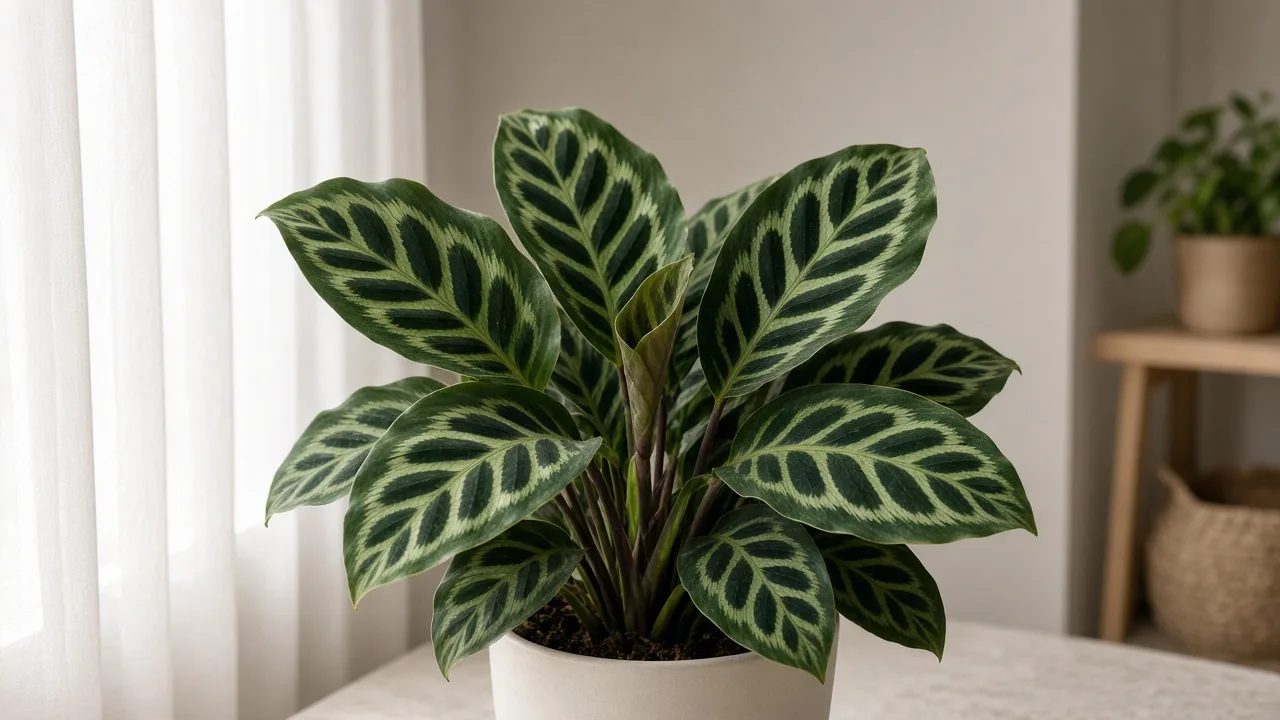
Slow Growth on Calathea Warscewiczii: Causes, Checks & Fixes
This guide covers slow growth on Calathea Warscewiczii. See also the general Slow Growth guide, watering, and light pages for this plant.
Slow Growth on Calathea Warscewiczii: Causes, Checks & Fixes
Quick answer
Slow growth on Calathea Warscewiczii (Goeppertia warszewiczii, Jungle Velvet) is stalled production of new large velvety spears from the rhizome crown—not the same as the stretched purplish petioles on leggy growth or healthy night folding on mature lance-shaped blades.
A thriving Jungle Velvet in warm humid months often opens a new upright spear every five to eight weeks. The species stays upright and clumping with heavy velvety foliage—compare this month to last summer, not to a fast pothos.
First step: log relative humidity within 30 cm of the canopy and run a humidifier until readings hold 60–75% at leaf height, move the pot to bright filtered indirect light within one to three feet of an east-facing window (or equivalent brightness), and keep night temperatures consistently above 60°F (16°C) for ten to fourteen days. Do not repot, divide, or fertilize on day one.
Judge recovery by new spears with crisp peacock-feather banding and soft purple undersides, not by whether old blades enlarge. Spent velvety leaves rarely regain full feather contrast after a stall.
Winter pause is expected—the RHS calathea growing guide notes warm humid conditions in the growing season and cautions against overwatering in winter. If growth stalls eight or more weeks during spring or summer, check whether humidity truly holds above 60% as NC State recommends for warszewiczii, filtered or rainwater, whether the top 2 cm of mix dries on a normal rhythm, and roots before repotting or feeding.
For generic stalled crowns and seasonal rest, see our slow growth hub. On Jungle Velvet, a dull velvet sheen and washed-out feather lines on the leading unfurl while petioles stay short usually mean humidity, water quality, light, or roots—not hunger.
Warscewiczii is listed as non-toxic to cats and dogs by the ASPCA; fix the stall before chewed leaves pile on wet soil.
When to use this page vs other Calathea Warscewiczii guides
| Pattern | Read next |
|---|---|
| Long purplish petioles, window lean, wide leaf gaps | Leggy growth |
| Peacock banding dull but crown still produces spears slowly | Not enough light |
| Crispy margins, stuck unfurl on moist soil | Low humidity |
| Yellow lower leaves, wet top 2 cm, gnats | Overwatering or root rot |
| Routine moisture and water quality | Watering guide |
| Window placement and grow-light setup | Light guide |
Is slow growth normal on Calathea Warscewiczii?
Some slowdown is healthy when daylight shortens and indoor heating dries the air. Calatheas like warm humid conditions and bright but indirect light, but metabolism eases in the low-light season. A firm clump with no new spears for six to ten weeks from late fall through early spring often needs only reduced watering—not emergency repotting.
What is not normal:
- no fresh spears through an entire warm spring and summer
- new leaves that open smaller with muddy or missing peacock-feather lines for multiple cycles
- a crown quiet for months while room temperatures sit in the comfortable 65–75°F (18–24°C) range
Under good care in active season, track spear frequency over eight to ten weeks rather than measuring height weekly. Jungle velvet gains height slowly even when healthy because each new blade is large and heavy; a clump that produces nothing through June and July despite humidity support and filtered water is stalled.
What slow growth looks like on Calathea Warscewiczii
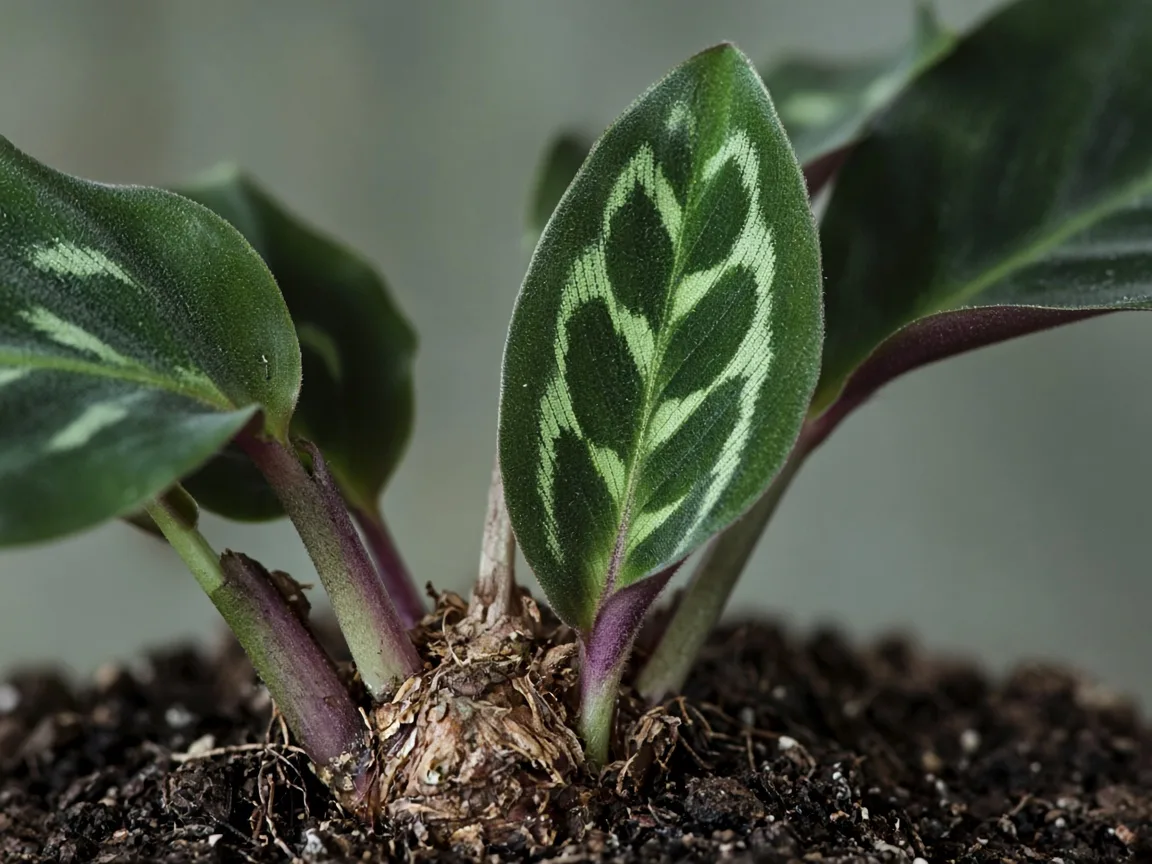
Slow growth on Jungle Velvet—few new spears and soft peacock-feather lines on the newest velvety leaf while older blades still fold at night.
Slow growth on Warscewiczii reads through new-spear quality and crown activity, not just green leaves from across the room.
Typical stall patterns:
- Crown stall with night movement on old leaves – mature lance-shaped blades still raise at night showing purple woolly undersides while the center produces few or no new spears for eight or more weeks in warm months
- Faded peacock-feather banding before full stop – the newest rolled spear shows weak or blurry light-green feather lines on deep velvety green while older leaves still look acceptable
- Dull velvet sheen on the leading unfurl – the fuzzy surface looks flat or dusty-gray before margins crisp
- Stuck or torn unfurl – a large spear opens halfway then stalls, often paired with low humidity stress on velvety tissue
- Small new blades – latest unfurls open shorter than prior lance-shaped leaves with soft edges
- Static upright footprint – clump height changes little through an active season despite correct pot size
- Wet mix without new growth – soil stays damp many days in a dim corner because transpiration never keeps pace with watering
| Pattern | What you see | Soil / pot | Night folding on old leaves | Likely cause |
|---|---|---|---|---|
| Winter rest | Few or no new spears Nov–Feb; firm purplish petioles | Normal dry-down; no sour smell | Often strong on mature leaves | Seasonal slowdown—usually no fix needed |
| Low-light stall | Washed feather lines on newest spear; lean toward window | Stays wet longer than in summer | May continue on old leaves | Not enough light |
| Low-humidity stall | Slow unfurl; smaller spears; velvet dull | Moderate moisture; roots firm | Often intact early | Low humidity |
| Tap-water / mineral stall | Growth slows; feather edges brown first | Normal weight; white crust on rim | Variable | Filtered or rainwater; see brown tips |
| Cool-draft stall | Growth stops near window glass in winter | Normal weight | May weaken on cold side | Air below 60°F (16°C) |
| Root-zone stress | Crown quiet; little yellow yet | Heavy, wet pot for days | Folding may slow | Overwatering or early root rot |
| Post-repot pause | No new shoots for weeks after division | Fresh mix; firm roots if healthy | Variable | Transplant shock—wait before re-disturbing |
| Leggy stretch | Long petioles; weak new leaves | Often dry-to-normal | May continue | Leggy growth—light deficit with elongation |
Night prayer movement on mature Jungle Velvet foliage while the crown stalls is a distinctive Marantaceae slow-growth signature—do not assume the plant is fine because leaves still fold at dusk.
When peacock-feather lines fade on the newest spear (Warscewiczii-only read)
Jungle velvet is sold for crisp light-green feather lines radiating from the midrib on a deep velvety ground. During a stall, the leading rolled spear often shows soft, one-tone green banding before the crown stops entirely—similar to early not enough light washout, but here petioles may stay short and the clump compact.
NC State Extension notes that leaf patterns can fade from inadequate light on Goeppertia warszewiczii. On Warscewiczii, pair that fade with spear frequency: if banding dulls and no new spear appears for two months in summer, treat it as a growth stall—not cosmetic aging on lower leaves.
Velvet texture adds a second signal: NC State warns that dust on hairy or velvety leaves can slow photosynthesis. A dull crown in a borderline dim, dry room may need humidity, brighter filtered light, and gentle dry brushing—not more fertilizer.
Why Calathea Warscewiczii gets slow growth
In nature, warszewiczii-type calatheas grow in warm, humid tropical forest understory with bright filtered light. Indoors, Jungle Velvet needs enough brightness and humidity above about 60% for large velvety leaves to unfurl cleanly. When any pillar slips for weeks, the rhizome banks energy instead of pushing the next heavy spear.
The RHS Calathea guide lists poor, weak growth from low light—especially on Goeppertia species—as a common houseplant problem. Warscewiczii fits that group: it is not a low-light filler despite bold foliage marketing.
Common indoor triggers:
- Winter short days plus dry heating air—transpiration stress on velvety blades without new spear production
- Tap water minerals—NC State recommends distilled or rainwater because tap water can damage Goeppertia leaves; The Spruce recommends consistent moisture with attention to water quality for calatheas indoors
- Overwatering in dim corners—slow transpiration keeps mix wet; roots lose vigor without obvious yellowing yet
- Recent repot or division—rhizomes often pause while re-establishing
- Cool drafts on purplish petioles near glass—growth stops while old leaves look fine
Slow growth is often stacked stress: dry air plus slightly low light plus heavy winter watering is more common than a single missing nutrient.
How to confirm the cause on Jungle Velvet
Work in this order so you change one variable at a time after the first-fix window:
- Season check – Is it late fall through early spring with firm stems and strong night fold on mature leaves? If yes, note winter rest and ease watering per watering guide—skip rescue repotting.
- Spear log – Mark the date of the last fully opened leaf. Count weeks. Eight or more in warm months is pathological.
- Hygrometer at canopy – Read RH within 30 cm of leaves. Below 55% during active season strongly implicates air moisture for velvety unfurls.
- Light audit – Hand-shadow test at leaf height; compare to light guide. Dim shelves often pair with wet mix.
- Pot weight and top 2 cm – Lift the pot after a normal dry-down cycle. Heavy, cool mix for days without new growth suggests root-zone stress.
- Water source – Note tap vs filtered; inspect newest spear for edge flecks before wide brown tips.
- Undersides and crown – Fine webbing or sticky residue means pests—not pure slow growth; see spider mites before assuming rest.
Confirmed slow growth (not winter rest) means the rhizome is waiting for stable humidity, light, warmth, and root oxygen—not an immediate heavy feed.
The first fix to try
You already set humidity, light, and warmth for ten to fourteen days. During that window:
- Water only when the top 2 cm begins to dry, with filtered or rainwater—do not keep soil soggy to compensate for dry air
- Move off heater vents and cold window glass so night temperatures stay above 60°F (16°C)
- Brush dust gently from velvety blades with a soft dry brush so any light you add is usable
- Do not fertilize, repot, or divide until a new spear appears or you confirm sour roots
If the pot stays wet and heavy with zero spears, shift to overwatering checks before adding more humidity.
Step-by-step recovery after the first fix
Once RH, light, and warmth are stable:
- Maintain humidifier output until two consecutive new spears open with sharper feather banding
- Match watering to the brighter spot—transpiration rises with better light; re-learn pot weight weekly
- Resume diluted fertilizer only after a clean unfurl in spring or summer—see fertilizer guide
- Repot in spring only if roots circle or mix smells sour—repotting guide
- Prune fully spent lower leaves at the rhizome after new growth proves the environment is working—pruning guide
Recovery timeline
Expect four to ten weeks from corrected humidity and light to a visible new rolled spear on Jungle Velvet—large velvety leaves take longer to initiate than compact calatheas. The second spear with crisp peacock lines is a stronger success signal than the first after long stress.
Old blades rarely regain perfect feather contrast; recovery is new spears with soft purple undersides and intact velvet.
Escalate if stems soften at the crown on wet mix, soil smells sour after repotting, or multiple leaves yellow while the pot stays heavy—start root rot routing the same week.
Mistakes to avoid
- Feeding a stalled plant to “wake it up”—burns sensitive new velvet
- Repotting into a much larger pot—extra wet mix stalls roots further
- Misting alone instead of sustained humidity—velvety leaves need steady RH, not brief droplets
- Chasing slow growth with more water in a dim corner—compounds overwatering
- Assuming stretch when petioles are still short—use this page vs leggy growth
How to prevent slow growth next time
- Hold 60–75% RH at leaf height through heating season—low-humidity setup
- Bright filtered indirect light year-round—review not-enough-light before decor shelves
- Filtered or rainwater as default for velvety prayer plants
- Water when the top 2 cm dries, not on a calendar alone
- Scout new rolled spears weekly—feather fade on the leading unfurl is an early stall warning
- Repot or divide in spring when roots demand it, not during winter pause
For broader species context, use the main Calathea Warscewiczii overview and problems hub.
When slow growth is normal vs. when to worry
Normal: winter pause with firm purplish petioles, strong night fold on mature velvety leaves, and resumed unfurls in spring when light and warmth return.
Worry now when growth stalls and you also see:
- stem softening at the crown on wet mix
- sour soil smell returning soon after repotting
- widespread yellowing while the pot stays heavy
- active pest webbing or collapse of multiple stems at once
Those patterns suggest crown involvement or advanced root failure—start the root rot guide the same day. Pure slow growth without wet soil, soft stems, or pest signs is slower-burning but still needs correction before the next winter short-day season makes recovery harder.
Conclusion
Jungle Velvet slow growth is usually humidity, light, temperature, and water quality first—hold RH at the canopy, brighten placement to filtered indirect light, and match watering to how fast mix dries in the new spot. Judge success by new velvety spears with sharp peacock-feather banding, not by fertilizer or repeated repotting.
Related Calathea Warscewiczii guides
- Calathea Warscewiczii overview
- Calathea Warscewiczii watering
- Calathea Warscewiczii light
- Calathea Warscewiczii soil
- Low humidity
- Brown tips
- Leggy growth
- Root rot
- Calathea Warscewiczii problems
Related tool
Use the Plant Problem Diagnosis Tool to narrow causes for slow growth on this plant before changing multiple variables at once.