Leggy Jungle Velvet Calathea: Velvet Fade & Light Fixes
Quick answer
Leggy Calathea Warscewiczii shows elongated purplish-green petioles, wide gaps between large velvety leaves, a lean toward the brightest window, and soft or faded peacock-feather midrib banding on new unfurls. First step: move the pot to the brightest filtered spot in your home—an east window or sheer-filtered south or west exposure—before pruning, repotting, or fertilizing.
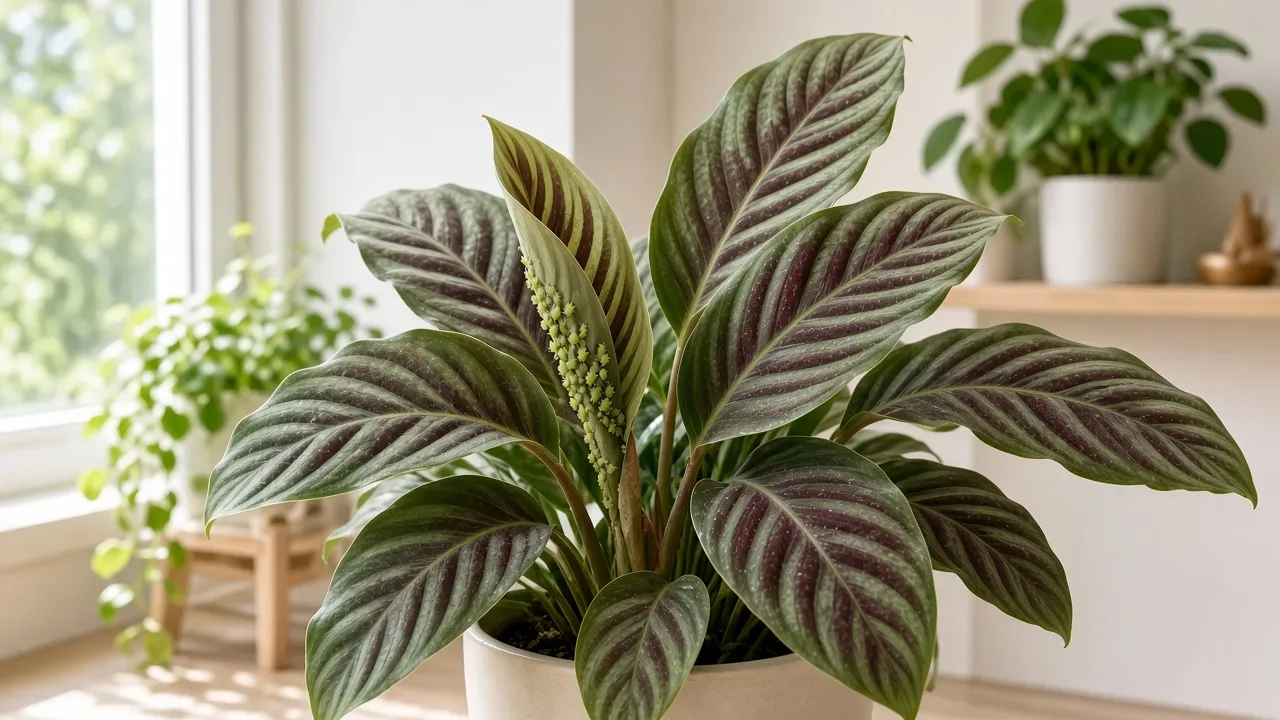
Leggy Growth on Calathea Warscewiczii: Causes, Checks & Fixes
This guide covers leggy growth on Calathea Warscewiczii. See also the general Leggy Growth guide, watering, and light pages for this plant.
Leggy Growth on Calathea Warscewiczii: Causes, Checks & Fixes
Quick answer
Leggy growth on Calathea Warscewiczii (Goeppertia warszewiczii, jungle velvet) is etiolation—the plant lengthens petioles and widens spacing between leaves to reach scarce light. On this species, washed-out or blurry peacock-feather banding on new velvety unfurls often appears before the clump looks dramatically tall, because the large soft blades and upright habit make height gain easy to miss until the signature midrib pattern is gone.
For how low light triggers stretch in general, see our leggy growth hub. On Warscewiczii, the telltales are long gaps between lance-shaped velvety leaves, a hard lean toward glass, smaller new blades than mature lower ones, feather-like light green lines that look soft or one-tone on fresh spears, and prayer-leaf folding that looks weak—not the crisp nightly lift healthy Marantaceae show.
First step: move the pot to bright, filtered light—never direct sun on velvety jungle velvet leaves. An east-facing window, a spot several feet from a south or west window behind sheer curtains, or a shelf under a full-spectrum grow light usually beats a far interior corner. Do not prune, repot, or fertilize until you have confirmed the plant is reaching for light rather than suffering root stress in a dim, wet corner.
When to use this page vs other Calathea Warscewiczii guides
This page is the shape-and-stretch entry when purplish-green petioles elongate and the crown leans—not when brown tips trace tap water alone, humidity crisping edges, or roots fail in soggy mix.
| Pattern | Read next |
|---|---|
| Peacock banding dull but petioles still fairly short | Not enough light |
| Compact plant but no new spears for months | Slow growth |
| Yellow lower leaves, wet top 2 cm, gnats | Overwatering or root rot |
| Bleached or scorched patches after a sun jump | Too much direct sun—see light guide for filtered placement |
| Window placement and grow-light setup | Light guide |
| Rhizome cuts after light is fixed | Pruning guide |
What leggy growth looks like on Calathea Warscewiczii
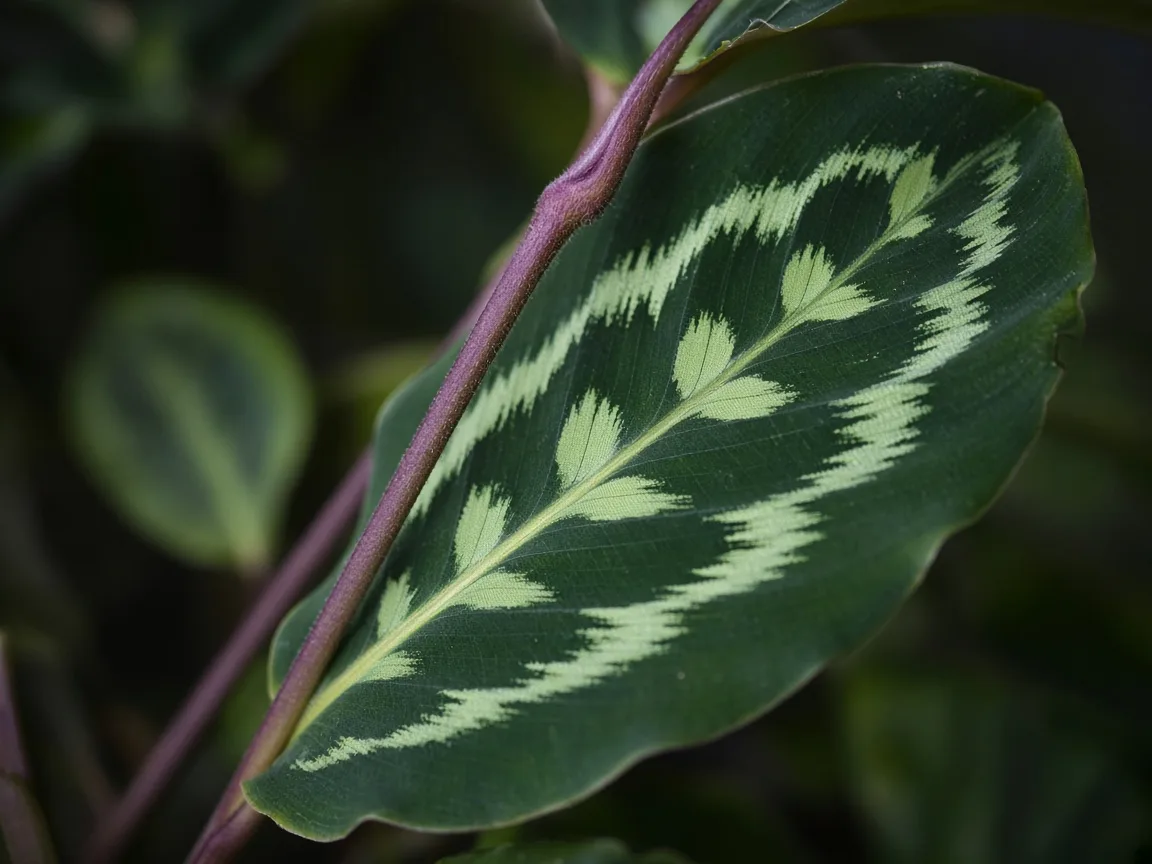
Leggy Jungle Velvet—stretched petioles and washed-out peacock-feather lines on new velvety leaves.
Healthy jungle velvet holds large, soft, velvety lance-shaped leaves in a fairly tight upright clump. Each blade shows deep green with light green peacock-feather lines radiating from the midrib, and purple woolly undersides when leaves lift at night. Leggy etiolation breaks that bold silhouette into a sparse, stilted tower.
Stretched purplish-green petioles and wide leaf gaps
Warscewiczii carries foliage on long purplish-green petioles—watch those stems, not only the velvety blades. In low light, each new leaf rides on a longer, thinner petiole with wider gaps between neighbors. Older stretched stems at the base stay that way even after you fix light; only new growth can return to compact spacing.
Other structural signs include:
- Leaning or reaching toward the brightest side of the room
- Smaller new blades than mature lower leaves on the same plant
- Reduced nyctinasty—leaves that no longer fold up noticeably at night like other prayer plants
- Weak, floppy posture on stems that used to hold heavy velvety leaves upright above the rhizome crown
This matches the classic etiolation response in houseplants—elongated internodes and paler tissue as the plant hunts photons.
Peacock-feather pattern wash-out on velvety leaves
Jungle velvet is grown for crisp light-green feather lines on a deep velvety ground. In dim conditions, the newest unfurls often open with soft, blurry, or nearly uniform green banding before petioles look obviously long. The plant produces extra chlorophyll to capture weak light, which dulls the peacock signal that makes this species easy to read at a glance.
NC State Extension notes that leaf patterns can fade from inadequate light on Goeppertia warszewiczii, while the same profile recommends bright, indirect light for indoor culture. That pattern is a Warscewiczii-specific early warning: on small-patterned calatheas you might notice mosaic fade first; here, midrib feather washout on fresh velvety spears often precedes obvious height gain.
Prayer-leaf movement vs wilt on large velvety blades
Warscewiczii shares the prayer-plant habit of raising leaves at night and lowering them by day, showing purple undersides when lifted. In chronic low light, owners sometimes confuse limp daytime droop with underwatering or low humidity curl. Check the rhythm: healthy plants still show a daily lift cycle when roots and humidity are stable. If leaves stay flattened all day and night while feather banding fades and petioles lengthen, suspect etiolation and weak photosynthesis, not thirst alone—cross-check watering only after you audit light.
Dust on fuzzy leaves stealing the light you provide
Velvety jungle velvet leaves collect dust faster than smooth calatheas, and NC State Extension warns that dust can slow photosynthesis on this species. In a borderline dim spot, a dusty crown can push Warscewiczii into stretch even when the window placement looks acceptable on paper. Clemson HGIC recommends dusting hairy or velvety leaves with a soft dry brush rather than rubbing with a wet cloth that can mat the fuzz. Clean leaves monthly after you confirm brightness is adequate—dusting alone does not fix true etiolation.
Why Calathea Warscewiczii gets leggy growth
In nature, warszewiczii-type calatheas grow in warm, humid tropical forest understory—bright but filtered, never harsh midday sun on velvety leaf surfaces. Indoors jungle velvet needs enough brightness for photosynthesis without scorching large soft blades or bleaching purple undersides. When light falls below that range for weeks, etiolation is the plant’s survival strategy, not a random defect.
The RHS Calathea guide lists poor, weak growth from low light—especially on Goeppertia species—as a common houseplant problem, with brighter placement or artificial lights as the fix. Warscewiczii fits that group: it is not a low-light filler plant despite being sold as a statement foliage piece.
Common triggers in homes:
- Far from windows—light intensity drops sharply with distance; a corner that feels fine to you may be low light for a large-pattern foliage plant
- Decor-first placement—jungle velvet on a bookshelf or hallway table more than 1.5–2 m from glass
- Seasonal daylight loss—the same shelf that worked in June may be too dim by December without a grow light
- Blocked glass—heavy curtains, tinted film, or dirty panes cut usable light more than owners expect
- Dust on velvety leaves, which scatters light before it reaches chloroplasts—more impactful on fuzzy foliage than on plain green leaves
Low light plus moist soil is a frequent overlap. Warscewiczii in dim corners transpires slowly, so mix stays wet longer. Yellow lower leaves and fungus gnats can stack on top of stretch—fix both light and watering rhythm, not light alone.
Less common but worth ruling out:
- Over-fertilization in shade—weak stretched stems plus salty mix stress roots without solving light; see fertilizer only after light is adequate
- Root-bound stall in a dark spot—growth energy goes to survival, not compact foliage; repotting helps only after brightness improves
How to confirm the cause
Run a short diagnostic before moving the pot or cutting stems.
Compare petiole length on new vs. old growth. If the last two leaves sit on visibly longer purplish-green petioles than leaves six months ago, suspect etiolation first.
Read the newest peacock-feather banding. Faded contrast on fresh velvety leaves with firm roots and evenly moist (not soggy) soil strongly points to light. Yellowing lower leaves while the top 2 cm of mix never dries points to overwatering made worse by low light—see overwatering on Calathea Warscewiczii.
Check placement. Stand at the pot and look toward the nearest window. Within about 60 cm of a window, most tropical foliage receives bright indirect light; farther back is usually medium or low. If you are beyond that range with no grow light, light is the limiter.
Do a two-week brighter placement test. Move Warscewiczii one step brighter while keeping watering tied to soil dryness per the watering guide. If the next leaf opens with sharper feather lines and a shorter petiole, you have confirmed insufficient light driving leggy growth.
Rule out lookalikes. Fine pale stippling on undersides suggests spider mites, not etiolation. Zero new leaves through a warm season with firm humidity may be slow growth—different urgency, overlapping fixes.
Lookalike comparison
| What you see | Likely cause | How to tell apart |
|---|---|---|
| Long petioles, lean toward window, dull new feather banding | Leggy growth / etiolation | Shorter spacing and sharper midrib lines on new leaves after brighter placement |
| Dull banding, no obvious stretch yet | Not enough light (early) | Move brighter before stems lengthen—see not-enough-light |
| No new spears for months, firm old leaves | Slow growth | Humidity and root check—see slow growth |
| Yellow lower leaves, wet soil, gnats | Overwatering in low light | Top 2 cm stays wet; reduce water and improve light |
| Pale stippling on undersides | Spider mites | Fine webbing or moving specks with a magnifier |
| Soft crown, sour wet mix | Root rot | Mushy rhizome—see root rot |
First fix for Calathea Warscewiczii
Move the pot to bright, filtered light—not direct sun.
Practical targets:
- East window—gentle morning light; usually safe without curtains if velvety leaves do not touch hot glass
- South or west window—set the pot 0.9–1.8 m back, or behind sheer curtains, so feather banding never sits in direct rays
- Dark room fallback—a full-spectrum LED grow light 30–45 cm above the foliage, on 12 to 14 hours daily with a timer
Make the move over a few days if you are jumping from a very dark corner to a much brighter spot. Jungle velvet hates direct sun more than dim light; NC State Extension notes leaf scorch from too much direct sunlight on velvety foliage, and burned tissue is permanent. Increase exposure gradually per the light guide.
Do not prune on day one. Fix light first. Cutting stretched stems before the plant has adequate brightness often produces more weak stretch from the remaining buds. Wait until two new leaves open with improved feather contrast and shorter petioles—then trim the worst offenders at the pruning guide.
Do not change three things at once. Keep the same pot, water source, and humidity setup for the first two weeks so you can read the plant’s response to light alone. Match mix expectations in the soil guide only if drainage is clearly failing.
When to prune at the rhizome crown
After light is clearly better and new growth looks compact, you can tidy stretched stems for appearance.
- Sterilize scissors and cut each leggy petiole flush at the rhizome crown where it meets the soil line—never mid-petiole or mid-blade. Warscewiczii does not branch from stem cuts.
- Remove no more than one-third of green foliage in one session during spring or summer active growth.
- Leave the best two or three newest compact leaves so the plant keeps photosynthetic area while it replaces stretch.
- Skip heavy pruning in winter unless tissue is fully dead—dry indoor air slows recovery on cut crowns.
Division for propagation follows the same rhizome logic—see propagation when you repot a recovered clump, not as day-one rescue for etiolation.
Recovery timeline
Expect two to four weeks before a clearly brighter leaf opens from the crown after a light move. Compare the newest petiole length to the one below it—gradual shortening on fresh growth is the win, not shrinkage on old stretch.
What recovers: sharper peacock-feather banding on new velvety leaves, normal prayer movement showing purple undersides, faster spear production in warm months, more upright posture on new stems.
What does not recover: faded pigment on old leaves, length already added to mature purplish-green petioles, sunburned brown patches from a too-sudden move into direct sun.
If lower leaves keep yellowing while soil stays wet even after light improves, inspect roots for rot before assuming brightness was the only issue.
What not to do
- Jumping to direct sun to “fix” legginess. Large velvety blades scorch first; burned tissue is permanent.
- Pruning before relighting. Weak new shoots follow scissors in dim corners.
- Over-fertilizing to force bushiness in a dark spot. Feed only during active growth when light is adequate—fertilizer without photons worsens root stress.
- Watering on a calendar after moving to brighter light. Faster drying means the old schedule can underwater or, if you keep pouring, overwater.
- Judging success by old stretched leaves. Faded mature foliage can make you think the fix failed when new growth is already improving.
- Wiping velvety leaves with a wet cloth to chase brightness—matting the fuzz can mar the surface; use a dry soft brush if dust is the issue.
How to prevent leggy growth next time
Place Warscewiczii where you can see peacock-feather contrast on the newest unfurl up close—a side table, plant stand, or shelf within a few feet of filtered daylight. It is not a background filler for deep corners.
Seasonal habits that help:
- Clean window glass in fall before daylight shrinks
- Run grow lights from October through March if your brightest spot still feels dim at noon—details in the light guide
- Rotate weekly for even growth
- Brush dust from velvety leaves monthly so feather banding catches the light you provide
- Pair light with moisture awareness—when you improve light, recheck how fast the top 2 cm dries
Jungle velvet rewards stable conditions: bright filtered light, even moisture, high humidity, and filtered water. When feather lines on the newest velvety leaf are crisp and petioles stay short, light is usually in the right range.
Related Calathea Warscewiczii guides
- Not enough light — early band fade before obvious stretch; start here if petioles are not yet long.
- Light — east vs filtered south/west placement, grow lights, and seasonal shifts for velvety leaves.
- Pruning — flush rhizome cuts on stretched petioles after relighting.
- Slow growth — when the clump stays compact but spears stall.
- Calathea Warscewiczii overview and problems hub — full humidity, water, and sibling symptom routing.
Conclusion
Leggy Calathea Warscewiczii is almost always too little usable light for a large velvety prayer plant, showing up as long purplish-green petioles, a window lean, and washed-out peacock-feather banding on new lance-shaped leaves. Move to bright filtered light first, wait for compact new spears, then prune at the rhizome if old stretch still bothers you—existing petiole length never compacts backward. Recovery is measured on sharper feather contrast and shorter spacing on fresh growth, not on faded lower leaves turning perfect again.
Related tool
Use the Plant Problem Diagnosis Tool to narrow causes for leggy growth on this plant before changing multiple variables at once.