Garlic Vine Care: Sun, Water, Soil, and a Strong Trellis
Mansoa alliacea
Learn how to grow Garlic Vine (Mansoa alliacea): choose bright light, balance moisture with drainage, support its woody climbing stems, prune after flowering, and protect it from frost.
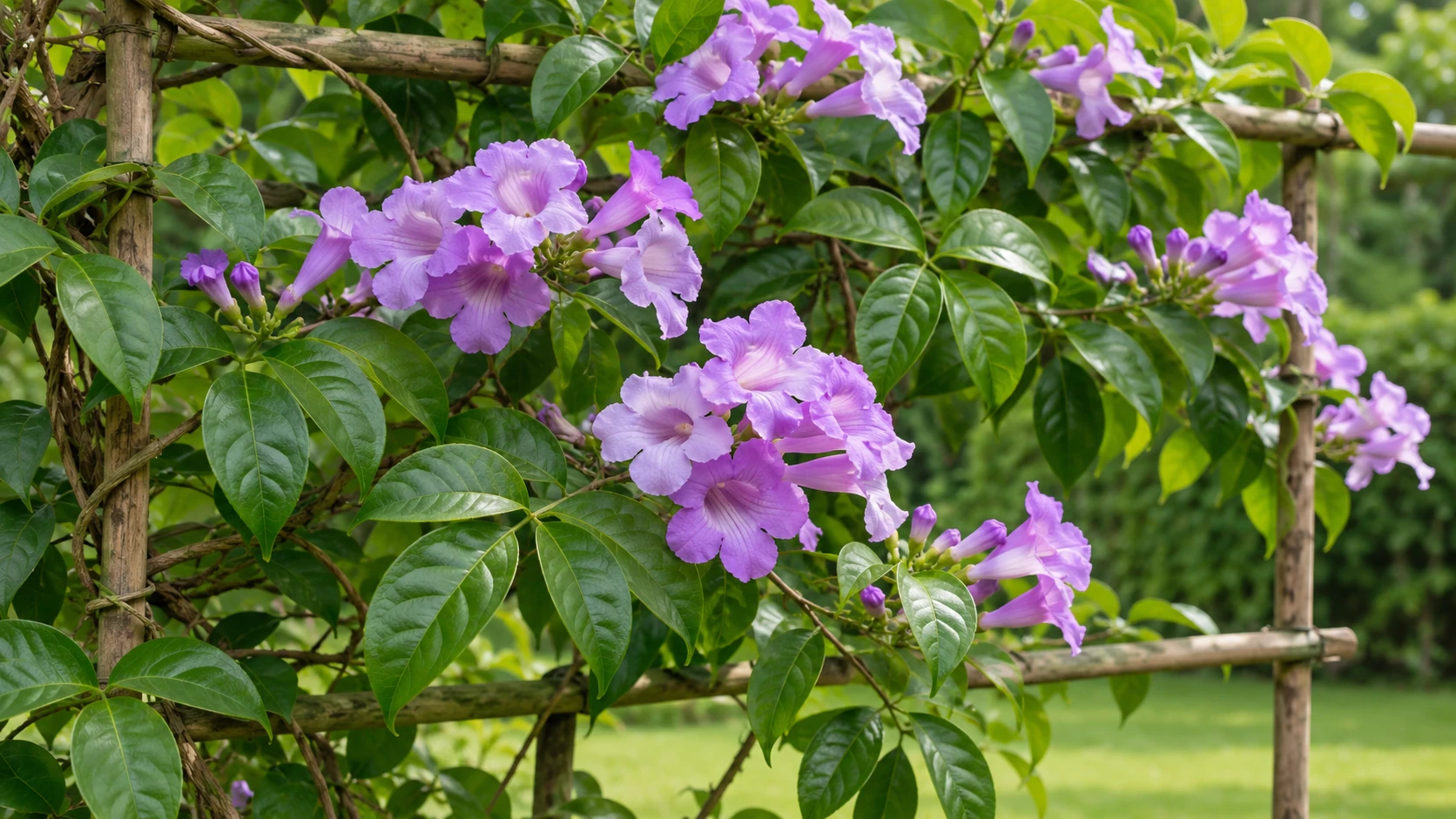
Garlic Vine Care Guide: How to Grow Mansoa alliacea
Start with wateringThe most common care mistake for Garlic VineWatering guide →Garlic Vine care essentials
Light
Full sun for stronger flowering; it tolerates partial shade.
Water
Keep the root zone evenly moist while the vine establishes and during warm, active growth, but let excess water drain away. In a container, check the surface layer and water when it begins to dry. Reduce watering when growth slows in cool weather, and do not leave the pot standing in water.
Soil
Grow Garlic Vine in humus-rich, organically improved soil that holds some moisture but drains freely. A container mix should not stay waterlogged.
Humidity
Temperature
Fertilizer
About Garlic Vine
Garlic Vine is native to Tropical Central and South America; sources report the range from Central America through Brazil and Peru., typically reaches A woody vine commonly grown to about 2–3 m (6–10 ft) with a suitable support; its reach varies with warmth, growing space, and pruning. indoors, with moderate to fast in warm, frost-free conditions growth. Garlic Vine has a evergreen tropical woody climber growth habit and part of the Bignoniaceae family. It is also known as False Garlic, Forest Garlic, Ajo Sacha, and Bejuco de ajo.
| Detail | Information |
|---|---|
| Also known as | False Garlic, Forest Garlic, Ajo Sacha, Bejuco de ajo |
| Native region | Tropical Central and South America; sources report the range from Central America through Brazil and Peru. |
| Mature size | A woody vine commonly grown to about 2–3 m (6–10 ft) with a suitable support; its reach varies with warmth, growing space, and pruning. |
| Growth rate | Moderate to fast in warm, frost-free conditions |
| Growth habit | Evergreen Tropical Woody Climber |
| Scientific name | Mansoa alliacea |
| Family | Bignoniaceae |
How to care for Garlic Vine?
How much light does Garlic Vine need?
Full sun for stronger flowering; it tolerates partial shade.. Partial shade. direct sun
- Full sun for stronger flowering; it tolerates partial shade. - Full sun for stronger flowering; it tolerates partial shade..
- Partial shade - Partial shade.
- direct sun - direct sun.
When should you water Garlic Vine?
Keep the root zone evenly moist while the vine establishes and during warm, active growth, but let excess water drain away. In a container, check the surface layer and water when it begins to dry. Reduce watering when growth slows in cool weather, and do not leave the pot standing in water.
- Feel the upper few centimeters of mix. Water thoroughly when that layer starts to dry - In a container, check the surface layer and water when it begins to dry.
- then let the pot drain fully - Keep the root zone evenly moist while the vine establishes and during warm, active growth, but let excess water drain away.
- Drain excess water - Keep the root zone evenly moist while the vine establishes and during warm, active growth, but let excess water drain away.
What soil works best for Garlic Vine?
Grow Garlic Vine in humus-rich, organically improved soil that holds some moisture but drains freely. A container mix should not stay waterlogged.
- Use a quality potting mix blended with compost and a coarse drainage material. - Grow Garlic Vine in humus-rich, organically improved soil that holds some moisture but drains freely.
- Choose a container with open drainage holes and a sturdy trellis or frame. - A container mix should not stay waterlogged.
Grower notes for Garlic Vine
Garlic Vine is not a true garlic
Mansoa alliacea belongs to the Bignoniaceae, the trumpet-flower family, rather than the Allium genus. Its crushed leaves can smell garlicky, which explains the common name, but it is a tropical flowering climber and should not be assessed for pet safety as if it were culinary garlic.
Give the woody stems a dependable support
Train young shoots onto a sturdy trellis, arbor, or climbing net while they are flexible. A 2025 study of Mansoa alliacea seedlings found that mesh supports encouraged more above-ground growth than simple poles, so choose a frame the vine can grip and that can carry mature woody growth.
Bright light helps it flower
Place the vine in full sun where possible; partial shade is tolerated, but gardening sources recommend a bright, open position for better flowering. Give the climber room to reach its support.
Balance moisture with drainage
Garlic Vine comes from warm, rainy tropical regions and is described as growing in organic soil that retains some moisture. Keep the root zone from drying completely during active growth, while ensuring that rainfall and watering can drain away.
Protect it from cold and prune after flowering
This is a tropical vine with little tolerance for frost. In a cool region, grow it in a movable container and bring it into a protected, bright space before frost. After flowering, trim wayward growth and check that its support remains sturdy as the stems become woody.
Is Garlic Vine safe for pets?
No species-specific pet-toxicity classification for Mansoa alliacea was found in the sources reviewed. ASPCA's general poison-control guidance says that eating plant material can upset cats' and dogs' stomachs; this is not a toxicity listing for Garlic Vine. The common name does not make this an Allium, and an absent listing is not proof of safety. Keep it out of reach of pets that chew plants, and contact a veterinarian or animal poison-control service if a pet eats it. Horse and other-pet status remains unverified.
Mansoa alliacea is a Bignoniaceae vine, not an Allium. No authoritative species-specific toxicity record for it was located in this research. The ASPCA page cited here gives general advice about plant material for cats and dogs but does not classify Garlic Vine; do not label the species toxic or non-toxic from that page or from its common name. Pet safety remains under review.
Watering Garlic Vine
For Garlic Vine, feel the upper few centimeters of mix. Water thoroughly when that layer starts to dry, then let the pot drain fully. and water use the soil as your guide rather than a fixed calendar. Check more often in hot, sunny weather and less often during cool or cloudy periods. In-ground vines need extra water during a prolonged dry spell; a container can dry sooner than garden soil. Maintain steady moisture in warm weather and while new plants establish. Reduce supplemental watering as temperatures fall and growth slows; protect the tropical vine from frost rather than keeping cold soil wet.
| Detail | Information |
|---|---|
| How often | Use the soil as your guide rather than a fixed calendar. Check more often in hot, sunny weather and less often during cool or cloudy periods. In-ground vines need extra water during a prolonged dry spell; a container can dry sooner than garden soil. |
| How to check | Feel the upper few centimeters of mix. Water thoroughly when that layer starts to dry, then let the pot drain fully. |
| Seasonal changes | Maintain steady moisture in warm weather and while new plants establish. Reduce supplemental watering as temperatures fall and growth slows; protect the tropical vine from frost rather than keeping cold soil wet. |
Signs of overwatering
- The mix remains wet between waterings or the pot drains slowly.
- Lower leaves yellow while the root zone is still damp.
Signs of underwatering
- The root zone is dry and leaves stay limp after the hottest part of the day.
- New growth stalls during an extended hot, dry period.
Soil & potting for Garlic Vine
Use a mix of Use a quality potting mix blended with compost and a coarse drainage material., Choose a container with open drainage holes and a sturdy trellis or frame. for Garlic Vine. Provide free drainage and avoid planting where water stands around the roots. Moisture-retentive soil and good drainage work together for this tropical climber. Repot repot container vines when roots fill the pot or the mix no longer drains reliably. Move up one container size at a time so the root ball is not left in a large volume of persistently wet soil., ideally in spring or the start of warm active growth.
| Detail | Information |
|---|---|
| Recommended mix | Use a quality potting mix blended with compost and a coarse drainage material., Choose a container with open drainage holes and a sturdy trellis or frame. |
| Drainage | Provide free drainage and avoid planting where water stands around the roots. Moisture-retentive soil and good drainage work together for this tropical climber. |
| Repotting frequency | Repot container vines when roots fill the pot or the mix no longer drains reliably. Move up one container size at a time so the root ball is not left in a large volume of persistently wet soil. |
| Best season to repot | Spring or the start of warm active growth |
Signs it needs repotting
- Roots emerge from the drainage holes or circle the root ball.
- The mix dries unusually quickly despite thorough watering.
- The container or support is no longer stable for the woody climbing stems.