Guppy Grass Care: Aquarium Light, Growth, and Pruning
Najas guadalupensis
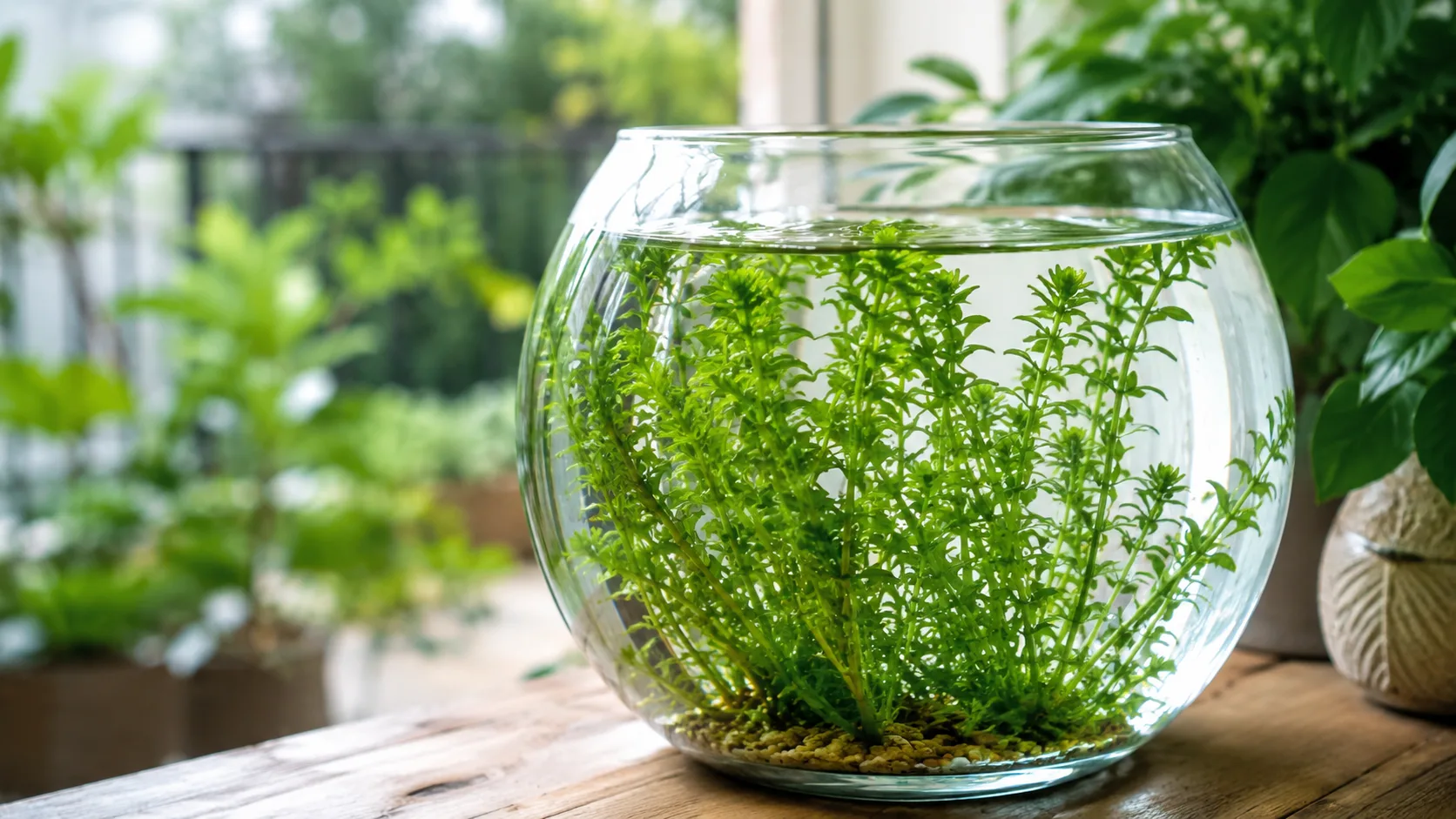
Keep Najas guadalupensis submerged in stable freshwater, give it low-to- moderate aquarium light, and allow it to float or loosely anchor it. It grows quickly from stem cuttings, so thin it often enough to keep light and water movement open in the rest of the tank.
Guppy Grass Aquarium Care Guide
Start with wateringThe most common care mistake for Guppy GrassGuppy Grass Watering and Water Quality →Guppy Grass care essentials
Light
Low to moderate aquarium light
Water
Grow Najas guadalupensis fully submerged in a freshwater aquarium. It is an aquatic plant, not a houseplant that needs top-watering. It can remain loose and floating or be lightly anchored in aquarium-safe substrate; keep the water stable and appropriate for the fish and invertebrates in the tank.
Soil
Soil is not required in submerged aquarium culture. Guppy Grass can float freely or be loosely anchored in aquarium-safe gravel or substrate; its fine roots mainly help with attachment, while the plant also takes up nutrients from the water column.
Humidity
Permanently submerged freshwater aquarium conditions
Temperature
20–26°C (68–79°F) in aquarium-care references
Fertilizer
Dose only if the aquarium's plant growth and water conditions indicate a need; a normally stocked tank may already supply nutrients.. Aquarium-labeled liquid plant fertilizer, used according to its label
About Guppy Grass
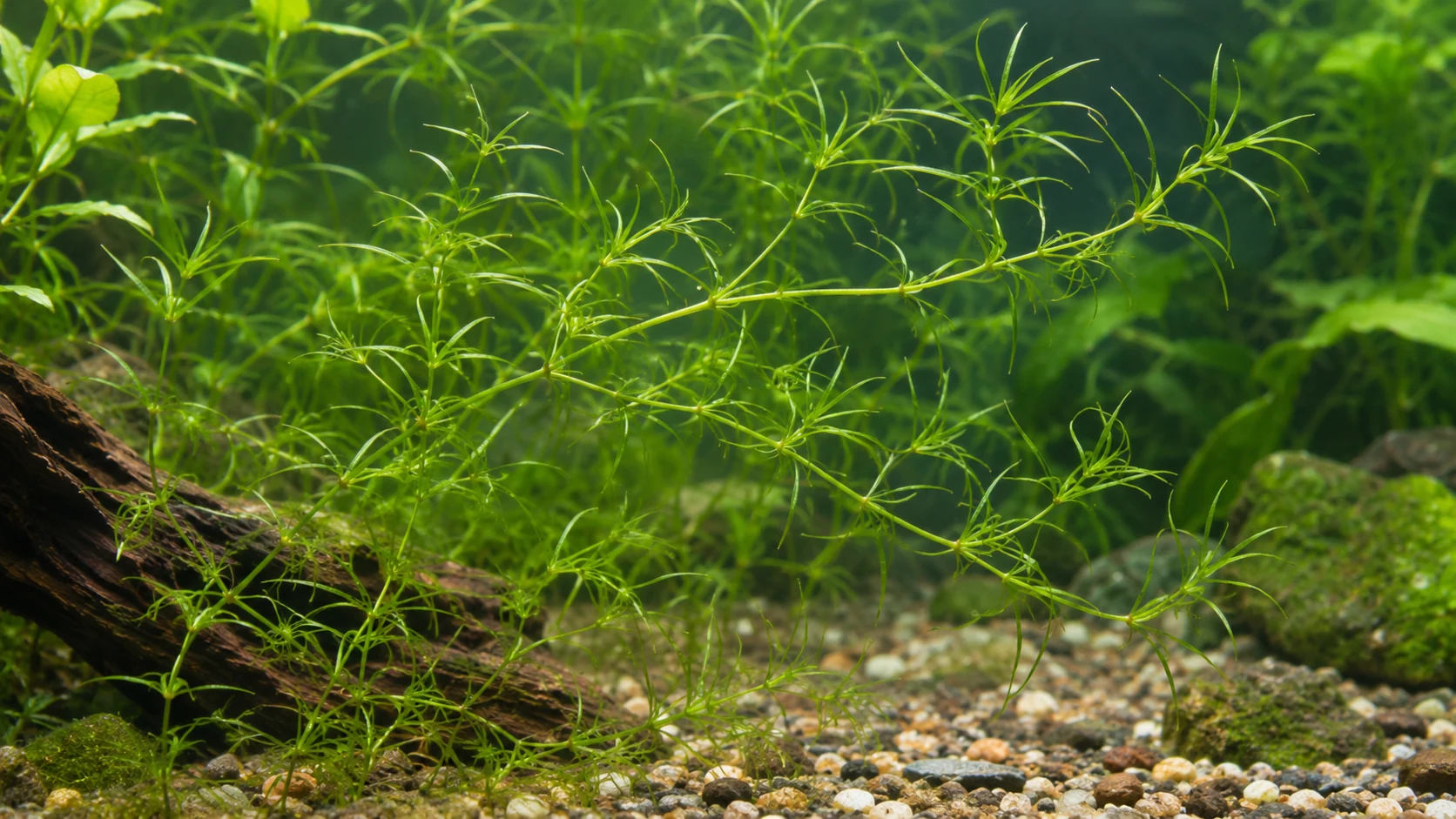
Guppy Grass is native to The Americas. Native Plant Trust records Najas guadalupensis in North America; aquarium references describe a broader range through Central and South America., typically reaches Stems may reach about 90 cm (3 ft) if left untrimmed in aquarium culture; actual length depends on tank depth, light, nutrients, and pruning. indoors, with fast growth. Guppy Grass has a a fast growing, branched, submerged aquatic herb. flexible stems can trail along the substrate or float; fine roots may anchor stems but are not required for aquarium growth. growth habit and part of the Hydrocharitaceae family. It is also known as Najas grass, Common water nymph, Guadalupe waternymph, and Southern waternymph.
| Detail | Information |
|---|---|
| Also known as | Najas grass, Common water nymph, Guadalupe waternymph, Southern waternymph |
| Native region | The Americas. Native Plant Trust records Najas guadalupensis in North America; aquarium references describe a broader range through Central and South America. |
| Mature size | Stems may reach about 90 cm (3 ft) if left untrimmed in aquarium culture; actual length depends on tank depth, light, nutrients, and pruning. |
| Growth rate | Fast |
| Growth habit | A Fast Growing, Branched, Submerged Aquatic Herb. Flexible Stems Can Trail Along The Substrate Or Float; Fine Roots May Anchor Stems But Are Not Required For Aquarium Growth. |
| Scientific name | Najas guadalupensis |
| Family | Hydrocharitaceae |
How to care for Guppy Grass?
How much light does Guppy Grass need?
Low to moderate aquarium light. Low-output freshwater aquarium lighting. Moderate planted-tank lighting when growth and algae are controlled. low light
- Low to moderate aquarium light - Low to moderate aquarium light.
- Low-output freshwater aquarium lighting - Low-output freshwater aquarium lighting.
- Moderate planted-tank lighting when growth and algae are controlled - Moderate planted-tank lighting when growth and algae are controlled.
- low light - Low to moderate aquarium light.
When should you water Guppy Grass?
Grow Najas guadalupensis fully submerged in a freshwater aquarium. It is an aquatic plant, not a houseplant that needs top-watering. It can remain loose and floating or be lightly anchored in aquarium-safe substrate; keep the water stable and appropriate for the fish and invertebrates in the tank.
- Check new growth
- leaf color
- light reaching the stems - It can remain loose and floating or be lightly anchored in aquarium-safe substrate; keep the water stable and appropriate for the fish and invertebrates in the tank.
- and whether loose growth is reducing circulation or covering the filter intake. If it is deteriorating - It can remain loose and floating or be lightly anchored in aquarium-safe substrate; keep the water stable and appropriate for the fish and invertebrates in the tank.
- review water quality - Grow Najas guadalupensis fully submerged in a freshwater aquarium.
- light - It can remain loose and floating or be lightly anchored in aquarium-safe substrate; keep the water stable and appropriate for the fish and invertebrates in the tank.
- and nutrient availability before changing several conditions at once - It can remain loose and floating or be lightly anchored in aquarium-safe substrate; keep the water stable and appropriate for the fish and invertebrates in the tank.
- Drain excess water - Grow Najas guadalupensis fully submerged in a freshwater aquarium.
What soil works best for Guppy Grass?
Soil is not required in submerged aquarium culture. Guppy Grass can float freely or be loosely anchored in aquarium-safe gravel or substrate; its fine roots mainly help with attachment, while the plant also takes up nutrients from the water column.
- No substrate is needed for floating growth - Guppy Grass can float freely or be loosely anchored in aquarium-safe gravel or substrate; its fine roots mainly help with attachment, while the plant also takes up nutrients from the water column.
- Aquarium-safe gravel or planted substrate if you want to anchor stems - Guppy Grass can float freely or be loosely anchored in aquarium-safe gravel or substrate; its fine roots mainly help with attachment, while the plant also takes up nutrients from the water column.
- Do not use terrestrial potting mix or houseplant fertilizer in aquarium water - Guppy Grass can float freely or be loosely anchored in aquarium-safe gravel or substrate; its fine roots mainly help with attachment, while the plant also takes up nutrients from the water column.
How to propagate Guppy Grass?
Cut a healthy section from a growing stem and place it where you want another patch. The cutting can float or be anchored; remove damaged lower growth and avoid packing many stems tightly together.
- Clip a healthy stem section - Cut a healthy section from a growing stem and place it where you want another patch.
- Let the cutting float or lightly anchor it in aquarium-safe substrate - The cutting can float or be anchored; remove damaged lower growth and avoid packing many stems tightly together.
- Thin and replant side shoots as the clump fills in - Cut a healthy section from a growing stem and place it where you want another patch.
Grower notes for Guppy Grass
Check the scientific name on the plant label
“Najas grass” and “water nymph” are common names, not a guarantee that a plant is Najas guadalupensis. Native Plant Trust's botanical key distinguishes this species from other Najas, including N. gracillima and N. flexilis, by fine leaf and seed traits. Use a scientific name when matching care advice; this guide is specifically for N. guadalupensis.
Choose floating or lightly anchored growth
Leave stems loose in the water column for a floating clump, or gently anchor cuttings in aquarium-safe substrate. Shrimp and Snail Breeder describes Guppy Grass roots as weak and mainly useful for attachment, so it does not need a nutrient-rich planted bed to grow.
Start with modest light
Aquarium care references recommend low-to-moderate light. Begin there and observe new growth and algae before increasing intensity; brighter light is not a substitute for balanced nutrients or stable tank conditions.
Feed the water column only when the tank needs it
The plant can grow without injected CO₂ and does not require substrate. If growth indicates a nutrient shortage, use an aquarium-labeled liquid product according to its directions and account for shrimp and other livestock in the tank.
Make pruning part of routine tank care
Guppy Grass can form long, dense stems. Thin it when it blocks light from lower plants, covers too much of the surface, or collects near a filter intake. Gather the clippings and contain them rather than releasing them outdoors.
Allow floating plants to adjust after replanting
Aquarium care references report that a floating clump can shed or melt after it is changed to anchored growth. Reposition a small section at a time, keep tank conditions steady, and watch for healthy new growth before removing the whole clump.
Guppy Grass and pets
The sources checked did not confirm a species-specific veterinary safety classification for Najas guadalupensis. Aquarium use and absence from a public list are not proof that a pet can safely eat it; keep pets away from aquarium plants and tank water and contact a veterinarian after ingestion.
ASPCA describes its toxic and non-toxic plant list as non-exhaustive. This review did not confirm an exact listing or veterinary assessment for Najas guadalupensis, so household-pet statuses remain caution / needs-review; do not infer safety from its use in fish tanks.
Watering Guppy Grass
For Guppy Grass, check new growth, leaf color, light reaching the stems, and whether loose growth is reducing circulation or covering the filter intake. If it is deteriorating, review water quality, light, and nutrient availability before changing several conditions at once. and water there is no separate plant watering schedule while Guppy Grass is submerged. Maintain the aquarium's normal water level and water-change routine, guided by livestock needs and water tests rather than a calendar for the plant. Keep the aquarium stable for its inhabitants. Growth can change when tank temperature, light, or nutrient availability changes; trim excess growth instead of making abrupt tank-wide adjustments to accelerate or slow it.
| Detail | Information |
|---|---|
| How often | There is no separate plant watering schedule while Guppy Grass is submerged. Maintain the aquarium's normal water level and water-change routine, guided by livestock needs and water tests rather than a calendar for the plant. |
| How to check | Check new growth, leaf color, light reaching the stems, and whether loose growth is reducing circulation or covering the filter intake. If it is deteriorating, review water quality, light, and nutrient availability before changing several conditions at once. |
| Seasonal changes | Keep the aquarium stable for its inhabitants. Growth can change when tank temperature, light, or nutrient availability changes; trim excess growth instead of making abrupt tank-wide adjustments to accelerate or slow it. |
Soil & potting for Guppy Grass
Use a mix of No substrate is needed for floating growth, Aquarium-safe gravel or planted substrate if you want to anchor stems, Do not use terrestrial potting mix or houseplant fertilizer in aquarium water for Guppy Grass. Drainage is not applicable to a fully submerged plant. Keep detached stems from piling up over filter intakes or restricting water movement. Repot not applicable; thin or reposition aquarium growth as needed, ideally in any time the aquarium is stable; remove small sections rather than disturbing the whole tank.
| Detail | Information |
|---|---|
| Recommended mix | No substrate is needed for floating growth, Aquarium-safe gravel or planted substrate if you want to anchor stems, Do not use terrestrial potting mix or houseplant fertilizer in aquarium water |
| Drainage | Drainage is not applicable to a fully submerged plant. Keep detached stems from piling up over filter intakes or restricting water movement. |
| Repotting frequency | Not applicable; thin or reposition aquarium growth as needed |
| Best season to repot | Any time the aquarium is stable; remove small sections rather than disturbing the whole tank |
Signs it needs repotting
- A floating mass is shading lower plants or covering too much of the surface
- Stems are collecting around the filter intake or restricting circulation
- Anchored stems have spread beyond the area you intended to cover
Humidity & temperature for Guppy Grass
Guppy Grass prefers permanently submerged freshwater aquarium conditions. Keep temperatures around 20–26°C (68–79°F) in aquarium-care references. Treat published ranges as aquarium-growing guidance, not a reason to move a community tank outside the temperature needs of its fish or invertebrates.
| Detail | Information |
|---|---|
| Humidity | Permanently submerged freshwater aquarium conditions |
| Ideal temperature | 20–26°C (68–79°F) in aquarium-care references |
| Temperature notes | Treat published ranges as aquarium-growing guidance, not a reason to move a community tank outside the temperature needs of its fish or invertebrates. |
Humidity tips
- Keep stems underwater while planting or moving them between tanks
- Avoid leaving the plant exposed to dry air during routine maintenance
Fertilizer & pruning for Guppy Grass
Feed Guppy Grass dose only if the aquarium's plant growth and water conditions indicate a need; a normally stocked tank may already supply nutrients. using aquarium-labeled liquid plant fertilizer, used according to its label. The best feeding window is during active aquarium growth, if additional nutrients are needed. Terrestrial fertilizers and products not labeled for aquarium use; take extra care with any additive in tanks containing shrimp or other sensitive livestock.
| Detail | Information |
|---|---|
| Fertilizer schedule | Dose only if the aquarium's plant growth and water conditions indicate a need; a normally stocked tank may already supply nutrients. |
| Best season | During active aquarium growth, if additional nutrients are needed |
| Fertilizer type | Aquarium-labeled liquid plant fertilizer, used according to its label |
| What to avoid | Terrestrial fertilizers and products not labeled for aquarium use; take extra care with any additive in tanks containing shrimp or other sensitive livestock. |
Pruning
Thin the fast-growing stems whenever they shade neighboring plants, cover the surface, or interfere with circulation. Collect and contain the clippings; do not release aquarium plants into local ponds, drains, or waterways.