Drooping Leaves on Jasmine: Causes, Checks & Fixes
Quick answer
Drooping leaves on jasmine usually mean roots cannot supply water-either the mix is too dry or too wet and roots are failing. First step: lift the pot and probe the top one to two inches of mix before you change anything.
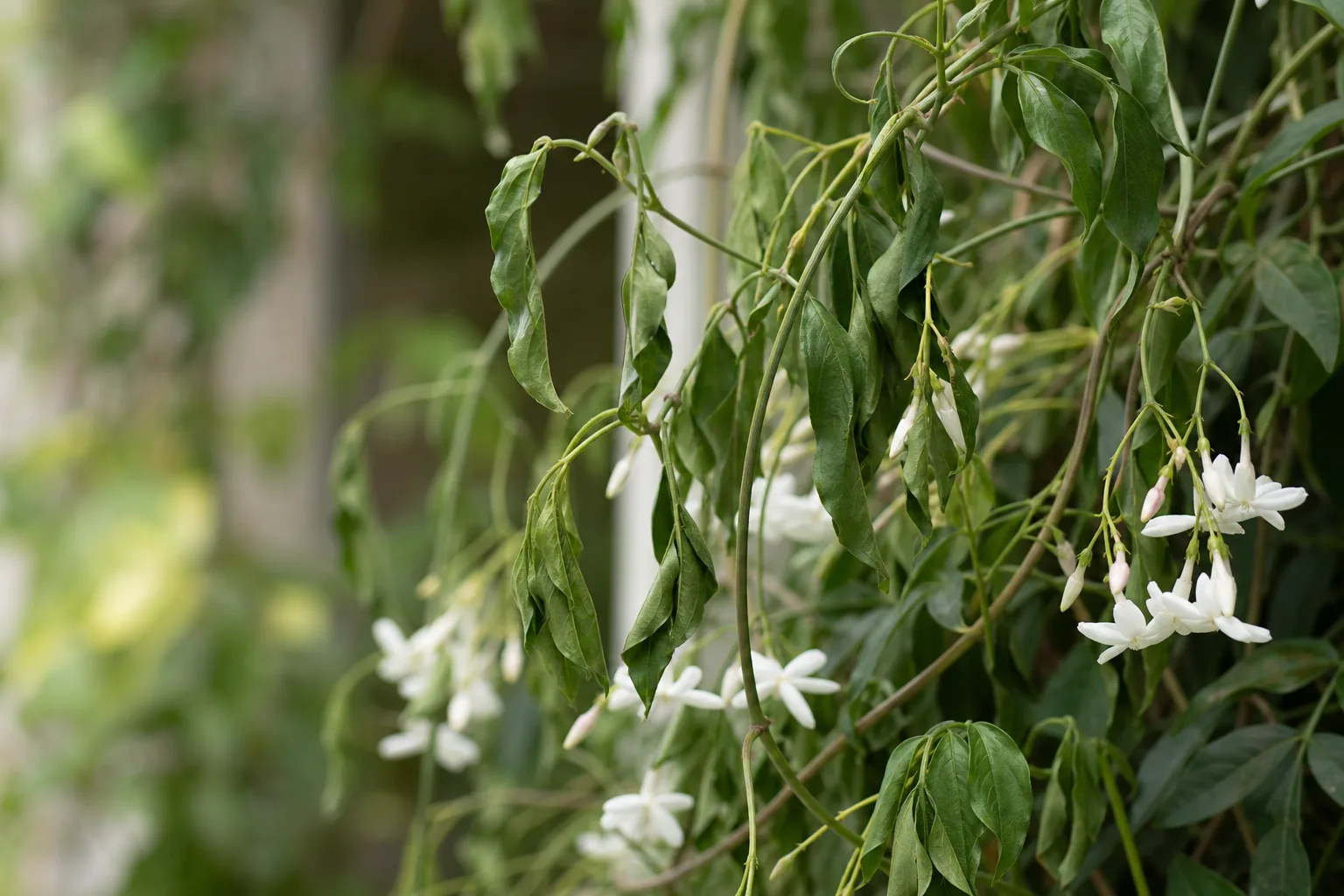
Drooping Leaves on Jasmine: Causes, Checks & Fixes
This guide covers drooping leaves on Jasmine. See also the general Drooping Leaves guide, watering, and light pages for this plant.
Drooping Leaves on Jasmine: Causes, Checks & Fixes
Quick answer
Drooping leaves on common jasmine (Jasminum officinale) mean turgor is slipping-leaflets and twining stems hang instead of holding their usual angle. The roots are not supplying water fast enough, or environmental stress is outpacing uptake. Plants in containers need regular watering throughout the growing season, so a missed drink during summer bloom can leave long hanging sections limp within a day. The opposite trap is watering a drooping vine when mix is already wet-rotting roots cannot take up water even when soil is wet, and another pour deepens oxygen starvation.
First step: lift the pot and probe the top one to two inches of mix before you change anything. A light container with dry soil and firm lower stems points to drought droop. A heavy pot that stays wet for days with soft stems points to root stress-not thirst. Slow limpness after Jasmine repotting guide or beside a drafty window often traces to shock or temperature, not a calendar watering mistake.
For acute same-day collapse across whole stem clusters, see wilting on jasmine. For the full drought-versus-wet matrix, see water stress.
Drooping leaves vs. wilting on jasmine
These terms overlap in conversation, but they point to different diagnostic paths on a twining vine.
Drooping is slower partial limpness. Opposite pinnate leaflets hang at a downward angle along the stem, one twining section may sag while neighbors look fine, or foliage stays soft for days after repotting, a draft, or a move from cool winter rest to a warm room. Color often stays green early on-unlike advanced yellowing, first-stage droop can look like a healthy vine that simply lost posture.
Wilting is acute collapse. Whole leaf clusters and twining sections lose turgor fast-often within hours after a dry spell, a heat spike, or root failure. Wilting on jasmine owns that same-day alarm pattern.
Both can trace to dry or wet soil. The difference is speed and pattern: drooping is a sustained hang; wilting is sudden collapse. When in doubt, run the confirmation checks below-soil moisture and pot weight decide the fix, not the word you use.
Why jasmine leaves droop
Jasmine is a vigorous twining climber that pushes soft new shoots and fragrant summer blooms when light and warmth are high. That growth phase increases transpiration through thin stems. Houseplants and glasshouse jasmines need regular watering while in growth but only very light watering in winter-and the seasonal swing changes how fast droop appears.
Summer bloom demand, winter overwatering, and container size
During active growth and bud swell, a container jasmine on a sunny trellis or south window can go from firm to limp within a day if the root ball dries. Twining sections that hang below the pot rim often droop first because water drains to the bottom while upper foliage transpires heavily in afternoon sun. A single dry spell during budding can drop flowers and leaves together-steady moisture through the bloom window matters more than a fixed weekly schedule.
The opposite trap is treating jasmine like a moisture-loving fern year-round. Cool rest slows uptake. Continuing summer frequency through autumn and winter keeps the root zone oxygen-poor. Saucers left full, decorative cache pots without drainage, and dense old mix that holds water like a sponge all push jasmine toward wet-root droop-especially when stems stay soft despite damp soil.
Container type changes drying speed. Terracotta and unglazed clay lose moisture faster than glazed ceramic or plastic. A vine that dried predictably in a porous pot may droop within 48 hours after a move to a sealed plastic container if you keep the same watering rhythm. See the watering guide for seasonal frequency ranges.
Root stress from chronic overwatering
Saturated mix blocks oxygen, fine roots stop absorbing, and leaves collapse despite wet soil. Lower leaves may yellow while upper growth still looks green-for a while. Fungus gnats hover when you disturb the surface. This is the more dangerous droop pattern on jasmine because the instinct is to water limp leaves. Pouring on a drowning vine accelerates rot. For wet-side depth, see overwatering and root rot.
Repot shock and draft stress after cool rest
Repotting and relocation disturb feeder roots that move water to leaflets. Relocating a plant can trigger leaf drop as an initial stress reaction, and a recently shifted vine may droop for several days even when soil moisture looks acceptable-especially if you watered heavily right after the move while roots were still adjusting.
Draft stress shows a different silhouette: one side of the vine droops while the rest looks fine. Cold winter glass, air-conditioning blasts, or heat from a register can stress exposed leaflets faster than roots can replace water. Indoor semi-tropical jasmines prefer day temperatures around 68 to 72°F and night temperatures around 50 to 55°F during active growth-sudden swings after moving from cool rest mimic watering failure without any soil change. See transplant shock when limpness follows a recent repot or room move.
What drooping looks like on jasmine
Healthy common jasmine holds opposite pinnate leaf clusters at a gentle angle from grooved stems. Drooping changes the silhouette:
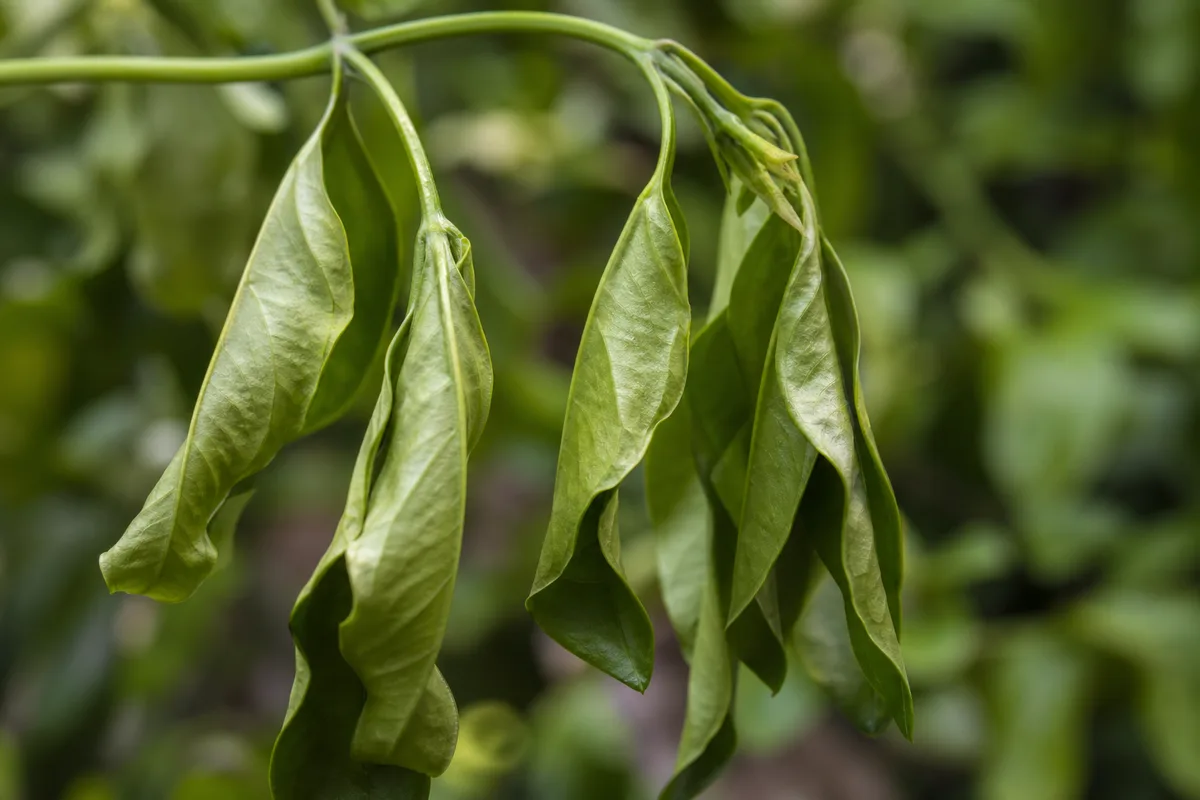
Drooping Leaves symptoms on Jasmine - compare with healthy tissue on the same plant.
- Leaflets hang downward along the twining stem instead of presenting their face outward
- Petioles lose stiffness and may bend where they meet the stem
- Color often stays green early on-first-stage droop can look like a healthy vine that simply lost posture
- Whole-vine droop suggests a root-zone issue affecting the entire pot
- One-sided or one-branch droop often means uneven light, localized heat or cold, partial root damage, or a long hanging section drying faster than the rest
Compare with yellow leaves: drooping can precede yellowing in both drought and rot, so leaf color alone does not separate the causes. Pot weight, soil texture, and stem firmness do.
Drought droop vs. wet-root droop vs. repot-shock limpness
| Pattern | Pot weight | Soil at 1–2 inches | Stem firmness | Other clues |
|---|---|---|---|---|
| Drought droop | Light | Dry, may pull from pot edge | Firm green stems | Perks after thorough soak if roots healthy |
| Wet-root droop | Heavy | Clinging wetness for days | Soft at soil line | Yellow lower leaves, sour smell, fungus gnats |
| Repot-shock limpness | Normal | Evenly moist, not soggy | Firm stems | Started within two weeks of repot or move |
| Heat/draft droop | Normal | Evenly moist | Firm stems | One-sided pattern, recent vent or window exposure |
How to confirm the cause
Work through these checks in order before changing anything else:
- Pot weight test - Lift the container right after a known good watering to learn the heavy baseline. A dramatically lighter pot with limp foliage strongly suggests drought. A heavy pot that has not dried in five or more days suggests excess moisture.
- Finger or skewer probe at one to two inches - Press into mix near the pot edge, not against the stem. Dry and crumbly at depth means drought. Cool, clinging particles mean wait before watering. If only the surface is pale but depth stays wet, you have been under-watering the center or over-watering the top-common in root-bound jasmine.
- Stem firmness at soil level - Soft, darkening tissue at the base points to rot advancing up the vine. Firm green stems with wet soil still warrant an unpot check.
- Bud and season check - Active summer growth and flowering demand more than light winter watering. Drooping during bud swell with a light dry pot is urgent-those buds may abort before they open.
- Recent events - Repot within the last two weeks, a move from outdoors to indoors, or placement near a heating vent explains temporary droop without root disease.
- Pattern on the vine - Drooping only on the longest trailing section may be localized dryness or weight; uniform hang across all stems points to the whole root ball.
- Wilting paradox check - Limp leaves with wet soil means inspect roots, not pour more water. Slide the plant out gently. Firm white or tan roots with dry mix support drought diagnosis. Brown, mushy roots with sour smell confirm wet-side stress.
- Hydrophobic mix check - Pour a small amount of water. If it exits the bottom instantly while the top stays pale and dry, the center may be bone dry despite surface splashes-a pattern that mimics chronic underwatering. See underwatering for rewetting technique.
If mix is evenly moist, roots are firm, and the plant still declines, review lookalike causes on water stress before assuming droop alone is the whole story.
First fix for jasmine
Lift the pot and probe the top one to two inches of mix-then act on what you find. Do not water by habit.
If the pot is light and mix is dry at depth
Water thoroughly until excess drains from the bottom, then empty the saucer. That single deep soak is the correct first response to drought droop on jasmine. Use room-temperature water at the soil surface-not a mist on leaves. Water so it drains freely from the bottom of the container, then wait until the top inch approaches dry before the next session.
If soil repelled water and ran down the sides of a shrunken root ball, water twice in one hour with drainage between passes so the center rewets instead of channeling down the gap-or bottom-water for 20 to 30 minutes per the underwatering guide. Do not fertilize a limp, dry jasmine on the same day.
If the pot is heavy and mix stays wet
Stop watering until the top 5 cm dries, improve drainage, and empty any standing saucer water. That is the first fix for wet-root droop. Move the pot to brighter airflow if it sits in a dim, stagnant corner-evaporation helps, but withholding water is the critical step. Do not pour because leaves droop; confirm whether roots can still function.
If stems soften at the base or roots are brown and mushy when you unpot, proceed to root rot recovery rather than waiting on dry-down alone.
If repot shock or draft stress fits the pattern
Keep moisture moderate-neither bone dry nor soggy. Move the plant away from heating vents, AC blasts, and cold window glass. Stabilize temperature for several days after shifting from cool winter rest before changing your watering rhythm. Avoid drowning the vine immediately after repotting; let it settle with even checks every two to three days.
Recovery timeline
Drought droop on healthy roots often shows visible perk-up within two to four hours of a thorough soak. Hanging twining sections may take until the next morning to fully lift. Crisp leaf edges do not green again-judge recovery by new tips and stable buds, not old damaged margins. Expect one to two weeks of consistent checks before growth rhythm feels normal again.
Wet-root droop takes longer. A mild case may stabilize once soil dries and new leaves emerge in two to four weeks. Root damage after prolonged soggy conditions can take a full season to outgrow; severely stripped root systems may never regain former bloom volume in the same year.
Repot or relocation droop usually resolves within three to seven days if you keep care stable and avoid overwatering during adjustment. Limpness beyond two weeks with firm roots and acceptable moisture points to transplant shock or a lookalike cause-not more blind watering.
Bud drop from a single dry spell during flowering is usually done-those buds will not reopen. Prevent the next flush from aborting by keeping moisture steady through the bloom window.
What not to do
- Water without checking moisture first - The leading cause of worsening droop on jasmine; wet-soil droop deepens rot when you pour on instinct.
- Assume every limp leaf means dry soil - Pouring on a drowning vine accelerates root failure.
- Mist leaves instead of fixing soil moisture - Surface dampness does not rehydrate a dry root ball and can encourage foliar disease when airflow is poor.
- Repot on day one for dry droop - A thirsty vine that perks up after one good drink rarely needs repotting.
- Increase fertilizer on limp vines - Feed only after water balance and root health stabilize.
- Leave runoff in saucers - Never let houseplants sit in standing water; roots need dry-down cycles between soaks.
- Change three variables at once - Repot, prune, and feed on the same weekend obscures which fix helped.
How to prevent drooping leaves next time
Build a check habit tied to the pot, not the clock. During active growth, probe the top inch and lift the pot every two to three days in summer; stretch toward every 10 to 14 days in cool winter rest per the watering guide. Increase frequency during flowering when buds are forming.
Match container to habit. Terracotta and unglazed clay suit jasmine’s need for good drainage; plastic stays wet longer-adjust interval accordingly.
Use a well-drained mix with compost and perlite or coarse sand. Repot every two years or when roots circle, before the root ball becomes mostly roots and almost no water-retaining soil.
Place jasmine where it gets enough light to use water predictably-full sun to partial shade outdoors or your brightest suitable indoor spot. Weak light plus frequent watering is a common path to chronic wet droop.
When moving plants between indoors and outdoors, change watering gradually with the shift in evaporation, not all at once on day one.
When to worry
Treat as urgent when stems soften at the soil line, the vine stays limp despite wet mix, or yellowing spreads up the plant within a week. Those signs suggest advanced root rot-not a simple missed watering.
Also act quickly if a blooming jasmine drops most buds during a heat wave while the pot is light and dry-prolonged drought during bloom can cost the entire season’s display on container plants.
Mild afternoon limpness on a hot day that resolves by evening with evenly moist soil is usually not urgent-confirm with a probe before reacting.
A vine that fails to produce new tips after four weeks of corrected watering and firm roots may need hard pruning after flowering or professional diagnosis-not endless soak-dry cycles.
Related jasmine problems
- Jasmine overview - species ID and baseline care
- Watering guide - seasonal rhythm and dry-down checks
- Water stress - full drought-versus-wet diagnostic matrix
- Wilting - acute same-day collapse and heat-stress branches
- Underwatering - drought-only depth with firm-stem differential
- Overwatering - chronic wet feet and yellow lower leaves
- Root rot - wet mix, soft stems, and root-trim recovery
- Transplant shock - limpness after repot or room move
When to use this page vs other Jasmine guides
- Jasmine watering guide - Use for routine moisture checks before assuming drooping leaves is the main issue.
- Jasmine problems hub - Browse all 53 common issues on this species.