Slow Growth on Jasmine: Causes, Checks & Fixes
Quick answer
Slow growth on common jasmine often means insufficient direct sun, a root-bound pot, or normal quiet during cool winter rest-not disease. Measure new tendril tips after chill ends; if extension stays sluggish through warm spring, check light hours and roots before fertilizing.
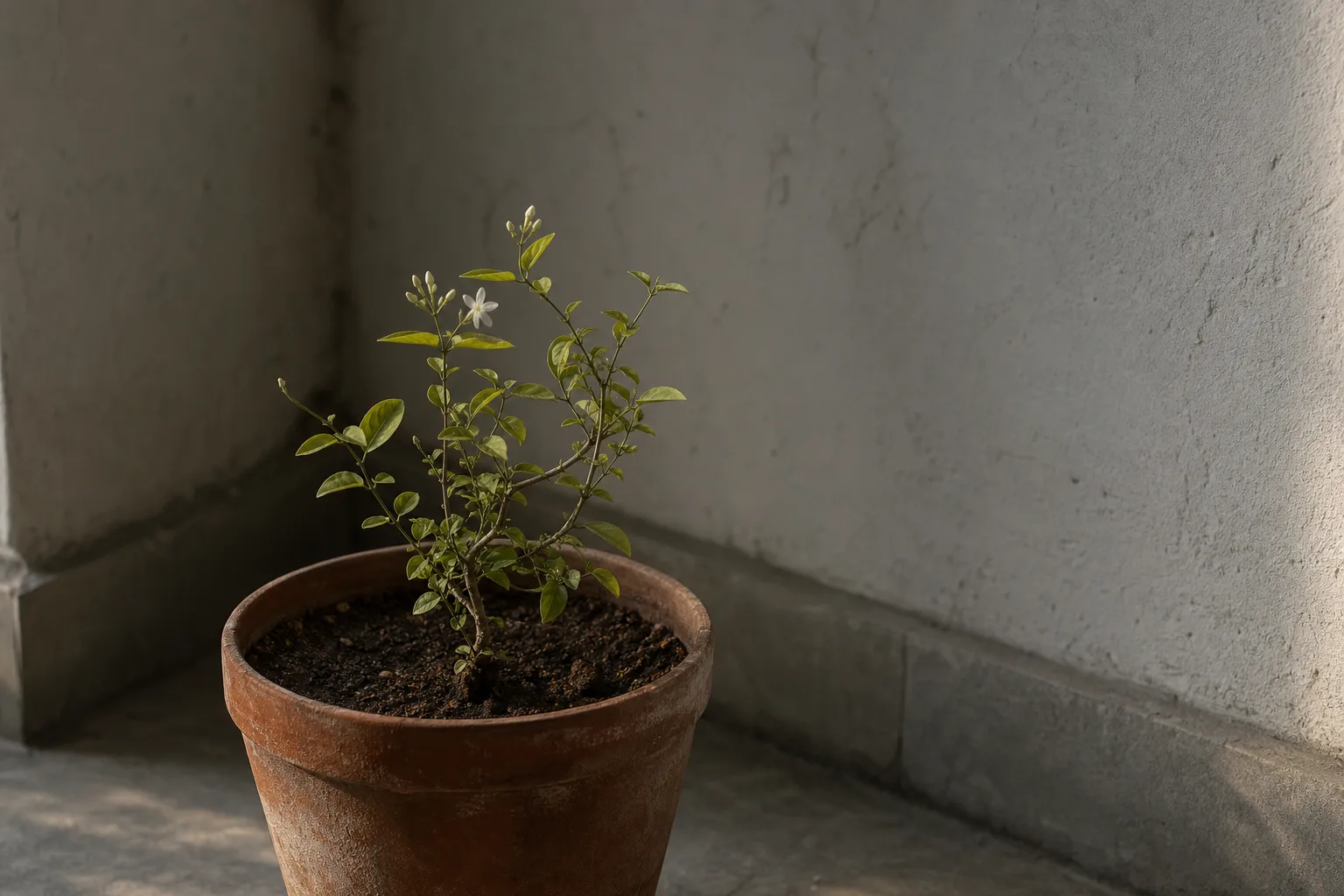
Slow Growth on Jasmine: Causes, Checks & Fixes
This guide covers slow growth on Jasmine. See also the general Slow Growth guide, watering, and light pages for this plant.
Slow Growth on Jasmine: Causes, Checks & Fixes
Quick answer
Slow growth on common jasmine (Jasminum officinale) means the vine still pushes new tendrils-but at a reduced pace, with longer gaps between tip breaks and shorter runner segments than a healthy plant in the same season. Visually, the tips look pale or small, and weeks pass between fresh breaks while older stems stay the same length. This is different from no new growth, where tips stay frozen for weeks, and from stunted growth, where new leaves stay tiny on tight internodes even when tips move.
Established jasmine is a vigorous twining climber that should extend noticeably once winter chill ends and direct sun returns. During cool rest at roughly 7–13°C (45–55°F), little visible extension is normal-the vine is setting bud wood, not failing. Sluggish extension through warm spring and summer usually traces to dim light, crowded roots, chronic wet soil during rest, sap feeders after a dry indoor winter, or cold damage after a late frost on outdoor vines.
First step: confirm the season, then count tendril tips-not total leaf count. On a twining vine, growth pace is measured by how often fresh tips appear and how far they extend between nodes, not by how long old stems look.
Slow growth vs. no new growth vs. stunted growth on jasmine
These three slugs sound similar in search, but they describe different patterns on a twining vine-and the first fix changes with each.
Slow growth (this page): Fresh tendril tips still appear, but every three to six weeks instead of every two to four weeks in warm weather. New segments are shorter than last season. Leaf size on new growth is usually normal; the vine simply feels behind schedule.
No new growth: Zero extending tips for six-plus weeks after winter rest ends and nights stay above 10°C (50°F). Old leaves may stay green while the vine goes fully static. See no new growth on jasmine for that stall workflow.
Stunted growth: Tips may move, but new leaves stay small and internodes stay tight-growth looks compressed, not merely slow. See stunted growth on jasmine when leaf size shrinks even though tips break.
Leggy growth is the opposite problem: long bare internodes and sparse leaves as the vine reaches for light-desperate stretch, not conservative slow pace. Both need more sun; leggy vines also need training after light improves. See leggy growth on jasmine.
What normal growth looks like on jasmine
Healthy common jasmine follows a seasonal rhythm tied to light and temperature.
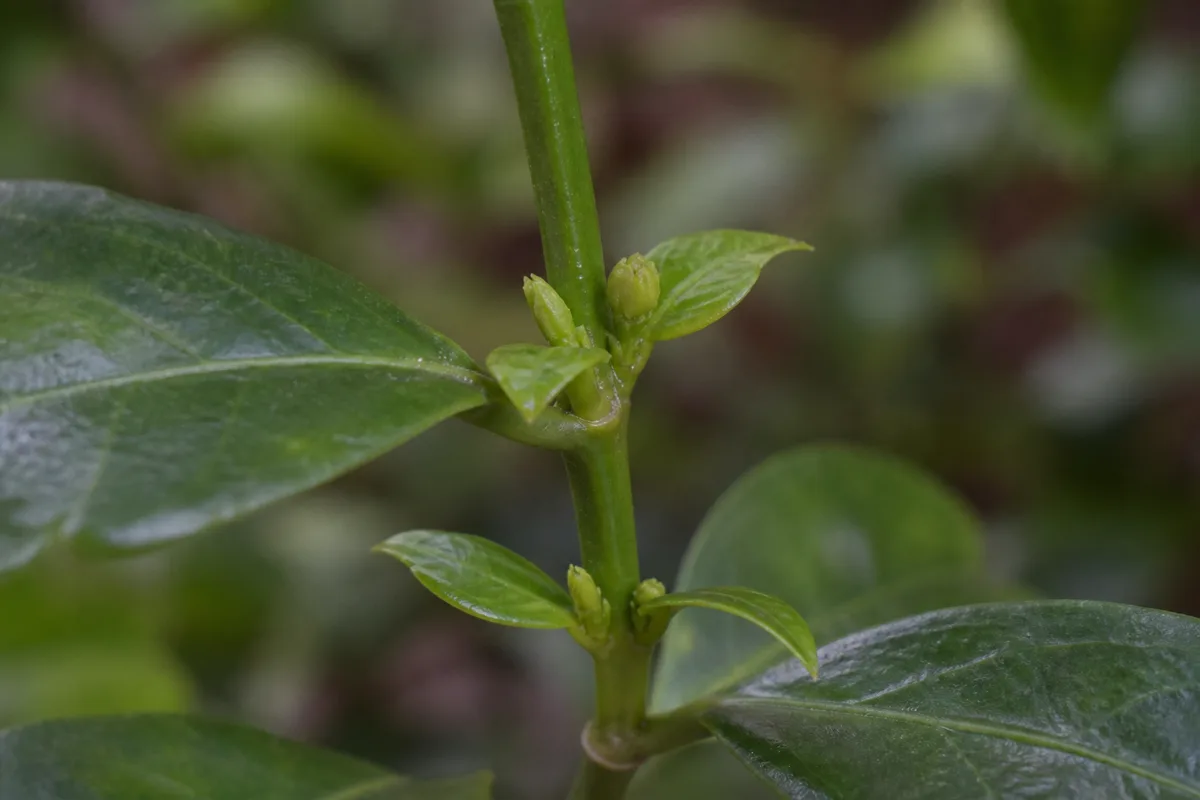
Slow Growth symptoms on Jasmine - compare with healthy tissue on the same plant.
Active summer pace (warm, bright conditions):
- Fresh tendril tips every two to four weeks on established container vines
- Runner segments lengthening several centimetres between leaf pairs during peak warmth
- Moderately fast extension-roughly twelve to twenty-four inches of new length over a full growing season outdoors or in strong indoor light
- Bud swell on leafy wood as days lengthen, leading to summer fragrance on J. officinale
Normal winter quiet (cool rest):
- Same leaf count for weeks with firm woody stems and no widespread yellowing
- Little or no new tendril break while nights stay cool and days are short-often October through March indoors
- Pot dries slowly because the plant uses less water; that matches the light watering rhythm for glasshouse and houseplant jasmines in winter
Post-chill pause (often mistaken for a problem):
- One to three weeks of stillness immediately after moving a rested vine to a warmer room-roots and buds adjust before the first spring push
- Firm green cambium under thin bark when you scratch a lower stem
Slow growth (this page): Tips still appear, but weeks apart instead of every two to four weeks; new segments stay shorter than last season; the vine feels “behind schedule” without going fully static.
When slow growth is a problem vs. healthy cool rest
Use this table before changing care. The urgency column tells you whether to wait, adjust light, or act the same day.
| Pattern | Likely meaning | Urgency | Action |
|---|---|---|---|
| No tendril tips, firm stems, cool room, calendar in winter | Normal rest and bud-setting | Wait | Hold feed; water lightly; wait for lengthening days |
| Tips every few weeks but short and pale in a dim room | Light-limited sluggish metabolism | Routine (2–4 weeks) | Increase direct sun; see not enough light |
| Tips slow, pot dries within 24 hours, roots circling | Root-bound stall | Spring priority | Repot one size up; see root-bound |
| Tips slow or stop, wet soil, yellow lower leaves, soft stems | Root damage from overwatering | Same day | Inspect roots; see root rot |
| Tips slow, stippling and webbing on undersides | Spider mite drain | Within days | Rinse and scout; see spider mites |
| Tips slow after late frost, brown leaf margins, firm lower wood | Cold damage on exposed shoots | Assess in 1–2 weeks | Shelter and trim dead tips; see cold damage |
| Zero tips six-plus weeks after warm spring arrives | Full stall, not slow growth | Escalate | Use no new growth workflow |
J. polyanthum (pink jasmine) often blooms indoors in late winter on growth made the previous year-its “slow summer” may look different from summer-flowering J. officinale. Identify your species on the jasmine overview before comparing pace to a neighbour’s vine.
Why jasmine growth slows
Several causes fit Jasmine overview’ twining biology better than generic houseplant advice.
Cool winter rest is built in
Indoor and container-grown common jasmine naturally slows from autumn into early spring. During rest, the vine conserves energy rather than extending runners. Keep plants cool in winter and let them rest; growth resumes when light and warmth increase-typically as you resume normal watering in late winter per the watering guide.
Warm dim rooms year-round suppress both rest rhythm and spring push. Owners often mistake January quiet for decline and overwater-damaging roots while the vine cannot use the moisture.
Insufficient direct sun limits extension
Jasmine is a sun-loving climber. NC State lists full sun as six or more hours of direct light daily, with partial shade tolerated but weaker for vigor. Indoor jasmines need at least four hours of direct sunlight daily or strong supplemental light. Leaves may persist in mediocre brightness, but photosynthesis cannot fuel frequent tip break-runners lengthen slowly if at all.
If natural light falls short, position a full-spectrum grow light 12 to 18 inches from the canopy for twelve to fourteen hours daily during the active season. Pale lime new leaves often mean intensity is still too low even when duration looks adequate.
Root-bound pots exhaust the root zone
Fast growth fills containers within about two years. When roots circle into a dense mat, little fresh soil holds water and nutrients. The vine may dry within a day after watering yet cannot extend at normal pace-even when you feed. See repotting guidance for inspection timing.
Root rot from chronic wet soil during rest
Overwatering during low-light winter months kills fine absorbing roots. The plant cannot take up water or nutrients, so tips slow even if you add fertilizer. Soft stems and sour-smelling soil confirm this path-not normal sluggish growth.
Spider mites after dry indoor winters
Spider mites prefer warm, dry environments with low humidity-common during heating season. Heavy feeding weakens the vine before webbing is obvious. Growth slows because resources drain to pests, not because the vine lacks nitrogen. For rinse schedules, isolation, and repeat treatment, see spider mites on jasmine.
Cold damage after outdoor transition
Container jasmine moved outdoors before the last frost, or left on a cold porch during a spring cold snap, may show slowed extension on browned outer shoots while lower stems stay firm. Cold during bud swell can stall the season’s first push without killing the vine. See cold damage on jasmine when sluggish tips follow frost or draft exposure.
Recent repotting or environmental shock
A vine repotted, moved outdoors abruptly, or shifted from a cool rest room to a warm living room may pause for two to four weeks while roots re-establish. Temporary slow pace after shock is normal if stems stay firm-see transplant shock if the stall follows a recent move.
Lookalike symptoms to rule out
Slow growth vs. no new growth: Zero extending tips for six-plus weeks after warm spring arrives is a full stall-different urgency and fixes. Slow growth means tips still appear, just behind schedule.
Slow growth vs. stunted growth: Stunted vines produce small leaves on short internodes even when tips move. Sluggish extension with normal-sized new leaves usually points to light or roots, not chronic nutrient stress.
Slow growth vs. leggy growth: Leggy jasmine stretches toward light with long bare internodes and sparse leaves-desperate reach, not conservative slow pace. Both need more sun; leggy vines also need training and possibly pinching after light improves.
Slow growth vs. root rot: Sluggish tips on wet soil with yellow lower leaves and soft stem bases is rot escalation-not patience. Dry-down rhythm and root firmness separate rot from rest.
Slow growth vs. cold damage: After a frost or cold draft, outer shoots may brown while the base stays firm-extension pauses on damaged tips but lower nodes can resume later. Match timing to weather and see cold damage.
Slow growth vs. spider mites: Stippling and fine webbing on leaf undersides with slowing tips point to mites, not dormancy-follow the dedicated spider mite protocol rather than waiting through rest.
How to confirm the cause
Work through these checks in order before changing care.
- Calendar and temperature - Cool short days from October through March fit normal rest at roughly 7–13°C (45–55°F). If it is late spring or summer and nights stay above 10°C (50°F), expect active extension unless something else limits growth. Night temperatures of 50 to 55°F and day temperatures of 68 to 72°F support healthy rhythm during the growing season.
- Tendril tip count - Mark the longest tip with a thread or photo. Check again in fourteen days. No movement in warm bright weather after rest ends points toward no new growth. Movement every two to four weeks but shorter than last year fits slow growth on this page.
- Midday shadow test - At noon on a clear day, hold your hand above the foliage. Almost no shadow means light is likely limiting growth indoors. Target four to six hours of direct sun daily on the leaves during the active season-details in the light guide.
- Pot weight and moisture - Lift the pot after watering. A bound root ball feels light again within a day. Constant heaviness with sour smell suggests oversaturation and possible root damage.
- Unpot inspection - Slide the plant out carefully. White firm roots with circling at the edges confirm root-bound stress. Brown mushy roots confirm rot. Compare findings to root-bound and root rot guides.
- Pest check - Examine leaf undersides with a hand lens. Webbing, stippling, or moving specks point to spider mites-not dormancy.
- Recent changes - Note repotting, hard pruning, frost exposure, or a move in the last four weeks. Temporary pause after shock or cold is common if basics are otherwise sound.
- Species check - Confirm Jasminum on the tag. Winter-blooming J. polyanthum and summer J. officinale have different rest and bloom clocks; compare to the overview.
If winter rest checks pass-firm stems, appropriate reduced watering, no pests-wait until days lengthen rather than forcing growth with feed or heat.
First fix for jasmine
Confirm the season, then increase direct sun to four to six hours on the foliage if the vine is past winter rest and still sluggish.
That single environmental correction fixes more slow jasmines than fertilizer ever will-provided roots are still healthy. Move the pot gradually to the brightest south or west window or outdoor partial shade after frost risk passes, stepping up over seven to ten days so leaves do not scorch.
Only after light and season are ruled out should you unpot to address roots or pests. Do not repot and fertilize on the same day on a weak vine.
If wet soil, soft stems, and yellow lower leaves appear in warm weather, skip light correction alone and inspect roots the same day-rot sluggishness needs unpotting before sun alone will help.
If the vine is still in normal winter rest with firm stems: do nothing aggressive. Keep the plant cool and bright, water lightly every ten to fourteen days, and hold fertilizer until new tips appear in spring.
Step-by-step recovery branches
Once you have identified the cause beyond normal rest, follow the matching path.
Low light:
- Relocate to four to six hours direct sun, or supplement with a grow light delivering strong exposure for twelve to fourteen hours daily.
- Rotate the pot weekly so inner stems receive light; train runners on a trellis for even penetration.
- After two to three weeks of stronger light, pinch the top inch of the longest stem above a node to encourage branching-only if the vine looks turgid, not wilted from root issues.
Root-bound:
- Repot one container size up in early spring using fresh well-draining mix.
- Tease or score outer circling roots gently; do not remove more than one-third unless tissue is mushy.
- Water to settle, then wait until the top inch of mix dries before watering again.
- Hold heavy feeding for two weeks until new white root tips or fresh leaf break appear.
Root rot:
- Unpot and trim all brown mushy roots back to firm white tissue.
- Repot into clean mix in a pot sized to the remaining root ball-not oversized.
- Water sparingly until new growth shows; recovery depends on roots regrowing, not old leaves lengthening.
Spider mites:
- Wash the plant thoroughly with a forceful spray of lukewarm water, targeting leaf undersides, early in the morning.
- Repeat every three to five days for three weeks; raise humidity above fifty percent if possible.
- Follow the full spider mite guide if webbing persists after rinsing.
Cold damage:
- Move container vines to shelter above 4°C (40°F); trim dead leaf and tip tissue once stems stay firm and no further frost is forecast.
- Hold fertilizer until new shoots emerge from lower nodes; see cold damage on jasmine for firm-wood versus mushy-stem decisions.
Post-repot or move shock:
- Keep the vine in bright indirect light for one week, then gradually increase direct sun.
- Maintain even moisture without saturation; avoid fertilizer until new tips emerge.
When rest alone explains the pace:
- Complete the cool period without overwatering; resume normal watering as February days lengthen.
- Expect the first visible tip break within one to three weeks after chill ends and sun strengthens-not overnight.
Recovery timeline
Winter rest resolves on its own over six to twelve weeks as days lengthen-expect visible tip break in early to mid-spring on established vines.
Light correction often shows new pale tips within three to six weeks once direct sun hours increase.
Root-bound recovery after spring repot may take four to eight weeks before runner extension matches prior seasons.
Root rot recovery is slower and uncertain. If no new tips appear eight weeks after trimming rot and correcting watering, the remaining root mass may be too small to support normal pace.
Spider mite recovery typically follows two to three weeks of consistent rinsing; severely weakened vines may need a full season to regain vigor.
Cold-damaged outer shoots may stay static until lower nodes push fresh growth in mid-spring-allow four to six weeks after stable warmth before deciding the vine is lost.
Judge improvement by new tendril tip frequency and segment length, not by old stem length-jasmine does not retroactively elongate previous internodes.
What not to do
Do not force winter growth with heavy nitrogen fertilizer-soft etiolated shoots in dim conditions weaken the vine and invite pests.
Do not repot into a much larger pot hoping to jump-start growth. Excess wet idle soil around a small root ball stalls jasmine worse than a slightly tight pot.
Do not blast heat to “wake up” a resting vine. Common jasmine needs cool bright rest in winter; warm rooms year-round prevent both growth rhythm and future flowering.
Do not fertilize before new growth actively extends-especially during cool rest or on a vine with damaged roots. Feed timing is covered in the fertilizer guide.
Do not assume fertilizer deficiency before checking light and roots. A vine with damaged roots cannot use feed and may burn further.
Do not confuse normal January quiet with spring stall and respond by watering heavily-wet cool soil rots roots silently.
How to prevent slow growth next time
Plan repotting every two years in early spring before roots form a solid circling mat. Upsize one container size only.
Track seasonal rhythm: reduce watering in cool months, resume as February days lengthen, and provide four to six hours of direct sun during the active season per the light guide.
After winter rest indoors, scout leaf undersides weekly for spider mites when humidity is low-early rinsing prevents the drain that stalls tips before webbing is obvious.
When moving outdoors for summer, transition gradually over seven to ten days to avoid shock stall and cold damage on tender new shoots.
Apply high-potassium feed during container growth only when new tips are extending-supporting bloom wood, not forcing a resting vine.
Keep the vine on a trellis or support so light reaches inner stems-not just the outer shell of foliage.
When to worry
Wait through rest when stems are firm, the calendar fits cool months, and watering is appropriately light-patience is part of normal jasmine culture, not neglect.
Increase sun within two to four weeks when tips stay pale and break less than once a month through May despite corrected watering and firm roots-light is the usual limiter after rest ends.
Unpot the same day when sluggish extension pairs with stems softening while soil stays wet in warm weather-that is rot, not slow growth, and delay risks losing the vine.
Follow mite protocol within days when stippling spreads and tips stop despite even moisture-see spider mites on jasmine.
Consult an extension office or master gardener if tip frequency stays below one break per month through June despite corrected light, healthy firm roots, appropriate watering, and pest clearance-something systemic (hidden stem rot or wrong species identification) may need in-person diagnosis.
Related jasmine problems
- No new growth - zero tip break for six-plus weeks after warm spring; full stall workflow
- Stunted growth - tiny new leaves on short internodes even when tips move
- Leggy growth - long bare internodes reaching for light; shape recovery after sun improves
- Not enough light - dim-room sluggish metabolism and window placement depth
- Root-bound - circling roots and pot dry within twenty-four hours
- Root rot - wet soil, yellow lower leaves, and mushy roots in warm weather
- Spider mites - stippling, webbing, and sap drain after dry indoor winters
- Cold damage - browned tips and stalled extension after frost or cold draft
- Transplant shock - pause after repot or abrupt room move
- Jasmine overview - species ID, winter rest, trellis culture, and care hub
FAQs
How can I confirm slow growth is a problem on jasmine?
Count new tendril tips over two weeks once days lengthen and nights stay above 10°C (50°F). Zero extension for six-plus weeks after winter rest points to a stall-see the no-new-growth guide. Sluggish but visible tip break every few weeks with normal leaf size fits slow growth on this page. No movement at all during 7–13°C cool rest is normal bud-setting time, not decline.
What should I check first for slow jasmine growth?
Start with the calendar and room temperature, then direct sun hours at the plant’s actual spot-not the window label. Lift the pot after watering to gauge dry-down speed, and slide the root ball out to see circling or mush. Do not reach for fertilizer until light and roots are ruled out.
How fast should jasmine grow in summer?
Established common jasmine in strong light often extends runners twelve to twenty-four inches per growing season on healthy roots. Indoors or in partial shade, pace drops-but you should still see fresh tendril tips every two to four weeks during warm months. Weeks with no tip movement in summer signal a problem, not normal slow growth.
When is slow growth urgent on jasmine?
Treat it as urgent if sluggish extension pairs with wet soil, yellow lower leaves, and soft stems in warm weather-that pattern suggests root rot, not seasonal quiet. Also act if fine webbing coats leaf undersides and tips stop despite adequate water-spider mites drain energy after dry indoor winters.
How do I prevent slow growth on jasmine next time?
Give four to six hours of direct sun during the active season, complete cool rest without overwatering, repot every two years before roots circle tightly, and resume normal watering as February days lengthen. Feed containers only when new growth is actively extending, using the fertilizer guide high-potassium rhythm for bloom wood.
Conclusion
Escalation on slow jasmine comes down to three paths: wait through firm-stem winter rest without overwatering; increase direct sun when warm-season tips break less than once a month on healthy roots; and unpot or rinse the same day when wet soft stems or spreading mite stippling appear. Old stems never speed up retroactively-judge recovery by fresh tip frequency and longer new segments. When tips stay at zero for weeks, switch to no new growth; when new leaves stay tiny on short internodes, see stunted growth; when long bare internodes dominate, see leggy growth.
When to use this page vs other Jasmine guides
- Jasmine watering guide - Use for routine moisture checks before assuming slow growth is the main issue.
- Jasmine problems hub - Browse all 53 common issues on this species.
- Not Enough Light on Jasmine - Different entry point when symptoms overlap with slow growth.
- Yellow Leaves on Jasmine - Different entry point when symptoms overlap with slow growth.