Mold on Substrate Near Java Fern: Causes, Checks & Fixes
Quick answer
Before you vacuum anything, press the Java Fern rhizome-it should feel firm. White or gray fuzz on wet substrate touching a buried or debris-choked rhizome is surface mold or biofilm feeding on mulm, not mold on submerged fronds. Expose the rhizome on wood, skim mulm during water changes, and escalate to rhizome-rot care if tissue softens.
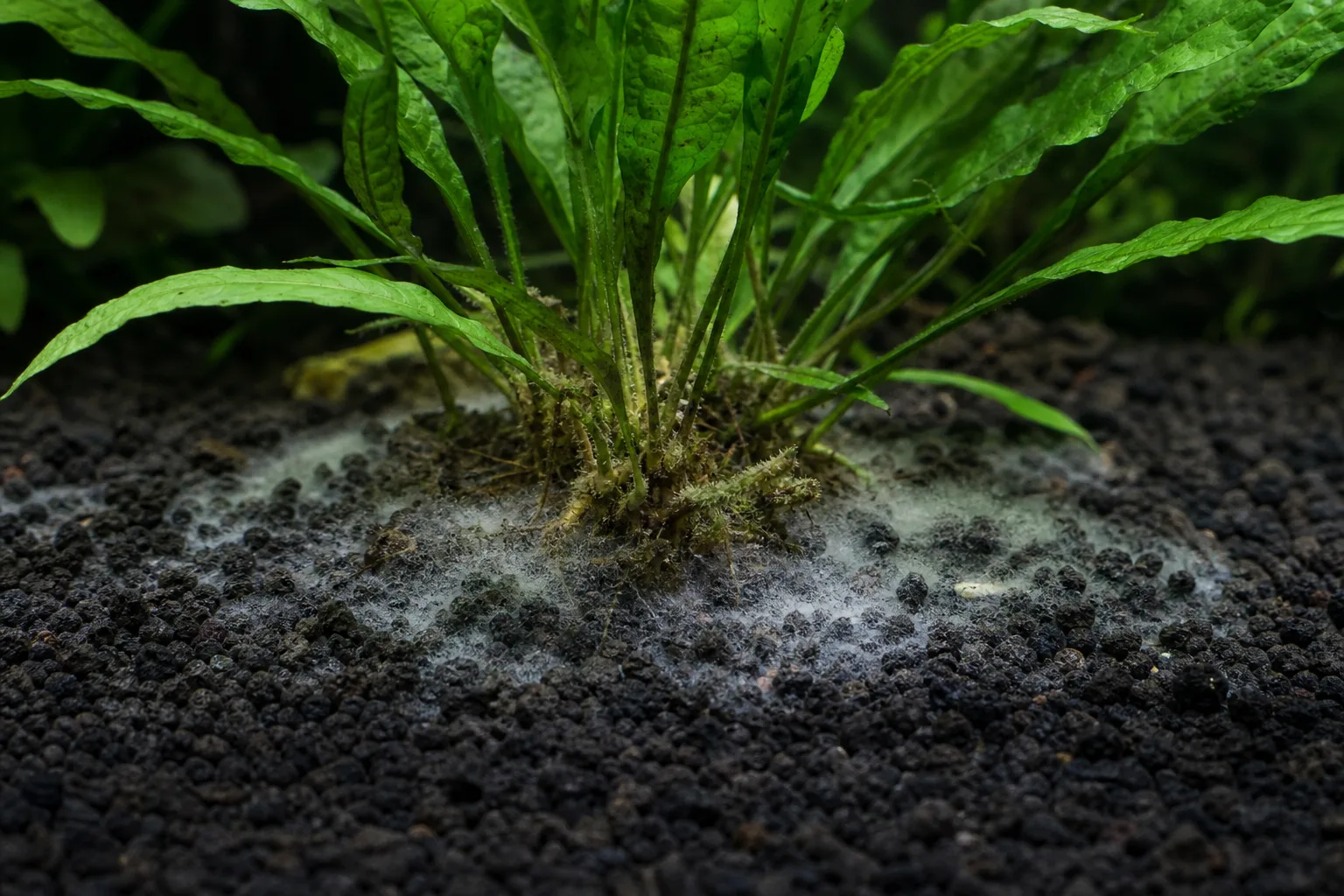
Mold on Substrate Near Java Fern: Causes, Checks & Fixes
This guide covers mold on soil on Java Fern. See also the general Mold on Soil guide, watering, and light pages for this plant.
Mold on Substrate Near Java Fern: Causes, Checks & Fixes
Quick answer
First check: press the rhizome along its length. Firm, springy tissue means you are likely dealing with harmless surface fuzz on wet substrate-not a leaf infection. Soft, squishy, or foul-smelling stem tissue under white growth means rhizome rot, not a gravel hygiene issue alone.
“Mold on soil” for Java Fern (Microsorum pteropus) means fungal or biofilm growth on wet aquarium substrate-gravel, sand, aquasoil, or paludarium soil at the waterline-around a misplanted or debris-choked rhizome. It is not mold on submerged fronds. Tropica warns plainly: do not cover the rhizome because it will rot in the same damp anaerobic pockets where surface mold thrives.
If the rhizome is firm: during your next water change, skim visible mulm and fuzzy patches off the substrate surface near the plant, lift the rhizome fully onto hardscape, and trim decaying fronds at the base. Do not dose tank-wide fungicide on day one when only gravel is affected.
What mold on substrate looks like on Java Fern
“Soil” here means aquarium substrate or paludarium soil at the waterline-not houseplant potting mix. Java Fern is an epiphyte that grows attached to rock and submerged wood, with a creeping horizontal rhizome and fine holdfast roots.
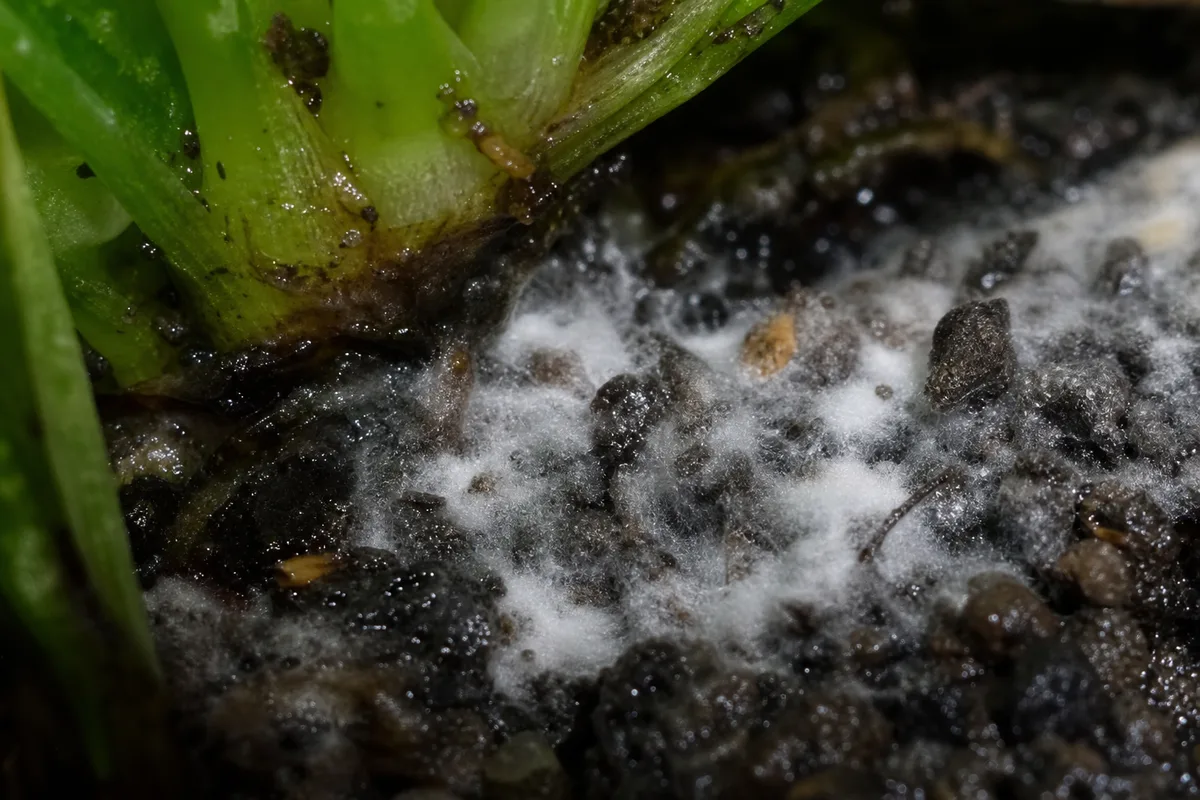
Mold on Soil symptoms on Java Fern - compare with healthy tissue on the same plant.
Typical harmless patterns near healthy Java Fern:
- White, gray, or cottony threads on gravel, sand, aquasoil, or driftwood beside the plant-not on firm submerged fronds
- Irregular tufts in quiet corners where flow is weak and mulm settles
- Fuzz appearing after melting emersed leaves dissolve onto the substrate
- Fronds still leathery and attached, with slow new growth from the rhizome tip
- Rhizome firm and greenish-brown when you press it gently
Patterns that mean more than surface mold:
- White or jelly-like growth directly on the rhizome itself
- Rhizome soft, blackened, or sour-smelling when lifted
- Fronds detaching quickly from the base while stem tissue discolors
- Fuzz returning within days on the same rhizome spot after you skim gravel only
- Holdfast roots brown and slimy near damaged rhizome tissue
Surface fuzz on gravel alone rarely damages Java Fern leaves. Fuzz anchored to a failing rhizome is a different problem-often rhizome rot-and needs isolation and trimming, not just substrate skimming.
Why Java Fern gets mold on nearby substrate
Water molds in aquariums feed on organic matter-carbohydrates from uneaten food, decaying plant tissue, wood leachates, and accumulated mulm. When dissolved organics stay high and flow is poor, white fuzzy growth appears on anything in the tank, including substrate around slow-growing Java Fern.
Plant-specific reasons this shows up near Java Fern:
- Buried or partially buried rhizome - The thick horizontal stem must stay above substrate. Burying it in gravel, sand, or aquasoil traps debris against tissue that should stay exposed, encourages anaerobic rot, and gives fungi a foothold on dying cells. This is the same error as treating Java Fern like a root-feeding sword plant that draws nutrients from buried substrate.
- Emersed-to-submersed melt - Store-bought Java Fern is often grown above water first. Old emersed fronds melt after submersion, leaving carbohydrate-rich debris on gravel exactly where the plant sits.
- Paludarium terrestrial soil - In paludarium builds, soggy soil kept against the rhizome at the emersed zone creates greenhouse mold that looks like houseplant soil fungus but stems from the same wet-organic problem.
- Low flow around hardscape - Ferns wedged in rock crevices or crowded against glass create dead zones where mulm piles while the rest of the tank looks clean.
- Holdfast mats trapping detritus - Mature holdfast roots weaving through gravel catch fine sludge-a food source for water mold even when upper fronds look fine.
- Aquasoil anaerobia - Active soil substrates release organics; a rhizome pressed into aquasoil stays in poorly aerated pockets where both mold and rot accelerate.
Because Microsorum pteropus grows slowly, owners sometimes mistake a quiet tank for a clean one while mulm builds unnoticed beneath broad fronds.
How to confirm the cause
Work through these checks in order:
- Rhizome exposure - Lift or gently shift the plant. The horizontal rhizome should sit on top of gravel or wood, with only fine holdfast roots buried. Any substrate piled over the rhizome is a setup error-see the Java Fern substrate guide for correct epiphyte placement.
- Rhizome firmness - Press the rhizome along its length. Healthy tissue feels solid and springy. Mushy, jelly-like, or blackened sections suggest rot under the fuzz-the same failure mode on Java Fern’s rhizome structure.
- Smell test - Lift the plant out briefly. Rotting rhizome tissue often smells sour or garbage-like. Harmless gravel fuzz usually has little odor beyond general tank smell.
- Frond pattern - One or two old fronds melting after purchase is common acclimation. Rapid brown-black collapse of multiple fronds from the rhizome outward points to crown or rhizome failure.
- Substrate debris audit - Look for piles of mulm, brown sludge, and dissolved melt tissue within a few inches of the plant. Fuzz on clean firm rhizomes with debris only on gravel is usually maintenance-related.
- Flow check - Note whether fuzz concentrates in one back corner. Stagnant pockets predict repeat mold even after skimming.
- New wood context - White coating on fresh driftwood alone, with firm Java Fern rhizomes elsewhere, is often temporary wood biofilm-not a plant emergency.
Decision tree: exposed + firm rhizome + stable fronds → substrate hygiene first. Soft rhizome where fuzz grows → rhizome rot protocol immediately.
First fix for Java Fern
During your next water change, use a gravel vacuum or siphon to skim mulm and white fuzzy patches off the substrate surface around the plant-without deeply stirring the entire gravel bed.
Hold the intake just above the gravel so you pull off visible sludge and fuzz while minimizing disruption to established filter bacteria deeper in the substrate. Remove melting fronds and any loose debris caught in holdfast roots at the same time.
While the water level is low, confirm the rhizome is fully exposed. If gravel, sand, or aquasoil has drifted over it, gently brush it clear and reattach the plant to rock or driftwood so the rhizome no longer contacts buried substrate. Do not “fix” fuzz by pushing the plant deeper into gravel-that accelerates the rot you are trying to prevent.
Do not dose fungicide, hydrogen peroxide, or other chemicals as a first response when only gravel is affected and the rhizome is healthy. Fix the organic source before adding treatments that can stress fish, shrimp, or biofilter colonies.
Step-by-step recovery
After the first skim and rhizome check:
- Remove decaying plant material - Pinch off melting or brown fronds at the rhizome. Leaving them in the tank feeds the next wave of water mold.
- Remount on hardscape - Attach the rhizome to stone or root with thread or gel glue so the entire stem sits in open flow above the substrate line.
- Reposition for circulation - Move crowded Java Fern so water can pass around the rhizome. Avoid dead corners behind filter intakes or stacked rock.
- Surface vacuum weekly - Skim mulm during routine partial water changes rather than deep-vacuuming the entire substrate every session.
- Improve circulation if needed - Add gentle flow to corners where mulm reappears within two to three days.
- Trim infected rhizome only if tissue is soft - Cut back to firm green or tan tissue with a sterile blade, disinfect tools between cuts, and reattach the healthy section fully exposed.
- Review tank maintenance - Neglected water changes and stagnant pockets mimic overwatering stress on Java Fern even though the plant lives submerged. Pair skimming with regular partial changes sized to your bioload.
If multiple Java Fern clumps share a tank and one shows rhizome rot, isolate it promptly. Decay can spread between plants in shared water.
Recovery timeline
Harmless fuzz on gravel alone often disappears within several days to two weeks once you remove its food source and keep up surface skimming. Java Fern fronds do not need to “heal” from gravel mold-the plant simply stops sitting in a debris pile.
Temporary white coating on new driftwood may take one to four weeks to fade as wood sugars leach out, even while you keep the substrate clean.
Rhizome rot recovery is measured in weeks to months. After sterile trimming, watch for one new firm frond every two to four weeks as a sign the remaining rhizome is stable at optimum temperatures around 22–28°C/27914). If soft tissue keeps spreading after a clean cut, salvage only firm sections or replace the plant.
Judge improvement by a clean substrate surface around exposed firm rhizomes, stable frond color, and new growth-not by old melt marks on spent emersed leaves.
Lookalike symptoms to rule out
| What you see | Likely cause | What to do |
|---|---|---|
| Cottony threads on gravel only; firm rhizome | Water mold on mulm | Surface skim + expose rhizome |
| Clear or white slime on new wood only | Temporary wood biofilm | Wait or scrub wood outside tank |
| Firm dark bumps on frond undersides | Sporangia (spore cases), not disease | No action if rhizome is firm |
| Brown sludge without white fuzz | Detritus buildup | Skim mulm; white fuzz may follow if organics stay high |
| Translucent melting fronds; firm rhizome | Acclimation melt | Remove dead tissue; do not bury rhizome |
| Fuzz on soft black rhizome; sour smell | Rhizome rot | Rhizome rot guide |
| Green hair on leaf surfaces in bright light | Algae on slow fronds | Reduce light; address nutrients separately |
Mistakes to avoid
Do not bury the rhizome deeper to hide fuzz or stabilize the plant. That accelerates the rot you are trying to prevent.
Do not deep-vacuum the entire substrate aggressively every week in a mature planted tank. Surface skimming removes mold food without repeatedly stripping beneficial bacteria from gravel interstices.
Do not spray household fungicides or high-dose peroxide into a display tank as a first fix for gravel fuzz.
Do not ignore white growth sitting directly on the rhizome. Gravel skimming will not cure soft infected tissue underneath.
Do not confuse sporangia on mature frond undersides with substrate mold or rhizome disease. Sporangia are firm, organized dark bumps; mold on gravel is fluffy and irregular.
Do not leave melting emersed leaves “to compost” in the tank. They are the most common local fuel source for fuzz near Java Fern.
Do not treat Java Fern like a root-feeding sword or crypt that wants its crown buried in nutrient-rich substrate. Epiphytes need the rhizome in open water-see the substrate guide for why holdfast roots differ from buried crowns.
How to prevent mold next time
Attach Java Fern to rock or driftwood whenever possible, with the rhizome fully visible above the substrate. If holdfast roots sit in gravel, keep the rhizome on top of the line, not under it.
Remove melting fronds and detritus during routine maintenance-not only when fuzz appears.
Skim mulm from the substrate surface during partial water changes. Pair that with stable filtration sized for the bioload.
Maintain gentle circulation so detritus cannot pile in one corner behind hardscape.
Quarantine new plants before adding them to a display tank, and inspect rhizomes at purchase for firm tissue.
After rescapes or temporary bucket storage, return plants to stable submerged conditions quickly. Long stays in stagnant containers stress rhizomes and invite rot that shows up as white fuzz on the stem.
For broader culture context-attachment methods, melt after purchase, and sporangia biology-see the Java Fern care overview.
When to worry
Treat as urgent when the rhizome is mushy, smells rotten, shows jelly-like discoloration, or loses fronds rapidly while fuzz grows on the stem itself. Isolate the plant, trim to healthy tissue per the rhizome rot guide, and watch tank mates for spread.
Worry less about one-time white tufts on gravel after a heavy feeding, new wood addition, or post-rescape mulm pile if rhizomes are firm, fronds stay attached, and skimming plus water changes clear the surface within two weeks.
Escalate if fuzz keeps returning on the same rhizome segment within days of trimming, or if every new Java Fern from a batch fails at the rhizome despite clean gravel. That pattern suggests contagious rhizome rot rather than harmless substrate mold.
Conclusion
Mold on substrate near Java Fern is almost always an aquarium hygiene signal-water mold feeding on mulm, melt debris, and wet organics in gravel or aquasoil-not submerged leaf disease. Check rhizome firmness first, skim the surface, expose and remount the stem, and remove decaying fronds before chemicals.
Related Java Fern problems
- Java Fern soil guide - attachment and why rhizomes stay above substrate
- Overwatering - chronic wet-substrate stress
- Root rot - soft rhizome with rapid frond loss
- Black spots - sporangia vs disease on fronds
When to use this page vs other Java Fern guides
- Java Fern watering guide - Use for routine moisture checks before assuming mold on soil is the main issue.
- Java Fern problems hub - Browse all 28 common issues on this species.
- Slow Growth on Java Fern - Different entry point when symptoms overlap with mold on soil.
- Black Spots on Java Fern - Different entry point when symptoms overlap with mold on soil.