Overwatering on Java Fern: Causes, Checks & Fixes
Quick answer
Java Fern cannot be overwatered like a houseplant—it lives submerged. 'Overwatering' in aquariums means poor water quality, stagnant flow around a buried rhizome, or organic debris trapping against the stem. First step: lift the rhizome clear of substrate and test ammonia, nitrite, and nitrate.
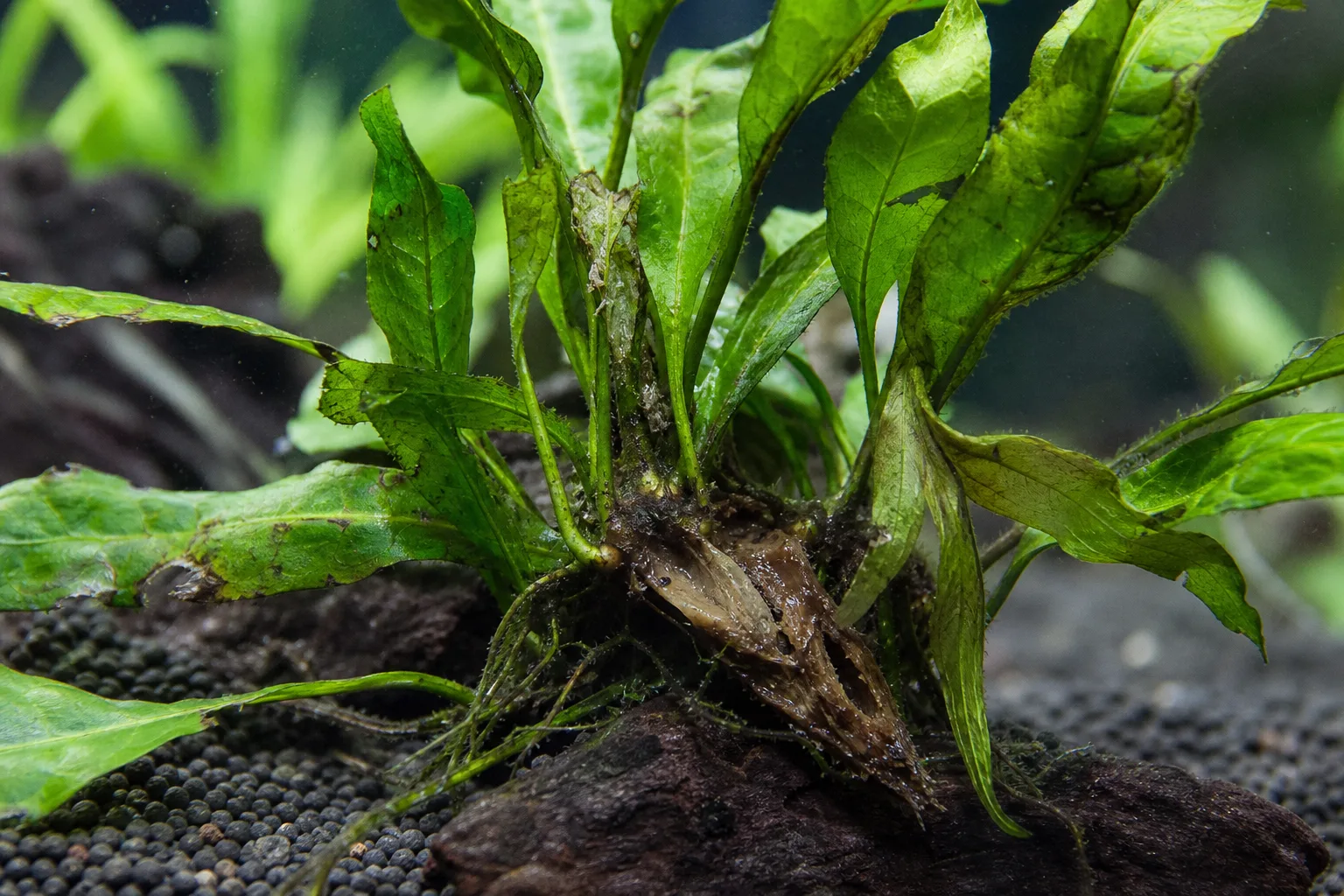
Overwatering on Java Fern: Causes, Checks & Fixes
This guide covers overwatering on Java Fern. See also the general Overwatering guide, watering, and light pages for this plant.
Overwatering on Java Fern: Causes, Checks & Fixes
Quick answer
Java Fern always sits underwater—so overwatering means bad tank hygiene, not too much H₂O. The aquarium equivalent is a buried rhizome in anaerobic substrate, stagnant pockets of mulm against the stem, or neglected water changes that let organics accumulate. Tropica says not to cover the rhizome because it will rot—that is underwater “overwatering.”
For how chronic wet conditions damage roots in general, see our overwatering guide. On Java Fern, the failure point is always the rhizome—not submerged leaves.
First step: lift the rhizome clear of gravel or aquasoil and test ammonia, nitrite, and nitrate.
Why Java Fern suffers from excess moisture at the rhizome
Holdfast roots absorb nutrients from open water. The rhizome needs oxygenated flow like stream margins in tropical Asia where Microsorum pteropus grows. When substrate packs against the stem or detritus decays locally, tissue rots the way terrestrial roots drown in soggy soil.
Java Fern-specific causes:
- Buried rhizome in gravel or aquasoil - The most common beginner mistake; leaves look fine briefly then melt from the base.
- Dead-flow zones behind hardscape - Rhizome trapped where filter current does not reach collects mulm.
- Neglected water changes - Heavy feeding without 25–50% weekly water changes during establishment lets organics spike.
- Overstocked tank - High bioload raises ammonia faster than plants and bacteria can process.
- New tank syndrome - Immature biofilter plus buried rhizome produces rapid melt.
Heavy feeding without matching maintenance can stress low-tech plants even when light is adequate.
What overwatering looks on Java Fern
Whole-frond melt, blackening at the frond base, and a soft rhizome where it touches substrate or mulm. Water may look cloudy near the plant. Fish gasping elsewhere in the tank signals broader water-quality failure, not just plant stress.
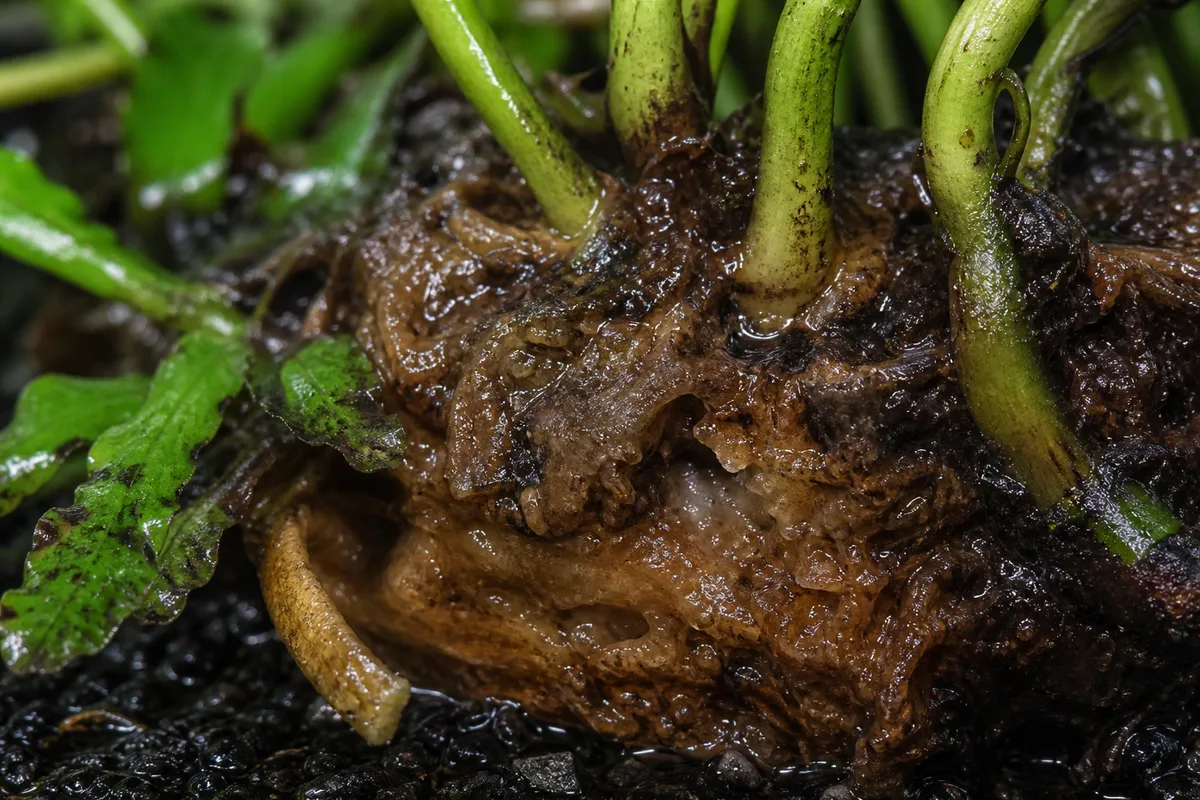
Overwatering symptoms on Java Fern—compare melting frond base with firm healthy rhizome tissue.
Typical signs:
- Transparent or dissolving frond tissue starting at the base where frond meets rhizome
- Black or brown soft tissue at the rhizome-substrate contact point
- Rhizome feels mushy when pressed—firm rhizome with only old-frond melt is milder
- Brown algae or mulm packed against the stem in low-flow corners
- New frond tips stop emerging while older fronds melt sequentially
Not aquarium overwatering:
- Brown spots on leaf blades with firm rhizome - often black spots or nutrient issues
- Slow growth in low light - see not enough light
- Whole-tank melt after a large water change - temperature or parameter shock
- Exposed roots waving in current - normal epiphyte growth, not a problem
How to confirm the cause
- Lift the rhizome clear of gravel or aquasoil—is substrate packed against the stem?
- Feel the rhizome - firm and woody vs soft and black at the base.
- Run ammonia, nitrite, and nitrate tests - elevated ammonia or nitrite confirms water-quality failure.
- Check flow - rhizome trapped behind wood in a dead zone collects debris.
- Review water change schedule - when was the last partial change?
- Compare with Dennerle’s wide pH 5–8 tolerance - extreme swings from neglected maintenance matter more than exact pH.
Confirmed rhizome rot requires soft black tissue at the substrate contact point, not merely transparent old fronds during acclimation.
First fix for Java Fern
Expose and remount the rhizome on rock or wood above the substrate line.
That single action stops anaerobic decay at the stem. Then:
- Vacuum mulm around the attachment point.
- Perform an immediate partial water change if parameters are off.
- Trim melting fronds at the rhizome with sterile scissors—discard mushy tissue.
- Resume regular weekly changes matched to stocking.
Do not respond by planting deeper in substrate. Do not stop water changes because the plant is melting—stale water worsens melt.
Step-by-step recovery
- Cut back to firm rhizome if soft tissue is present—discard black sections.
- Remount with thread or glue on porous driftwood in moderate current.
- Partial water changes 25–50% weekly until parameters stabilize.
- Reduce feeding temporarily while the biofilter and plant recover.
- Wait two to four weeks for new frond tips from firm rhizome—Java Fern is slow to rebound.
- Rule out root rot if rhizome continues softening despite exposed mounting.
Recovery timeline
Firm rhizome with exposed mounting: new frond tips in two to four weeks at 22–28°C. Soft rhizome requiring surgery: four to eight weeks before steady growth if water stays clean. Melted frond tissue does not regenerate—judge recovery by new growth from the rhizome.
Rhizome burial vs normal melt: Java Fern only
Terrestrial overwatering yellows leaves while roots fail. Java Fern submerges all foliage—the diagnostic tissue is the horizontal rhizome leaves sprout from. Burial causes anaerobic rot at the only structure you must protect. Holdfast roots may touch gravel lightly, but the rhizome must stay fully exposed.
Acclimation melt after purchase is common: old fronds dissolve while the rhizome stays firm. That is not the same as burial rot—check rhizome texture, not frond count alone.
What not to do
Do not plant deeper to “anchor” a melting fern. Do not assume a filter alone replaces water changes. Do not dose heavy fertilizer on a rotting rhizome. Do not confuse normal dark holdfast roots with rot—feel the rhizome, not the roots.
How to prevent overwatering next time
Treat Java Fern as an aquarium epiphyte: rhizome in flow, not in soil. Pair low light demand with consistent maintenance rather than heavy intervention. During rescapes, verify carpet plants have not pushed substrate over the rhizome.
Stable tanks beat perfect parameters that only exist on test day. See the Java Fern watering guide for routine moisture and water-change expectations.
When to worry
Urgent when ammonia or nitrite spike, rhizome tissue softens while surrounded by mulm, or melt spreads along the entire rhizome in days. Salvage only the firmest section and remount immediately. If the whole rhizome is black and mushy, discard and replace the plant—Java Fern is inexpensive and rot spores persist in tank debris.
Conclusion
Java Fern “overwatering” is rhizome burial or stagnant tank water—not too much H₂O on submerged leaves. Expose the rhizome, fix parameters, trim melt, and judge recovery by firm stem tissue and new frond tips.
When to use this page vs other Java Fern guides
- Java Fern watering guide - Routine maintenance before assuming overwatering.
- Exposed roots - Normal epiphyte anchoring vs rot.
- Root rot - Advanced rhizome decay.
- Yellow leaves - Overlapping symptom entry point.