Rhizome Rot on Java Fern: Causes, Checks & Fixes
Quick answer
On Java Fern, 'root rot' is rhizome rot-black mushy tissue on the horizontal stem, almost always from burying the rhizome in substrate or letting it decay in stagnant debris. Cut away rot, remount exposed on wood, and improve flow.
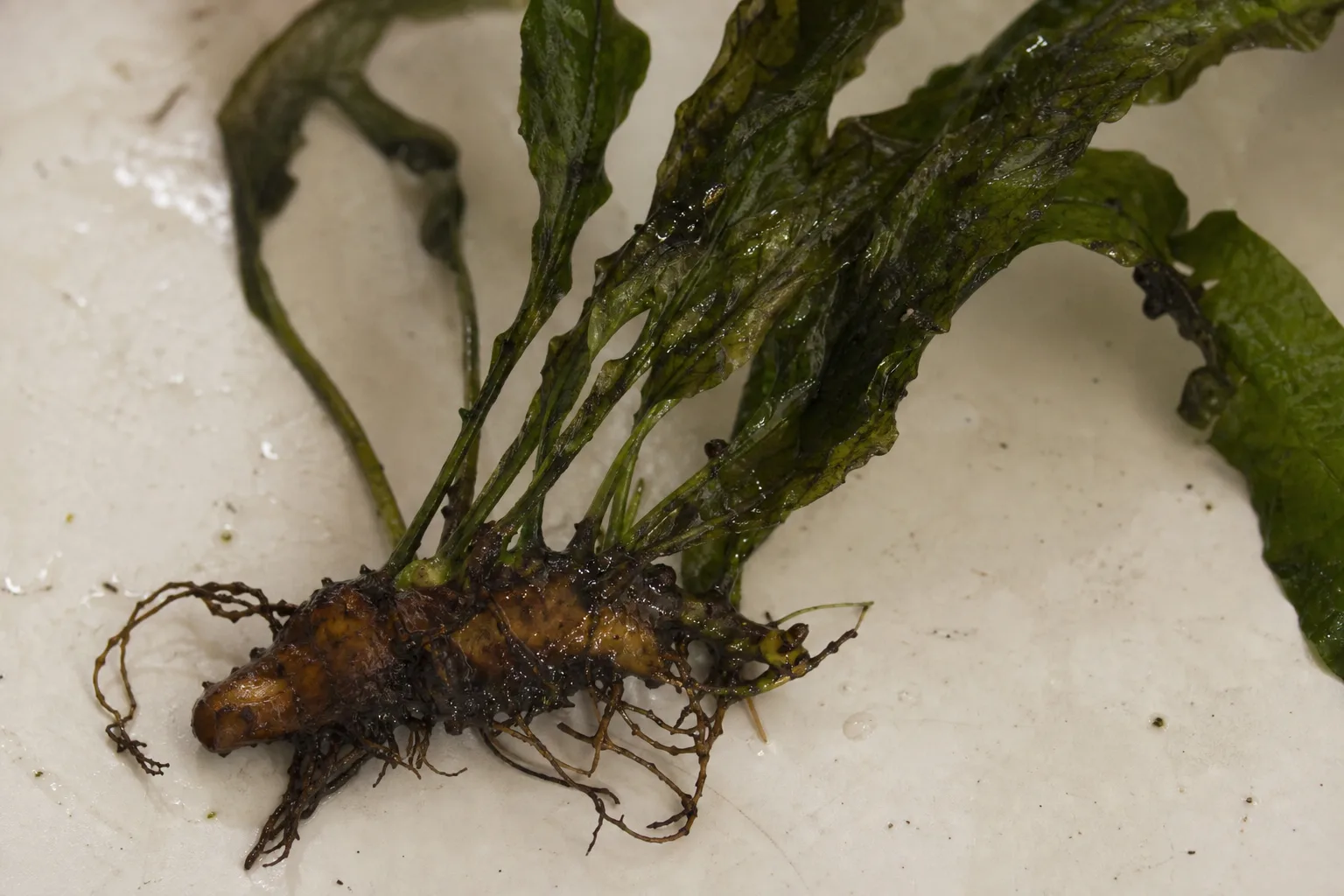
Rhizome Rot on Java Fern: Causes, Checks & Fixes
This guide covers root rot on Java Fern. See also the general Root Rot guide, watering, and light pages for this plant.
Rhizome Rot on Java Fern: Causes, Checks & Fixes
Quick answer
Java Fern does not have a classical root ball-it has a rhizome (horizontal stem) and fine holdfast roots that grip rock or wood. When hobbyists search “root rot,” they mean rhizome rot: black, mushy stem tissue that kills fronds from the base up. Tropica warns plainly: do not cover the rhizome because it will rot. Lift buried sections onto hardscape immediately.
First fix: trim soft black tissue back to firm rhizome, then remount the healthy section on driftwood or rock with the entire stem exposed to flow-not buried in gravel or aquasoil.
This page is the salvage deep-dive-trim surgery, discard thresholds, and recovery timing after tissue has turned mushy. For early burial, stagnant mulm, or poor water quality before the rhizome softens, start with overwatering. For ongoing parameters and change schedules, see the Java Fern watering guide.
What rhizome rot looks like on Java Fern
Fronds darken at the base and detach with a gentle tug. Rhizome tissue turns black or dark brown and feels soft-healthy rhizome is firm and greenish-brown. Holdfast roots may look fine while the rhizome above them rots; decay often starts where substrate, moss, or mulm contacts the stem.
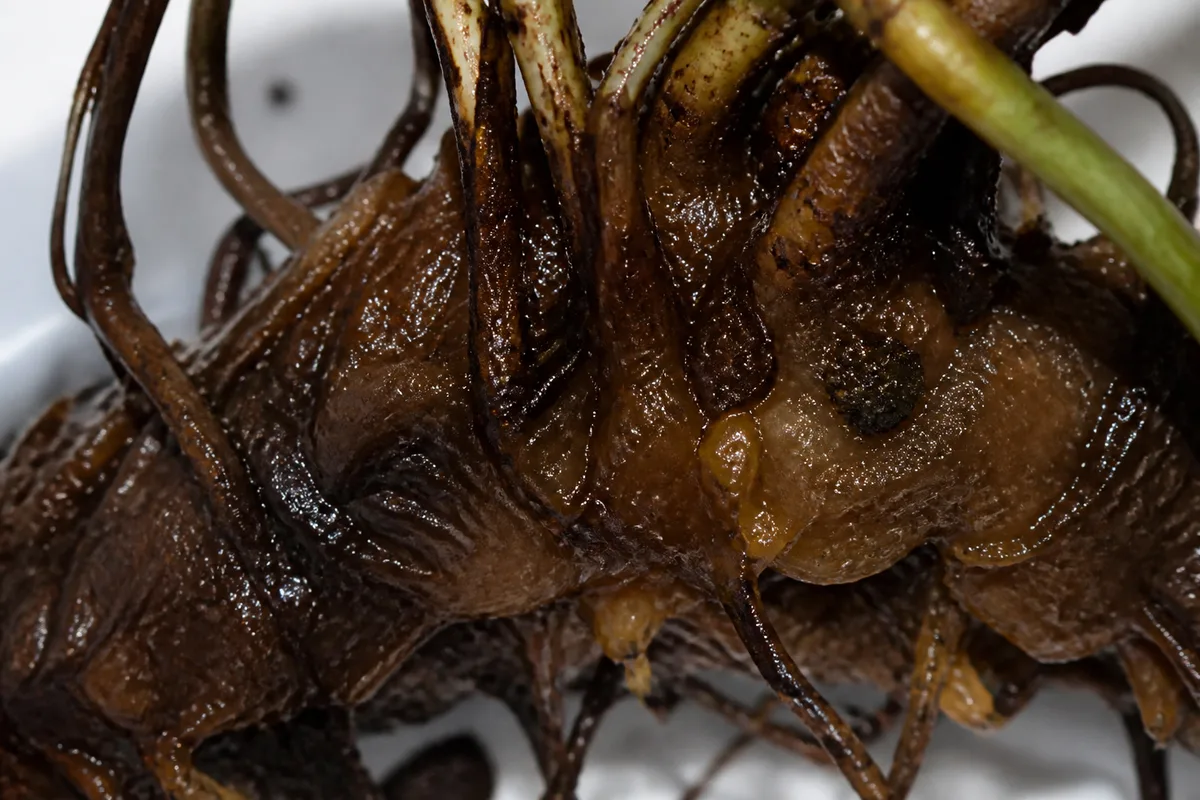
Root Rot symptoms on Java Fern - compare with healthy tissue on the same plant.
Rot vs sporangia vs melt
- Rhizome rot: soft black stem, sour smell, fronds pulling free at the base
- Sporangia: symmetrical dark bumps on firm leaf undersides-normal spores, not disease-see
black-spots - Acclimation melt: whole fronds yellow days after purchase with a firm rhizome-see
yellow-leaves - Nutrient drought: pale thin new tips on a firm woody stem-see
underwatering
Do not confuse sporangia on leaf undersides with stem disease. Rot always involves the horizontal rhizome, not isolated leaf spots.
Why Java Fern gets rhizome rot
The rhizome must stay in oxygenated tank water, not buried in anaerobic substrate. Gravel, sand, and aquasoil packed against the stem suffocate tissue the way waterlogged soil kills terrestrial roots. Detritus trapped in slow flow behind hardscape can decay against the rhizome for weeks before you notice yellowing fronds.
Microsorum pteropus is an epiphyte-evolved to cling to stones and submerged wood in Southeast Asian streams and river margins, not to sit under sediment. Aquarium Co-Op notes that burying the rhizome under gravel or sand causes it to rot; only the twig-like rhizome surface and holdfast roots should contact hardscape.
Burial during planting or rescape
The most common trigger is planting Java Fern like a sword plant-pushing the rhizome into gravel “to hold it.” Partial burial during rescapes (“just the back third under aquasoil”) fails the same way. Dennerle lists Microsorum pteropus as an epiphyte that must not be planted in substrate/27914).
Detritus in dead-flow zones
A rhizome wedged behind driftwood in a low-flow pocket collects mulm. Organic debris decays against the stem, producing local anaerobic rot even when the rest of the tank tests fine. Vacuum crevices during weekly maintenance.
Uncycled-tank ammonia vs burial rot
In a new uncycled aquarium, ammonia or nitrite spikes can stress epiphyte tissue while you are still learning to mount plants. Burial rot and ammonia damage can overlap-softening at the rhizome base with fish gasping elsewhere points to cycle failure, not surgery alone. Test ammonia and nitrite before assuming burial is the only cause. If parameters are toxic, partial water changes take priority over glue remounting.
Lookalike symptoms to rule out
| Pattern | Rhizome feel | Smell | Key test | Read next |
|---|---|---|---|---|
| Rhizome rot (burial) | Soft, black at substrate contact | Sour | Section under gravel | This page |
| Rhizome rot (mulm) | Soft where debris sits | Sour | Dead-flow pocket behind wood | This page |
| Acclimation melt | Firm throughout | None | Recent purchase; adequate nitrate | yellow-leaves |
| Nutrient drought | Firm; pale new tips | None | Zero nitrate; skipped changes | underwatering |
| Stagnant organics | Soft if buried in mulm | May be tank-wide | Cloudy water; rare changes | overwatering |
| Ammonia spike (uncycled) | May soften at base | Tank stress | Ammonia or nitrite above zero | Watering guide |
| Sporangia | Firm | None | Bumps on leaf underside only | black-spots |
The fastest branch point: press the horizontal stem. Firm and woody with only old-frond melt is not rot. Mushy, jelly-like, or foul-smelling tissue means trim surgery on this page.
How to confirm the cause
Work through this checklist in order:
- Unthread or lift the plant from wood, moss wrap, or substrate until the full rhizome length is visible.
- Burial inspection-any section under gravel, sand, aquasoil, or thick moss mat is suspect. Tropica: if planted in the bottom, do not cover the rhizome.
- Firmness test-press along the stem with a blunt tool. Healthy tissue resists; rot yields like wet foam.
- Smell test-sour anaerobic odor at the stem confirms decay. No smell with firm rhizome suggests melt or drought instead.
- Holdfast check-fine roots may look brown and intact while the rhizome above them has already softened.
- Water tests-run ammonia, nitrite, and nitrate. Toxic ammonia in a new tank requires water changes before plant surgery alone will hold.
- Flow check-rhizome trapped in a dead zone behind hardscape? Mulm accumulation fits rot even without burial.
- Sporangia check-dark bumps only on firm leaf undersides, with a firm rhizome, are normal-not rot.
Confirmed rot: soft black rhizome tissue, sour smell, and/or clear burial or mulm contact. Suspected but unconfirmed: complete the checklist before discarding the plant.
First fix for Java Fern
Trim rotted rhizome back to firm tissue-one clear first action:
- Remove the plant from substrate or crowded moss that hides the rhizome.
- Cut black tissue with sharp, clean scissors until the cross-section looks firm and greenish-brown inside.
- Pat the cut section dry briefly if using gel glue.
Secondary steps immediately after trim:
- Mount on root or stone with thread or small dabs of cyanoacrylate gel on holdfast roots-Aquarium Co-Op recommends holding glued rhizome 30 seconds before submerging.
- Keep the entire scaly rhizome surface exposed to gentle flow.
- Vacuum heavy detritus from the attachment zone.
- Run a partial water change if ammonia, nitrite, or nitrate is out of range.
Do not replant trimmed sections under substrate “to help them root.”
Step-by-step recovery
- Remove the plant from substrate, moss wrap, or crowded hardscape that hides the rhizome.
- Trim black tissue until the cross-section feels firm-on standard Java Fern, aim to leave at least 2–3 cm of healthy rhizome if possible; Windelov and Needle Leaf cultivars have shorter segments and tolerate less aggressive cuts.
- Remount the healthy section on rock or driftwood above the substrate line-thread, gel glue on roots only, or a crevice wedge in Dutch-style scapes.
- Partial water change if parameters are off; otherwise resume 25–30% weekly changes.
- Do not move the plant for three weeks-disturbing fresh glue or thread stresses recovering tissue.
- Judge recovery by new frond tips, not old melted leaves. Dead frond tissue will not re-green.
Example recovery path
A rescaped 20-gallon community tank buried roughly 4 cm of Java Fern rhizome in aquasoil to anchor the plant. Within three weeks the buried section turned black and mushy while holdfast roots still looked intact. The keeper trimmed 4 cm of rot, gel-glued the firm remainder to driftwood with three small dots on the roots, ran 30% weekly water changes at 76°F, and saw the first new frond tip at week five. Old melted leaves were trimmed only after that new growth stayed green.
Recovery timeline
Java Fern is a slow grower-rhizome surgery recovery takes weeks, not days. Dead or melted frond tissue will not revert. Success means new opaque fronds emerging from firm rhizome.
| Severity | Rhizome remaining | Expected recovery |
|---|---|---|
| Mild | Trimmed 1–2 cm; most rhizome firm | New frond tip in 3–4 weeks at 22–28°C/27914) |
| Moderate | ~50% rhizome removed; 2–3 cm firm section left | 4–6 weeks to first stable new frond |
| Severe | Only 2 cm firm segment after trim | 6–8+ weeks; may produce one small frond then stall if segment too short |
Week-by-week path:
- Days 1–3: Trim, remount, stabilize flow; no repositioning.
- Weeks 1–2: Old fronds may continue melting-normal; watch rhizome firmness, not leaf color.
- Weeks 3–5: First new frond tip confirms salvage; leave it undisturbed.
- Week 6+: Trim fully dead old fronds only after new growth is established.
If the rhizome softens again during this window, repeat trim or discard-advancing rot outpaces slow epiphyte regrowth.
What not to do
Do not plant Java Fern like a sword plant with the rhizome under gravel. Do not leave rotting rhizome in the tank hoping it recovers-it spreads and fouls water. Do not dose antibiotics; this is physical decay from burial or anaerobic contact, not a mystery pathogen. Do not bury a trimmed rhizome “to help it root.” Do not confuse sporangia with stem rot. Do not apply glue across the entire rhizome surface-suffocation can trigger new decay.
How to prevent rhizome rot next time
Follow the epiphyte rule: rhizome above substrate, holdfast roots gripping hardscape. In Dutch-style tanks, wedge the rhizome into crevices on wood rather than under soil. Keep slow growth in mind-recovery takes weeks after a bad burial.
Vacuum detritus weekly from crevices behind driftwood. Position the rhizome in gentle flow without blasting fronds against the heater. For remount technique after rescapes, see the Java Fern repotting guide. For baseline mounting and species context, see the Java Fern overview.
When to worry / when to discard
Escalate immediately if:
- Black tissue advances along the rhizome week over week despite trim and remount
- The entire rhizome is black, soft, and foul-smelling on inspection-discard; it cannot be saved
- Ammonia or nitrite stays above zero in a new tank-fix the cycle with water changes, not more glue
- Less than 2 cm of firm rhizome remains after trim on standard form-salvage is unlikely; take a healthy plantlet from a firm leaf if one exists
Cosmetic melt on a firm rhizome after you have remounted is not urgent-watch stem firmness, not old leaf color.
Rot spreads through the rhizome faster than melt consumes individual leaves. Waiting for “one more week” while the stem softens often means total loss.
When to use this page vs other Java Fern guides
- Java Fern watering guide - Use for routine moisture checks before assuming root rot is the main issue.
- Java Fern problems hub - Browse all 28 common issues on this species.
- Yellow Leaves on Java Fern - Different entry point when symptoms overlap with root rot.
- Wilting on Java Fern - Different entry point when symptoms overlap with root rot.
Related Java Fern guides
- Java Fern overview
- Java Fern watering
- Java Fern light
- Java Fern soil
- Yellow Leaves on Java Fern
- Wilting on Java Fern
- Java Fern problems
Related tool
Use the Root Rot Risk Checker to narrow causes for root rot on this plant before changing multiple variables at once.