Underwatering on Java Fern: Causes, Checks & Fixes
Quick answer
Submerged Java Fern cannot dry out, but nutrient drought from infrequent water changes, zero nitrate in heavily planted tanks, or open-top evaporation without topping off starves this epiphyte. Resume 25–30% weekly water changes before dosing fertilizer.
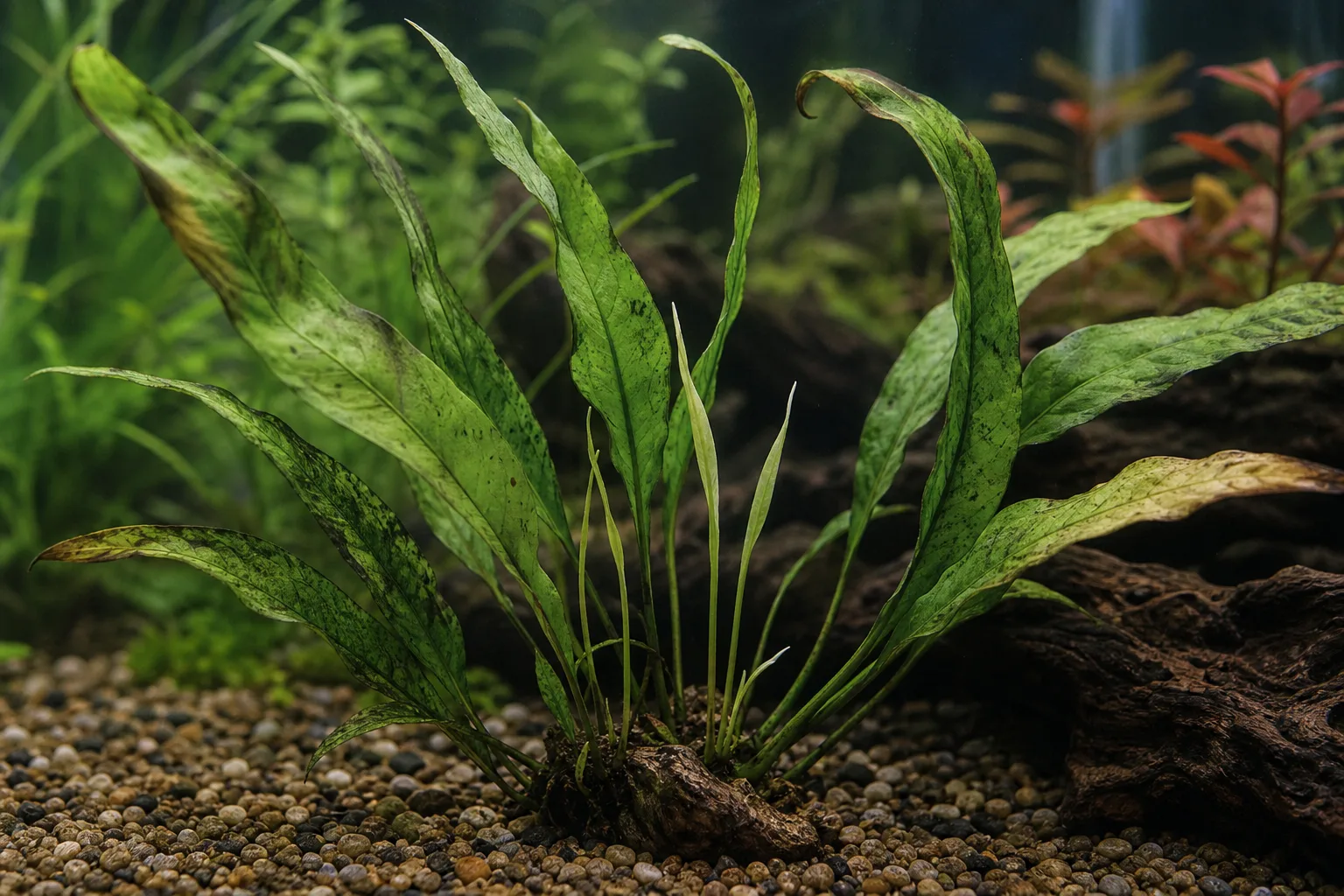
Underwatering on Java Fern: Causes, Checks & Fixes
This guide covers underwatering on Java Fern. See also the general Underwatering guide, watering, and light pages for this plant.
Underwatering on Java Fern: Causes, Checks & Fixes
Quick answer
Submerged Java Fern never needs watering from a can-but it can suffer nutrient drought when tanks get few water changes, heavy plant loads strip the column bare, or open-top evaporation concentrates waste without fresh input. Microsorum pteropus pulls minerals from the water column through leaves and rhizome, not buried substrate.
First fix: resume 25–30% weekly partial water changes before adding fertilizer. Match replacement water to tank temperature and dechlorinate as usual.
This page covers symptom diagnosis and nutrient-drought recovery. For ongoing temperature, pH, GH/KH targets, and baseline change schedules, see the Java Fern watering guide. For chronic nitrate dosing workflow, see nitrogen-deficiency. For the opposite problem-stagnant organics and buried rhizome-see overwatering.
What underwatering looks like on Java Fern
Nutrient drought shows up as pale, thin new fronds emerging from a firm rhizome that barely extends. Older fronds may brown at tips while the stem stays woody-not soft or black. Growth stalls for weeks even though the plant is fully submerged.
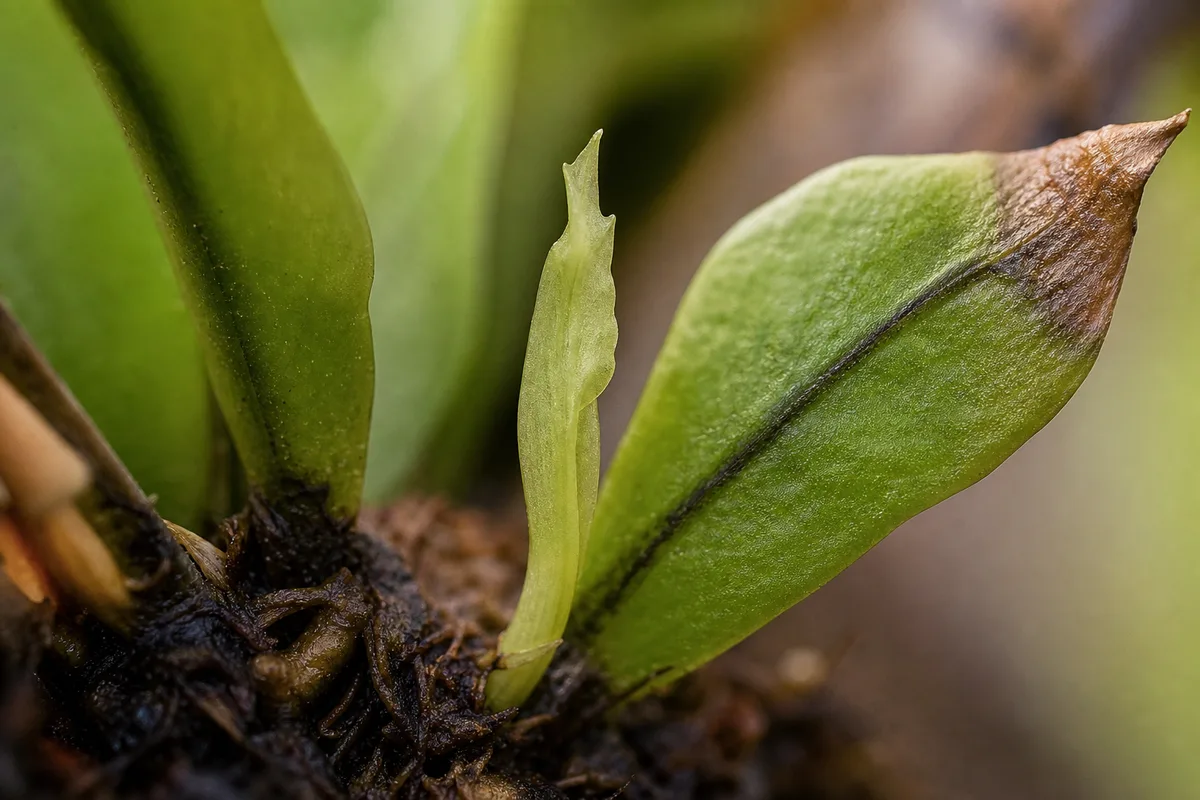
Underwatering symptoms on Java Fern - compare with healthy tissue on the same plant.
Drought vs rot vs deficiency at a glance
- Nutrient drought: pale new tips, thin leaves, firm rhizome, zero to 5 ppm nitrate after weeks of skipped changes
- Rhizome rot: yellowing climbs from a soft, black, foul-smelling base-see
root-rot - Nitrogen deficiency: gradual pale yellow on established older fronds over weeks-see
nitrogen-deficiencyandpale-leaves - Acclimation melt: whole-frond yellowing days after purchase with adequate nitrate-see
yellow-leaves
Old frond tip browning from drought will not re-green. Recovery success is measured by new opaque green fronds at the rhizome tip, not by old damaged tissue.
Why Java Fern shows underwatering stress
Java Fern is a slow-growing epiphyte on root or stone. Holdfast roots anchor to hardscape; they do not feed from gravel the way sword plants do. When dissolved nitrogen, phosphate, and trace minerals drop too low for too long, this species yellows and stalls before the rhizome fails-unlike rot, where the stem softens first.
Nutrient-column starvation (most common)
In shrimp-only nano tanks, heavily planted stem setups, or any aquarium where fast growers outcompete slow epiphytes, nitrates can read near zero while Java Fern sits mounted in flow. Fish waste alone may not replenish the column if you run aggressive filtration, skip fertilizer, and perform only small top-offs. Tropica recommends 25–50% weekly water changes while tanks establish-many keepers find that monthly mini-changes under 10% leave planted community tanks chronically lean.
Open-top evaporation and concentrated waste
Open-top aquariums lose water to evaporation daily. If you top off with plain water but rarely partial-change, dissolved organics and minerals concentrate while nitrate may still read misleadingly low in a lightly stocked tank. The fern experiences starving water-high dissolved solids without fresh nitrogen input. Top evaporation with dechlorinated water and schedule regular partial changes; evaporation top-off alone is not a water change.
Cold water and low-light slowdown
Cold water below 22°C/27914) slows nutrient uptake and leaf replacement. Very dim low-light conditions reduce demand but also extend recovery-pale new fronds may persist longer before greening even after you fix the water-change schedule.
Cause-to-fix matrix
| Cause | Typical tank | Key test | First action |
|---|---|---|---|
| Skipped water changes | Busy keeper, “filter handles it” mindset | Nitrate zero to 5 ppm; month-old water | Resume 25–30% weekly partial changes |
| Heavy planting, no dosing | Stem-heavy scape, slow epiphyte on wood | Fast plants green, Java Fern pale | Partial change then light all-in-one fertilizer at half label |
| Open-top evaporation only | Rimless, no lid, frequent top-off | TDS creep; small volume lost daily | Top off and weekly partial change |
| Shrimp-only / low bioload | No fish waste, sponge filter | Zero nitrate for weeks | Dose aquarium fertilizer lightly; see fertilizer guide |
| Cold or dim tank | Unheated room, shaded corner | Temp under 20°C; PAR very low | Raise temp toward 22–28°C band; modest photoperiod within Easy-plant limits |
High-tech tanks running Estimative Index dosing may show intentionally low nitrate-that is not drought. This page targets neglected low-tech setups where zero nitrate pairs with skipped maintenance, not deliberate EI targets.
How to confirm the cause
Work through these checks in order:
- Rhizome feel-Press the horizontal stem. Firm and woody supports drought diagnosis. Soft black tissue means burial or rot-read
root-rotinstead. - Water-change log-When did you last remove 25% or more of the tank volume? Many planted community keepers find monthly changes under 10% insufficient once stem plants and fish load climb.
- Nitrate and phosphate tests-Zero nitrate for weeks with pale established fronds points to column starvation. Sudden whole-frond melt after stable readings suggests acclimation-see
yellow-leaves. - Mounting check-Rhizome exposed on wood or stone, not buried. Buried rhizomes rot even in “well-watered” tanks.
- Evaporation pattern-Open-top tank with daily top-off but no partial changes? Concentrated waste fits drought mechanics.
- Sporangia check-Symmetrical dark bumps on firm leaf undersides are normal reproductive structures, not deficiency spots.
| Pattern | Nitrate | Rhizome | Water-change history | Read next |
|---|---|---|---|---|
| Nutrient drought | Zero to 5 ppm | Firm | Weeks of small or no changes | This page |
| Rhizome rot | Variable | Soft, black, foul | Burial or mulm at base | root-rot |
| Nitrogen deficiency (chronic) | Zero for weeks | Firm | Some changes but no fertilizer | nitrogen-deficiency |
| Stagnant / organic overload | May be high | Soft if buried in mulm | Rare changes + debris at stem | overwatering |
| Acclimation melt | Often 10–20 ppm | Firm | Recent purchase or rescape | yellow-leaves |
Confirmed nutrient drought: firm rhizome, pale thin new growth, low nitrate, and a maintenance gap you can name. Suspected but unconfirmed: run tests and review the matrix before mega-dosing.
First fix for Java Fern
Resume weekly 25–30% partial water changes-one clear first action:
- Match replacement water to tank temperature within 2°F and dechlorinate.
- Vacuum lightly around the rhizome attachment without burying the stem.
- Wait 48 hours, retest nitrate, then add a balanced liquid aquarium fertilizer at half label strength once if nitrate remains under 5 ppm in a planted tank.
Secondary steps only after the first partial change:
- Keep temperature in the 22–28°C band/27914) for steady leaf formation.
- Trim only fully dead fronds at the rhizome; leave pale but firm tissue until new green growth appears if the rhizome is healthy.
- If water smells foul or ammonia reads above zero, partial-change before dosing-fixing starvation in foul water requires a water change first, not fertilizer alone.
- For turtle tanks or heavy bioload, see the watering guide section on 30–40% weekly changes in warm stocked setups.
Do not bury the rhizome in root tabs hoping to fix starvation-covering it causes rot. Do not mega-dose fertilizer in one day on a stressed plant.
Recovery timeline
Nutrient drought recovery is slower than stem plants because Java Fern is a slow grower. Dead or pale old frond tips will not revert. Judge success by new frond color at the rhizome, not old leaf margins.
| Severity | Signs | Expected recovery |
|---|---|---|
| Mild | Pale new tips; firm rhizome; nitrate 5–10 ppm | First greener new frond in 2–3 weeks after resumed changes |
| Moderate | Thin pale new growth; zero nitrate for weeks | 3–4 weeks to opaque green new leaf at stable 22–28°C |
| Severe | Stalled rhizome extension; months at zero nitrate | 4–6 weeks or longer in cold or very dim tanks |
Week-by-week path:
- Days 1–7: Partial change; stop skipping maintenance; half-strength fertilizer only if water tests clean.
- Weeks 2–3: Watch for the first darker green new frond-recovery confirmed when it stays opaque without further thinning.
- Weeks 4–6: Trim residual brown-tipped old fronds if new growth is established.
Example recovery path: A Java Fern on driftwood in a 15-gallon community tank showed pale thin new fronds and zero nitrate after six weeks of 5% top-offs only. The rhizome stayed firm. The keeper resumed 30% weekly changes, dosed half-strength liquid fertilizer once after nitrate retested at 3 ppm, and saw a solid green new frond at day twenty-two.
Lookalike symptoms
| Pattern | Key clue | Read next |
|---|---|---|
| Gradual pale yellow on older fronds | Weeks of zero nitrate; dosing workflow needed | nitrogen-deficiency |
| Whole-frond melt after purchase | Firm rhizome; nitrate adequate | yellow-leaves |
| Soft black rhizome base | Burial, mulm, or decay | root-rot |
| Melting with cloudy water / mulm at stem | Stagnant organics, not lean water | overwatering |
| Glassy transparency before yellow | Melt-first presentation | transparent-leaves |
| Leggy pale fronds, long gaps | Too little light, not drought | not-enough-light |
| Pinholes in older leaves | Potassium shortage | potassium-deficiency |
Under nutrient drought the rhizome stays firm while new growth pales. Under burial rot the rhizome goes soft first-that touch test is the fastest branch point.
What not to do
Do not bury the rhizome in root tabs hoping to fix starvation-covering it causes rot. Do not mega-dose fertilizer in one day on a stressed plant. Do not confuse sporangia on firm leaf undersides with deficiency spots. Do not assume a can of tap water replaces a partial water change. Do not dose heavily into foul or ammonia-positive water-change water first.
How to prevent underwatering
Schedule consistent 25–30% weekly partial changes for most community planted tanks-details and bioload adjustments in the watering guide. Top off open-top evaporation with fresh dechlorinated water between changes. Match feeding to slow growth-light liquid fertilizer beats letting nitrate sit at zero for months in planted aquaria.
Mount the rhizome on rock or driftwood with flow across the stem. In shrimp-only or lightly stocked tanks, plan fertilizer from day one rather than waiting for visible pale fronds.
When to worry
Cosmetic pale new tips on a firm rhizome after you resume changes are not urgent. Escalate if:
- The rhizome softens or smells-treat as rot on
root-rot, not drought - Nitrate and phosphate stay undetectable for three or more months with zero new growth-full workflow on
nitrogen-deficiency - Every new frond melts within days of a full fertilizer pour-read
fertilizer-burn
When to use this page vs other Java Fern guides
- Java Fern watering guide - Use for routine moisture checks before assuming underwatering is the main issue.
- Java Fern problems hub - Browse all 28 common issues on this species.
- Wilting on Java Fern - Different entry point when symptoms overlap with underwatering.
- Yellow Leaves on Java Fern - Different entry point when symptoms overlap with underwatering.
- Drooping Leaves on Java Fern - Different entry point when symptoms overlap with underwatering.
Related Java Fern guides
- Java Fern overview
- Java Fern watering
- Java Fern light
- Java Fern soil
- Wilting on Java Fern
- Yellow Leaves on Java Fern
- Drooping Leaves on Java Fern
- Curling Leaves on Java Fern
- Java Fern problems
Related tool
Use the Plant Watering Calculator to narrow causes for underwatering on this plant before changing multiple variables at once.