Not Enough Light on Java Fern: Causes, Checks & Fixes
Quick answer
Java Fern tolerates low light better than most aquarium plants, but extreme dimness causes pale thin fronds and stalled growth. First step: move the exposed rhizome to a brighter zone and target roughly 20–40 µmol PAR with six to eight hours of LED daily-increase gradually to avoid melt shock.
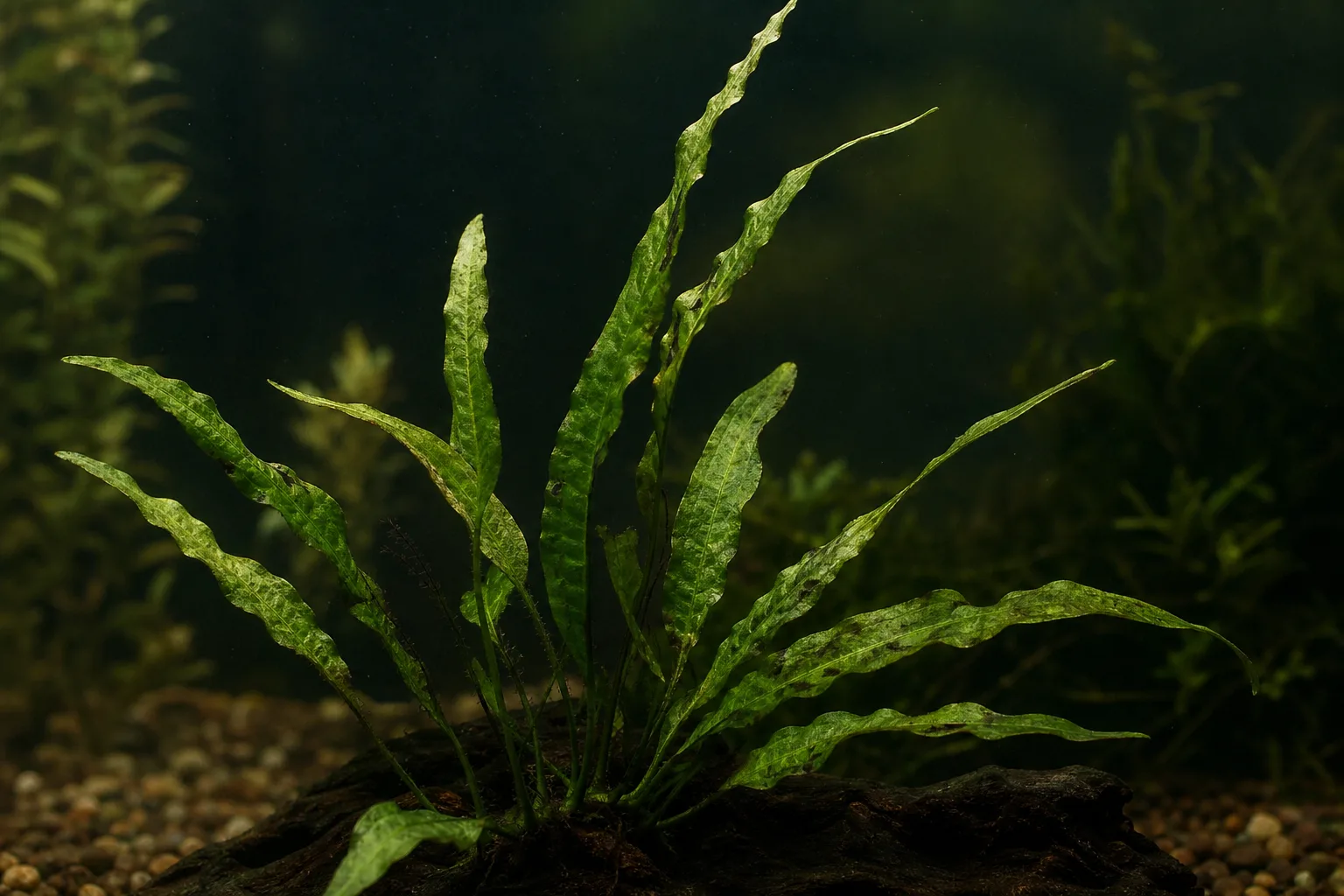
Not Enough Light on Java Fern: Causes, Checks & Fixes
This guide covers not enough light on Java Fern. See also the general Not Enough Light guide, watering, and light pages for this plant.
Not Enough Light on Java Fern: Causes, Checks & Fixes
Quick answer
Java Fern (Microsorum pteropus) is famous for low light tolerance-but low light is not zero light. In back corners below weak starter LEDs, rhizomes tucked under driftwood arches, or tanks where floaters now block the only light path, the plant survives on old leaves while new fronds stay pale, thin, and absent for months.
First step: relocate the exposed rhizome to a brighter zone in the tank and extend photoperiod one hour per week toward six to eight hours daily. Target roughly 20–40 µmol/m²/s PAR at the frond surface-the comfortable band from our Java Fern light guide-not blinding high-tech intensity. Do not bury the rhizome, crank the dimmer to maximum, or dose fertilizer as a first response.
This page is reactive troubleshooting for a fern that already looks dim or stalled. For proactive placement, PAR measurement, and fixture selection, start with the light requirements guide. If fronds are visibly stretched with wide spacing along the rhizome, also read leggy growth-stretch is the advanced stage of chronic insufficient light, and the fix overlaps.
What not enough light looks like on Java Fern
Java Fern grows slowly even in good conditions. Low-light stress pushes that pace toward zero visible progress while existing fronds age out.
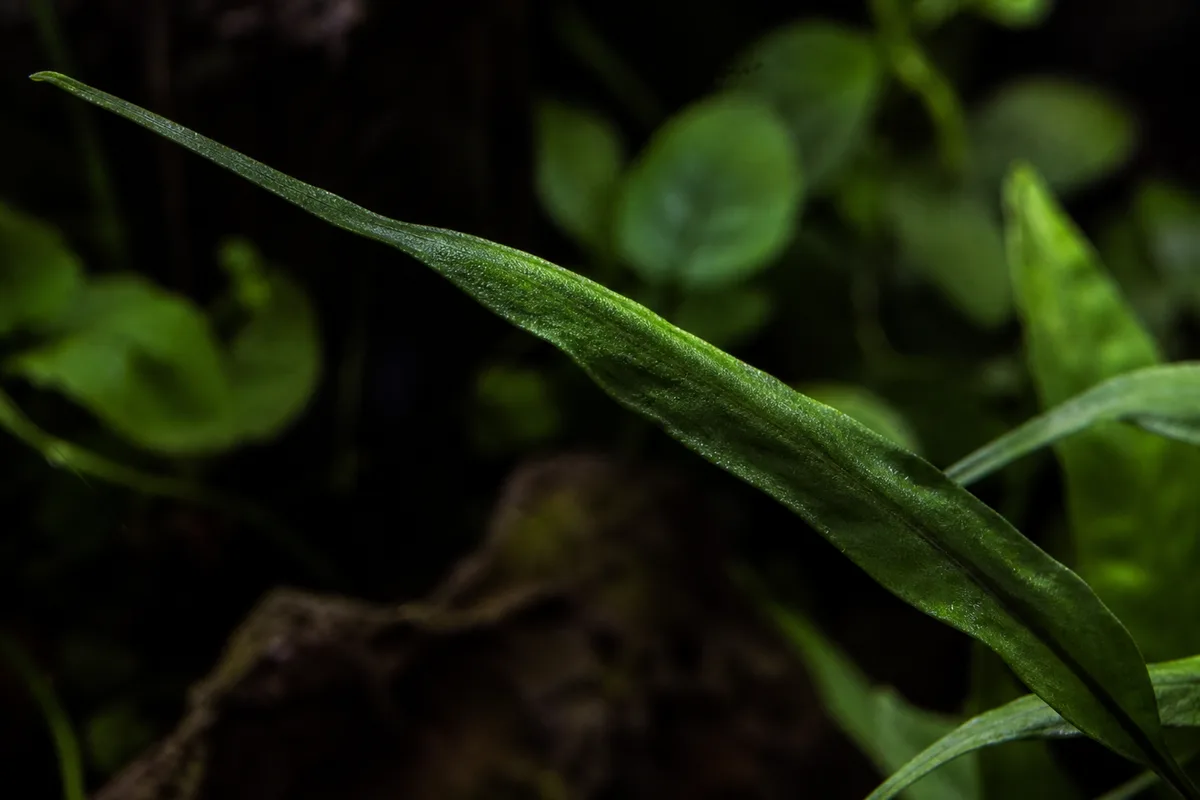
Not Enough Light symptoms on Java Fern - compare with healthy tissue on the same plant.
Watch for these patterns on the rhizome tip and newest fronds:
- No new frond buds for two to three months while the rhizome stays firm and attached to hardscape
- Pale yellow-green new tissue compared with older, deeper green blades on the same plant
- Thin, elongated fronds on standard or Windelov forms that normally grow broad and leathery
- Directional lean-all fronds angle toward one brighter corner, the tank front, or the surface, like plants reaching for light in dim conditions
- Rhizome that barely extends over seasons; the cluster looks frozen in place
- Algae on old fronds while the plant weakens-competing organisms use the limited photons available; this is competition in a dim tank, not proof of too much light
- Strong contrast within the same tank-a Java Fern higher on driftwood grows while a shaded clone on the bottom does nothing
What does not usually mean chronic low light on Java Fern:
- Transparent or glassy patches spreading quickly on emersed-grown leaves right after purchase-acclimation melt, not months of darkness
- Soft mushy rhizome with foul odor-rhizome rot from burial or damage, not light alone
- Dense hair or spot algae on every leaf under ten-plus hour photoperiods-often too much light or nutrient imbalance on a slow grower
- Naturally slim fronds on narrow-leaf or needle-leaf cultivars-baseline shape, not etiolation unless extra length and paleness appear
Because Java Fern is an epiphyte with a horizontal rhizome, symptoms show at the growing tip and newest blades. An old dark leaf on the back may age normally while the front tip fails to sprout-that localized stall is a placement clue.
Why Java Fern lacks sufficient light
Microsorum pteropus evolved as a helophyte and lithophyte on shaded stream margins in tropical Asia-filtered light exists, but perpetual shadow does not. In aquariums, insufficient usable light usually comes from tank geometry and shade, not from choosing the wrong species.
Common causes in low-tech planted tanks:
- Weak stock hood LEDs on tall tanks - light intensity drops with depth; a rhizome in the bottom third may receive a fraction of the PAR at the surface
- Hardscape and floating-plant shade - duckweed, frogbit, or a tall driftwood arch blocks the only light path to a rhizome tied underneath
- Photoperiod too short or inconsistent - room ambient light does not replace a dedicated aquarium lamp; four-to-five-hour schedules limit total energy capture
- Back-corner placement below a single small fixture on a wide tank-the center and front get photons; the rear epiphyte does not
- Dirty glass, lids, or condensation film - cuts PAR more than owners notice
- Competing stem-plant walls that grew in after setup and now overshadow the fern
- Buried or partially buried rhizomes - covering the rhizome causes rot and stressed upward growth that mimics pale weak fronds; culture error, not pure darkness
Java Fern absorbs nutrients primarily through the water column and rhizome, not heavy root feeding in substrate. Without enough light to drive photosynthesis, pale fronds persist even when nitrates are present-a pattern that looks like pale leaves from deficiency but starts with photons not reaching chlorophyll.
How to confirm the cause
Work through these checks before buying expensive gear or changing fertilizer:
- Rhizome placement - Is the growing tip in the lower third of a deep tank, under wood, or directly beneath floating plants?
- Night-tank look - Turn off room lights. If the Java Fern zone is nearly black while the surface under the fixture glows, aquarium light is not reaching the plant.
- Same-tank comparison - If another section of the same rhizome or a second mount higher on driftwood produces buds and the lower section does not, placement-not species-limits growth.
- Rhizome firmness - Press the rhizome. Firm and woody supports light stress or normal slowness; mushy, jelly-like, or foul-smelling tissue means rot-different emergency.
- Photoperiod audit - Log timer hours. Under six hours daily often correlates with stall in low-tech setups.
- Direction of lean - All fronds pointing one way confirms uneven or insufficient light, not random weakness.
- Recent tank history - New plants may melt emersed leaves without growing submersed replacements for several weeks; wait until melt stabilizes before blaming chronic low light.
- PAR estimate - If you have a meter, read at the frond. Below 15 µmol/m²/s means survival; 20–40 µmol is the comfortable low-to-moderate range detailed further on the light guide.
Confirmed low light: firm rhizome, no rot smell, no melt goo at frond bases, zero new fronds for months in a visibly shaded zone, improvement beginning within three to six weeks after repositioning.
Symptom lookalike table
| Pattern | Firm rhizome? | New growth? | Most likely cause |
|---|---|---|---|
| Pale thin fronds, lean toward light | Yes | Slow or absent | Insufficient light - reposition first |
| Long gaps between leaf bases, stretch | Yes | Thin new tips | Leggy etiolation - same fix; see leggy growth |
| Transparent melt on new purchase | Yes | Melt then occasional bud | Acclimation melt - wait; do not blast light |
| Mushy rhizome, foul smell | No | Collapsing stalks | Rhizome rot - see root rot |
| Pale new fronds in bright zone | Yes | Present but washed out | Nutrient lack - see pale leaves after light confirmed |
| No change for months, firm, dim zone | Yes | None | Normal slow growth vs low light - see slow growth if placement is already bright |
| Algae coat on blades, short fronds | Yes | Stunted | Too much light or imbalance - reduce before adding hours |
First fix for Java Fern
Relocate the rhizome to the brightest acceptable zone in the tank without burying it, then extend photoperiod by one hour per week until you reach six to eight hours daily.
Unwrap thread if needed and remount on rock or driftwood facing open water-not inside a cave shadow. Raise the cluster on a stone if deep substrate or tank height leaves the base in shade. Increase timer settings gradually; do not jump from four to ten hours overnight. Java Fern in sudden high PAR can melt; gradual improvement matches its low-light nature.
If the current fixture is inadequate for tank volume, upgrade within low-to-moderate Easy-plant targets rather than high-tech blast lighting. Aim for 20–40 µmol at the leaf per the PAR guide-not 60+ without shade.
After relocation and photoperiod adjustment, trim the thinnest oldest fronds at the rhizome with sharp scissors. This redirects energy to new compact leaves rather than maintaining pale stretched tissue-without cutting into the rhizome itself.
Step-by-step recovery
After the first placement fix, continue in this order:
- Clean the light path - Wipe aquarium glass, lid panels, and fixture lenses. Thin floating mats above the rhizome.
- Hold photoperiod steady each week - Add only one hour per week until you reach six to eight hours. Mass jumps trigger melt shock.
- Week 1–2 - Remove melting frond tips from shock if they appear, but avoid mass pruning.
- Week 3–4 - Watch for new frond buds along the rhizome. They should emerge with slightly broader, darker blades than the pale generation.
- Month 2–3 - Trim remaining unsightly pale fronds as replacements mature. Java Fern grows slowly-judge by rhizome advance and leaf quality, not daily change.
- Add liquid fertilizer only after new growth looks green and firm - Nutrients cannot replace photons in a dark tank; feeding before light invites algae.
Do not add CO₂ or heavy dosing until light is stable. Stressed plants in dim tanks rarely benefit from nutrient pushes.
Recovery timeline
Existing pale fronds do not re-darken or thicken once formed. A thin yellow-green leaf from a dark period stays thin-judge recovery by the next frond, not old blades.
Expect visible improvement in new frond color and thickness within three to six weeks after light correction in a warm tank. Full aesthetic recovery may take two to three months because Java Fern overview advances slowly.
Signs of improvement: darker green new tips, fronds no longer reaching horizontally toward the glass, firm rhizome with steady bud formation, shorter distance between new leaf bases.
Signs the problem is worsening: continued pale tips on every new frond, melt spreading from multiple leaves, or rhizome softening-last case means burial or rot, not simple low light.
Lookalike symptoms
Normal slow growth - Few new leaves per month but each frond is proportionally broad and green with no directional lean. See slow growth when placement and photoperiod are already adequate.
Leggy etiolation - Extra length and wide spacing between leaf bases along the rhizome; overlap with chronic dimness. Fix is identical: brighter placement and adequate photoperiod. Details on leggy growth.
Emersed-to-submersed melt - Older nursery leaves turn translucent-brown and drop after setup; rhizome firm; occasional new leaf within two to three weeks of planting points to acclimation-not months of shade.
Nutrient deficiency - General paleness or transparent tissue without extreme stretch while the plant sits in a well-lit zone; fix fertilizer after light is confirmed-see pale leaves.
Rhizome rot - Mushy rhizome, jelly discoloration, fronds detaching with goo; often from buried rhizome or physical damage-see root rot.
Too much light - Transparent patches, brown burn spots, or heavy algae on slow leaves under long photoperiods or high PAR; reduce intensity before adding more hours.
What not to do
Do not bury the rhizome in gravel to anchor or “feed” the plant while troubleshooting-covering it causes rot and weak upward fronds that mimic low light.
Do not jump to high PAR or long photoperiod immediately after months of shade-melt shock is common on this epiphyte.
Do not dose heavy fertilizer or iron in a dark tank to “wake up” Java Fern-without photosynthesis, nutrients feed algae instead.
Do not assume low light tolerance means no aquarium light-survival without growth still means insufficient energy for new fronds.
Do not judge recovery by old pale blades-only new frond quality confirms the fix worked.
Do not stack fixes on day one-reposition, set the timer ramp, wait three to six weeks, then adjust fertilizer or hardware.
How to prevent low-light stress
Plan Java Fern placement at aquascape setup: mount on midground hardscape where ambient tank light reaches the rhizome, not inside a cave shadow. Keep floaters thinned above epiphytes. Use a timer from day one and follow a grow-in schedule-start around six hours, then increase toward eight only after plants establish.
Match lighting to Easy-category plants: low demand does not mean no demand. For tall tanks, elevate the rhizome on hardscape rather than leaving it in the substrate shadow zone. Stable weekly water changes and temperatures in the 22–28°C range/27914) support regrowth after any lighting adjustment-see the Java Fern overview for full culture basics.
When to worry
Low light alone rarely kills a firm Java Fern rhizome; it stalls growth until conditions improve. Escalate when:
- The rhizome turns soft, discolored, or smells rotten-treat rot immediately, not light
- Transparent melt spreads on every new frond within days of a tank move-may be acclimation; hold gradual light, do not panic-prune the whole plant
- Algae coats all fronds under long photoperiods-reduce light duration and rebalance nutrients rather than adding more hours
- No new growth after six to eight weeks of confirmed good placement and upgraded moderate lighting-reinspect for buried rhizome sections, hidden rot, or chronic cold slowing metabolism
For a firm rhizome with no new fronds in a shaded corner, repositioning and a timer fix is enough urgency-patience matters on this slow species.
Conclusion
Not enough light on Java Fern is usually a placement and photoperiod problem, not a mystery disease. Confirm that aquarium light reaches the rhizome tip, separate normal slowness from months of zero new fronds, and move the plant to usable brightness before fertilizing or buying high-output gear. Recovery shows up as the next frond-darker, thicker, and closer to the rhizome-not repaired old tissue. Give the plant three to six weeks after the first fix, keep the rhizome exposed on hardscape, increase light gradually to avoid melt shock, and treat soft rhizome tissue as rot instead of dim light.
For PAR targets, photoperiod rules, and fixture selection, continue with the Java Fern light guide. For stretch-specific diagnosis, see leggy growth. For mushy rhizomes, see root rot.
When to use this page vs other Java Fern guides
- Java Fern watering guide - Use for routine moisture checks before assuming not enough light is the main issue.
- Java Fern problems hub - Browse all 28 common issues on this species.
- Leggy Growth on Java Fern - Different entry point when symptoms overlap with not enough light.
- Slow Growth on Java Fern - Different entry point when symptoms overlap with not enough light.
- Yellow Leaves on Java Fern - Different entry point when symptoms overlap with not enough light.