Java Moss Care Guide: Aquarium Growth, Light, and Trimming
Taxiphyllum barbieri
Keep Taxiphyllum barbieri submerged in stable freshwater, attach it to hardscape instead of burying it, use low to moderate light, and thin it when its center becomes too dense for water to pass through.
Java Moss Aquarium Care Guide
Start with wateringThe most common care mistake for Java MossJava Moss Watering and Water Quality →Java Moss care essentials
Light
Low to moderate aquarium light
Water
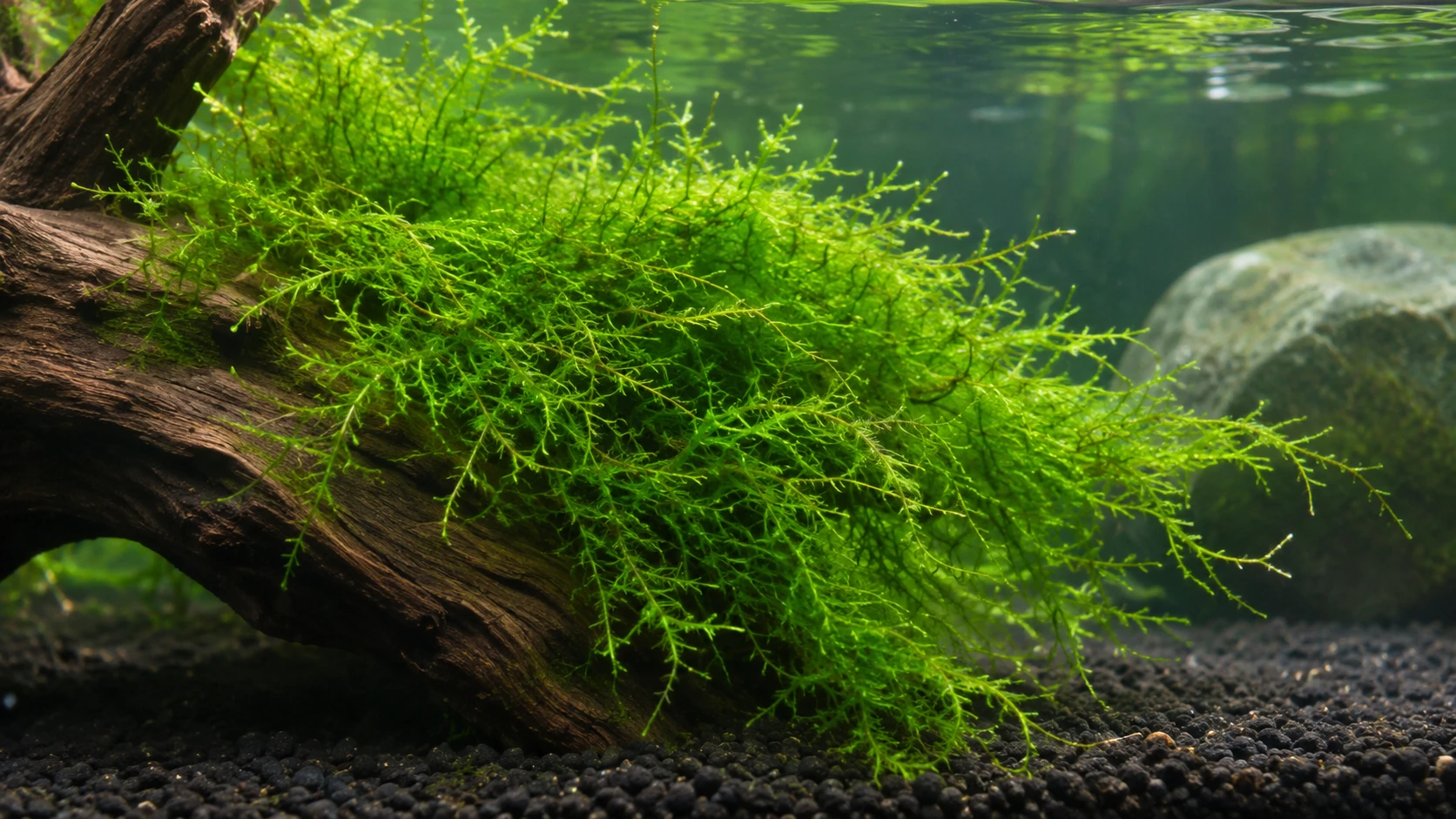
Grow Taxiphyllum barbieri fully submerged in a freshwater aquarium. It does not need terrestrial potting mix: tie or attach small portions to rock, driftwood, or aquarium-safe mesh and let them spread over the surface. Keep the aquarium water clean and allow gentle circulation through the moss rather than burying a thick clump in substrate.
Soil
Soil is not used for submerged aquarium culture. Attach the moss to a rock, piece of driftwood, or aquarium-safe mesh; do not bury it in terrestrial potting mix or a deep layer of substrate.
Humidity
Permanently submerged freshwater aquarium conditions
Temperature
22–28°C (72–82°F) on Dennerle's profile; other aquarium guides report a wider tolerance
Fertilizer
Usually unnecessary in a normally stocked aquarium; add nutrients only when the full tank's plant plan calls for them. Aquarium plant fertilizer used according to its label
About Java Moss
Java Moss is native to Southeast Asia, typically reaches About 3–10 cm thick in aquarium cultivation; width and shape depend on attachment and trimming indoors, with moderate in typical aquarium conditions; faster growth can make a mat dense growth. Java Moss has a mat forming aquatic moss; it anchors to hardscape with rhizoids rather than rooting in soil growth habit and part of the Hypnaceae family. It is also known as Taxiphyllum barbieri, Bogor moss, and Aquarium-trade Java moss.
| Detail | Information |
|---|---|
| Also known as | Taxiphyllum barbieri, Bogor moss, Aquarium-trade Java moss |
| Native region | Southeast Asia |
| Mature size | About 3–10 cm thick in aquarium cultivation; width and shape depend on attachment and trimming |
| Growth rate | Moderate in typical aquarium conditions; faster growth can make a mat dense |
| Growth habit | Mat Forming Aquatic Moss; It Anchors To Hardscape With Rhizoids Rather Than Rooting In Soil |
| Scientific name | Taxiphyllum barbieri |
| Family | Hypnaceae |
How to care for Java Moss?
How much light does Java Moss need?
Low to moderate aquarium light. Low aquarium lighting. Moderate planted-tank lighting. Brighter light when algae is controlled. low light
- Low to moderate aquarium light - Low to moderate aquarium light.
- Low aquarium lighting - Low aquarium lighting.
- Moderate planted-tank lighting - Moderate planted-tank lighting.
- Brighter light when algae is controlled - Brighter light when algae is controlled.
- low light - Low to moderate aquarium light.
When should you water Java Moss?
Grow Taxiphyllum barbieri fully submerged in a freshwater aquarium. It does not need terrestrial potting mix: tie or attach small portions to rock, driftwood, or aquarium-safe mesh and let them spread over the surface. Keep the aquarium water clean and allow gentle circulation through the moss rather than burying a thick clump in substrate.
- Inspect the center of attached mats as well as the outer tips. Dense - It does not need terrestrial potting mix: tie or attach small portions to rock, driftwood, or aquarium-safe mesh and let them spread over the surface.
- brown inner growth or a patch lifting away from its hardscape can indicate that the mat has become too thick for water to circulate through it - Keep the aquarium water clean and allow gentle circulation through the moss rather than burying a thick clump in substrate.
- Drain excess water - Grow Taxiphyllum barbieri fully submerged in a freshwater aquarium.
What soil works best for Java Moss?
Soil is not used for submerged aquarium culture. Attach the moss to a rock, piece of driftwood, or aquarium-safe mesh; do not bury it in terrestrial potting mix or a deep layer of substrate.
- Aquarium-safe rock or driftwood for attachment - Attach the moss to a rock, piece of driftwood, or aquarium-safe mesh; do not bury it in terrestrial potting mix or a deep layer of substrate.
- Aquarium-safe mesh for a carpet or wall - Attach the moss to a rock, piece of driftwood, or aquarium-safe mesh; do not bury it in terrestrial potting mix or a deep layer of substrate.
- Fishing line
- cotton thread
- or aquarium-safe cyanoacrylate gel to hold small portions while they attach - Attach the moss to a rock, piece of driftwood, or aquarium-safe mesh; do not bury it in terrestrial potting mix or a deep layer of substrate.
How to propagate Java Moss?
Snip a small healthy piece from a clean patch and place it where new growth is wanted. Tie it loosely to rock, driftwood, or mesh until it catches, then keep the layer thin enough for light and water to reach it.
- Cut or pull off a healthy fragment - Snip a small healthy piece from a clean patch and place it where new growth is wanted.
- Attach the fragment to a new hardscape surface - Tie it loosely to rock, driftwood, or mesh until it catches, then keep the layer thin enough for light and water to reach it.
- Let it grow in place, then trim and divide again as needed - Tie it loosely to rock, driftwood, or mesh until it catches, then keep the layer thin enough for light and water to reach it.
Grower notes for Java Moss
Check the Latin name when buying “Java moss”
Aquarium references disagree about the common name. Tropica and many aquarium guides use Java moss for Taxiphyllum barbieri, while Dennerle notes that older use of the name also referred to Vesicularia dubyana. Check the plant label and use the scientific name when matching care advice; this hub covers Taxiphyllum barbieri.
Attach it to hardscape rather than burying it
Secure small pieces to rock, driftwood, or mesh with cotton thread, fishing line, or aquarium-safe gel while it catches. Tropica notes that the moss will grow over surfaces, and aquarium guides describe rhizoids as anchors rather than soil-feeding roots.
Start with modest light
Tropica rates its light and CO2 demands low, and Dennerle lists low to medium light. Brighter light can produce denser growth, but Aquariadise warns that algae can smother the moss if a bright tank is poorly balanced.
Keep the center of the mat open
Trim a patch before it becomes a thick blanket. The Shrimp Farm reports that water flow may not reach inner strands in dense growth, which can brown and detach; thinning also helps keep clippings away from filters.
CO2 and fertilizer are optional
Java moss can grow in a low-tech aquarium without injected CO2 or regular nutrient dosing. Use aquarium-labeled products only when the wider tank needs them, and do not add terrestrial fertilizer to aquarium water.
Use fragments to make more patches
Cut a clean piece from a healthy mat and attach it somewhere new. Keep the clipping thin and secure until it grows onto the hardscape; loose fragments are easy to gather if you trim over a net or container.
Java Moss and Pets
This review found no species-specific veterinary toxicity classification for Taxiphyllum barbieri. Its absence from a public toxic-plant list is not proof that it is safe to eat. Keep aquariums secured from chewing pets and consult a veterinarian if an animal ingests moss or aquarium water.
Do not infer household-pet safety from Java moss being commonly grown in aquariums. No species-specific veterinary classification was found in this review; all household-pet entries remain caution / needs-review.
Watering Java Moss
For Java Moss, inspect the center of attached mats as well as the outer tips. Dense, brown inner growth or a patch lifting away from its hardscape can indicate that the mat has become too thick for water to circulate through it. and water there is no separate watering schedule for a submerged plant. Keep the tank stable for its fish and invertebrates, and trim or thin crowded moss so water can reach the inner growth. Growth can slow in cooler water or lower winter light. Keep temperature and lighting appropriate for the aquarium's other inhabitants instead of changing the whole tank to accelerate the moss.
| Detail | Information |
|---|---|
| How often | There is no separate watering schedule for a submerged plant. Keep the tank stable for its fish and invertebrates, and trim or thin crowded moss so water can reach the inner growth. |
| How to check | Inspect the center of attached mats as well as the outer tips. Dense, brown inner growth or a patch lifting away from its hardscape can indicate that the mat has become too thick for water to circulate through it. |
| Seasonal changes | Growth can slow in cooler water or lower winter light. Keep temperature and lighting appropriate for the aquarium's other inhabitants instead of changing the whole tank to accelerate the moss. |
Soil & potting for Java Moss
Use a mix of Aquarium-safe rock or driftwood for attachment, Aquarium-safe mesh for a carpet or wall, Fishing line, cotton thread, or aquarium-safe cyanoacrylate gel to hold small portions while they attach for Java Moss. Not applicable to a fully submerged plant. Keep water moving gently through the moss and prevent dense growth from blocking filter intakes. Repot not applicable; thin, divide, or reposition the attached mat instead of repotting, ideally in any time the aquarium is stable; trim small sections rather than disturbing the whole tank.
| Detail | Information |
|---|---|
| Recommended mix | Aquarium-safe rock or driftwood for attachment, Aquarium-safe mesh for a carpet or wall, Fishing line, cotton thread, or aquarium-safe cyanoacrylate gel to hold small portions while they attach |
| Drainage | Not applicable to a fully submerged plant. Keep water moving gently through the moss and prevent dense growth from blocking filter intakes. |
| Repotting frequency | Not applicable; thin, divide, or reposition the attached mat instead of repotting |
| Best season to repot | Any time the aquarium is stable; trim small sections rather than disturbing the whole tank |
Signs it needs repotting
- The moss has become a dense layer that traps debris or blocks water movement
- Inner growth browns while the outside remains green
- The patch lifts from its attachment or starts to cover a filter intake
Humidity & temperature for Java Moss
Java Moss prefers permanently submerged freshwater aquarium conditions. Keep temperatures around 22–28°C (72–82°F) on Dennerle's profile; other aquarium guides report a wider tolerance. Keep the aquarium stable for its fish and invertebrates; do not change their conditions just for the moss.
| Detail | Information |
|---|---|
| Humidity | Permanently submerged freshwater aquarium conditions |
| Ideal temperature | 22–28°C (72–82°F) on Dennerle's profile; other aquarium guides report a wider tolerance |
| Temperature notes | Keep the aquarium stable for its fish and invertebrates; do not change their conditions just for the moss. |
Humidity tips
- Keep the moss underwater during routine care and planting
- Avoid letting attached clumps dry out while moving them between tanks
Fertilizer & pruning for Java Moss
Feed Java Moss usually unnecessary in a normally stocked aquarium; add nutrients only when the full tank's plant plan calls for them using aquarium plant fertilizer used according to its label. The best feeding window is during active aquarium plant growth, if needed. Terrestrial garden fertilizer or any product not labeled for aquarium use.
| Detail | Information |
|---|---|
| Fertilizer schedule | Usually unnecessary in a normally stocked aquarium; add nutrients only when the full tank's plant plan calls for them |
| Best season | During active aquarium plant growth, if needed |
| Fertilizer type | Aquarium plant fertilizer used according to its label |
| What to avoid | Terrestrial garden fertilizer or any product not labeled for aquarium use |
Pruning
Trim overgrown mats with clean aquascaping scissors. Remove loose clippings from the aquarium so they do not lodge in filters, and keep the remaining mat open enough for water to circulate through its center.