Jungle Val Aquarium Care: Light, Substrate, and Runners
Vallisneria americana
Jungle Val is a tall, easy aquarium Vallisneria that roots in sand or gravel, needs aquarium light and steady nutrients, and spreads quickly by runners. Keep the crown uncovered and give its long leaves room to reach the surface.

Jungle Val (Vallisneria americana) Aquarium Care Guide
Start with wateringThe most common care mistake for Jungle ValView Jungle Val care guides →Jungle Val care essentials
Light
Moderate to bright planted-aquarium LED lighting
Water
Jungle Val is a submerged aquarium plant, not a terrestrial plant to water on a drying schedule. Keep the crown and leaves underwater in a stable freshwater tank. Plant its roots in sand or gravel while leaving the crown where the leaves meet the roots exposed above the substrate.
Soil
Root it in aquarium sand, fine gravel, or a planted-tank substrate. Nutrient- poor inert substrate may need root tabs or another aquarium-safe nutrient source.
Humidity
Temperature
About 18–28°C (64–82°F) in an aquarium-care reference; keep the whole tank within its livestock-safe range.
Fertilizer
Start with the nutrients supplied by fish waste and the substrate. If growth is weak in inert sand or gravel, use an aquarium-labeled root tab or plant fertilizer at its label rate; adjust after observing new growth.. Aquarium-safe root tabs or a planted-tank fertilizer when the substrate or water column is nutrient-poor
About Jungle Val
Jungle Val is native to Native across much of North America, with records extending into Mexico, the Caribbean, and Central America. Aquarium trade labels can vary, so check the supplier's species identification., typically reaches A submerged basal rosette with ribbon leaves. Flora references report leaves roughly 10–110 cm long; USGS records plants up to about 2 m in Louisiana. Aquarium-grown height varies with the stock, light, nutrients, and tank depth. indoors, with fast once established under suitable aquarium light and nutrition; spreads by runners. growth. Jungle Val has a fully submerged, rosette forming perennial aquatic herb that spreads by stolons growth habit and part of the Hydrocharitaceae family. It is also known as Jungle Vallisneria, American eelgrass, and Tape-grass.
| Detail | Information |
|---|---|
| Also known as | Jungle Vallisneria, American eelgrass, Tape-grass |
| Native region | Native across much of North America, with records extending into Mexico, the Caribbean, and Central America. Aquarium trade labels can vary, so check the supplier's species identification. |
| Mature size | A submerged basal rosette with ribbon leaves. Flora references report leaves roughly 10–110 cm long; USGS records plants up to about 2 m in Louisiana. Aquarium-grown height varies with the stock, light, nutrients, and tank depth. |
| Growth rate | Fast once established under suitable aquarium light and nutrition; spreads by runners. |
| Growth habit | Fully Submerged, Rosette Forming Perennial Aquatic Herb That Spreads By Stolons |
| Scientific name | Vallisneria americana |
| Family | Hydrocharitaceae |
How to care for Jungle Val?
How much light does Jungle Val need?
Moderate to bright planted-aquarium LED lighting. Moderate aquarium lighting. Higher light when nutrients and algae are kept in balance
- Moderate to bright planted-aquarium LED lighting - Moderate to bright planted-aquarium LED lighting.
- Moderate aquarium lighting - Moderate to bright planted-aquarium LED lighting.
- Higher light when nutrients and algae are kept in balance - Higher light when nutrients and algae are kept in balance.
When should you water Jungle Val?
Jungle Val is a submerged aquarium plant, not a terrestrial plant to water on a drying schedule. Keep the crown and leaves underwater in a stable freshwater tank. Plant its roots in sand or gravel while leaving the crown where the leaves meet the roots exposed above the substrate.
- Inspect the crown - Keep the crown and leaves underwater in a stable freshwater tank.
- roots - Plant its roots in sand or gravel while leaving the crown where the leaves meet the roots exposed above the substrate.
- leaf color
- and new runner growth - Keep the crown and leaves underwater in a stable freshwater tank.
- and monitor the aquarium's temperature and water chemistry. Yellowing or melting leaves can follow a recent move and can also point to light - Keep the crown and leaves underwater in a stable freshwater tank.
- nutrient
- or water-quality changes - Jungle Val is a submerged aquarium plant, not a terrestrial plant to water on a drying schedule.
- Drain excess water - Jungle Val is a submerged aquarium plant, not a terrestrial plant to water on a drying schedule.
What soil works best for Jungle Val?
Root it in aquarium sand, fine gravel, or a planted-tank substrate. Nutrient- poor inert substrate may need root tabs or another aquarium-safe nutrient source.
- Use aquarium-safe sand or fine gravel - Root it in aquarium sand, fine gravel, or a planted-tank substrate.
- or a nutrient-rich planted-tank substrate - Root it in aquarium sand, fine gravel, or a planted-tank substrate.
- Add root tabs only when the substrate is low in nutrients and the label is suitable for aquarium use. - Nutrient- poor inert substrate may need root tabs or another aquarium-safe nutrient source.
How to propagate Jungle Val?
An established plant sends runners through the substrate. Let a daughter rosette root and form leaves, then clip the connecting runner and replant it if you want another clump. Remove unwanted rooted daughters before they crowd slower plants or spread beyond the background area.
- Stolons or runners - An established plant sends runners through the substrate.
Grower notes for Jungle Val
Plan for tall leaves before planting
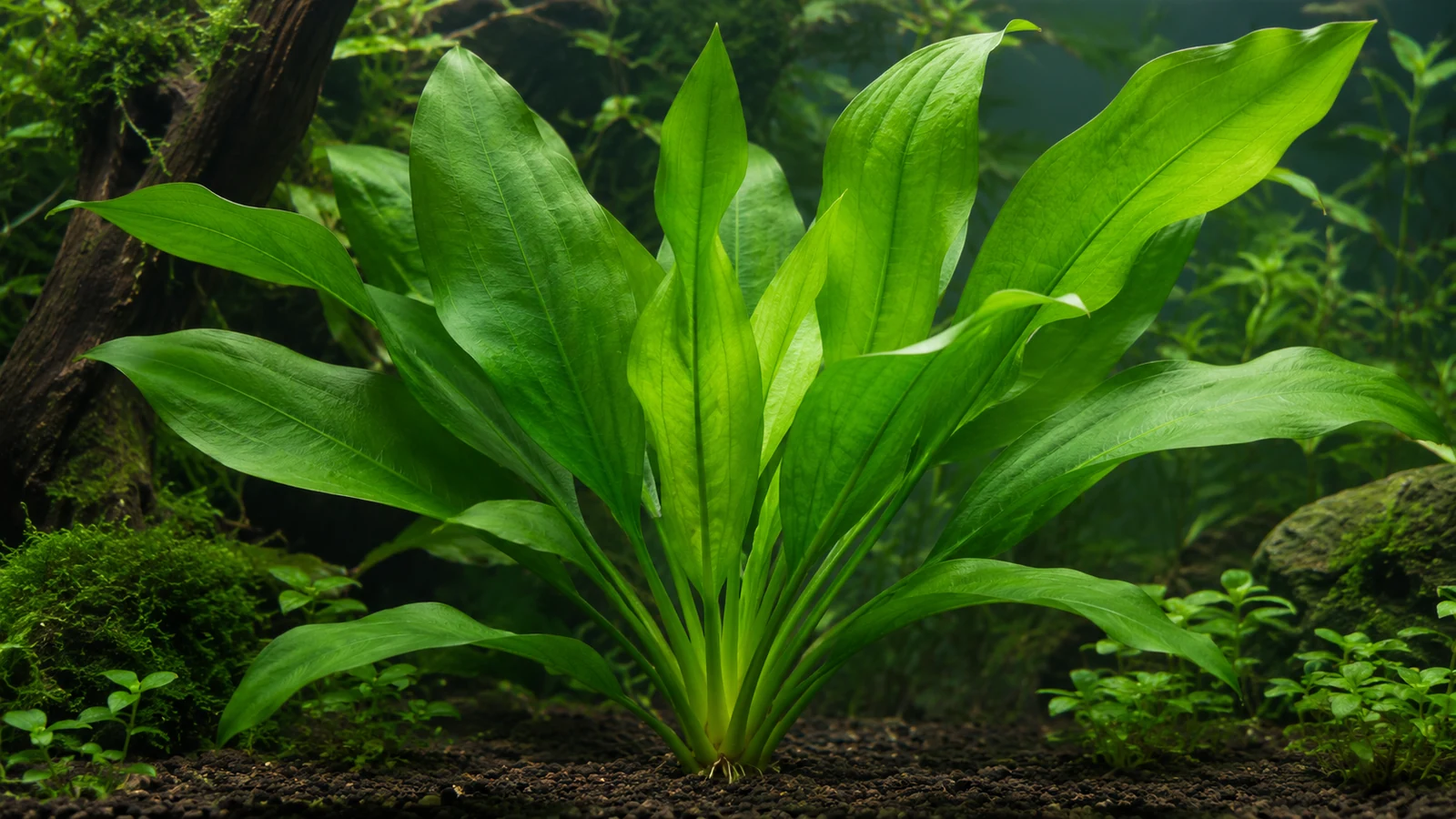
Jungle Val is a background plant, not a tiny midground grass. Flora of North America reports Vallisneria americana leaves from about 10 to 110 cm, and USGS field records show that plants can be taller. Aquarium conditions and trade stock vary, so choose a tank with enough height and let leaves reach the surface if they do.
Keep the crown above the substrate
Anchor the roots in sand, fine gravel, or planted-tank substrate, but do not bury the crown where the leaves meet the roots. Fish Laboratory's Jungle Val guide warns that a covered crown can rot; protect new plants from fish that dig until they are rooted.
Give roots nutrients and leaves usable light
Aquarium Co-Op describes Vallisneria as undemanding but points to two basics: light and nutrients. Fish Laboratory recommends bright aquarium light; in nutrient-poor sand or gravel, an aquarium-safe root tab can support new growth. Add nutrients gradually and watch for algae.
Expect runners, then thin them deliberately
USGS describes Vallisneria americana as a rooted rosette spreading by stolons. Aquarium Co-Op and Fish Laboratory both note that runners can fill a tank. Let a daughter rosette establish before clipping the runner, then replant or discard it to keep the clump in its intended area.
Keep water stable instead of chasing one number
Flora references place this species in fresh to brackish, often neutral or basic waters, while aquarium guides report a broad tolerance. For a freshwater display, keep water chemistry stable and compatible with its fish; do not add salt or make a sharp pH change just to suit the plant.
Trim after the clump has settled
Let new plants root before trimming. If mature leaves crowd the tank, aquarium-care guidance supports trimming leaves with scissors and thinning runners; choosing a taller tank is often easier than repeatedly cutting the canopy. Remove damaged growth and keep the filter's flow path clear.
Jungle Val pet safety
No species-specific veterinary safety classification for Vallisneria americana was found in the sources reviewed. Aquarium use is not proof that a plant is safe to chew or forage. Keep it out of reach of pets that may nibble plants and ask a veterinarian about an ingestion concern.
No exact species-level pet toxicity record for Vallisneria americana was located. Keep pet exposure cautious; a missing listing is not a safety clearance.
Watering Jungle Val
For Jungle Val, inspect the crown, roots, leaf color, and new runner growth, and monitor the aquarium's temperature and water chemistry. Yellowing or melting leaves can follow a recent move and can also point to light, nutrient, or water-quality changes. and water keep it continuously submerged. Maintain routine aquarium water changes and stable conditions appropriate for the fish and other animals in the tank. A stable indoor aquarium does not need a seasonal watering schedule. Keep temperature and lighting steady; change them only as required by the full aquarium community.
| Detail | Information |
|---|---|
| How often | Keep it continuously submerged. Maintain routine aquarium water changes and stable conditions appropriate for the fish and other animals in the tank. |
| How to check | Inspect the crown, roots, leaf color, and new runner growth, and monitor the aquarium's temperature and water chemistry. Yellowing or melting leaves can follow a recent move and can also point to light, nutrient, or water-quality changes. |
| Seasonal changes | A stable indoor aquarium does not need a seasonal watering schedule. Keep temperature and lighting steady; change them only as required by the full aquarium community. |
Signs of overwatering
- Not applicable to a fully submerged plant; check crown health and water quality instead.
Signs of underwatering
- Not applicable to a fully submerged plant; check that the aquarium is stable and the roots remain anchored.
Soil & potting for Jungle Val
Use a mix of Use aquarium-safe sand or fine gravel, or a nutrient-rich planted-tank substrate., Add root tabs only when the substrate is low in nutrients and the label is suitable for aquarium use. for Jungle Val. Terrestrial drainage is not relevant underwater. Keep the crown uncovered, anchor the roots, and avoid packing substrate over the leaf bases. Repot aquatic Jungle Val is planted directly in the tank substrate rather than a terrestrial pot. Replant only when moving or dividing established daughter rosettes., ideally in replant during steady, healthy growth in a stable aquarium; indoor tanks have no required planting season.
| Detail | Information |
|---|---|
| Recommended mix | Use aquarium-safe sand or fine gravel, or a nutrient-rich planted-tank substrate., Add root tabs only when the substrate is low in nutrients and the label is suitable for aquarium use. |
| Drainage | Terrestrial drainage is not relevant underwater. Keep the crown uncovered, anchor the roots, and avoid packing substrate over the leaf bases. |
| Repotting frequency | Aquatic Jungle Val is planted directly in the tank substrate rather than a terrestrial pot. Replant only when moving or dividing established daughter rosettes. |
| Best season to repot | Replant during steady, healthy growth in a stable aquarium; indoor tanks have no required planting season. |
Signs it needs repotting
- Rooted runners have spread beyond the intended planting area.
- A daughter rosette has enough roots and leaves to be moved on its own.
Humidity & temperature for Jungle Val
Keep temperatures around about 18–28°C (64–82°F) in an aquarium-care reference; keep the whole tank within its livestock-safe range. Wild Vallisneria americana occurs in fresh to brackish waters and is reported from neutral-to-basic habitats. Aquarium guides describe a broad pH tolerance; favor stable water chemistry suited to the fish in the tank rather than chasing a narrow pH or hardness target for this plant alone.
| Detail | Information |
|---|---|
| Ideal temperature | About 18–28°C (64–82°F) in an aquarium-care reference; keep the whole tank within its livestock-safe range. |
| Temperature notes | Wild Vallisneria americana occurs in fresh to brackish waters and is reported from neutral-to-basic habitats. Aquarium guides describe a broad pH tolerance; favor stable water chemistry suited to the fish in the tank rather than chasing a narrow pH or hardness target for this plant alone. |
Fertilizer & pruning for Jungle Val
Feed Jungle Val start with the nutrients supplied by fish waste and the substrate. If growth is weak in inert sand or gravel, use an aquarium-labeled root tab or plant fertilizer at its label rate; adjust after observing new growth. using aquarium-safe root tabs or a planted-tank fertilizer when the substrate or water column is nutrient-poor. The best feeding window is feed only as needed during active growth; do not add garden fertilizer to an aquarium. Do not use terrestrial garden fertilizers or dose extra nutrients without considering algae and aquarium livestock.
| Detail | Information |
|---|---|
| Fertilizer schedule | Start with the nutrients supplied by fish waste and the substrate. If growth is weak in inert sand or gravel, use an aquarium-labeled root tab or plant fertilizer at its label rate; adjust after observing new growth. |
| Best season | Feed only as needed during active growth; do not add garden fertilizer to an aquarium. |
| Fertilizer type | Aquarium-safe root tabs or a planted-tank fertilizer when the substrate or water column is nutrient-poor |
| What to avoid | Do not use terrestrial garden fertilizers or dose extra nutrients without considering algae and aquarium livestock. |
Pruning (optional)
Routine pruning is not required. After the plant settles, remove damaged or overlong leaves if they obstruct the layout, and control spread by thinning rooted runners. Choose enough tank height for mature leaves rather than repeatedly cutting the entire canopy to keep a giant form short.