Mealybugs on Lemongrass: Causes, Checks & Fixes
Quick answer
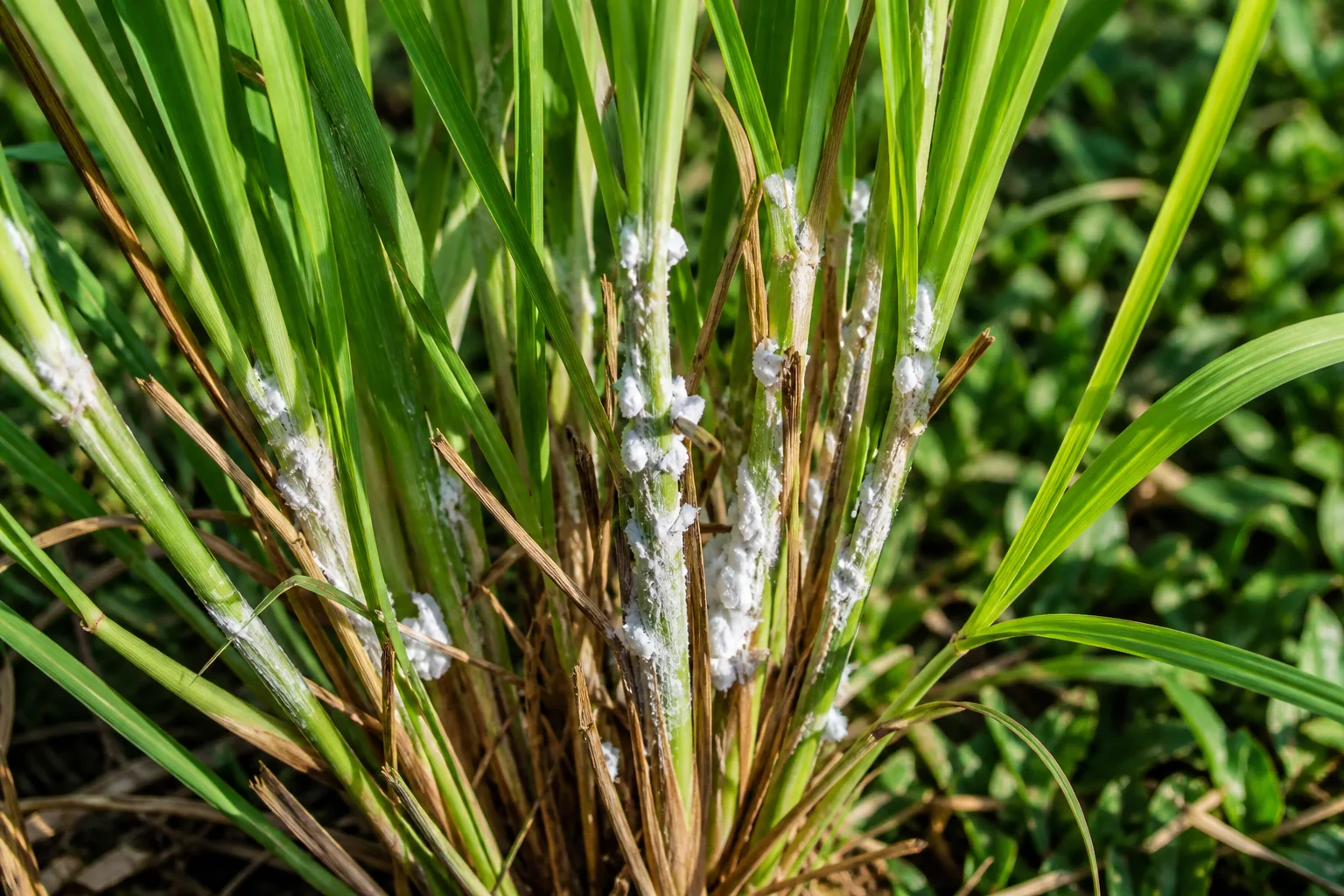
Mealybugs on Lemongrass hide as white cottony clusters at stalk bases and inner leaf sheaths-especially on indoor-overwintered clumps. First step: isolate the pot, pull outer sheaths apart at the soil line, and dab visible bugs with 70% alcohol before spraying insecticidal soap into crevices weekly.
Mealybugs on Lemongrass: Causes, Checks & Fixes
This guide covers mealybugs on Lemongrass. See also the general Mealybugs guide, watering, and light pages for this plant.
Mealybugs on Lemongrass: Causes, Checks & Fixes
Quick answer
Mealybugs on lemongrass (Cymbopogon citratus) show up as white cottony clusters tucked into stalk bases and overlapping leaf sheaths at the soil line-not as a dusting on blade tips you see during harvest. They suck sap, leave sticky honeydew, and thrive where dense clump centers trap moisture and block airflow.
First step: isolate the pot, pull outer sheaths apart at the crown, and dab every visible cluster with 70% isopropyl alcohol on a cotton swab before spraying labeled insecticidal soap into the crevices your swab cannot reach. Because you cook with Lemongrass overview, mechanical removal and repeat contact sprays beat harsh residual pesticides on a culinary clump.
Indoor-overwintered pots are the highest-risk scenario: heated dry air weakens blades while tight sheaths still shelter pests, and natural predators that control outdoor outbreaks are absent. See the lemongrass overview for overwintering placement, and scout neighboring herbs on the same sill before mealybugs spread through shared benches.
What mealybugs look like on Lemongrass
On lemongrass, mealybugs concentrate where grass blades overlap at the crown-exactly the zone you skip when glancing at outer harvest stalks.
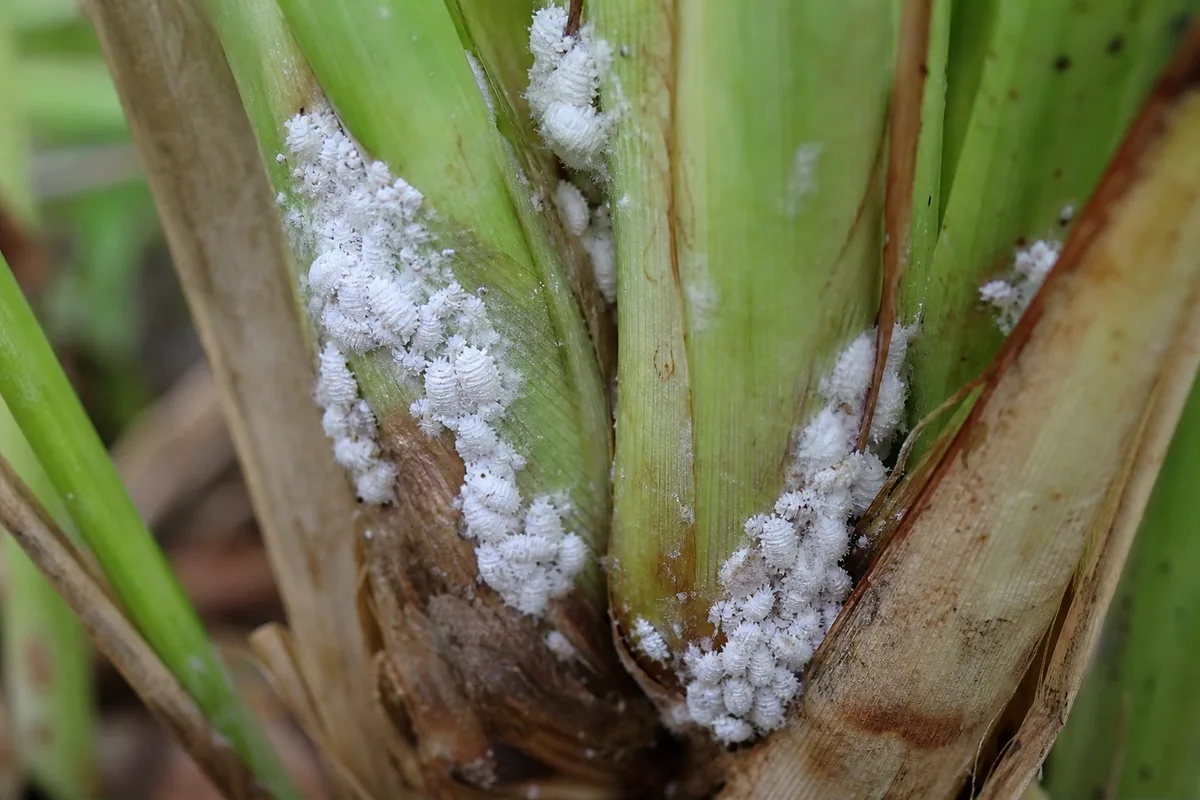
Mealybugs symptoms on Lemongrass - compare with healthy tissue on the same plant.
Early signs:
- White or gray cottony ovals at stalk bases and inner sheaths near the soil line
- Waxy filaments trailing from clusters in tight clump centers
- Sticky, glossy honeydew on inner blades below the infestation
- Ants on the pot rim or saucer, climbing toward hidden sap feeders
- Slow yellowing or limp new tillers when feeding is heavy
Heavier infestations:
- Cottony masses coating multiple stalks at the crown
- Black sooty mold on honeydew-coated blades
- White wax visible at pot drainage holes or on upper roots when you lift the clump slightly-possible root-zone mealybugs
- Deformed or stunted new shoots that fail to stiffen despite good water and sun
Unlike aphids on lemongrass, which cluster on tender post-harvest regrowth tips, mealybugs favor protected sheath layers at the clump base. Unlike spider mites, they do not produce fine webbing or bronze stippling-they leave cottony wax and stickiness instead.
Why Lemongrass gets mealybugs
Lemongrass grows as a dense tropical grass clump with overlapping leaf sheaths that trap humidity at the crown. That architecture shelters slow-moving pests better than open herb rosettes. Mealybugs prefer protected sites-stem joints, sheath overlaps, and pot rims-where rinsing and casual harvest glances never reach.
Indoor overwintering is the most common trigger for kitchen growers. When you bring potted lemongrass indoors as temperatures cool, airflow around the dense crown drops, beneficial insects disappear, and pests that were minor outdoors can expand in the sheltered clump center. The same pot may look clean on blade tips while wax coats inner sheaths at the soil line.
Common introduction routes:
- Hitchhikers on nursery divisions, supermarket-rooted stalk clumps, or herbs placed beside lemongrass on a winter sill
- Ants protecting existing colonies while farming honeydew-see ants on lemongrass when trails are heavy but insects are hard to spot
- Soft, over-fertilized growth in dim indoor light-easier for pests to colonize than firm sun-grown blades
- Shared tools or hands moving between infested succulents and culinary grass pots without washing
Outdoor lemongrass in full summer sun often stays cleaner because rain, wind, and predatory insects knock back populations. Problems spike again when pots return indoors in fall without a sheath-base inspection.
How to confirm the cause
Work through these checks in order before you spray anything:
- Start at the soil line, not blade tips - Kneel or tilt the pot and look where outer sheaths meet the crown. Mealybugs hide here on lemongrass more often than on upper harvest stalks.
- Pull outer sheaths apart gently - Part overlapping blades at the clump base and shine a light into the gap. White cottony clusters confirm mealybugs; flat tan bumps suggest scale instead.
- Crush test with alcohol - Press a cotton swab soaked in 70% isopropyl alcohol onto one cluster. Mealybugs smear orange-gray when killed; perlite splash, dust, or mineral deposits do not.
- Touch-test stickiness - Honeydew feels tacky on fingertips. Water spots and dust do not.
- Check the pot rim and drainage holes - Crawlers and egg masses often sit on rim edges and beneath the clump where sheaths pack tightly.
- Inspect neighboring overwintered herbs - Basil, mint, and other soft plants on the same bench can share mealybugs even when lemongrass looks like the only affected pot.
- Lift slightly for root-zone wax - If stems look clean but the clump stays weak, slide the root ball partly out and inspect the soil line and upper roots for white wax without obvious aboveground colonies.
- Rule out lookalikes - Use the table below before committing to a three-week soap schedule.
Confirmed diagnosis: stationary white cottony clumps in sheaths plus sticky honeydew or ants at the pot base. Suspected only: one white speck without stickiness-recheck in two days; early crawlers are easy to miss inside curled sheaths.
Lookalike symptoms
| What you see | Likely cause | Quick check |
|---|---|---|
| Loose white cotton + waxy filaments | Mealybugs | Alcohol swab smears orange-gray |
| Fixed brown/tan bumps on stalks | Scale insects | Bump stays glued; scrape test |
| Pear-shaped clusters on new shoots | Aphids | Post-harvest regrowth tips |
| Fine webbing + yellow stippling | Spider mites | Hot dry pocket near a heat vent |
| White specks on pot rim only | Perlite splash or dust | Wipes away dry; no stickiness |
| Ants without visible wax | Hidden sap feeders | Inspect sheaths and ant trails |
On Poaceae stems, scale insects attach with hardened covers while mealybugs remain soft under fluffy wax-both can share the same clump, so check for both at the crown.
First fix for Lemongrass
Isolate the pot and dab every visible mealybug with 70% isopropyl alcohol on a cotton swab, pressing into stalk bases and inner sheaths at the soil line.
Move the clump away from other herbs before you treat. Work methodically around the crown, disposing of swabs in sealed trash-not an indoor compost pile where crawlers can survive. UC IPM recommends alcohol dabs for houseplant mealybugs, with a spot test on one sheath first if the plant was recently stressed or sits in strong midday sun.
Do not spray oil, neem, or soap the same hour unless alcohol alone failed on reinspection. Stacking contact treatments before you confirm live pests remain adds stress to blades you plan to eat.
After dabbing, let foliage dry in morning light. If cottony clusters persist in crevices the swab missed, proceed to labeled insecticidal soap-not homemade dish detergent, which can burn grass blades.
Step-by-step recovery
Match your workflow to infestation severity:
Light infestation (few clusters on one or two stalks)
- Isolate for two weeks.
- Dab every visible cluster with alcohol; dispose of swabs.
- Spray insecticidal soap into inner sheaths until runoff; soaps kill only insects they touch.
- Re-inspect in five to seven days; repeat once if new wax appears.
Moderate infestation (multiple stalks, sticky blades, no root wax)
- Isolate and remove the worst outer stalks at the base if inner shoots look clean.
- Alcohol-dab all visible clusters, then soap-spray sheaths and stalk bases thoroughly.
- Wipe honeydew from blades with a damp cloth to reduce sooty mold and ant attraction.
- Repeat soap every five to seven days for three weeks-mealybug eggs and crawlers survive a single pass hidden in sheath layers.
- Wash harvest scissors between cuts on other herbs.
Heavy infestation (crown coated, root wax, or three failed cycles)
- Consider discarding the most infested divisions rather than treating the entire clump indefinitely-UC IPM notes that severely infested houseplants are sometimes best discarded to protect the collection.
- Rinse and pot clean outer shoots separately, or restart from fresh supermarket stalks.
- Sterilize the old pot or replace it before replanting salvage divisions.
- Quarantine salvage plants four weeks and scout the whole herb shelf.
Throughout all tiers: judge progress by new tillers emerging without fresh cottony wax, not by old sticky blades still waiting for harvest trim.
Recovery timeline
Within 24–48 hours of thorough alcohol dabbing, visible clusters often collapse and fresh honeydew slows.
Two to three weeks of weekly soap repeats is typical before new shoots emerge clean, because mealybugs reproduce in protected sheath pockets your first treatment missed.
Old sticky or sooty-marked blades do not revert. Judge success by firm new tillers without wax and by ants leaving the pot rim.
Worsening signs: cottony wax spreading to most stalks, deformed new growth after two treatment cycles, root-zone wax when stems looked clean, or mealybugs jumping to every herb on the patio-those mean escalation, not patience.
What not to do
Do not harvest infested stalks for cooking until bugs are gone, soap residue is rinsed off, and label pre-harvest intervals have passed.
Do not stop after one alcohol dab or a single soap spray-hidden eggs in inner sheaths hatch across multiple weeks.
Do not apply horticultural oil in full midday sun without a spot test; lemongrass blade tips can scorch on hot patios.
Do not mistake perlite splash or dust for cottony wax without pulling sheaths apart at the soil line.
Do not ignore ants-they protect mealybug colonies and reveal hidden honeydew producers below.
Do not apply systemic insecticides on culinary clumps without checking edible-plant restrictions on the label.
Do not compost heavily infested stalks indoors where crawlers reinfest neighboring pots.
Pet safety: The ASPCA lists lemongrass (Cymbopogon citratus) as toxic to cats, dogs, and horses if ingested. Keep pets away from treated foliage until sprays have dried, and store harvested stalks out of reach. This is general safety information, not veterinary advice.
When to worry
Act the same day if cottony clusters cover multiple stalks, sooty mold coats harvestable blades, ants farm the clump heavily, or new tillers stay deformed after one full alcohol-and-soap round.
You can wait one careful inspection cycle if you find a small cluster on one outer sheath after a good alcohol dab-lemongrass often outgrows a light hit when caught before overwintering crowding peaks.
Escalate to division discard or clump replacement when root-zone wax appears with a weakening crown, three weekly soap cycles fail, or mealybugs reappear on every herb after you move pots back outdoors in spring. Lemongrass is easy to restart from rinsed divisions or supermarket stalks; protecting the rest of your kitchen collection matters more than saving one reservoir pot.
How to prevent mealybugs on Lemongrass
Prevention is mostly sheath-base scouting on a plant whose harvest stalks hide the crown.
- Inspect stalk bases weekly during indoor overwintering-the same moment you check soil moisture is your best pest check.
- Quarantine new divisions or supermarket-rooted stalks for ten to fourteen days before placing them beside established harvest clumps.
- Keep clumps in bright light with spaced pots so sheaths dry between waterings; see lemongrass watering for seasonal rhythm without crown-saturating soaks.
- Avoid excess nitrogen during winter slowdown-that pushes soft, pest-friendly tissue in dim rooms.
- Scout immediately when moving pots indoors in fall-pests hitchhike on blades from patio to kitchen.
- Wash tools and hands between succulents and culinary grass pots on shared benches.
Outdoor summer clumps in full sun with good airflow rarely need preventive sprays; the critical window is the first six weeks after indoor move-in.
Lemongrass care cross-check after treatment
Mealybug recovery sticks better when baseline care matches what lemongrass expects:
- Light - Bright indoor light or supplemental grow light during overwintering; weak stretched blades trap more humidity in sheaths.
- Water - Keep soil evenly moist during active indoor growth without saturating the crown. Match pot and season per the watering guide.
- Airflow - Space pots so blades do not touch; divide overcrowded clumps so inner sheaths dry between soaks.
- Division timing - Split dense clumps in spring before outdoor return so the crown opens up and hidden wax is easier to spot next winter.
Treating pests without opening a packed clump center usually means reinfestation from inner sheath layers within weeks.
Related lemongrass problems
If sticky blades or sap feeders overlap with your mealybug issue, these guides are the next step:
- Lemongrass overview
- Aphids on lemongrass - honeydew on tender regrowth with different insect behavior
- Ants on lemongrass - trails that reveal hidden sap feeders
- Spider mites on lemongrass - stippling and webbing without cottony wax
- Lemongrass watering - moisture management after treatment
- Lemongrass pruning - harvest cuts and crown inspection points
Conclusion
Mealybugs on lemongrass reward close inspection at the clump base-not a quick glance at blade tips during harvest. Confirm cottony wax in inner sheaths with an alcohol crush test, isolate and dab visible clusters first, then repeat insecticidal soap through the hidden crawler cycle. Inspect weekly after you move pots indoors, quarantine new divisions, and judge recovery by clean new tillers before the next kitchen cut-not by old sticky blades still waiting for the base trim.
When to use this page vs other Lemongrass guides
- Lemongrass watering guide - Use for routine moisture checks before assuming mealybugs is the main issue.
- Lemongrass problems hub - Browse all 52 common issues on this species.
- Ants on Plant on Lemongrass - Different entry point when symptoms overlap with mealybugs.
- Yellow Leaves on Lemongrass - Different entry point when symptoms overlap with mealybugs.
- Slow Growth on Lemongrass - Different entry point when symptoms overlap with mealybugs.