Wilting on Lucky Bamboo: Causes, Checks & Fixes
Quick answer
Wilting Lucky Bamboo with dry pebbles or soil needs water; wilting with wet soil or cloudy vase water suggests root rot. First step: check moisture and root firmness before the next drink.
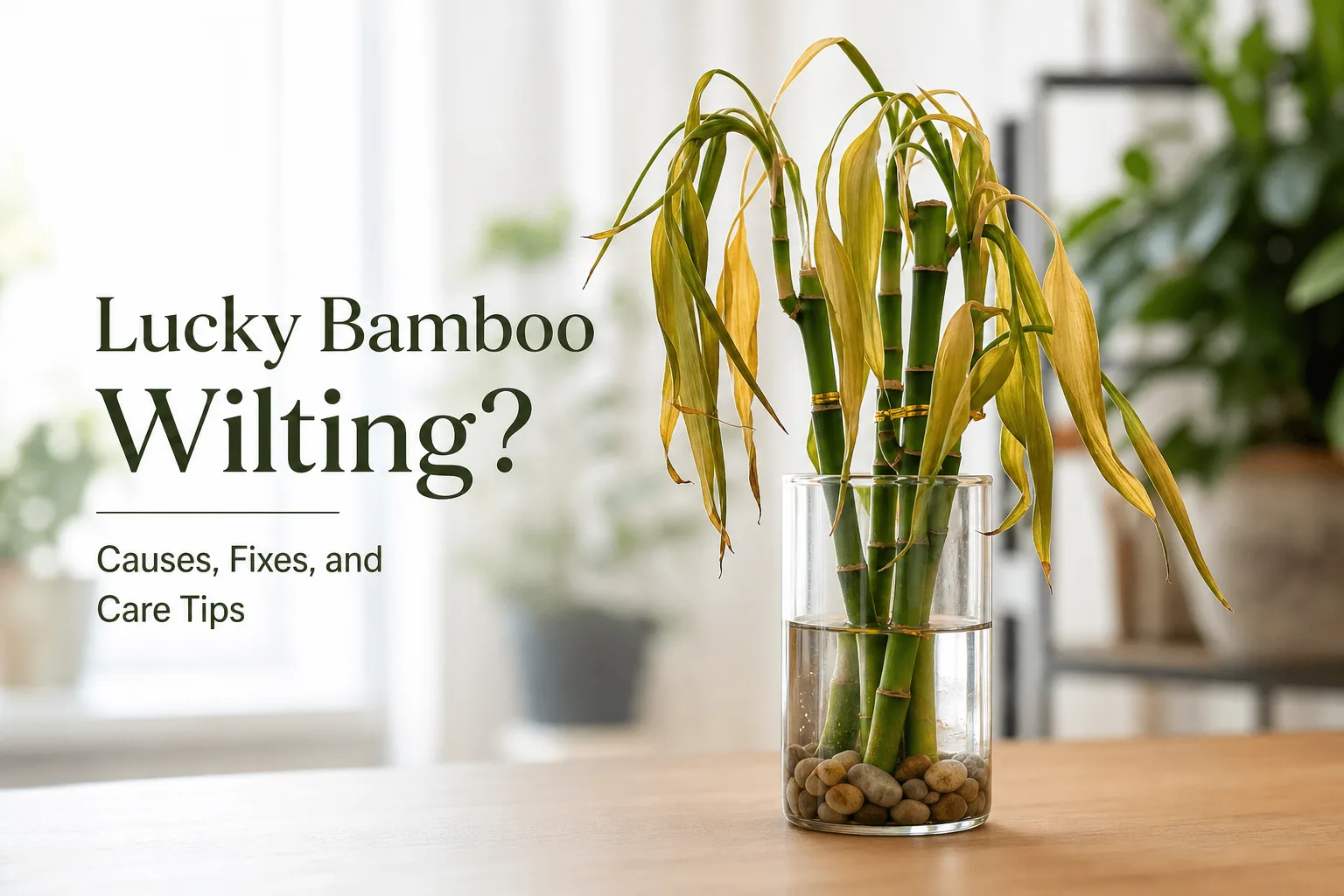
Wilting on Lucky Bamboo: Causes, Checks & Fixes
This guide covers wilting on Lucky Bamboo. See also the general Wilting guide, watering, and light pages for this plant.
Wilting on Lucky Bamboo: Causes, Checks & Fixes
Quick answer
Wilting on Lucky Bamboo (Dracaena sanderiana) splits into two opposite causes: underwatering on Lucky Bamboo when roots are dry, or root dysfunction when water is present but roots cannot absorb it. First step: check vase water level or soil moisture and inspect root firmness before watering again.
Damaged roots behave like drought above ground - leaves and canes limp even when the vase looks full. Overwatering can cause yellowing of the leaves and rotting of the stems while the plant still appears “watered.”
What wilting looks like on Lucky Bamboo
Drought wilt: Leaves hang along canes, pebbles or soil are dry, pot feels light, and canes may look slightly wrinkled at nodes. Roots stay firm and white when rinsed.
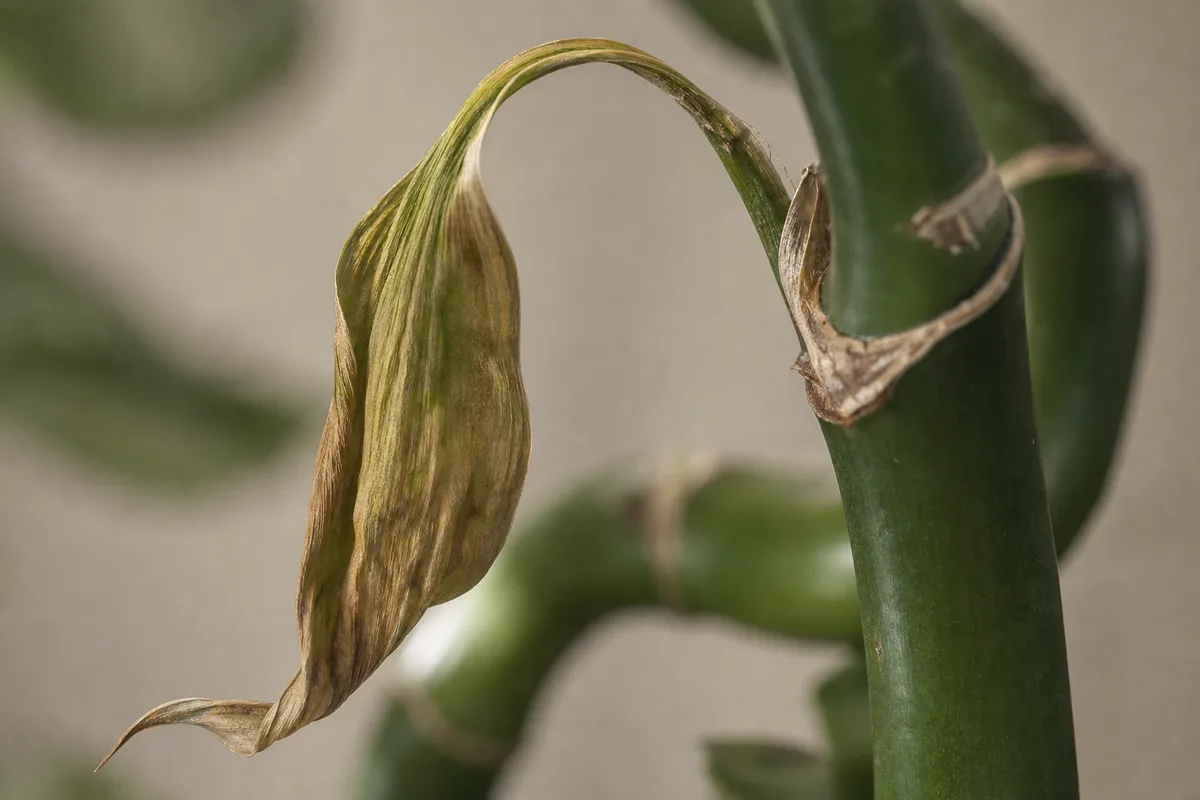
Wilting symptoms on Lucky Bamboo - compare with healthy tissue on the same plant.
Rot wilt: Leaves droop while soil stays wet or vase water is cloudy. Lower leaves yellow. Stem bases may soften. A sour smell confirms anaerobic conditions.
Heat wilt: Temporary limpness in hot, bright rooms with adequate water - canes firm up overnight if roots are healthy.
Post-move shock: Brief wilt after relocation or Lucky Bamboo repotting guide; roots intact when checked.
Why Lucky Bamboo wilts
Underwatered vase plants lose coverage when roots and at least one inch of stem are no longer submerged. Evaporation in warm bright, indirect light accelerates drying.
Overwatered soil or stagnant vase water rots roots - then the plant cannot hydrate foliage despite wet conditions. Fog in the water is a sign of bacteria that attacks roots similarly.
Fluoride stress weakens tissue over time but wilting acutely usually means moisture imbalance at roots, not tip burn alone.
How to confirm the cause
- Moisture state - Dry pebbles vs. wet soil vs. cloudy vase water.
- Pot weight - Light pot suggests drought; heavy wet pot with wilt suggests rot.
- Root feel - Firm vs. mushy when lifted from pebbles or soil.
- Smell - Sour odor supports rot; neutral smell with dry roots supports drought.
- Timeline - Forgotten water change for weeks vs. daily watering in cool dim light.
- Stem base - Soft tissue means rot, not simple thirst.
First fix for Lucky Bamboo
Match the fix to the confirmed pattern - one action only.
If dry: Refill vase with filtered water to proper depth or soak soil until drainage runs, then empty saucers.
If wet with mushy roots: Stop watering, change all vase water after trimming soft roots, or unpot soil plants into fresh well-drained mix.
Do not water wilting plants on autopilot - confirm roots first.
Step-by-step recovery
Drought path:
- Rehydrate with filtered or distilled water.
- Wait 24 hours for cane firmness.
- Establish weekly vase checks or top-inch soil tests.
Rot path:
- Dump cloudy water or remove wet soil.
- Trim mushy roots; rinse pebbles or repot fresh.
- Refill with clean water or water lightly once in new mix.
- Place in Lucky Bamboo light guide with airflow.
- Hold fertilizer two weeks.
Recovery timeline
Drought wilt often resolves within one to two days after proper watering. Rot recovery takes two to four weeks minimum if stems stay firm.
Soft stem bases rarely recover intact braids - propagate firm cane sections in clean water; new roots form in 2 to 3 weeks.
Causes to rule out
- Pests - Heavy mite or mealybug feeding weakens plants; inspect foliage.
- Cold exposure - After outdoor nights below 65°F.
- Transplant shock - Temporary wilt; roots firm when checked.
- Direct sun scorch - Crisp leaves, not uniform limpness; soil may be dry from heat, not neglect.
What not to do
Do not assume wilt always means “needs water.” Do not top up cloudy vase water. Avoid fertilizing limp plants before root diagnosis. Do not repot and soak simultaneously without inspecting roots.
How to prevent wilting next time
Maintain vase depth with weekly water changes. Soil: water when top inch dries. Align frequency with light intensity.
Use filtered water to reduce fluoride stress that compounds root problems.
Lucky Bamboo care cross-check
Wilting diagnosis always starts at roots - Lucky Bamboo in water is not “always hydrated” if water is stale or below root level.
When to worry
Escalate when stems mush, rot smell persists after water change, or wilt worsens with wet soil. Lucky bamboo is toxic to pets.
Conclusion
Lucky Bamboo wilts from dry roots or damaged wet roots - opposite fixes. Check moisture, smell, and root firmness before watering. Rehydrate drought or refresh rotted root zones, then stabilize weekly care in bright indirect light.
When to use this page vs other Lucky Bamboo guides
- Lucky Bamboo watering guide - Use for routine moisture checks before assuming wilting is the main issue.
- Lucky Bamboo problems hub - Browse all 41 common issues on this species.
- Underwatering on Lucky Bamboo - Different entry point when symptoms overlap with wilting.
- Overwatering on Lucky Bamboo - Different entry point when symptoms overlap with wilting.
- Root Rot on Lucky Bamboo - Different entry point when symptoms overlap with wilting.