Underwatering on Maranta Leuconeura: Causes, Checks & Fixes
Quick answer
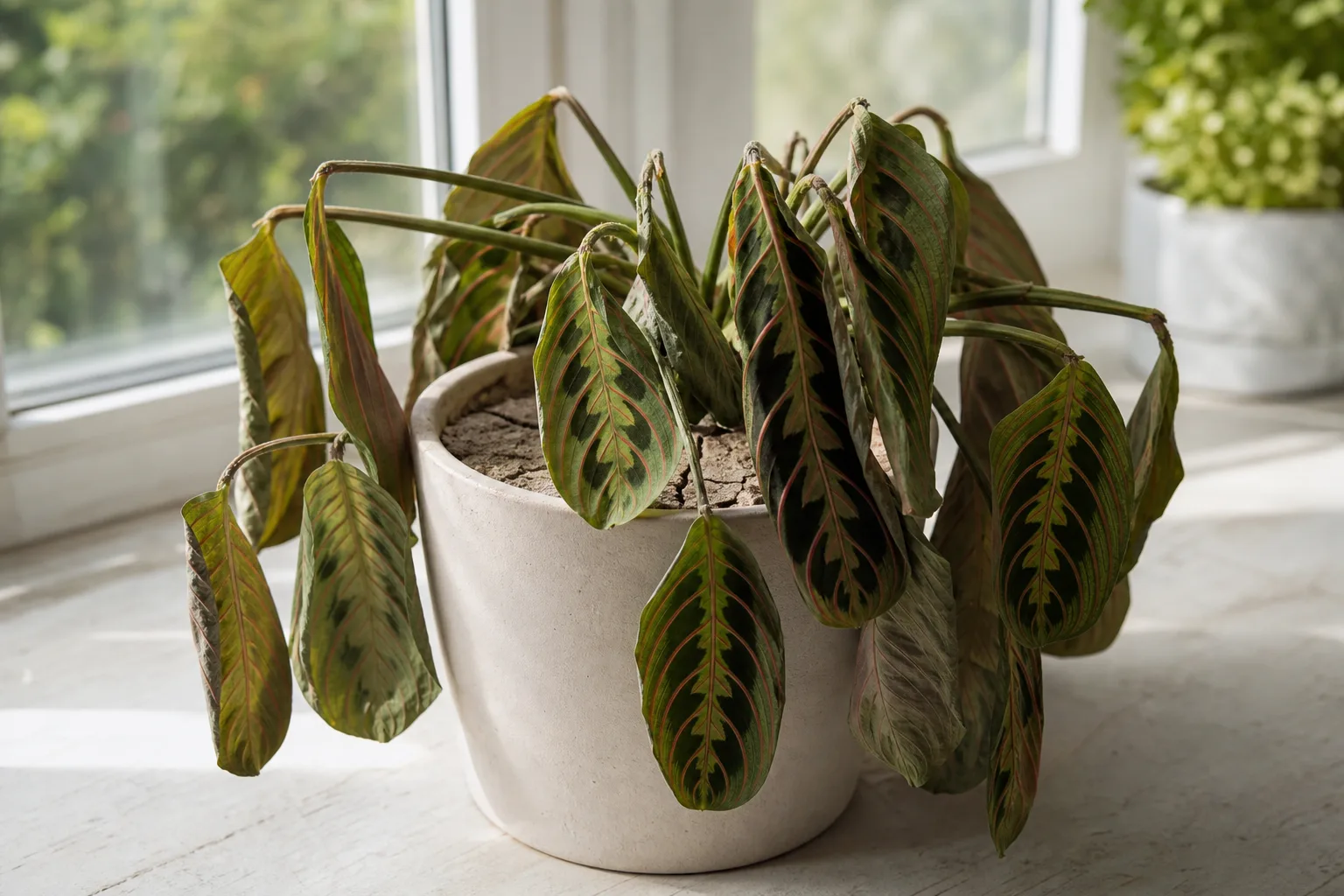
Underwatering on prayer plant shows as limp leaves, crispy tips, and dry mix at 2 cm depth-Maranta leuconeura should not dry out completely. First step: water thoroughly until a little drains, or bottom-soak if mix repels water; then resume when the top 2 cm begins to dry.
Underwatering on Maranta Leuconeura: Causes, Checks & Fixes
This guide covers underwatering on Maranta Leuconeura. See also the general Underwatering guide, watering, and light pages for this plant.
Underwatering on Maranta Leuconeura: Causes, Checks & Fixes
Quick answer
Underwatering on Maranta leuconeura (prayer plant) means the root zone dried too far between drinks. Unlike succulents, prayer plants need consistently moist, well-drained soil during active growth and should not be allowed to dry out completely. Drought and root rot on Maranta Leuconeura both cause limp leaves-so read pot weight and soil at 2 cm before you pour. A light, dry pot gets water; a heavy, wet pot needs a different fix. For the full drought-versus-rot decision tree, see our wilting guide.
First step: water thoroughly with room-temperature filtered or overnight tap water until a small amount drains, then empty the saucer. If water races through in seconds and the top 2 cm stays dry, the mix may be hydrophobic-bottom-soak instead of repeating shallow top splashes.
What underwatering looks on Maranta leuconeura
Healthy prayer plant leaves lie flat or angled upward by day and fold upward at night. Underwatering breaks that rhythm before every symptom shows at once.
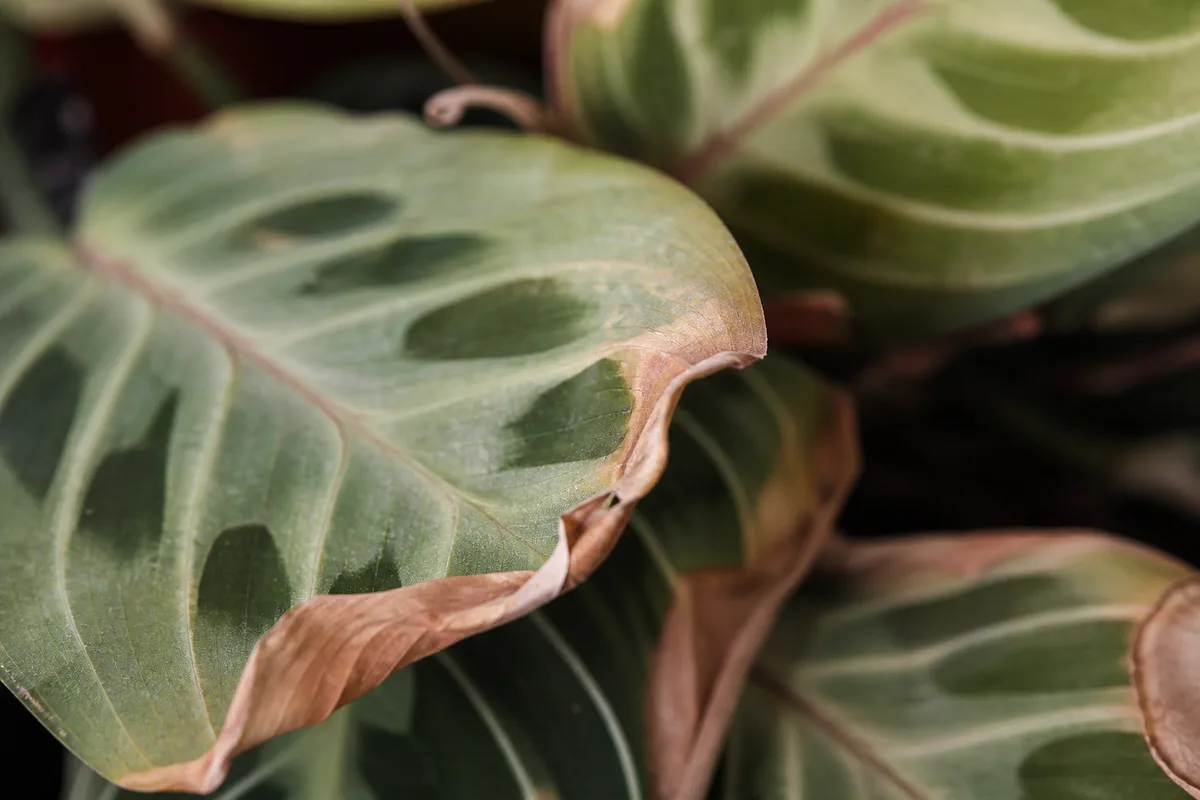
Underwatering symptoms on Maranta Leuconeura - compare with healthy tissue on the same plant.
Typical drought patterns:
- Limp, curling leaves that may still show herringbone or red-vein pattern color early
- Crispy brown tips and margins on older leaves-often worse when low humidity compounds dry roots
- Pot feels noticeably light when lifted; dry mix may pull away from the pot wall
- Leaves fail to rise fully at night when dehydration is severe-lost nyctinastic folding often appears before widespread tip burn
- Newest rolled leaves look soft or wrinkled rather than crisp
- Soil dusty-dry at 2 cm depth; finger probe finds no cool moisture below the surface
What underwatering is not: A heavy pot that stays wet for days, yellow lower leaves on soggy mix, sour smell from drainage holes, or soft dark stems at the crown-that pattern fits overwatering or root rot, and more water will make it worse.
A real recovery timeline
A red-veined prayer plant in a 4-inch pot skipped ten days of watering in a dry, heated winter room. Mix had shrunk from the pot sides; leaves hung flat day and night. After a twenty-five-minute bottom-soak and one slow top pass with filtered water, stems firmed within six hours and night folding returned on the second evening. Two oldest leaves kept crispy tips until new growth replaced them three weeks later-typical for Maranta once roots rehydrate.
Underwatering vs. overwatering vs. hydrophobic soil - read the pot before you pour
Prayer plants wilt from opposite moisture failures. Use pot weight and the 2 cm finger test before choosing a fix.
| What you notice | Likely cause | First move |
|---|---|---|
| Light pot, dusty-dry at 2 cm, firm green stems | Underwatering | Thorough top water or bottom-soak if mix repels |
| Light pot, water runs through in seconds, dry at 2 cm after “watering” | Hydrophobic dry core | Bottom-soak until top 2 cm is moist, then drain |
| Heavy pot, wet at 2 cm, yellow lower leaves, sour smell | Overwatering / rot | Stop watering; inspect roots if decline continues |
| Moist soil at 2 cm, crispy tips only, firm stems | Low humidity or water quality | See low humidity guide; do not flood roots |
| Limp leaves after Maranta Leuconeura repotting guide, firm stems, normal moisture | Transplant stress | Stable light and even moisture; hold fertilizer |
If drought and rot both seem possible, our wilting guide walks through the full branch-by-branch diagnosis.
Why prayer plant dries out
Maranta leuconeura evolved as a low-growing tropical perennial from Brazil with fine, shallow roots that cannot store water like a succulent. Indoors, underwatering is almost always a schedule or absorption failure, not bad luck.
The moisture paradox
Prayer plants have a reputation for needing evenly moist soil-yet many growers chronically under-water after one overwatering scare. One rotted crown teaches caution; the fix becomes waiting too long between drinks. Maranta does not forgive bone-dry collapse the way a snake plant might.
Heat vents, small pots, and summer growth
Winter heating near the pot dries the surface fast while owners water less. Small nursery pots in Maranta Leuconeura light guide transpire heavily in summer. A prayer plant that drank every five days in March may need water every three days in July-or sooner if a heat vent blows across the leaves.
Peat pull-away and hydrophobic crust
Peat-based mix holds moisture beautifully when evenly damp. When it dries completely, peat moss is very difficult to re-wet. Mix shrinks from the pot wall; you pour, water runs between the root ball and pot sides, and the saucer fills while the center stays dry. That looks like you watered-but the plant still reads as underwatered.
How to confirm the cause
Work through these checks in order:
- Pot weight - Lift the container. Noticeably light supports drought; heavy and slow to tilt suggests wet soil instead.
- Finger test at 2 cm - Test soil with your finger to two inches before watering. Dusty dry at 2 cm supports underwatering.
- Runoff behavior - Slow pour: if water channels to the sides within a minute, suspect hydrophobic mix even though leaves look drought-stressed.
- Night movement - Leaves that stopped folding at night for several evenings point to sustained dehydration, not a single missed afternoon drink.
- Stem base - Firm green stems at the soil line fit drought; soft, darkening crowns fit rot.
- Smell - Sour or swampy odor means overwatering until roots prove otherwise-not underwatering.
- Recovery trial (dry, light pots only) - Water thoroughly until a little drains, empty the saucer, and recheck in four to six hours. Perking supports drought. No change with wet, heavy soil means stop watering and inspect roots.
If the pot is light, mix is dry throughout, stems are firm, and roots at the edge are pale when sampled, underwatering is the working diagnosis.
First fix for Maranta leuconeura
Rehydrate the root zone thoroughly-choose top watering or bottom-soaking based on whether mix accepts water.
If mix absorbs water normally: Water with room-temperature filtered or overnight tap water until a small amount drains from the bottom. Empty the saucer so the plant is not sitting in runoff. Prayer plants need evenly moist soil during the growing season, not a shallow sprinkle that wets only the top inch.
If water runs through without wetting the top 2 cm: Skip repeated top splashes. Move to the bottom-soak path below.
Do not assume every limp prayer plant needs water. A heavy, wet pot with declining leaves needs less moisture and possible root inspection-not another drink.
Step-by-step drought recovery
Top-water path (mix still accepts water)
- Water slowly from the top until drainage runs clear; discard saucer water within thirty minutes.
- Probe at 2 cm six hours later. If still dry, one more slow pass is fine-do not flood the crown.
- Raise humidity - Group plants, use a pebble tray, or run a humidifier while roots recover. Low humidity accelerates edge crisping when roots cannot keep pace.
- Hold fertilizer until new growth looks healthy for two weeks.
- Note your interval - Count days until the top 2 cm dries in your room; match the rhythm in our watering guide.
Bottom-soak path (hydrophobic or repelling mix)
- Set the pot in a sink or basin with a few inches of lukewarm water so it enters through drainage holes.
- Soak until the top 2 cm feels moist when pressed-often twenty to ninety minutes for a standard houseplant pot. Check hourly rather than leaving it submerged overnight.
- Lift, drain fifteen to thirty minutes, and empty the saucer completely.
- One gentle top pass after the soak settles the surface without water standing on stems.
- If mix repels again within two weeks, refresh tired peat-heavy soil or read the full dry hydrophobic soil guide.
Recovery timeline and what to expect
Mild drought often improves within four to twelve hours after thorough rehydration if stems stayed firm. Full turgor across older leaves may take one to three days.
Tip and margin damage on existing foliage usually does not turn green again. New leaves that roll cleanly at night are the best recovery sign.
Severe chronic drought may drop older leaves over one to two weeks even after a successful soak. Fine roots damaged by repeated dry cycles recover slowly-judge success over two to four weeks, not overnight.
Worsening signs after rehydration: crown softness, sour smell from the mix, or continued collapse with a heavy wet pot-inspect roots for rot rather than watering again.
Causes to rule out (lookalike matrix)
- Normal nyctinastic movement - Slight daytime relaxation in warm rooms is not drought; true underwatering breaks the fold cycle for multiple nights or leaves stay limp after dark.
- Hydrophobic dry core - Light pot plus runoff channeling; fix with bottom-soak, not calendar under-watering.
- Overwatering wilt - Heavy pot, wet at 2 cm, yellow lower leaves; withholding water is correct, not a deep drink.
- Low humidity curl - Crispy tips with moist soil at 2 cm; raise humidity without keeping mix permanently soggy.
- Cold draft damage - Translucent or blackened patches after exposure near a window; soil moisture may be normal.
- Pest weakness - Stippling or webbing on undersides weakens plants over weeks; sudden light-pot drought still starts with moisture checks.
What not to do
Do not leave the plant in a saucer of water for days-that swings toward overwatering and crown rot on prayer plants. Do not mist leaves instead of watering the root zone; misting does not rehydrate a dry root ball.
Avoid watering on autopilot because leaves look limp-confirm the pot is light and dry first. Do not pour faster onto crusted mix and trust saucer fill level. Skip fertilizer on a drought-stressed plant. Do not move a dehydrated prayer plant into direct sun hoping to dry it out; too much sun bleaches leaf colors and increases water demand.
How to prevent underwatering next time
Match watering to the pot and room, not a calendar. Test soil at 2 cm depth and water when that layer begins to dry-often every five to seven days in active growth, less in winter, but never until the whole ball goes hard dry.
Learn pot weight after a proper drink so a light container triggers action before leaves collapse. Keep bright indirect light, 60%+ humidity, and room temperatures in the comfort zone your Maranta prefers. Use filtered or overnight tap water to limit fluoride brown tips.
In winter, allow soil to dry somewhat between waterings while keeping the plant from bone-dry collapse-stretch intervals, not depth of drying. Bottom-soak at the first sign of peat pulling from the pot wall. Full seasonal rhythm and crown-dry technique live in our Maranta watering guide.
When to worry / when to inspect roots instead
Escalate if rehydration fails twice-leaves stay collapsed after a proper soak and drainage, or the crown softens while you were treating drought. Unpot gently: healthy Maranta roots are pale and firm; rotten roots appear dark and soft.
Slow afternoon droop on an otherwise folding plant in dry winter air can wait for humidity and a measured drink. Act the same day if mix has been bone-dry at 2 cm for several days, night folding has stopped for three or more evenings, or multiple stems collapse while water runs straight through repelling mix.
If more than half the root mass is decayed after trimming, survival odds drop-take division cuttings from any firm rhizome sections while tissue is still healthy.
About this guide
This guide was written by sai-ananth and reviewed by the LeafyPixels Review Board against botanical references including the University of Illinois Extension prayer plant page, Missouri Botanical Garden PlantFinder entry for M. leuconeura, UC Master Gardeners of Santa Clara County hydrophobic soil guidance, University of Maryland Extension indoor watering resources, and LeafyPixels watering, wilting, dry hydrophobic soil, and overwatering guides. The sample recovery timeline and pot-weight heuristics are editorial diagnostics synthesized from prayer plant growth habit and extension moisture guidance-not a single published case study from one lab.
Conclusion
Underwatering on Maranta leuconeura is a light, dry pot problem before it is a mystery disease. Rehydrate thoroughly-top-water when mix accepts water, bottom-soak when it repels-use filtered water, and resume when the top 2 cm begins to dry. Prayer plants recover quickly from honest drought when roots are sound; they recover slowly from crown rot left sitting in stale water. Stable light, humidity, and finger-check watering keep the nightly leaf fold working as your early warning instead of your goodbye. When drought and rot both seem possible, start with the wilting guide; when water will not soak in, use the hydrophobic soil guide.
When to use this page vs other Maranta Leuconeura guides
- Maranta Leuconeura watering guide - Use for routine moisture checks before assuming underwatering is the main issue.
- Maranta Leuconeura problems hub - Browse all 40 common issues on this species.
- Wilting on Maranta Leuconeura - Different entry point when symptoms overlap with underwatering.
- Brown Tips on Maranta Leuconeura - Different entry point when symptoms overlap with underwatering.
- Yellow Leaves on Maranta Leuconeura - Different entry point when symptoms overlap with underwatering.
Related Maranta Leuconeura guides
- Maranta Leuconeura overview
- Maranta Leuconeura watering
- Maranta Leuconeura light
- Maranta Leuconeura soil
- Wilting on Maranta Leuconeura
- Brown Tips on Maranta Leuconeura
- Yellow Leaves on Maranta Leuconeura
- Overwatering on Maranta Leuconeura
- Curling Leaves on Maranta Leuconeura
- Maranta Leuconeura problems