Mogra Heat Stress: How to Check Leaves, Soil & Sun
Quick answer
When Mogra wilts or scorches during a hot spell, first move the pot out of harsh afternoon heat into bright open shade. Then check the top 2–3 cm of mix and water only if it is dry; a wet pot needs better drainage and cooler roots, not more water.
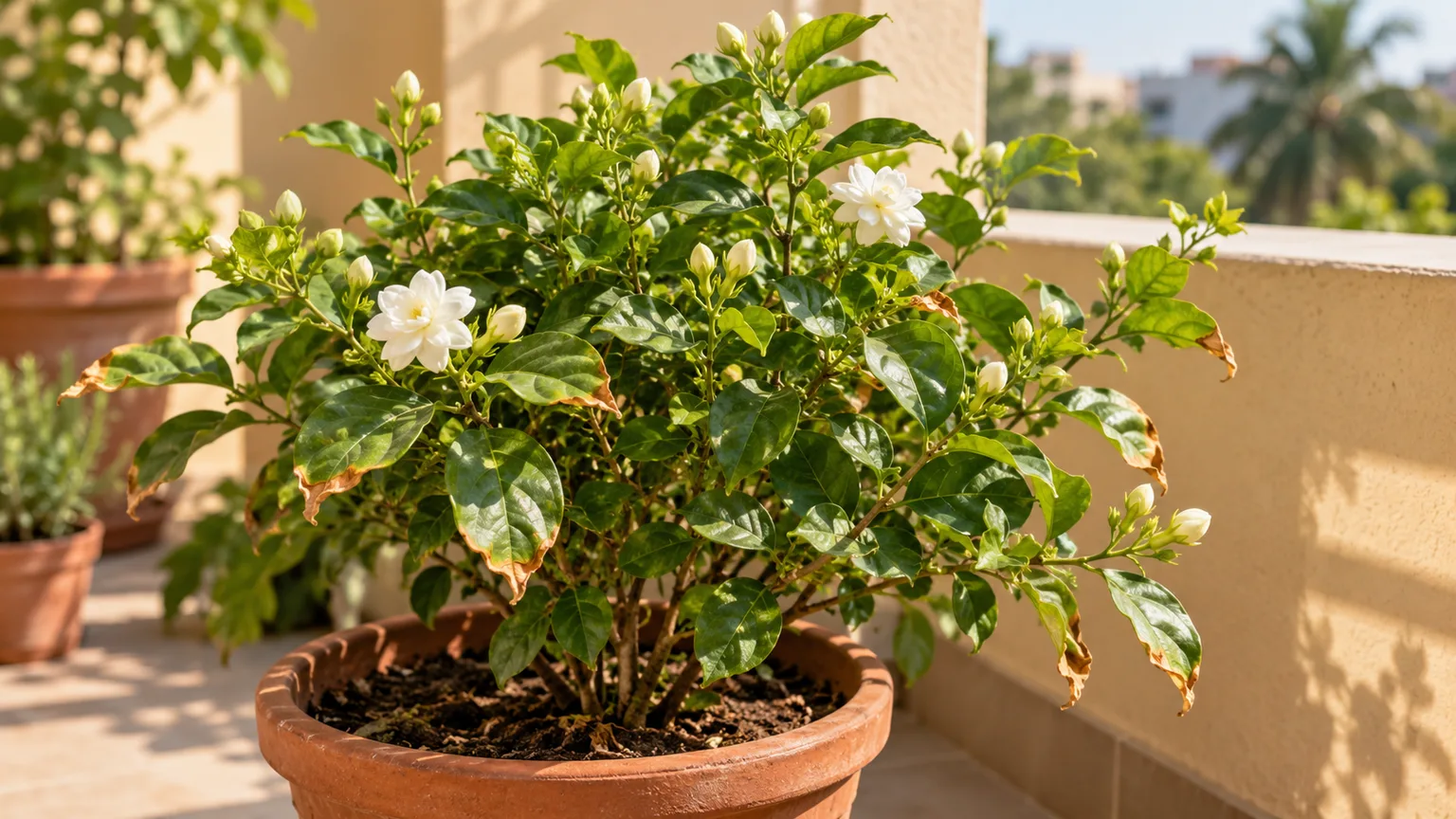
Heat Stress on Mogra: Causes, Checks & First Fixes
This guide covers heat stress on Mogra. See also the general Heat Stress guide, watering, and light pages for this plant.
Heat Stress on Mogra: Causes, Checks & First Fixes
Quick answer
When Mogra starts drooping, curling, or developing crisp leaf edges during a spell of very hot weather, first move the pot to bright open shade for the hottest afternoon hours. This lowers direct heat on the leaves and the container while keeping the evergreen jasmine in useful daylight. Once it is out of the heat, check the mix: water only if the upper 2–3 cm are dry and the pot feels noticeably lighter than usual. If the soil is wet, more water can deepen the problem.
Heat stress is a pattern to confirm, not a diagnosis based on the forecast alone. Mogra is a warm-climate plant that flowers through hot seasons; a hot day by itself does not prove that the plant is injured. Compare how the leaves look at midday and again the next cool morning, and note whether the affected side faces a hot wall, hard paving, or newly intensified sun. For the general plant response to high temperatures, see the heat-stress guide; the checks below focus on Mogra’s evergreen shoots, flowering cycle, and potted root zone.
What heat stress looks like on Mogra
Heat-related trouble often begins as a short-lived loss of firmness during the hottest part of the day. Mogra’s newest leaves may hang, curl slightly inward, or feel softer than they did in the morning. If they recover overnight after the pot cools, that shift supports a temporary heat-load or water-demand explanation; it does not prove the leaves have been permanently damaged. Fine Gardening likewise treats wilting as a water-stress signal to check during a heat wave (container heat-wave checks).
More lasting exposure can leave dry, pale, tan, or brown patches along the margins or on the side of the plant receiving the strongest afternoon sun. Those patches feel crisp rather than wet or soft. A jasmine growing guide notes that harsh midday sun can scorch delicate leaves, so the pattern is especially relevant after a move into stronger exposure (jasmine sun-scorch guidance). Heat stress is more plausible when the damage appeared soon after a heat wave, a move to a sunnier balcony, or several days of hot wind, and when the pattern is strongest on exposed growth.
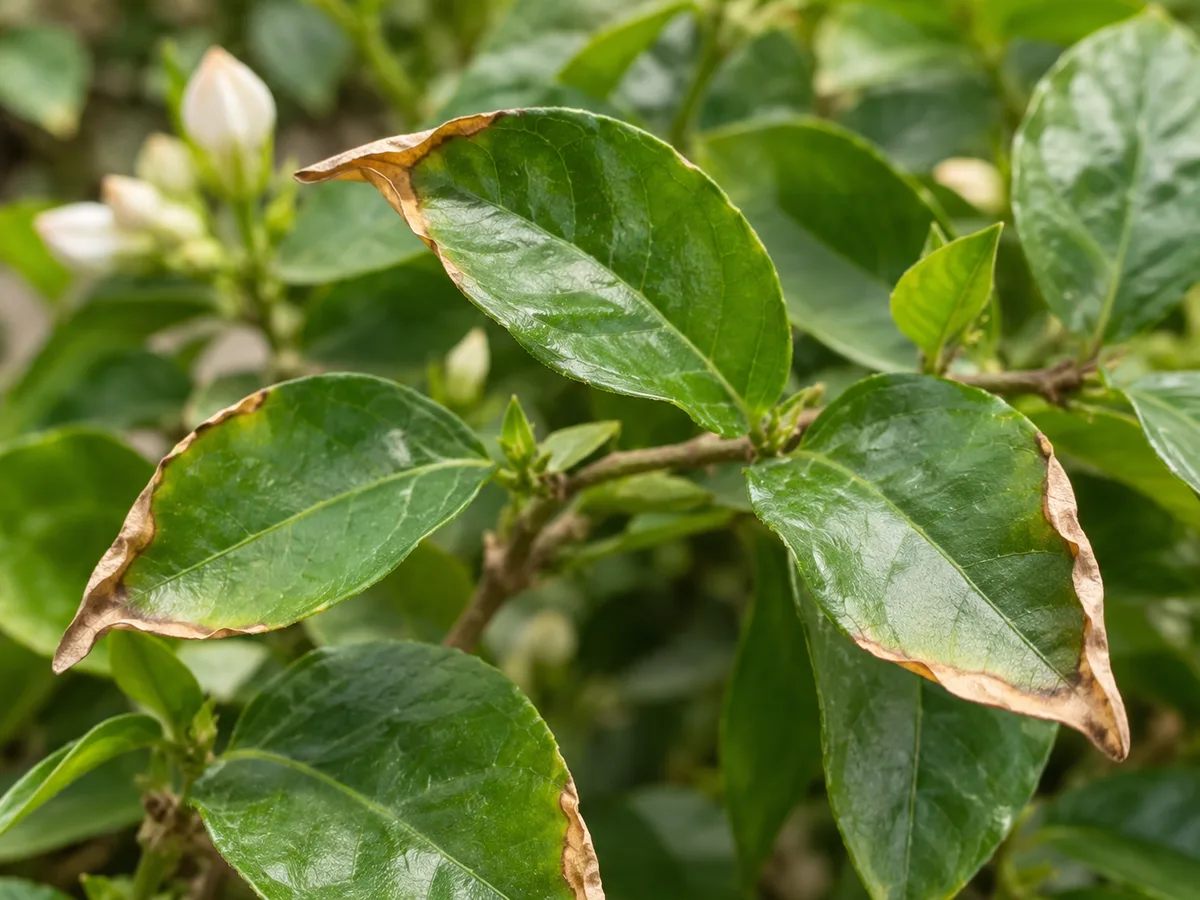
Dry, crisp edges on exposed Mogra leaves can record earlier heat or sun exposure; check the soil and the next morning’s growth before treating the whole plant as dehydrated.
Mogra’s flowers need a separate reading from its foliage. The flowers open in clusters and naturally change color as they age; Arabian jasmine blooms can fade from white to pink and then yellowish-brown as they get older (flower aging on Arabian jasmine). An old bloom changing color is not, by itself, evidence that the whole shrub is overheating. Check whether unopened buds and fresh leaves are also affected, and use the Mogra flower-browning guide when the change is limited to spent flowers. A heat-stressed plant may lose some display, but this article does not assume that every browned flower was damaged by heat.
Why a hot-season Mogra can still struggle
Mogra is not a cool-room plant. A study of Jasminum sambac notes that the evergreen species blooms in hot summers, including settings where temperatures rise above 38°C, and investigates genes associated with heat response. That research explains why warmth is part of the plant’s growing context; it does not establish a safe temperature for every cultivar, pot, balcony, or length of exposure. Plant responses to heat vary with temperature, duration, species, and the surrounding conditions, so use the Mogra care guide and the plant’s own daily pattern rather than treating a single number as a pass-or-fail threshold (jasmine heat-response study; plant heat-response review).
Afternoon sun can be harsher than Mogra’s usual light
Mogra can grow in full sun to partial shade, but a potted plant may experience a sharp change when it is moved outdoors or placed beside a south- or west-facing wall. Light reflected from concrete, metal railings, glass, or a balcony floor can heat exposed leaves and the pot at the same time. That local combination is different from the plant receiving bright morning sun in a garden with cooler soil around its roots. Epic Gardening’s Arabian-jasmine guide describes the species as warm-climate and suited to full sun or partial shade, while Mogra cultivation advice also allows partial shade; neither means a small pot must stay in relentless afternoon sun during a heat wave (Arabian jasmine light guidance; Ugaoo’s Mogra growing guide).
A Mogra pot can dry faster than its usual routine
Heat can make a container dry faster than its usual schedule. A Mogra that normally needs water every few days may dry sooner during a hot spell, especially when its pot is exposed to afternoon sun or sits on a heated surface. Use the top 2–3 cm dry-down check and pot weight rather than a fixed calendar; a light pot plus dry mix supports underwatering as a contributing cause. In heat-wave guidance, Fine Gardening recommends checking container moisture frequently because pots can dry quickly; Epic Gardening likewise advises checking Arabian-jasmine soil before watering and keeping it evenly moist rather than waterlogged (container heat-wave checks; Arabian jasmine watering guidance).
Warm roots and wet roots can produce confusing signs
A pot that is hot to the touch can add to the heat load on a plant already exposed to hot air; Fine Gardening notes that container soil temperatures can soar and recommends cooling the pot with shade (container heat-wave checks). A wilted Mogra still does not automatically need a drink. Check the drainage holes, whether the pot is standing in runoff, and whether the mix remains heavy and wet long after watering. A persistently damp root zone or soft lower stems make simple thirst less likely and deserve a root-zone check. Ugaoo’s Mogra guide warns that this plant does not tolerate waterlogging (Mogra watering and drainage notes).
Confirm the cause before watering
Use three checks in order. First, compare the plant at midday with its condition at dawn: temporary afternoon droop that largely lifts overnight is different from shoots that remain collapsed after a cool night. Second, feel the potting mix 2–3 cm below the surface and lift the pot if practical. Dry mix and a light pot support a watering need; wet, heavy mix means you should not add water just because the leaves droop.
Third, map the damage to its exposure. Crispy patches limited to one sun-facing side after a sudden move suggest heat or sun scorch. Damage spread evenly across the shrub, including shaded inner leaves, deserves a wider check of moisture, drainage, pests, and recent root disturbance. Look under leaves and along tender stems for stippling, webbing, sticky residue, or visible insects; those signs can point to pests that happened to appear during the same hot period. The Mogra watering guide explains the plant’s dry-down check, while the Mogra light guide helps you compare the plant’s present exposure with the light it can use for flowering.
A simple log helps when the pattern is ambiguous. For three or four days, note the afternoon temperature, hours of direct sun, whether the pot feels light or heavy, and whether the foliage recovers by morning. Do not treat the log as a laboratory diagnosis; it is a way to see whether a specific change in shade, watering, or wind exposure tracks the plant’s response. If the root ball is dry, water it once and note how quickly the pot dries again. If the mix is wet, keep the pot out of direct heat and see whether the plant steadies without extra irrigation.
First fix: give Mogra afternoon shade
Move the container to a bright, airy place that receives morning light but is protected from the strongest afternoon sun. If it cannot be moved, set up shade above the foliage without letting fabric rest against leaves, or block radiant heat from a wall or paving surface. This is a temporary recovery step, not a plan to keep Mogra in a dark corner: the plant still needs good light to grow and flower. Fine Gardening’s heat-wave guidance similarly recommends checking containers and using shade to cool pots during extreme heat (heat-wave container and shade steps).
After the pot is cooler, water only if the top 2–3 cm have dried and the container feels light. Pour slowly over the mix until water exits the drainage holes, then allow it to drain fully. If water runs straight down the pot sides while the center remains dry, re-wet in a few slow passes rather than leaving the root ball submerged. Do not water a still-soggy Mogra simply because its leaves are limp; wait for the mix to approach its normal dry-down and check drainage.
Recovery steps for Mogra’s evergreen shoots
Keep the root zone evenly moist, not permanently wet
For the next week, check moisture once in the morning and again late in the afternoon if the weather remains unusually hot. This is observation, not a prescription to water twice daily. Water only when the upper layer has dried, and make sure the pot empties freely. Mogra blooms during warm seasons and benefits from steady moisture in active growth, but its roots still need air and drainage; use the plant’s daily dry-down rather than a fixed schedule.
If the pot dries within hours on several consecutive days, use temporary afternoon shade first and consider whether the container is root-bound or the mix has become hydrophobic. Do not compensate by leaving the pot in a tray of water. Once the heat eases, return Mogra toward its usual bright position gradually, especially if it has spent several days in shade. An abrupt jump from shade back to full afternoon sun can recreate the same exposed-leaf pattern.
Leave firm green leaves in place
Do not strip the shrub of leaves because their tips look unattractive. Firm, partly green leaves still contribute energy while Mogra resumes growth, and removing a large amount during heat adds another stress. Wait until the weather steadies, then trim only fully dry or brittle tissue with clean pruners. If damage is advancing down stems or the stem itself is shriveling, check for a root-zone problem rather than pruning progressively larger sections.
Pause feeding and major pruning
Do not fertilize while the plant is wilting or losing leaves. Fertilizer will not cool a pot or repair scorched tissue; concentrated salts can add avoidable stress when roots are struggling. Fine Gardening advises suspending fertilizer during heat stress and resuming when temperatures fall and growth is active again. Mogra’s regular pruning is associated with its flowering cycle, so save shaping for a stable period rather than cutting back heat-stressed shoots (heat-wave fertilizer guidance; Mogra pruning guide).
Heat stress, dry soil, and other Mogra lookalikes
| What you notice | More likely explanation | Next check |
|---|---|---|
| Soft leaves droop in late afternoon, then mostly lift by morning; pot is dry and light | Heat-driven water demand, with dry mix contributing | Move to afternoon shade, then water thoroughly if the top layer is dry |
| Pale or crisp patches occur mainly on the exposed outer side after a move to stronger sun | Sun scorch or radiant heat injury | Keep the plant in bright shade temporarily and compare new growth; burned areas will not turn green again |
| Whole shoots stay limp at dawn, mix remains wet, or lower stems feel soft | Root damage or waterlogged soil may be involved | Stop adding water; check drainage and review the Mogra soil guide |
| Only old flowers turn yellowish-brown while leaves and new shoots stay firm | Normal flower aging is more likely than whole-plant heat stress | Remove spent blooms when convenient; use the flower-browning guide if buds or fresh petals are also affected |
| Leaves show fine stippling, webbing, sticky residue, or clustered insects | A pest may be present alongside heat; Epic Gardening lists spider mites among Arabian-jasmine pests (Arabian jasmine pest list) | Inspect leaf undersides and tender stems; compare with the Mogra spider-mite guide |
| Older leaves yellow across the shrub and the pot stays wet | Watering or root-zone trouble may be more likely than heat alone; Arabian jasmine can yellow from too little or too much water (yellow-leaf causes) | Check drainage and the Mogra yellow-leaves guide |
These patterns can overlap. A dry root ball can wilt at the same time as a hot balcony scorches the exposed leaves, while root trouble can make a plant less able to cope with warm weather. Treat one likely cause at a time and use the plant’s response over the next few days to decide whether the diagnosis still fits.
Recovery timeline and when to worry
A Mogra with brief midday droop but firm stems and a root ball that is not damaged may look steadier after the pot is shaded and the moisture issue is corrected. Existing brown or papery areas will remain; they are damaged tissue, not a reversible color change. Judge recovery by whether the injury stops spreading, whether shoots remain firm the following morning, and whether the next leaves open with normal texture. Mogra can flush new growth in warm weather, but the time depends on the depth of stress and the plant’s active growth phase.
Escalate your inspection if most leaves stay limp through dawn, more stems become brittle, or the plant does not stabilize after several days of cooler placement and appropriate watering. A sour smell, black or mushy lower stems, or persistently saturated soil is a stronger reason to inspect roots than a few scorched tips. If roots remain firm, continue stable care; if most have become soft and collapsed, recovery may be limited to the firm living stems. Avoid repotting solely to refresh the potting mix while Mogra is heat-stressed. Repot only if drainage has failed, the mix has broken down, or inspection confirms serious root damage; otherwise a sudden root disturbance can add stress without correcting the exposure.
Prevent another hot-spell setback without losing flowers
As the hot season approaches, keep Mogra in its established bright position instead of moving it abruptly from deep shade into all-day sun. A newly acquired or recently repotted plant needs time to adjust to stronger exposure. If it has been indoors, increase outdoor light in stages and use the afternoon response to set the pace. Mogra still needs strong light to flower well, but a stable potted root zone matters during heat spikes too.
Check the pot more often when daytime heat, wind, or reflective surfaces change its usual dry-down. Container plants can dry quickly in a heat wave, so use moisture and pot weight rather than the calendar. Keep drainage holes open and avoid letting the pot stand in hot runoff. If a dark or thin container heats strongly, shade the pot itself or set it inside a larger light-colored outer pot with air space between them, making sure water can still drain freely. Do not seal Mogra into a stagnant, enclosed corner; moving air helps the leaves and soil surface dry normally after watering.
Keep the plant’s flower cycle in view. Mogra is often grown for its clusters of fragrant blooms in summer and the rainy season, as noted in Ugaoo’s Mogra growing guide (seasonal Mogra flowering). A short spell of afternoon shade can protect a stressed pot without turning the long-term placement into low light. When the heat passes, restore brighter exposure gradually and resume normal feeding only after steady growth returns. For the overall setup, revisit Mogra’s light, soil, and watering routines as a coordinated care system rather than changing all three at once.
When to use this page vs other Mogra guides
Use this guide when symptoms began during unusually hot weather or after a Mogra’s exposure changed, especially if leaf injury is strongest on the afternoon-facing side. If the main evidence is a dry pot and repeated wilting between waterings, start with the drooping-leaves guide and watering routine. If the mix stays wet, the soil smells sour, or stems soften, prioritize the soil and root-zone checks instead of treating the plant as simply overheated.
If only blossoms are changing color, compare their age and condition with the flower-browning guide. If older leaves yellow beyond the exposed area, use the yellow-leaves guide. For a broader care reset, the Mogra overview links the plant’s light, soil, and watering needs; the Mogra problems hub helps route symptoms that do not fit the heat pattern here.
Related Mogra guides
- Light: Use the Mogra light guide to plan the plant’s normal flowering exposure after the heat wave passes.
- Watering: Use the Mogra watering guide to judge when the pot has dried enough for another drink.
- Soil: Use the Mogra soil guide if the mix stays wet, sheds water, or drains slowly.
- Flowers turning brown: Use the flower-browning guide when the symptom is limited to flowers rather than foliage or shoots.
- Problem routing: Use the Mogra problems hub when the pattern points to a different cause.
Related tool
Use the Plant Problem Diagnosis Tool to narrow causes for heat stress on this plant before changing several care variables.