Leggy Mogra Seedlings: What to Check and How to Fix Them
Quick answer
A Mogra seedling that is tall, thin, pale, or leaning toward a window is usually reaching for more usable light. Move it to a brighter, evenly lit position, protecting it from an abrupt jump into hot direct sun; if the base is damaged or the seedling collapses, check for damping off before treating it as a light problem.
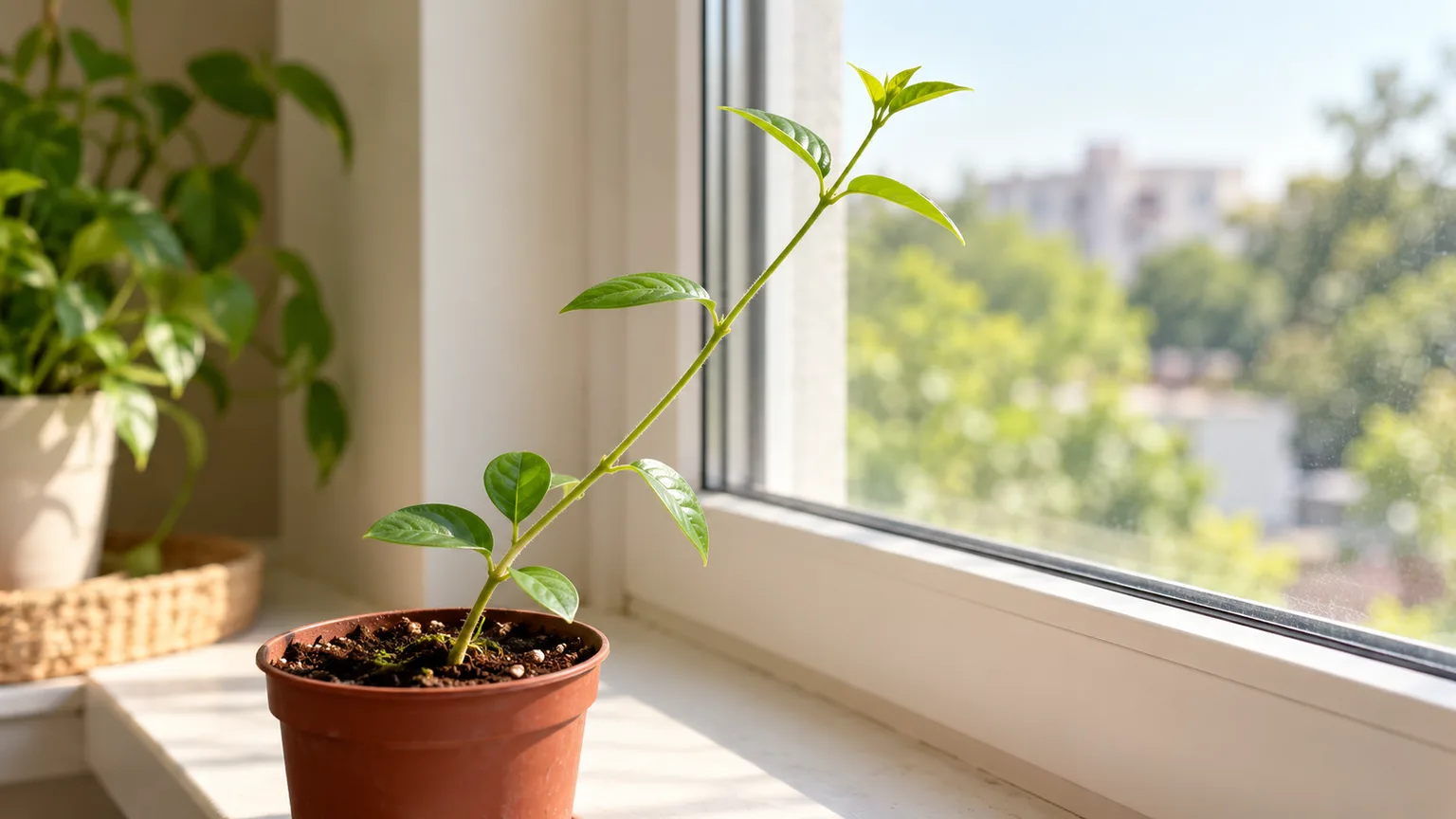
Leggy Seedlings on Mogra: Causes, Checks & Fixes
This guide covers leggy seedlings on Mogra. See also the general Leggy Seedlings guide, watering, and light pages for this plant.
Leggy Seedlings on Mogra: Causes, Checks & Fixes
Quick answer
A Mogra seedling that is tall, thin, pale, or leaning toward a window is usually reaching for more usable light. First, move it to a brighter, evenly lit position, keeping it out of an abrupt change to hot midday sun. Then inspect the stem at the soil line: a firm green base supports a light-related diagnosis, while a pinched, soft, or dark base calls for a damping-off check.
The stretched part of a stem will not shrink back after you improve conditions. The useful recovery sign is the next stretch of growth: new leaves should be closer together, better colored, and able to hold themselves up. For the general seedling pattern, see the leggy-seedlings guide; this page explains how to apply that diagnosis to Mogra, also called Arabian jasmine.
What leggy seedlings look like on Mogra
Legginess is a pattern of weak extension growth, not simply a Mogra shoot that is longer than you expected. Affected seedlings have a narrow stem that lengthens faster than it gains strength, small leaves spaced far apart, and a noticeable lean toward the brightest side of the room. The stem may be lighter green than the newer leaves, but color alone is not enough to diagnose the cause.
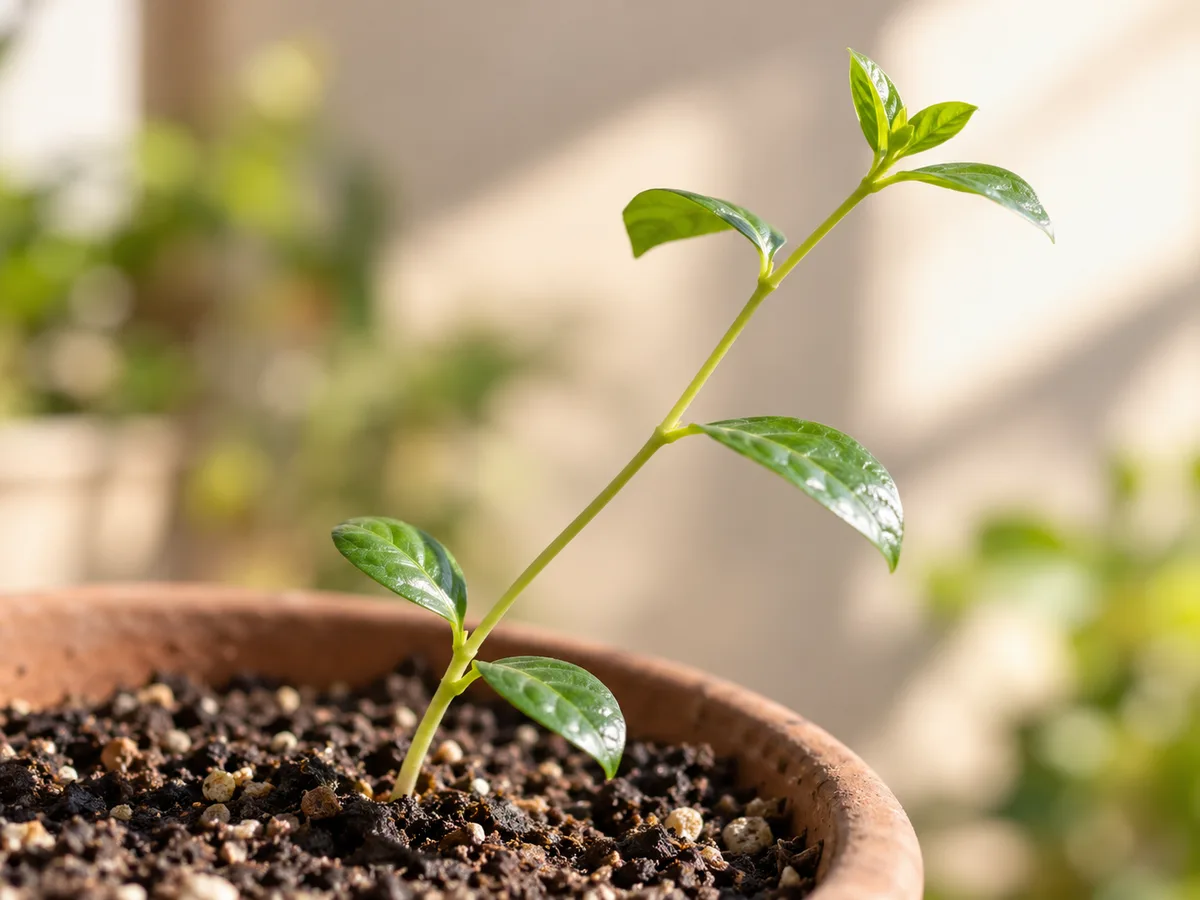
A leggy seedling has an unusually long, slender stem between small leaves and often bends toward the light.
Compare it with a second seedling grown in a brighter spot, if you have one. If both lean in the same direction, the light is probably one-sided; if one collapses or its base is damaged, investigate that plant separately. Garden Betty describes the classic pattern as thin, pale growth that reaches toward light.
First sort out whether this is a seedling or a young Mogra cutting
A seedling is a plant that grew from seed. A rooted cutting is a piece of a parent plant that has formed roots, and it can already have a more mature-looking stem and leaves; RHS describes seedlings and cuttings as distinct propagation stages. This distinction matters because the page is meant for a genuinely seed-grown Mogra with juvenile growth, not every small jasmine plant that has a long shoot.
The Royal Horticultural Society lists semi-ripe cuttings in summer and layering in autumn as propagation methods for Jasminum sambac. If the seller or grower did not specify the method, ask before applying this seedling advice.
If the plant came from a cutting and has a long, sparse shoot, compare it with leggy growth on established Mogra. If the seed never sprouted, use Mogra problems hub instead. The way the plant started changes which diagnosis and recovery advice fits.
Why young Mogra stretches under indoor light
Low or one-sided light is the first cause to investigate. Seedlings naturally orient toward light; when usable light is weak or comes mainly from a window on one side, the stem can elongate and lean before the leaves fill out. A bright-looking room is not necessarily bright at the seed tray, especially when it is set back from the glass or shaded by a balcony, curtain, or neighboring building; window-grown seedlings can stretch toward the sun.
Mogra is a warm-growing evergreen shrub that can twine with support. Mature plants tolerate full sun to partial shade, depending on climate and exposure; for indoor or greenhouse culture, RHS advises bright light with shade from hot sun. That adult tolerance does not mean a newly emerged seedling should be moved suddenly from a dim room into harsh outdoor sun. Use the plant’s bright-light preference as the destination, then acclimate it gradually.
Mogra’s adult climbing habit can look leggy later
Arabian jasmine may grow as a twining shrubby vine on a support or spread as a shrub without one. An established plant can therefore send out long shoots as part of its normal habit; RHS classifies Mogra as a climber and wall shrub.
Use the seedling diagnosis when the plant is still young and the stem is weak relative to its few leaves. On an established Mogra, long shoots with firm stems and healthy, normally sized foliage may call for a light check or shaping plan instead. The Mogra light guide helps assess the mature plant’s placement, while the Mogra problems hub routes you to other symptom pages when the leaves or stems show a different problem.
Warm germination conditions can keep the stem stretching
Some growers use a covered tray or warm mat to help seeds germinate. Once green shoots appear, leaving a cover in place or keeping the tray unusually warm can encourage fast, weak extension, especially if the light is also limited. Excess heat after sprouting can contribute to leggy seedlings; treat it as a secondary factor, not a substitute for checking light first.
If the seedlings are still under a clear cover, remove or vent it after emergence and keep them in a stable, warm room rather than beside a heater. Do not chill Mogra seedlings to slow growth: Arabian jasmine is adapted to a warm, humid climate, not a cold treatment. The goal is to remove excessive warmth and stagnant cover conditions while keeping the plant comfortable.
How to confirm the cause before changing care
Check the plant in this order so a weak-looking seedling does not receive several unnecessary treatments:
- Trace the light. Note whether the stem leans toward a window or lamp, whether the tray is shaded for much of the day, and whether the light reaches all the seedlings. A consistent lean toward one source strongly supports a directional-light problem.
- Look at the newest growth. Compare the newest stem section and leaves with older growth. Continued long gaps and a weak stem suggest the current conditions still favor stretching; compact new leaves after a light correction are a better sign than a change in the old stem.
- Feel the stem at the soil line. A firm base is more consistent with legginess. If the base is visibly damaged or the seedling suddenly topples, check for damping off or another problem; RHS notes that damping off can affect seedlings and recommends good hygiene and air circulation to reduce problems.
- Check the medium without flooding it. The surface should not stay waterlogged, and very dry seed-starting mix can weaken a young plant. Mogra prefers a moist but well-drained medium as it grows; use the Mogra watering guide to judge the pot’s dry-down rather than watering by a fixed daily schedule.
- Check spacing and airflow. If seedlings share a small cell or dense tray, leaves may shade one another and stems may compete for the same window light; crowded seedlings can compete for light. Move them only if roots can be separated without tearing them; otherwise improve the light over the whole tray and wait for a safe transplanting stage.
Do not diagnose legginess from height alone. A seedling can be upright and naturally slender for its age; the combination of a thin stem, sparse leaves, and directional leaning is more useful. If it falls over, inspect the base and roots before changing the light. That is why the stem at soil level is the most important lookalike check.
The first fix: give the Mogra seedling more even light
Move the seedling closer to its brightest suitable light source or adjust its grow light so light reaches the canopy evenly. This is the first correction because light-seeking growth is the most common explanation for the long, leaning stem. Keep the change simple for the first few days so you can tell whether the location helps.
If you use a windowsill, choose the brightest practical position and turn the pot or tray a little each day so new growth does not keep reaching from one side. If you use an LED, follow the fixture’s instructions and keep the lamp centered over the seedling instead of copying a distance from a different setup. Give the seedling several days under the improved light before judging whether the new growth is more compact.
Do not place a tender indoor-grown Mogra seedling directly into strong afternoon sun to “make up” for the earlier shortage. Begin with bright light and, if it will live outdoors, increase exposure gradually over several days, pausing if the seedling reacts poorly. The adult plant’s ability to grow in full sun to partial shade depends on its conditions; a seedling that has spent weeks indoors needs time to adjust. The Mogra light guide covers the established plant’s longer-term placement.
Do not treat a Mogra seedling like a tomato seedling
Some vegetable seedlings tolerate deeper planting because their stems can form additional roots; tomato seedlings are a familiar example. Do not assume the same rescue works for Mogra. Keep the root collar at its original depth and add a small loose support if the plant cannot stay upright; do not press wet mix against a long, tender stem simply to hide its height.
Avoid topping or pinching a very young Mogra to make it look bushier. It has limited leaves available to capture light, and removing them will not correct the low-light conditions that caused the stretch. Once the seedling is stable and making compact new growth, you can consider later shaping as the plant develops; the current goal is a healthy growing tip and a stem that can support its leaves.
Recovery: what can change and what cannot
Existing stretched internodes will remain long. Improving the light changes what the seedling does next; it does not pull the old stem back into a compact shape. If the plant is still upright or can be supported without kinking, keep the improved light steady and judge recovery by new growth rather than by the length of the original stem.
The encouraging signs are a firm stem base, an active growing tip, and new leaves appearing closer together with better color. If the stem has bent but remains intact, a thin stake can hold it gently while the plant continues growing. Tie loosely; a tight tie can pinch a soft stem as it thickens. Do not prune off the only growing tip or fertilize heavily in the hope of making the stem stronger overnight.
If the seedling collapses at the soil line, its base is visibly damaged, or the stem has snapped, it may not recover. Remove a clearly rotted seedling from the tray, keep neighboring seedlings from sitting in stale, saturated conditions, and clean the container before reusing it. Do not treat every weak stem as a fungal disease or apply a fungicide without a confirmed problem.
Prevent legginess in the next Mogra batch
Set up the light before sowing rather than waiting until the seedlings lean. Put the tray where it will receive bright, even light, or arrange a suitable grow light over it before the first shoots emerge. Check the tray’s actual position in the room: a nearby window can still leave the far edge shaded, and a lamp aimed at only one side can produce uneven seedlings.
After emergence, remove any germination cover that is no longer needed and keep the growing area ventilated. If several seeds sprout together, separate or thin them when their roots can be handled safely; do not tug out a neighboring plant if the roots are intertwined. Water enough to prevent the small root plugs from drying, but do not leave them standing in water. Use a free-draining seed-starting medium; if you are repotting a Mogra after it has outgrown its starter cell, the Mogra soil guide explains the mature plant’s drainage needs.
If you are preparing another seed tray, decide first whether you truly want to grow this Mogra from seed. A plant started from a cutting or layer follows a different propagation route, so keep those young plants separate from seedling advice and adjust their light to the growth they are making.
Related Mogra guides
Use the Mogra overview for the full care picture, and the Mogra problems hub if you are unsure which symptom page fits. If a mature Mogra has long but firm shoots rather than a floppy seedling stem, compare it with leggy growth on Mogra; if the plant is pale without the seedling shape, check Mogra’s not-enough-light guide. For a broader review of adult placement and moisture, continue to the light and watering guides.
Related tool
Use the Plant Problem Diagnosis Tool if the seedling is leaning but you cannot tell whether light, stem damage, or a wet growing medium is the main issue.