Mogra Mosaic Virus: Signs, Checks & Next Steps
Quick answer
Yellow and green mottling on Mogra can be a warning sign, but leaf appearance alone cannot confirm a virus. First isolate the plant from nearby jasmine and avoid taking cuttings while you check the pattern. A published study documents yellow mosaic on Jasminum sambac; confirmation may require a plant diagnostic lab.
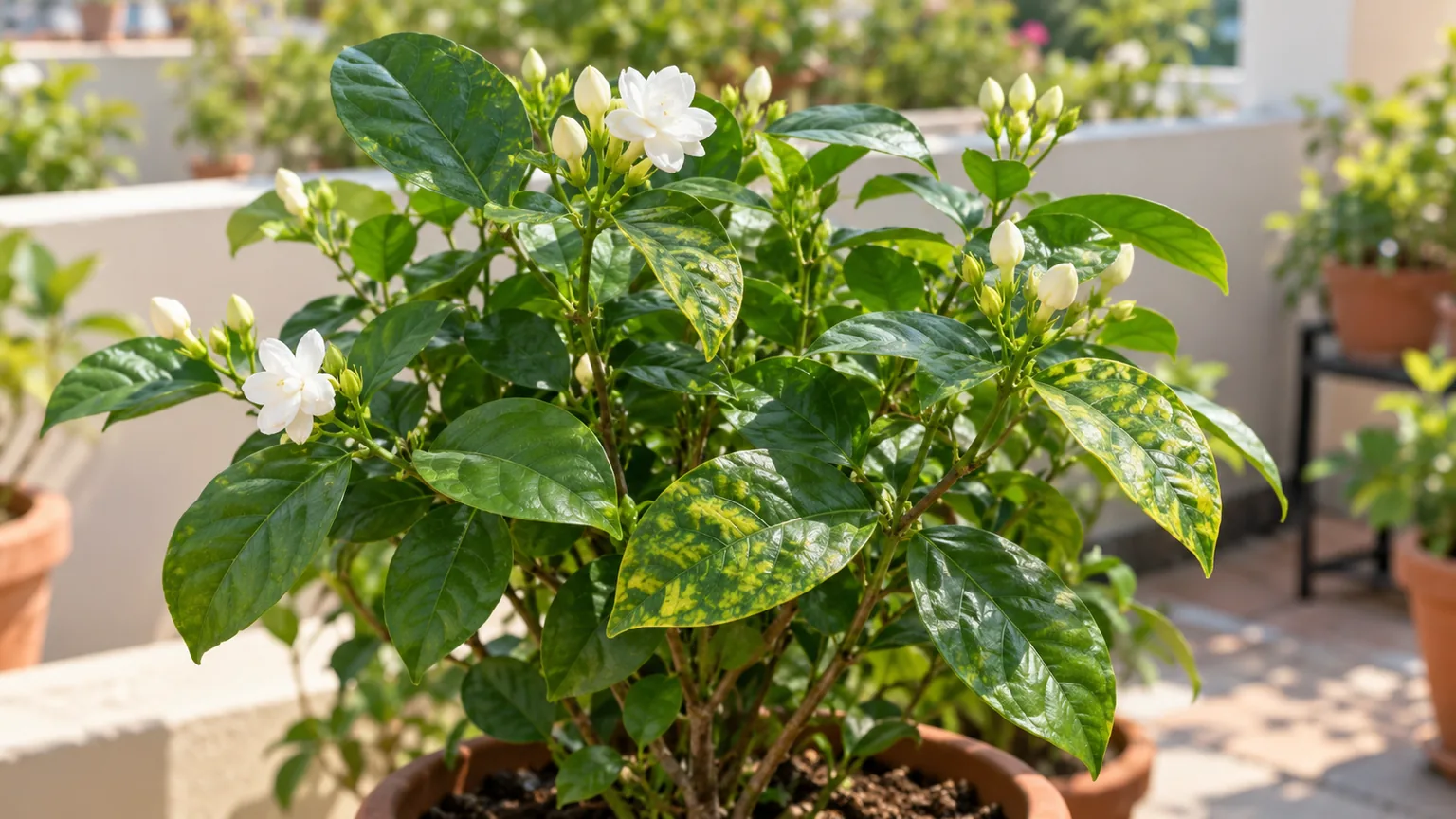
Mosaic Virus on Mogra: Symptoms, Diagnosis & What to Do
This guide covers mosaic virus on Mogra. See also the general Mosaic Virus guide, watering, and light pages for this plant.
Mosaic Virus on Mogra: Symptoms, Diagnosis & What to Do
Quick answer
If your Mogra has irregular pale and dark green patches, yellow vein clearing, or new leaves that emerge mottled, isolate it as a precaution and record which shoots are affected. A leaf pattern can guide what to check next, but it cannot name a virus. Compare several leaves before changing care or using a product. For the plant’s baseline, start with the Mogra overview and Mogra problem guide hub; for general virus symptoms across garden plants, see the mosaic virus overview.
What mosaic-like symptoms look like on Mogra
The most useful sign to look for is a pattern that repeats across more than one leaf: pale yellow tissue beside greener tissue, mottling that does not form a simple, even discoloration, or a leaf that develops an irregular pattern as it expands. A single pale leaf is weak evidence. Compare leaves of similar age and note whether the change appears on the newest Mogra growth, older leaves, or both.
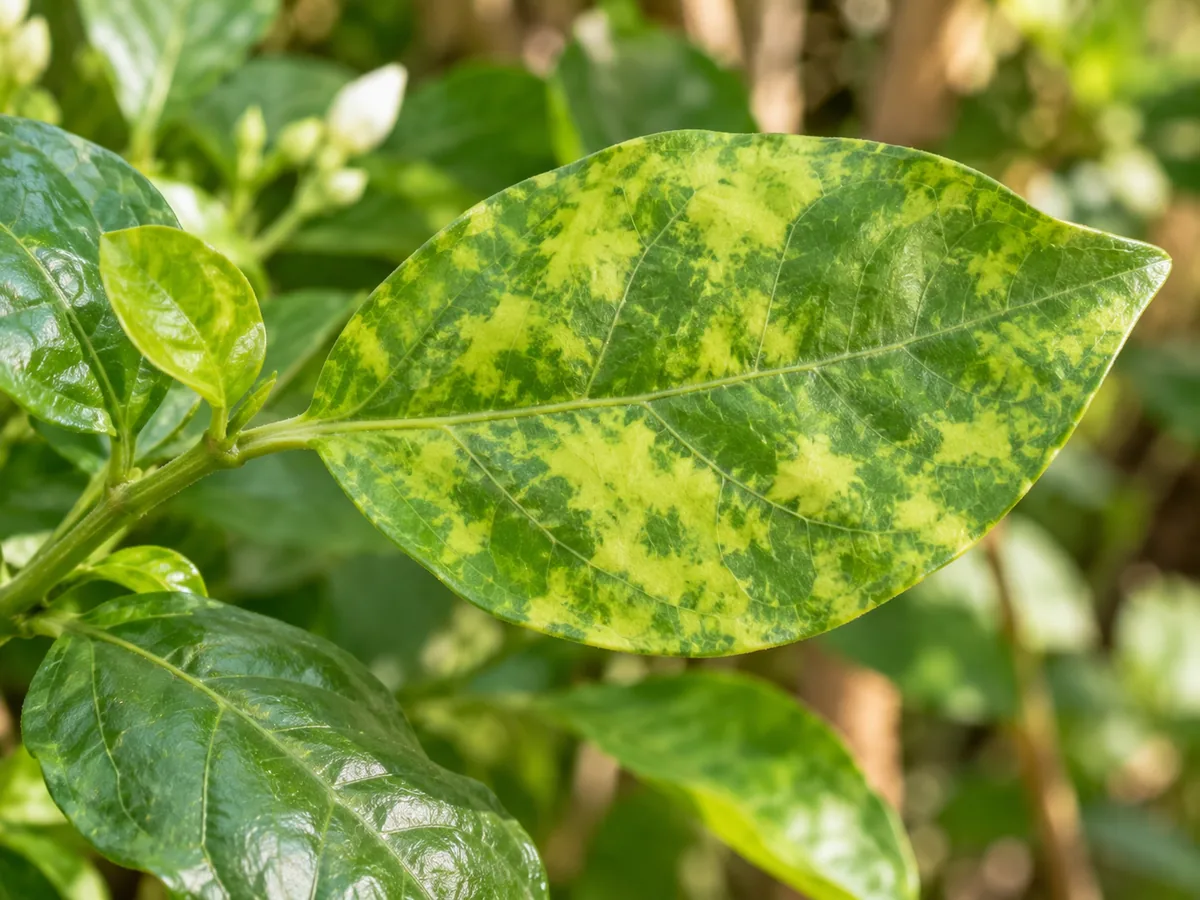
A mottled Mogra leaf is a reason to isolate and investigate, not proof of a specific virus.
In a published investigation of commercially cultivated Jasminum sambac in Andhra Pradesh, researchers described vein clearing followed by severe yellow mosaic in affected leaves and characterized a virus isolate from the plants. That is direct evidence that a jasmine mosaic disease has been reported on Mogra’s species; it does not mean every yellow patch on a home-grown Mogra has the same cause. The study’s description of jasmine yellow mosaic is a useful reference for the appearance, not a substitute for testing your plant.
Look at the whole growth pattern rather than trying to diagnose from one photograph. A mosaic-like leaf may also become distorted, and the plant may show stunted growth, signs reported among houseplant virus symptoms; neither sign identifies the cause. Record which shoot it grew from and whether neighboring leaves show the same pattern. Avoid removing every marked leaf immediately: keeping a small, dated photo record gives you a way to see whether the pattern is stable, spreading, or limited to one damaged leaf.
Why the Mogra-specific evidence matters
“Mosaic virus” is a common symptom label, not a single laboratory identity. Research has associated more than one virus with jasmine, and different jasmine species have been studied in different places. For example, a U.S. Department of Agriculture report describes two jasmine viruses found in symptomatic star jasmine and angelwing jasmine, and notes detection in a symptomatic Jasminum sambac sample as well. Those findings do not identify the agent in your pot; they show why a generic label should not be treated as a confirmed species-level diagnosis. The USDA report on viruses detected in jasmine gives the species and virus context.
Another study investigated yellow spots and chlorotic variegation on Jasminum officinale and identified a Jasmine virus C isolate after sequencing. That is a different jasmine species and a different virus report, so it should not be presented as the cause of Mogra’s symptoms. It does reinforce a practical point: similar-looking yellow patterns can be linked to different agents, and a visual name such as “mosaic” does not tell you which one is present. The Jasmine virus C study describes how the researchers investigated symptomatic jasmine.
On Mogra, therefore, separate three levels of certainty:
- A pattern is visible. You can describe the leaf as mottled, veined, ringed, or distorted.
- A virus is suspected. The pattern repeats or advances across new growth, and ordinary care changes do not explain it well.
- A virus is identified. A diagnostic service or suitable laboratory test supports the conclusion.
Use the first two levels to protect nearby plants while you decide what to do. Reserve the third for a tested diagnosis. The broader mosaic-virus topic is covered by the global guide linked above; this page keeps the question tied to Jasminum sambac.
First fix: isolate the Mogra while you assess it
Move the pot away from nearby jasmine and other plants that could be exposed to the same tools, cuttings, or handling. This is a precaution while the cause is uncertain; it is not proof that simple proximity caused the symptoms. If the Mogra is planted in a bed and cannot be moved, avoid taking material from it and work on it after you finish caring for healthy plants.
Do not start by spraying, repotting, fertilizing, or stripping the plant. None of those actions can establish whether the pattern is viral, and combining them makes later changes harder to interpret. Keep the Mogra in its usual stable placement and water according to the condition of its mix while you gather observations. If the plant is also wilting or the potting mix stays wet, investigate those problems separately after you have recorded the leaf pattern.
Use clean hands and tools after handling suspect foliage. The exact transmission route of a particular jasmine isolate should not be guessed from a tomato or cucumber virus. However, practical tomato mosaic guidance describes mechanical spread and recommends cleaning hands and tools after handling affected plants; treat that as general hygiene, not proof that the same route has been demonstrated for this Mogra disease. The tomato mosaic control guidance is specifically about tomato, so keep its host-specific details separate.
Read a Mogra shoot, not just one old leaf
When you inspect the plant, compare the newest pair of leaves with a fully expanded leaf lower on the same shoot. Note whether the newest leaves start with the pattern, whether they become more distorted as they open, and whether a separate shoot is affected. A stable mark on one older leaf after rubbing or sun exposure tells you less than the same uneven pattern appearing on successive leaves.
Mogra is grown for its leaves and flowers, so inspect the shoot tips and any developing buds without cutting them off for a closer look. Check whether the discoloration is confined to the leaf blade or extends into the petiole and stem, and note whether flowers or buds are also changing. A virus diagnosis should not be inferred from flower appearance alone; the record helps a clinic understand which parts of the plant are affected and when the pattern began.
Take one clear whole-plant photo and close photos of two or three affected leaves in natural light. Include a healthy-looking leaf from the same plant for comparison. Write down when the first mark appeared, whether the Mogra was recently moved or pruned, and whether new leaves have repeated the pattern. This small record is more useful than repeatedly changing light, water, and fertilizer in response to each new mark.
If you see insects, sticky residue, fine webbing, or damage concentrated around tender growth, document those signs separately. Visible pests are a separate finding; they do not automatically explain every mottled area. Use the Mogra spider-mite guide when you find evidence of mites.
Separate mosaic-like leaves from Mogra care problems
Leaf color and shape can change for reasons that have nothing to do with a virus. Look at the pattern across the plant and compare it with recent changes in care:
| What you notice | What it may point toward | Useful next step |
|---|---|---|
| One leaf is pale after a move or direct exposure | Local damage or a placement change may be involved | Review the Mogra’s recent light and placement history before moving it again |
| Several leaves yellow evenly or the whole plant looks generally pale | Watering or nutrient conditions may need review | Compare the pattern with Mogra yellow leaves and iron deficiency on Mogra |
| New leaves are misshapen but do not show repeated pale-green patterning | Growth stress or a pest may be more plausible than mosaic | Inspect leaf undersides and tender tips; compare with Mogra deformed new growth |
| Irregular pale and green areas repeat on several leaves and continue into newer growth | A virus deserves closer attention, though this still is not confirmation | Keep the plant isolated and ask a diagnostic service about testing |
These are sorting clues, not a home test. Gardening Know How’s general houseplant-virus overview lists mottling, yellow rings, distortion, and stunting among possible signs. Its separate tomato mosaic discussion describes symptoms that can resemble other disease or nonviral damage; that is a tomato example, not proof of a specific Mogra lookalike. Together, those sources support treating appearance as a reason to investigate rather than a final diagnosis. The houseplant-virus discussion lists possible signs, and the tomato mosaic article explains that crop-specific overlap.
If several Mogra plants show similar color change at once, review what changed across the group: watering routine, light, temperature, fertilizer, or a recent treatment. If one plant is affected while nearby plants remain normal and the pattern keeps appearing on new leaves, isolation and diagnosis become more important. Neither pattern proves or disproves a virus by itself.
How to ask for a reliable diagnosis
Contact a local university extension, botanical garden, or plant diagnostic clinic and ask whether it tests ornamental jasmine for viruses. Send the photos and symptom timeline first. Before mailing or carrying tissue, follow the clinic’s instructions about what to sample, how fresh it should be, and how to package it; different services may require different material.
Tell the clinic the plant is Mogra (Jasminum sambac) and describe the pattern without naming a virus as though it were confirmed. Include the origin of the plant if known, whether it was recently propagated, and whether other jasmine plants are nearby. If a clinic cannot test this species or virus, ask what it can rule out and whether it recommends keeping the plant separate.
Laboratory diagnosis matters because jasmine has reports of different viruses and the visible symptoms are not unique to one agent. The Mogra study characterized an isolate from symptomatic tissue, while the J. officinale study used sequencing to identify a different Jasmine virus C isolate. Those research methods are not home tests; the practical lesson is to avoid treating a symptom label as a species-specific laboratory result.
Recovery: what can and cannot improve
If a virus is confirmed, do not expect a marked leaf to become normal again after changing care. Plant-virus guidance for houseplants describes viral disease as having no cure, so there is no fertilizer, fungicide, or household spray that reverses an established infection. A general guide to viral diseases of houseplants explains that limit; it is broad guidance rather than a test result for Mogra.
The decision then is how to manage the plant, not how to erase the pattern. If the Mogra has mild symptoms, remains vigorous, and can be kept separate, you may choose to retain it as an ornamental while monitoring it. Do not use it as a source of cuttings or share it with another grower while its status is unresolved. If symptoms spread through new shoots, nearby plants develop similar changes, or isolation is not practical, ask the diagnostic service whether removal is the better risk-reduction choice.
Judge progress by the pattern over time. Mark the date of each photo and compare the same shoot every week or two, without repeatedly handling the leaves. Improvement means the pattern is not appearing on additional growth and the plant continues to produce normally shaped leaves; this does not prove that a virus is absent. Worsening means the pattern expands across shoots, new leaves repeatedly emerge distorted or mottled, or the plant declines despite stable care.
If a test is unavailable, keep the Mogra separate and avoid propagation rather than making a definitive claim from appearance. A plant with a stable pattern may remain manageable, but a symptom-free stretch does not by itself confirm that a virus is gone. Reassess if new leaves change or another jasmine develops similar marks.
Prevention for Mogra and nearby jasmine
Buy or accept Mogra plants and cuttings from sources that can describe their stock and handling. Inspect leaf undersides, shoot tips, and the newest leaves before placing a new jasmine beside established plants. Keep a new plant separate while you inspect it, especially if it has unexplained mottling or distortion.
Do not take cuttings from a Mogra with unexplained mosaic-like symptoms, following the cautious approach in houseplant-virus prevention guidance. Keep pruning tools clean between plants and wash your hands after handling suspect leaves. General plant-virus guidance notes that infected cuttings and handling can matter for some viruses, but the route depends on the virus; the reported jasmine isolate should not be assigned a specific vector or transmission pathway without evidence. The tomato mosaic source above demonstrates why clean handling is sensible, but does not establish how this particular Jasmine virus moves.
Keep care changes measured. Mogra’s care overview is the place to review its normal light, watering, and soil routine; make one justified adjustment at a time if you find a real care mismatch. Do not use a broad pesticide merely because leaves look mottled. If you find aphids, mites, or another pest, identify that pest and address it as a separate problem rather than assuming it is the virus or that killing it will cure the plant.
Related tool
Use the Plant Problem Diagnosis Tool to compare possible causes for mosaic-like leaves on Mogra before changing multiple care variables.
Related Mogra guides
- Use yellow leaves on Mogra when the color change is broad and more uniform than a repeated mosaic pattern.
- Compare iron deficiency on Mogra when pale growth is the main concern; this page cannot diagnose a nutrient problem.
- If leaf shape is the main change, see distorted leaves on Mogra or deformed new growth on Mogra.
- Use the Mogra spider-mite guide if you find mites or webbing. For other plant-specific comparisons, open the Mogra problem hub.
Keep this page for the virus question: isolate first, document the Mogra’s pattern, and ask for testing when available.