Iron Deficiency on Monstera Deliciosa: Causes, Checks &
Quick answer
Iron deficiency on Monstera deliciosa shows as yellow new split leaves with dark green veins on the newest unfurling foliage at the moss-pole tip while older splits may stay green. First step: confirm chlorosis is on new growth, not old lower leaves, and check whether chunky mix stays too wet or alkaline for iron uptake.
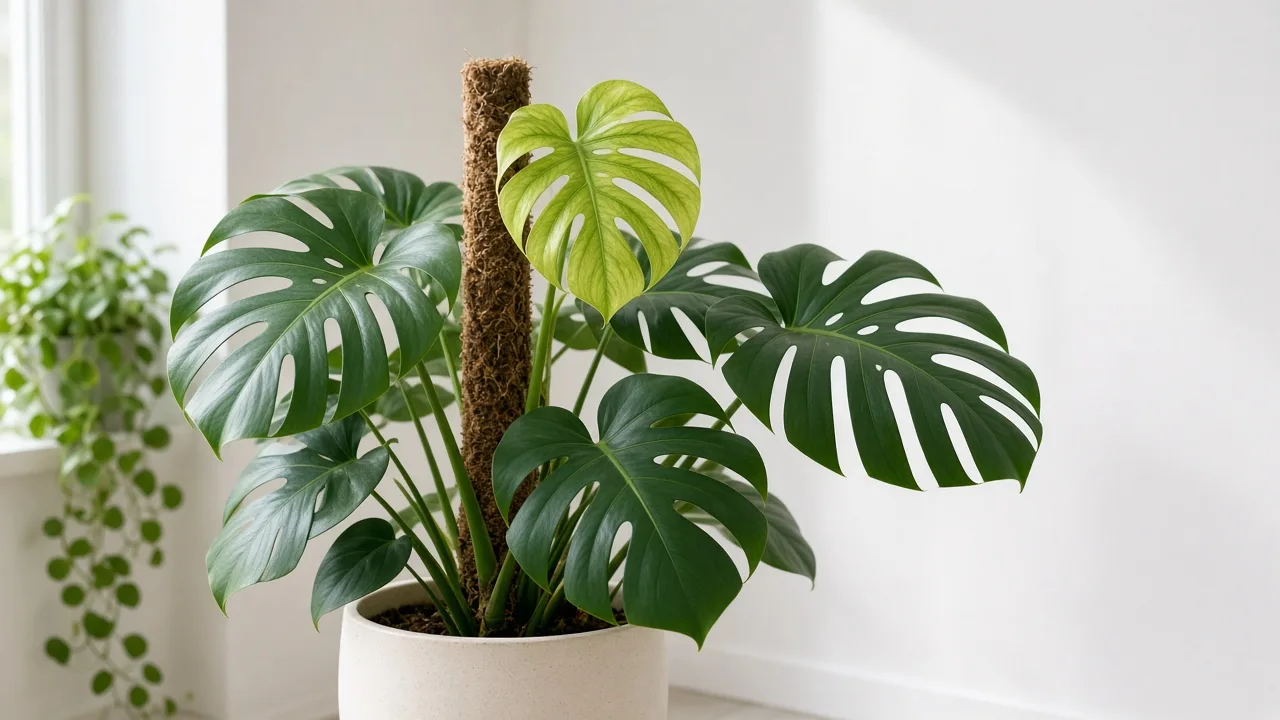
Iron Deficiency on Monstera Deliciosa: Causes, Checks & Fixes
This guide covers iron deficiency on Monstera Deliciosa. See also the general Iron Deficiency guide, watering, and light pages for this plant.
Iron Deficiency on Monstera Deliciosa: Causes, Checks & Fixes
Quick answer
Iron deficiency on Monstera deliciosa (Monstera deliciosa) shows as yellow or pale new split leaves with dark green veins (interveinal chlorosis) on the newest unfurling foliage at the moss-pole tip, while older fenestrated blades below may stay normal green. Iron is immobile in plants, so chlorosis appears on young expanding tissue first-not on the lowest old splits the way nitrogen deficiency does.
See our iron deficiency guide for general chlorosis mechanics. On Monstera deliciosa, inspect the split still unfurling at the climbing tip-veins stay green while tissue between them yellows before holes fully develop.
First step: confirm new-growth chlorosis with green veins, then check root health and whether chunky aroid mix stays wet too long before applying chelated iron.
What iron deficiency looks like on Monstera deliciosa
Healthy deliciosa pushes large fenestrated splits from nodes along a woody climbing vine. Iron stress breaks that pattern at the active growing tip, not across the whole canopy at once.
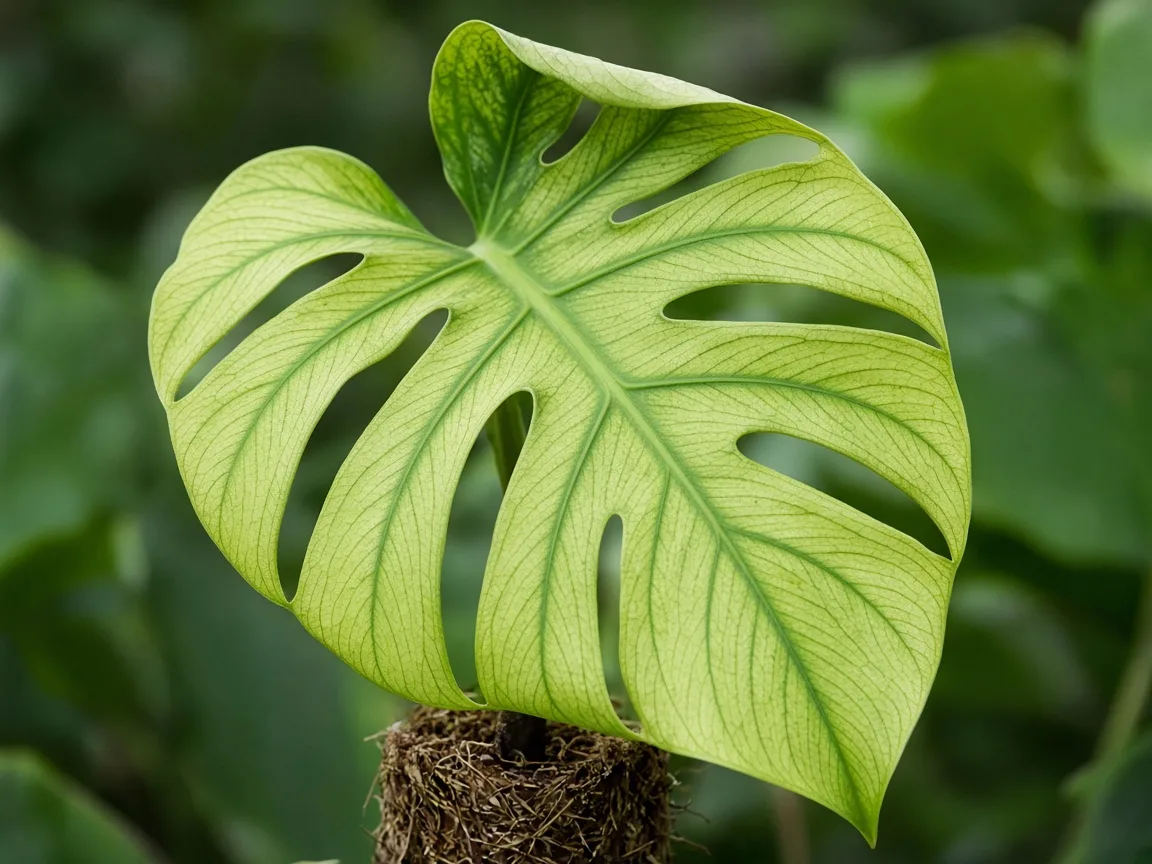
Interveinal chlorosis on a new Monstera deliciosa split-yellow tissue between darker green veins on the leaf still opening at the moss pole.
Typical signs:
- Yellow or pale new splits at the moss-pole tip with veins remaining darker green
- Successively paler new leaves on the same vine if untreated
- Older lower splits may stay green while only new growth looks chlorotic
- Thin or undersized new fenestrations when chlorosis is severe
- Firm stems if roots are functional-soft stems on wet mix point to overwatering instead
Not iron deficiency:
- Uniform pale older leaves first - nitrogen deficiency
- Washed-out green across many leaves with long internodes - not enough light or pale leaves
- Mottled eraser-like patches with webbing - thrips before assuming chlorosis
- All leaves yellow on persistently wet soil - overwatering or root rot
The classic symptom of iron deficiency is interveinal chlorosis where leaf tissue yellows while veins stay green. On a floor Monstera, that pattern is easiest to read on the blade still opening at the top of the pole.
Why Monstera deliciosa gets iron deficiency
Monstera deliciosa is a large climbing aroid that needs iron for chlorophyll in every new split leaf. Iron chlorosis often results when roots cannot absorb iron even when it is present in fertilizer-high pH, waterlogged chunky mix, compacted bark, or salt crust block uptake while the vine keeps pushing new tips.
Monstera-specific causes:
- Overwatering large floor pots - Heavy containers stay wet in the root core even when the surface dries; symptoms worsen in poorly drained soils.
- Compacted old bark mix - Chunky aroid mix breaks down after one to two years and holds water without oxygen.
- Alkaline or lime-heavy components - Locks iron in pot culture despite feeding; RHS notes micronutrient deficiencies including iron can cause chlorosis when uptake fails.
- Salt buildup from tap water or excess fertilizer - Injures roots and blocks micronutrient absorption; white crust on the pot rim is a warning sign.
- Misread nitrogen deficiency - Old leaves yellow first with nitrogen; iron hits new tips with green veins.
Do not diagnose iron deficiency on sour wet soil with soft stems at the base-that is root failure from chronic saturation until you unpot and see mostly white firm roots.
Unfurling fenestrations: iron on deliciosa tips
Monstera shows iron stress on the split still opening at the moss pole-a pattern that would be nonsense on a snake plant rosette or peace lily crown. Veins remain green while the expanding blade between them yellows before fenestrations fully develop.
That tip-only chlorosis distinguishes iron from nitrogen, which starts on the lowest mature splits on the main vine. It also differs from normal juvenile color: a brand-new split is briefly lime green for a few days, then deepens. Worry when every new split stays yellow-green with dark veins for weeks after hardening off.
Because deliciosa leaves are large, one chlorotic unfurling split is highly visible from across the room-use that single blade as your diagnostic anchor before changing fertilizer, mix, or pot size.
Moss-pole tips and wet chunky mix
The active growing tip on a moss pole is where deliciosa invests the most new tissue. Iron demand peaks there, but so does risk when the root zone fails.
Moss pole moisture traps: Many growers keep pole moss damp for aerial roots while also watering the pot on schedule. If chunky mix below never dries to the 3-5 cm depth NC State recommends before the next drink, roots lose oxygen and micronutrient uptake drops-even though the vine tip still tries to unfurl.
Floor-pot dry-down illusion: On a heavy 30 cm+ decorative pot, the top layer may feel dry while the core stays wet. Chlorosis at the moss-pole tip with a heavy pot and fungus gnats is often wet mix, not simple iron starvation. Cross-check with Monstera watering and probe depth, not surface crust alone.
Compacted bark in old specimens: Mature deliciosa often stays in the same mix two seasons too long. Perlite and bark break down; what started as airy chunky aroid soil becomes a water-holding sponge that locks iron chemically and biologically.
How to confirm the cause
Work through this checklist before iron drenches, repotting, and fertilizer changes on the same week:
- New vs old leaf pattern - Chlorosis on newest tip splits with green veins; older blades still green.
- Root inspection - White firm roots support micronutrient fixes; brown mushy roots need drainage first.
- Soil moisture at 3-5 cm - Wet days after watering on a heavy floor pot?
- Salt crust - White rim suggests flush before iron.
- Complete fertilizer history - Chlorosis despite feeding points to uptake block, not starvation.
- Pest check - Magnifying glass on new unfurling tissue rules out thrips mottling.
- Light cross-check - Very dim rooms slow recovery even after iron; see not enough light if internodes stretch.
If soil is wet throughout, stems soften at the soil line, and roots are mostly mushy, treat as confirmed overwatering or root rot overlapping with chlorosis-not a mild iron-only case.
First fix for Monstera deliciosa
Correct watering so the top 3-5 cm of chunky mix dry between drinks, then apply one chelated iron drench at label rate for houseplants only if roots are healthy.
Penn State Extension recommends a well-draining soilless mix amended with bark or perlite for Monstera-do not iron-feed waterlogged roots. Chelated iron is absorbed more readily than non-chelated forms in pot culture when pH or salts have limited uptake.
One corrected watering rhythm plus one iron application is the first fix-not repotting, heavy pruning, and triple fertilizer the same day.
Step-by-step recovery
- Adjust watering for floor specimen size; empty cachepot standing water after each drink.
- Flush soil if white salt crust rings the pot rim-leach salts before micronutrient drenches.
- Apply chelated iron once at label rate; repeat only per label if new splits still chlorotic after three weeks.
- Repot into fresh chunky aroid mix if roots fill the pot and old bark has compacted-see Monstera soil for ratios.
- Use complete balanced fertilizer with micronutrients during active growth per the Monstera fertilizer guide-not nitrogen-only feeds.
- Monitor the next two unfurling splits at the moss pole for greener tissue between veins.
Do not foliar-spray iron on hot sunny windows when leaves are still soft from unfurling; foliar iron can burn foliage above 85°F and damages thin new Monstera tissue easily.
Recovery timeline
The split currently chlorotic rarely re-greens fully. The next one or two new fenestrated leaves after corrected care usually show improvement within two to four weeks. Severe root damage on a large floor specimen may take a full growing season before splits regain normal size.
Judge recovery by unstreaked green between veins on new unfurling tissue, not by old chlorotic blades darkening again. If three successive new splits stay pale despite healthy roots and one chelated iron cycle, reassess pH, compaction, and whether yellow leaves from multiple causes overlap.
Lookalike symptoms
| Pattern | Likely cause |
|---|---|
| New yellow splits, green veins at moss pole | Iron deficiency (this page) |
| Old lower splits pale first, new leaves small | Nitrogen deficiency |
| All leaves yellow, wet heavy pot | Overwatering |
| Washed-out green, long gaps between nodes | Not enough light |
| Mottled patches, fine webbing on new splits | Thrips |
| Tip burn after heavy feeding | Over-fertilization; flush before more iron |
Mistakes to avoid
- Iron before drainage - Chelated iron on waterlogged roots wastes product and delays the real fix.
- Nitrogen-only fertilizer - Large deliciosa pushing splits needs complete micronutrients during growth.
- Repot + iron + full-strength feed same week - Stack one change at a time on a stressed vine.
- Assuming lime-green new splits are always iron - Normal juvenile color deepens within days; chlorosis persists with green veins.
- Ignoring thrips - Tip mottling from pests mimics chlorosis; inspect before fertilizing.
When to use this page vs other Monstera guides
Use this page for interveinal chlorosis on new unfurling splits at the moss-pole tip. Use nitrogen deficiency when older lower leaves pale first. Use yellow leaves when multiple causes overlap or the whole plant yellows at once. Use overwatering when wet mix, soft stems, and lower-leaf yellowing dominate before tip chlorosis appears.