Slow Growth on Monstera Deliciosa: Causes, Checks & Fixes
Quick answer
Slow growth on Monstera deliciosa is usually low light, winter rest, or a root-bound pot-not hunger. First step: check light exposure and season before changing fertilizer or repotting.
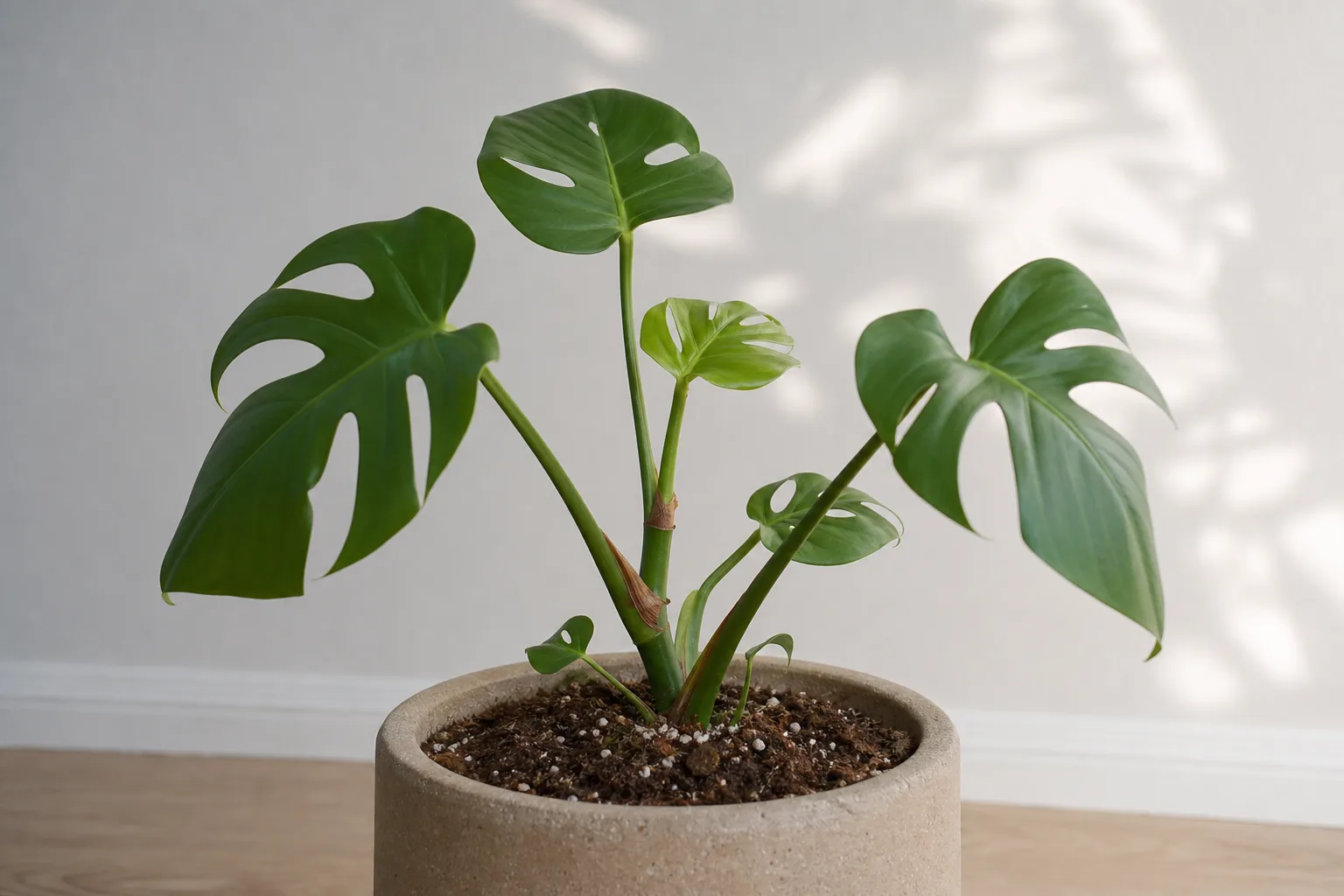
Slow Growth on Monstera Deliciosa: Causes, Checks & Fixes
This guide covers slow growth on Monstera Deliciosa. See also the general Slow Growth guide, watering, and light pages for this plant.
Slow Growth on Monstera Deliciosa: Causes, Checks & Fixes
Quick answer
If your split-leaf Monstera has not pushed a new leaf in months, the usual mistake is reaching for fertilizer when the real limit is energy or root space. Monstera deliciosa (Monstera deliciosa) is a naturally vigorous climbing aroid that can produce large, fenestrated leaves when light, warmth, and pot size keep pace-but it will sit nearly still in a dim corner, through a cold winter, or when roots have consumed the mix.
First step: assess light and season before changing anything else. Move the plant to the brightest indirect spot you can offer, or add a grow light, and note whether you are in winter rest. If light is already strong and it is spring or summer, check whether roots circle the pot or water runs straight through. Do not double fertilizer on a stalled plant; hungry-looking pale leaves are far less common than too little light or cramped roots.
This page covers total growth stall-no new leaves for extended periods. If your vine still produces leaves but spaces them far apart, see leggy growth. If new leaves stay solid without splits on a mature vine, see not enough light.
What slow growth looks like on Monstera Deliciosa
Normal slow periods you should not panic over
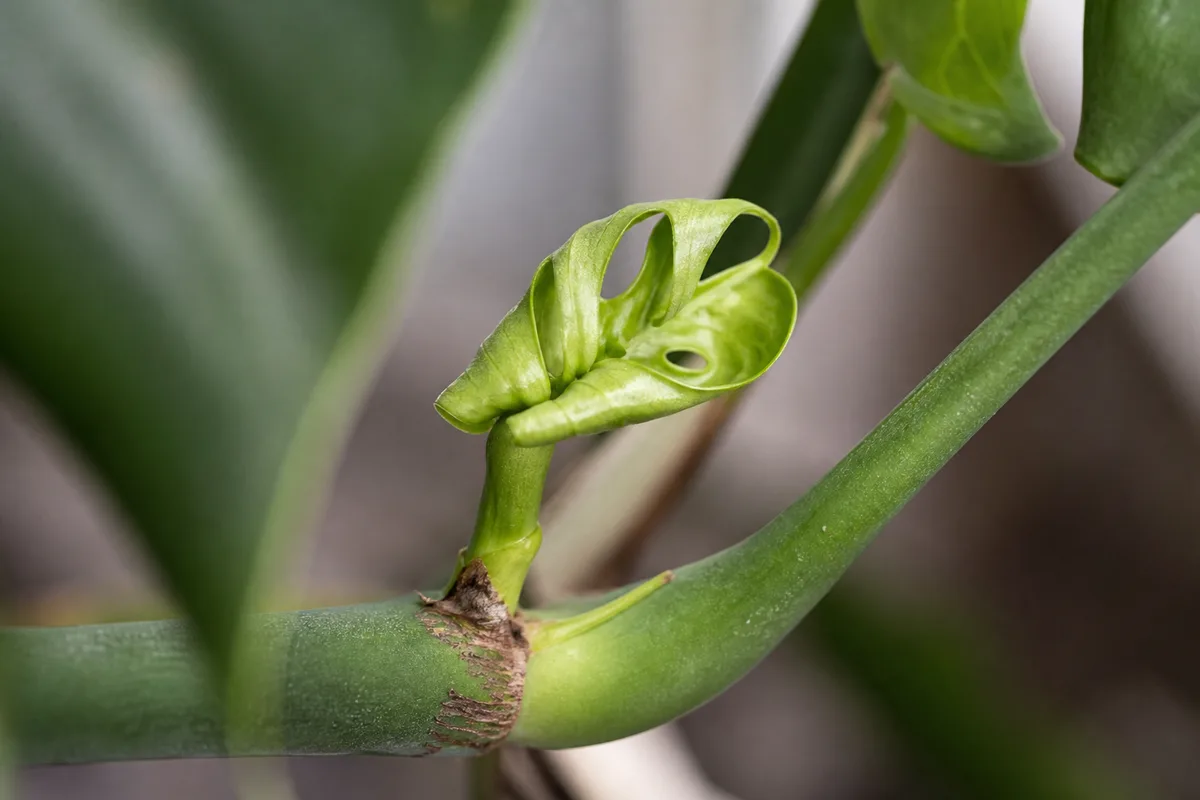
Slow Growth symptoms on Monstera Deliciosa - compare with healthy tissue on the same plant.
Juvenile solid leaves are not a stall. Young deliciosa specimens carry smaller heart-shaped blades without holes or splits-that is normal maturation, not slow growth. NC State Extension notes only mature leaves develop perforations as each blade grows. Concern starts when a climbing plant with aerial roots and prior fenestrations suddenly stops producing leaves entirely, or when a mature vine pushes only tiny solid hearts for months while light and roots look adequate.
Winter rest is expected. From late fall through early spring, many indoor Monsteras slow or stop leaf production while temperatures drop and days shorten. That is normal if leaves stay firm, soil dries on your usual schedule, and growth picks up when light returns.
Stall signals during active season
Healthy deliciosa in active growth pushes new leaves on a regular rhythm-often every two to four weeks in warm months when light is good (typical indoor observation, not a fixed rule). Slow growth shows up as:
- No new leaves for months during spring or summer, while the plant otherwise looks green and alive
- Smaller new leaves than older ones, with shorter petioles or fewer splits and holes on foliage that should be maturing
- Long gaps between leaves (wide internodes) even without obvious leaning-light may be marginal; see leggy growth if leaves still form
- Aerial roots searching with little upward vine extension, as if the plant is waiting for better conditions
- Pot dries very fast after watering, or water channels through and out immediately-common when roots fill the container
- Static size for a year or more despite stable care-often root-bound or light-limited
Why Monstera Deliciosa gets slow growth
Insufficient light is the usual bottleneck
Photosynthesis drives new tissue. Monstera deliciosa evolved as a rainforest climber reaching for brighter canopy light; indoors it wants bright indirect exposure, not a distant shelf. In weak light, the plant survives by stretching or simply idling-producing fewer leaves and delaying fenestrations on mature foliage. On a floor Monstera in a dim corner, leaves can stay green for years while fenestrations never develop and new leaf frequency drops to zero.
Winter rest and cool temperatures
Growth slows when room temperatures drift toward the low end of the plant’s comfort range or when daylight hours shrink. Monstera does not grow below about 50°F, and cold drafts suppress metabolism even when the plant looks fine. A Monstera kept in a warm room through winter may still stall if daylight is short-owners sometimes mistake artificial warmth for an active growing season.
Root-bound pots and tired mix
Deliciosa is a vigorous grower that outgrows containers. When roots coil densely, there is little fresh mix to hold water and nutrients, uptake efficiency drops, and the plant stalls even though you water on schedule. A large specimen in a small pot that dries in two days is a classic root-bound signal-see the repotting guide for timing and moss-pole installation. Decomposed, compacted substrate has the same effect.
Water stress-both too wet and too dry
Chronic overwatering damages roots and stalls growth while leaves may yellow-overlap with overwatering and root rot when soil stays wet for weeks. Chronic underwatering keeps the plant alive but on the dry side growth is deliberately slower. Erratic swings between soggy and bone-dry force the plant to spend energy on recovery instead of new leaves. Match rhythm to the watering guide.
Missing climbing support
Deliciosa is not a self-supporting floor bush. Without a moss pole, trellis, or bark board for aerial roots, vining stems may look awkward and produce less of the large architectural foliage the species is known for-especially when light is only moderate. Support alone does not fix a light stall, but a moss pole with attached aerial roots often fuels larger leaves once conditions improve.
Hidden pests and root rot
Low-level spider mites, scale, or mealybugs drain vigor before obvious leaf damage appears-check spider mites and mealybugs if growth stalls without an obvious cultural cause. Root rot from wet soil stops growth entirely and can kill the plant if ignored-slow growth with multiple yellow leaves and sour soil is a red flag, not simple stagnation.
How to confirm the cause - six-step checklist
Work through these checks in order:
- Season and temperature - Is it late fall or winter? Are nights below about 60°F near the plant? If yes, expect slower pace before treating it as a problem.
- Light at the canopy - At midday, hold your hand at the height of the top leaves, not at the pot on the floor. A soft, diffuse shadow suggests usable light; almost no shadow means growth will stall. South- or east-facing windows with sheer curtains often work; deep interior rooms usually need supplemental lighting per the light guide.
- Newest leaf size and spacing - Compare the last two leaves to one from six months ago. Smaller size with wide gaps confirms light or root limits.
- Pot weight and dry-down - After watering, note how many days until the top 3–5 cm feels dry. A huge plant in a small pot that dries in two days may be root-bound; a pot that stays wet for two weeks suggests overwatering or poor drainage.
- Root inspection - Slide the plant partly out of the pot. Dense white roots circling the outside, little visible mix, or roots escaping drainage holes confirm binding. Mushy brown roots with wet soil point to rot, not simple slow growth.
- Pest scan - Check leaf undersides and stem joints with a magnifier for mites, scale bumps, or cottony mealybugs.
If the plant is firm, pest-free, in bright indirect light, and still barely growing in midsummer, root space or depleted mix is the next suspect-not fertilizer.
First fix for Monstera Deliciosa
Improve light first.
Move the pot to the brightest indirect spot available-within a few feet of a sunny window filtered by a sheer curtain is a common sweet spot. If natural light is weak, add a full-spectrum grow light 12–18 inches above the leaf canopy for roughly 10–12 hours daily during short winter days or north-facing rooms. Position the lamp so it lights the foliage crown, not just the pot on the floor. Give the plant two to three weeks in the new light before repotting or feeding.
Do not jump to a larger pot or heavy fertilizer on day one. Light is the cheapest, safest lever, and it rules out the most common cause.
Step-by-step recovery
After light improves, address remaining limits in this order:
- Stabilize watering - Water thoroughly when the top 3–5 cm of mix is dry, then empty the saucer. Reduce frequency in winter. Avoid keeping the plant constantly moist unless you have confirmed it dries fast because of root fill, not because of overwatering.
- Add or upgrade support - Install a sturdy moss pole or trellis and gently tie the main stem. Mist the pole or keep it moist so aerial roots can attach; attached roots help fuel larger leaves.
- Repot if root-bound - In spring or early summer, move up one pot size only (about 2–5 cm wider). Use chunky aroid mix with perlite and bark per the soil guide. Tease circling roots gently before filling around the root ball. Skip fertilizer for six to eight weeks after repotting.
- Feed lightly during active growth - Once new leaves appear steadily and roots are healthy, apply a balanced liquid fertilizer at half strength every four to six weeks from spring through fall per the fertilizer guide. Stop if leaf tips burn or growth was already good before feeding.
- Treat pests if found - Isolate, rinse leaf undersides, and treat confirmed infestations before expecting a growth spurt.
- Address root rot separately - If inspection finds mushy roots with yellowing leaves, follow the root-rot recovery path-trim decay, repot into fresh mix, and hold fertilizer-rather than chasing slow growth alone.
Monstera contains calcium oxalate crystals toxic to cats and dogs. If you relocate or repot near pets and a animal chews foliage, contact ASPCA Animal Poison Control or your veterinarian-the overview guide documents full toxicity context.
Recovery timeline
In spring and summer, after light improves, many Monsteras push a new leaf within two to four weeks (typical indoor observation during active season-not a guaranteed schedule). Faster leaf frequency and gradually larger blade size over the next two to three months mark real recovery.
Old leaves do not enlarge-only new foliage reflects improvement. Fenestrations on mature leaves develop as each new leaf ages; do not expect instant splits on the very next leaf after a light move.
Winter corrections may show little until day length and warmth increase-plan on four to eight weeks after conditions improve before judging success.
Worsening signs: continued stall with yellowing, drooping wet soil, shrinking new leaves, or soft stems mean the diagnosis is incomplete-re-check roots and pests rather than waiting longer.
Lookalike symptoms - comparison table
| Pattern | Key signals | First direction | Deep dive |
|---|---|---|---|
| Winter rest | Few or no new leaves; firm green foliage; shorter days | Wait; resume checks in spring | This page |
| Leggy growth | Long internodes; still producing leaves; lean toward window | Bright light + moss pole + prune | Leggy growth |
| Not enough light | Solid new leaves on mature vine; fenestration loss | Bright indirect placement | Not enough light |
| Root rot | Yellowing, wilting, sour soil, mushy roots | Trim, repot, dry down | Root rot |
| Post-repot pause | Two to six weeks of pause after disturbance | Hold steady care | Repotting |
| Variegated cultivar | ’Albo’ or ‘Thai Constellation’ slower than green baseline | More light; compare to own history | Overview |
| Normal juvenile stage | Small solid hearts on young plant; no prior fenestrations | Age-not a stall | Overview |
What not to do
Do not pile on fertilizer to force growth on a light-starved or root-bound plant-salt buildup stresses roots further. Avoid jumping two pot sizes “to encourage growth”; oversized pots stay wet and slow roots. Do not move directly into harsh midday sun without acclimating; scorched leaves set recovery back. Do not ignore pests because leaves still look mostly green. Do not water on a calendar regardless of season; winter needs less, fast-drying root-bound pots may need more frequent checks but not necessarily more volume.
How to prevent slow growth
Match placement to Deliciosa’s needs: bright indirect light, warm stable temperatures, humidity around 50–70% when possible, and a moss pole from early on. Repot every one to two years before roots form a solid mat. Refresh chunky, well-draining mix rather than topping off old soil indefinitely. Track new leaf count monthly during growing season so a stall shows up early. Feed lightly only when the plant is already growing; fertilizer supports momentum-it does not create it from low light.
When to worry
Investigate promptly if slow growth comes with multiple yellow leaves, wet soil that never dries, stem softening, or pest colonies. Those combinations suggest active decline. Pure stagnation with firm leaves in winter, or for a few weeks after repotting, is usually not an emergency-patience and corrected light are enough.
How this page fits the Monstera cluster
| Your question | Best page |
|---|---|
| No new leaves for months; total stall | This page |
| Long stems with wide leaf gaps; still producing leaves | Leggy growth |
| Solid new leaves / missing splits on mature vine | Not enough light |
| Yellow leaves on wet soil | Root rot or overwatering |
| Where to put my Monstera long term | Light guide |
| When and how to repot or add a moss pole | Repotting |
Related Monstera deliciosa guides
- Monstera deliciosa overview - species hub, fenestration biology, toxicity
- Light needs - window placement and grow lights
- Watering - dry-down rhythm and seasonal adjustment
- Fertilizer - when feeding helps vs. hurts a stalled plant
- Repotting and moss poles - root-bound recovery
- Leggy growth - stretch while leaves still form
- Not enough light - fenestration loss focus
- Root rot - when stall pairs with yellowing and wet soil
Slow growth on Monstera deliciosa is usually an energy or root-space limit-not a fertilizer shortage. Check season and light at canopy height, inspect root fill, add support, and correct one factor at a time. Recovery shows up in new leaf frequency and blade size over the next few months, not in old leaves reshaping. When you can execute that path without searching again, you have addressed what a dim corner, cramped pot, or mistaken winter panic could not fix alone.
Related tool
Use the Plant Problem Diagnosis Tool to narrow causes for slow growth on this plant before changing multiple variables at once.