Wilting on Monstera Deliciosa: Causes, Checks & Fixes
Quick answer
Wilting on Monstera Deliciosa means roots are not moving water-probe 2–3 in (5–7 cm) into the mix and lift the pot before you water again. Dry soil calls for a soak; wet soil calls for withholding water and inspecting roots.
Wilting on Monstera Deliciosa: Causes, Checks & Fixes
This guide covers wilting on Monstera Deliciosa. See also the general Wilting guide, watering, and light pages for this plant.
Wilting on Monstera Deliciosa: Causes, Checks & Fixes
Quick answer
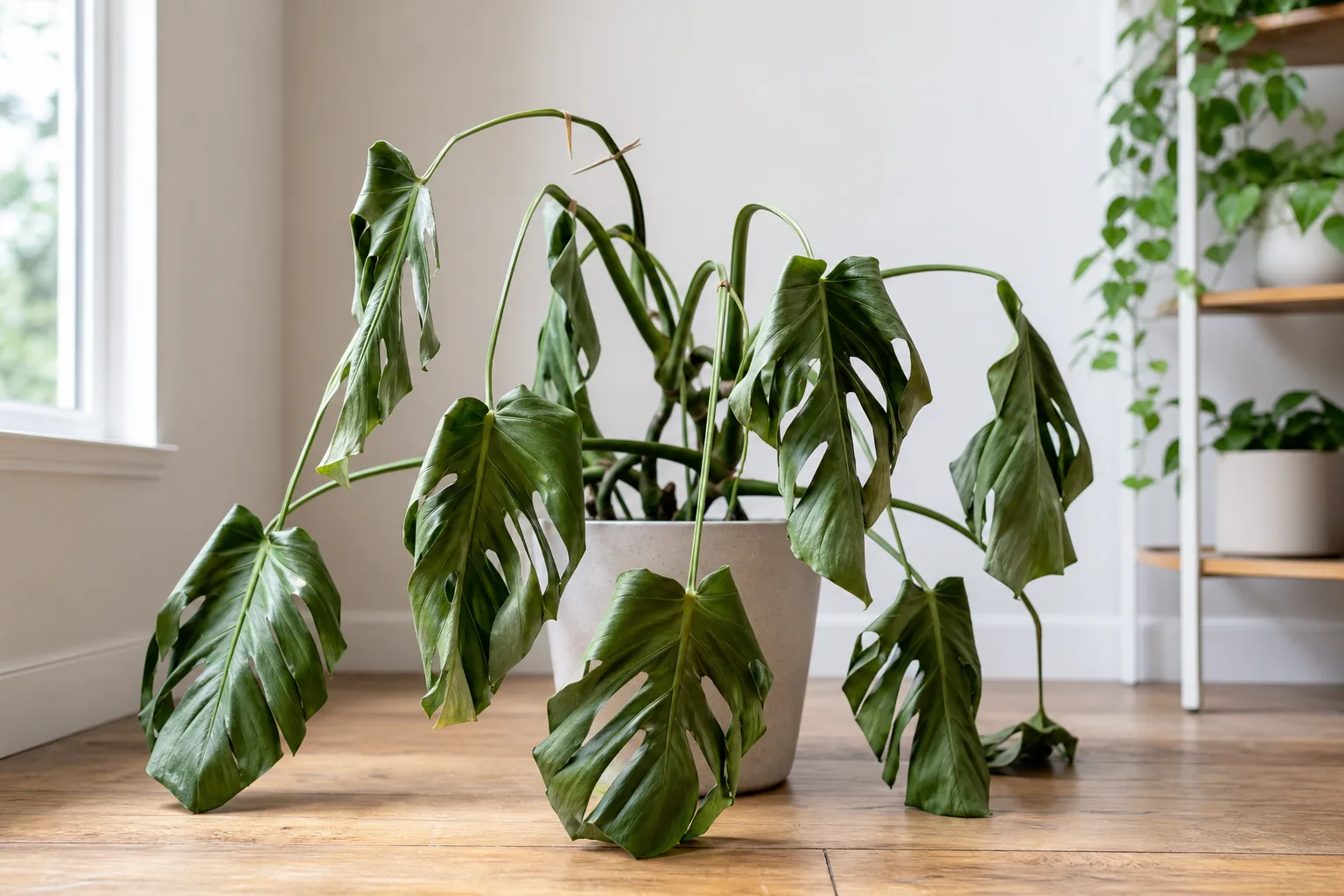
Wilting on Monstera Deliciosa (Monstera deliciosa) means the plant has lost turgor-internal water pressure-in its large split leaves and long petioles. That collapse can come from too little water in the root zone or from roots that cannot absorb water even when soil is wet. On this floor-sized aroid, both patterns look like a dramatic mass of limp green from across the room, which is why watering without checking is the most common mistake.
First step: probe soil moisture 2–3 in (5–7 cm) deep and lift the pot before you do anything else. A light, dry pot calls for a thorough soak and full drainage. A heavy, wet pot calls for pausing water and inspecting roots-not another drink. That single check separates thirst wilt from uptake failure.
| What you find | Likely cause | First action |
|---|---|---|
| Light pot, dry mix 2–3 in down | Underwatering | Deep soak, drain saucer |
| Heavy pot, wet mix, sour smell | Root stress / rot | Stop watering; inspect roots |
| Limp by afternoon, firm by morning | Heat wilt | Filter sun; water only if dry |
| Perks after water, wilts again in 24 h | Root-bound | Check circling roots; plan repot |
For routine watering rhythm on this species, see our Monstera deliciosa watering guide.
What wilting looks like on Monstera Deliciosa
Healthy Monstera leaves hold themselves out from stiff petioles with a slight arch. When turgor drops, whole leaves hang straight down, petioles soften, and a mature fenestrated plant can look flat overnight. Because each blade is broad and perforated, wilt reads as one large slump rather than a few drooping tips.
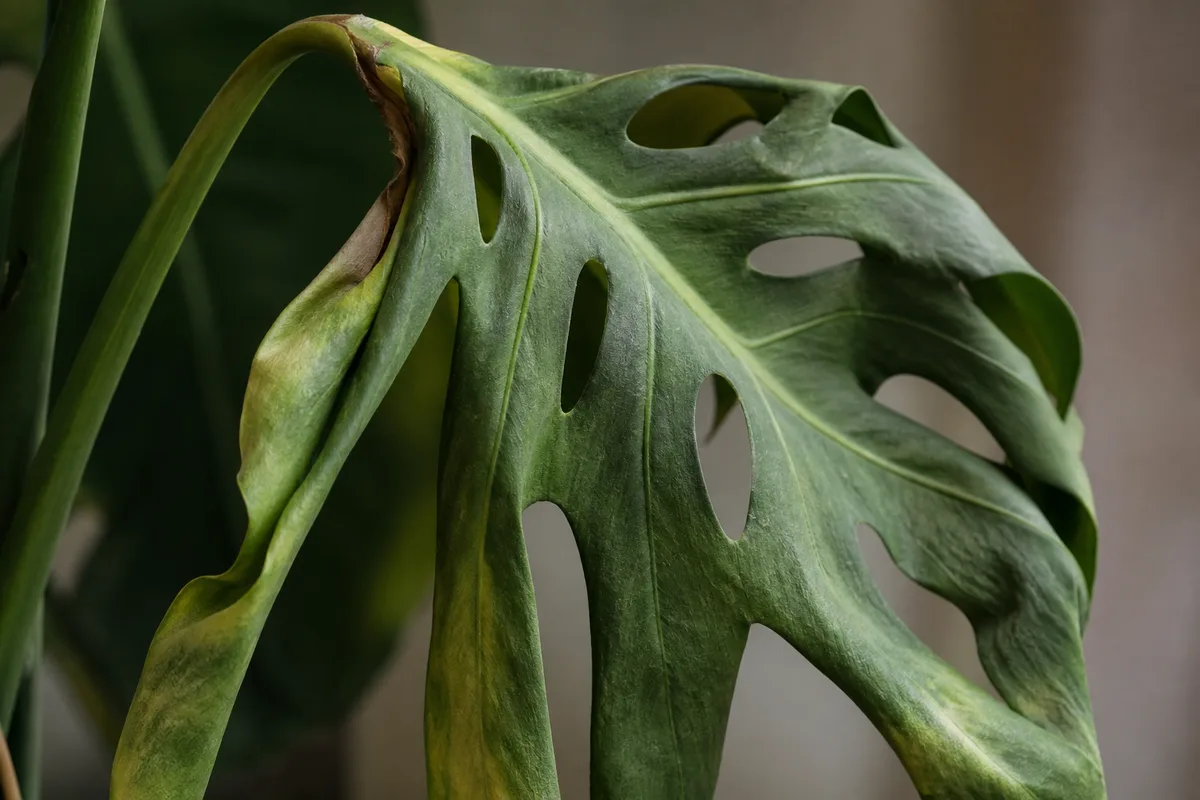
Wilting symptoms on Monstera Deliciosa - compare with healthy tissue on the same plant.
Patterns that help narrow the cause:
- Dry-soil wilt - Leaves limp and sometimes slightly curled at edges; pot feels light; top 2–3 in (5–7 cm) of mix is dusty dry; older leaves may feel papery before the whole plant collapses.
- Wet-soil paradox wilt - Leaves limp while mix stays damp for days; lower leaves may yellow; stem near soil line can feel soft; pot smells sour or musty. This is the signature case where soil is wet but the plant looks thirsty.
- Afternoon wilt - Leaves droop in midday heat or direct sun but firm up by morning when roots and soil moisture are otherwise adequate.
- Post-repot wilt - Temporary limpness for several days after root disturbance, especially if the plant was watered heavily right after repotting.
- Root-bound frequent wilt - Plant perks after watering but wilts again within a day because water channels through a dense root mat without rehydrating the center.
Wilting is not the same as a single old leaf yellowing and dropping-that is often normal senescence on a lower leaf while the rest of the vine stays firm. If you are unsure whether the posture is acute collapse or gradual hang, compare our drooping leaves guide after you run the moisture checks below.
Why mature fenestrated leaves look catastrophic on simple thirst: A dinner-plate split leaf carries far more water weight on a long petiole than a juvenile heart-shaped blade. One missed watering on a moss-pole specimen can turn a towering vine into a wall of limp tissue in a single night-even when roots are still alive and the fix is one deep soak.
Why Monstera Deliciosa wilts
Monstera deliciosa is a tropical climbing aroid with large, thin leaves that transpire heavily when light, heat, or airflow is high. It needs steady moisture at the roots-but not a permanently wet root zone. When culture misses that balance, wilt follows.
Underwatering is the straightforward case. If the chunky aroid mix dries through the root ball, fine roots lose function and leaves cannot stay rigid. Monstera is somewhat forgiving of a missed drink, but repeated drought shrinks the root system and makes the next wilt episode worse. Chronic underwatering after a past rot scare is common on this species-owners afraid of overwatering let airy mix go bone-dry and trigger the same limp collapse they were trying to prevent.
Overwatering and root oxygen loss produce paradox wilt: soil stays wet, yet leaves collapse because saturated mix excludes oxygen from roots. Without aerobic respiration, roots stop taking up water. Penn State Extension notes that overwatering can result in root rot on Monstera-wilt with wet soil is often the first visible sign, not yellow leaves alone.
Root rot progression is the advanced form of wet-soil wilt. Decayed roots cannot transport water upward, so the plant behaves like it is thirsty even though the pot is heavy. NC State Extension guidance on container plants states that leaves remaining wilted after watering usually means rotted roots unable to absorb water. Escalate to our root rot on Monstera Deliciosa guide when inspection shows brown, mushy roots.
Heat and light stress push transpiration faster than roots can supply on a hot afternoon, especially if the plant sits in a window with direct sun or near a heating vent. Monstera prefers warm temperatures between 60° and 85°F and abhors cold drafts-sudden cold can also reduce uptake temporarily. See light requirements for safe placement.
Repotting or root disturbance can wilt a Monstera for days while cut roots re-establish. Watering heavily before roots callus keeps the mix anaerobic and extends shock.
Root-bound pots create frequent wilt: water runs through the dense mat without saturating the center, so the plant perks briefly then collapses again. Lifting the plant out and seeing circling roots against the pot wall supports this diagnosis.
Large-pot surface-dry / wet-core mismatch tricks owners in both directions. In a 10–12 in floor container, the top crust can look dusty while the center stays wet for weeks-or the surface feels moist while the root ball center has dried into a hydrophobic block. Always probe 2–3 in (5–7 cm) deep and compare pot weight to your last well-watered baseline.
Unsupported vine weight adds a secondary stress. NC State Extension recommends sturdy support so heavy stems do not break on a climbing Monstera. A tall vine without a moss pole or trellis can stress petioles and make limp posture worse once turgor drops-support does not replace watering fixes, but it reduces mechanical flop on recovery.
How to confirm the cause
Work through these checks in order before changing watering, repotting, or fertilizing:
- Pot weight - Lift the container. A surprisingly light pot with limp foliage strongly suggests dry soil. A heavy pot with limp foliage suggests oversaturation or root failure, not thirst.
- Moisture at depth - Insert a finger, skewer, or moisture probe 2–3 in (5–7 cm) into the mix-not just the surface. Surface dryness with wet core still happens in large Monstera pots.
- Drainage and saucer - Are drainage holes open? Is the plant sitting in runoff? Is a decorative cachepot holding water after every drink?
- Stem base and smell - Press the lower stem near soil. Soft, mushy tissue or a sour smell points toward rot, not underwatering.
- Leaf pattern - All leaves limp at once suggests water-pathway stress. One or two lower leaves limp while new center growth is firm may be localized damage or aging, not whole-plant wilt.
- Recent events - Repotting, moving to a hotter window, travel, or a cold draft in the last week explains temporary wilt without root disease.
- Root inspection (if wet wilt persists) - Knock the plant gently from the pot. Healthy Monstera roots are firm and pale; rotted roots are brown, slimy, or hollow.
If soil is dry throughout, the stem base is firm, and the plant collapsed after you skipped a watering cycle, treat as underwatering until proven otherwise. If soil is wet, the pot is heavy, and wilt has lasted more than 48 hours without improvement, treat as root stress or rot until proven otherwise.
First fix for Monstera Deliciosa
Check soil moisture at depth and match your action to what you find-do not water by reflex.
If the mix is dry 2–3 in (5–7 cm) down and the pot is light, water thoroughly until excess drains from the bottom, then empty the saucer completely. That one deep drink is the correct first response to thirst wilt.
If the mix is wet, the pot is heavy, or the stem base is soft, stop watering and move the plant to bright indirect light with good airflow. Plan a root inspection within 24 hours if leaves stay limp. Adding water to saturated, rotting roots is the most common way owners turn recoverable wilt into crown failure.
Do not fertilize, mist heavily, or repot on day one unless inspection shows advanced rot that requires trimming and fresh mix.
Step-by-step recovery
Once you know wet versus dry, follow the matching path:
When soil is dry (underwatering)
- Water evenly until the full root ball is moistened and excess runs out the drainage holes.
- Empty any saucer or cachepot so the plant is not sitting in standing water.
- If mix has dried into a hard, repelling block, bottom-water for 30–45 minutes, then let the pot drain fully.
- Recheck turgor after 2–6 hours. Mild thirst wilt often improves the same day.
- Resume a moisture-guided schedule: allow the top quarter to one-third of the mix to dry before the next thorough drink per our watering guide.
Recovery snapshot: A 10-in floor pot with bone-dry mix 2 in down and limp fenestrated leaves often shows firm petioles within 6–8 hours after one deep soak and full drainage-dramatic collapse can reverse quickly when roots were healthy all along.
When soil is wet (overwatering or root rot)
- Stop all watering until the top half of the mix dries-this may take one to two weeks indoors.
- Confirm drainage holes are open and remove decorative pot sleeves that trap runoff.
- Unpot and rinse roots if wilt persists more than 48 hours with wet soil or if you smell sour mix.
- Trim brown, mushy roots with clean scissors; keep only firm, pale tissue.
- Repot into fresh, chunky aroid mix with perlite and bark in a pot sized to the trimmed root ball-not dramatically larger.
- Wait until the plant stabilizes before fertilizing. New firm leaves unfurling from the center mark success. Full protocol: overwatering and root rot.
Recovery snapshot: Heavy wet pot, yellow lower leaves, sour smell-stop watering, unpot within 48 hours, trim mushy roots, repot into airy mix. Expect one to three weeks before new center growth looks normal; old collapsed blades may not re-harden.
When heat caused temporary wilt
- Move the plant out of direct sun and away from hot vents.
- Confirm soil moisture is adequate at depth; give a deep drink only if dry.
- Expect recovery by the next morning if roots are healthy.
Recovery snapshot: Afternoon collapse near a hot south window with firm leaves by morning-filter sun and skip extra water unless the probe reads dry at depth.
When root-bound
- Unpot and confirm circling roots filling the container.
- Repot one size up into fresh chunky mix only if roots are firm and white-not if they are mushy from rot.
- Water thoroughly once after repot, then resume normal dry-down checks.
Recovery timeline
Thirst wilt on an otherwise healthy Monstera often shows visible firming within 2–12 hours after a proper soak. Leaves that were only slightly limp may fully recover; severely dehydrated leaves may keep slight edge curl but should not continue collapsing.
Root-related wilt takes longer. After correcting saturation and trimming bad roots, expect one to three weeks before new growth looks normal. Old wilted leaves may not re-harden fully-you judge recovery by new leaves staying firm, not by saving every mature blade.
Repot shock usually resolves within 5–10 days if you avoid overwatering and keep light stable.
Worsening signs include stem softening at the soil line, spreading yellow-brown leaves despite dry soil on top, or no new firm growth after three weeks of corrected care.
Lookalike symptoms
| Symptom | How it differs from acute wilt | First action |
|---|---|---|
| Gradual droop on stiff petioles | Often chronic posture, not overnight collapse | Drooping leaves guide |
| Afternoon limp, morning firm | Heat transpiration, not root failure | Filter sun; check moisture |
| Edge curl, firm petioles | Low humidity, not uptake failure | Low humidity guide |
| Stippling + webbing | Pest stress, not simple water wilt | Spider mites guide |
| One old leaf yellowing | Normal senescence | Remove leaf if desired |
- Drooping leaves without full collapse - Often early water stress; same wet-vs-dry check applies, but posture develops more gradually. Use our drooping leaves page when limp hang is the main complaint rather than sudden whole-plant collapse.
- Leggy, weak petioles in dim light - Structural weakness from low light, not acute wilt; move to brighter indirect light rather than watering more.
- Normal lower-leaf drop - One old leaf yellows and falls while the rest of the vine stays rigid; not whole-plant wilt.
- Curling from low humidity - Leaf edges curl but petioles stay relatively firm; raise humidity rather than soaking an already wet pot.
Wilting vs. drooping - when to use this page
Both URLs address limp Monstera foliage, but search intent differs:
- Use this wilting page when leaves collapsed quickly-often overnight-on a previously firm vine, especially with paradox wet-soil wilt, heat wilt that recovers by morning, or root-bound frequent wilt after watering.
- Use the drooping leaves page when established leaves gradually hang without dramatic overnight flattening, or when you are troubleshooting chronic limp posture rather than acute turgor loss.
The diagnostic fork is the same on both pages: probe 2–3 in (5–7 cm) deep and lift the pot before you water. This page emphasizes uptake failure vocabulary, paradox wilt, heat-wilt overnight recovery, and root-bound patterns that recur within 24 hours of watering.
What not to do
Do not water repeatedly because leaves look limp when soil is already wet-that deepens root rot. Avoid moving a wilted plant into harsh direct sun to “dry it out”; Monstera scorches easily and transpires harder in sun.
Do not repot into a much larger container as a first fix; extra wet soil volume slows drying and encourages rot. Skip fertilizer on a wilted root system-salts stress damaged roots.
Do not assume wilting always means thirst; overwatering is equally common on large indoor Monsteras in heavy mix and low light. See overwatering when the wet branch matches your checks.
How to prevent wilting next time
Match watering to how the pot actually dries in your room, not a calendar. Water thoroughly and allow the soil to dry slightly between waterings; allow the top 2–3 in (5–7 cm) of mix to dry before watering again during active growth; reduce frequency in cooler, darker months when the root zone stays moist longer.
Use a chunky, well-draining aroid mix with perlite and bark per UF IFAS guidance on aroid culture, a pot with open drainage, and empty saucers after every drink. Place Monstera where it gets bright indirect light so it uses water steadily without sitting in stale wet soil.
Provide stable warmth above 60°F, humidity above 50% when possible, and a moss pole or trellis so aerial roots attach and the vine is not stressed by flopping weight. After repotting, water lightly once, then let the mix dry normally before the next drink.
When to worry
Escalate immediately if the stem base softens, wilt spreads to every leaf while soil stays soggy, roots are mostly mushy on inspection, or the plant collapses further after you corrected underwatering with a proper soak.
Temporary afternoon droop on an otherwise healthy vine in a warm room can wait for an overnight recheck. Persistent wet-soil wilt cannot-move to root rot protocols.
Pet-accessible floor pots: Monstera deliciosa is toxic to cats and dogs because all parts contain insoluble calcium oxalate crystals that irritate the mouth and throat. Wilting vines on the floor are easier for pets to chew. If ingestion is suspected, call ASPCA Animal Poison Control at (888) 426-4435 and your veterinarian-do not wait for wilt to resolve on its own.
How this page fits the Monstera cluster
| Your question | Best page |
|---|---|
| Sudden whole-plant collapse, wet soil paradox | This page |
| Gradual limp hang on established leaves | Drooping leaves |
| Chronic wet mix, yellow lower leaves | Overwatering |
| Bone-dry mix, crispy edges | Underwatering |
| Mushy roots, sour smell | Root rot |
| Stippling and webbing | Spider mites |
| Edge curl, firm petioles | Low humidity |
Related Monstera deliciosa guides
- Monstera deliciosa overview - species hub
- Watering - dry-down rhythm for floor pots
- Light - placement that prevents heat wilt
- Drooping leaves - gradual limp posture vs acute wilt
- Overwatering - wet-branch recovery detail
- Underwatering - dry-branch recovery detail
- Root rot - when wet-soil wilt advances
- Spider mites - pest-related limp foliage
- Low humidity - curl vs wilt differentiation
Related tool
Use the Plant Watering Calculator to narrow causes for wilting on this plant before changing multiple variables at once.