Monte Carlo Aquarium Plant Care: Light, CO2 and Carpeting
Micranthemum tweediei
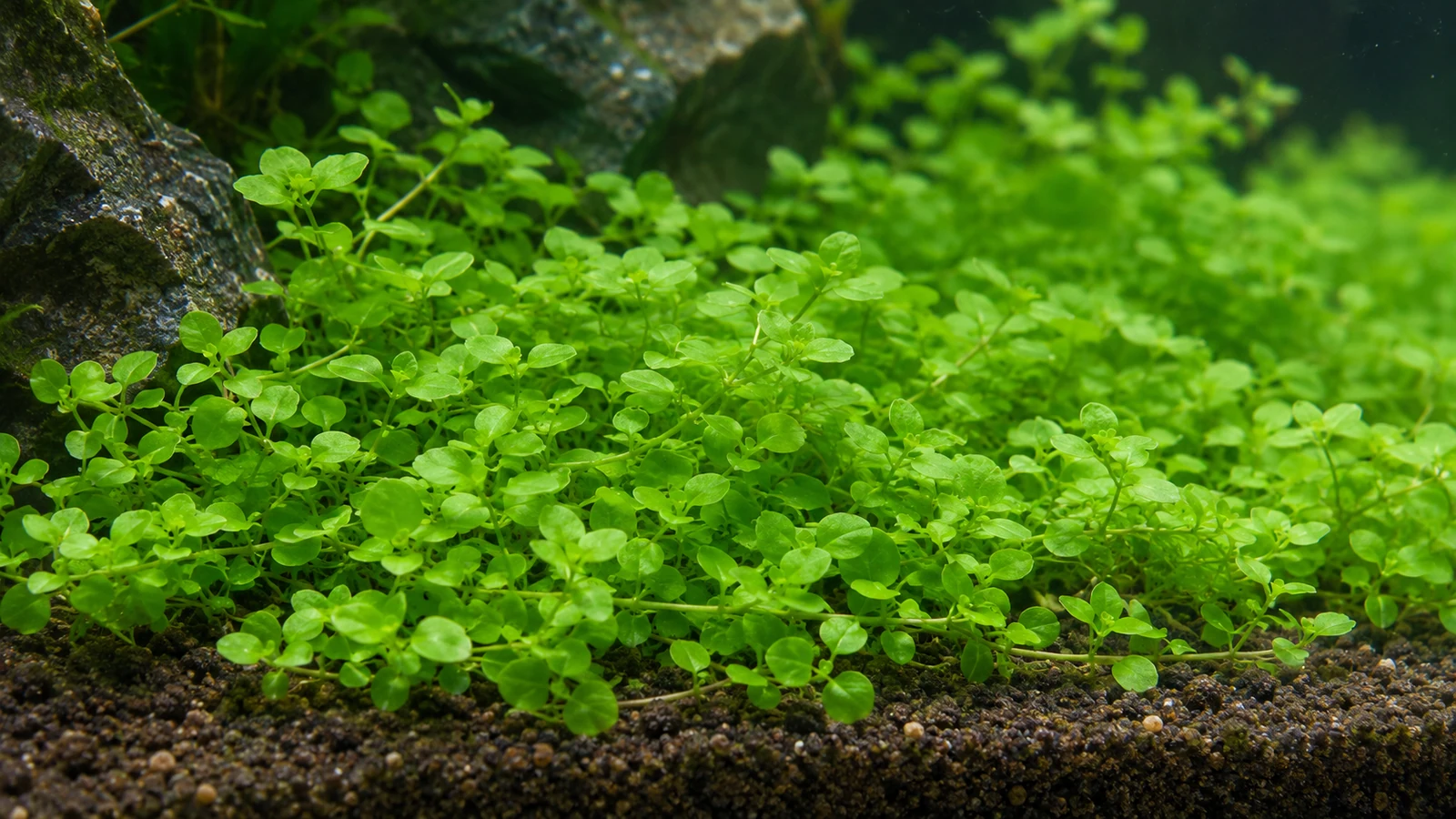
Grow Monte Carlo fully submerged in a stable aquarium. Plant small, firmly anchored portions in fine or nutrient-bearing substrate, provide moderate to high light and CO2 for a compact carpet, and trim or divide the mat before dense growth shades its lower layers.
Monte Carlo Aquarium Plant Care Guide
Start with wateringThe most common care mistake for Monte CarloView the watering and submerged-care guide →Monte Carlo care essentials
Light
Moderate to high aquarium light for compact creeping growth and a dense carpet.
Water
Keep fully submerged in a stable, established aquarium. Maintain clean water and the tank's normal filtration and livestock-appropriate water-change routine; terrestrial watering schedules do not apply.
Soil
Use aquarium substrate that the fine creeping stems can root into. Nutrient-rich substrate supports growth; the plant can also be secured to rock or wood and fed through the water column.
Humidity
Fully submerged aquarium conditions
Temperature
Fertilizer
Provide aquarium-appropriate nutrients according to plant growth and the aquarium's nutrient balance; avoid dosing by a houseplant schedule.. Aquarium-safe liquid plant fertilizer for water-column feeding; nutrient-bearing substrate can support rooted growth.
About Monte Carlo
Monte Carlo is native to Argentina is reported as the original collection location for the aquarium plant; its full native range was not verified in the sources reviewed., typically reaches Usually kept as a low foreground mat; Tropica reports 3–5+ cm average height after two months, with height depending on light and trimming. indoors, with medium in tropica's comparison; spreads more quickly once established under favorable aquarium light, co2, and nutrients. growth. Monte Carlo has a submerged creeping stem plant grown as a foreground carpet; can also trail from hardscape growth habit and part of the Linderniaceae (genus-level placement; species-specific authority page not verified) family. It is also known as Micranthemum 'Monte Carlo', Micranthemum tweediei 'Monte Carlo', and Monte Carlo aquarium plant.
| Detail | Information |
|---|---|
| Also known as | Micranthemum 'Monte Carlo', Micranthemum tweediei 'Monte Carlo', Monte Carlo aquarium plant |
| Native region | Argentina is reported as the original collection location for the aquarium plant; its full native range was not verified in the sources reviewed. |
| Mature size | Usually kept as a low foreground mat; Tropica reports 3–5+ cm average height after two months, with height depending on light and trimming. |
| Growth rate | Medium in Tropica's comparison; spreads more quickly once established under favorable aquarium light, CO2, and nutrients. |
| Growth habit | Submerged Creeping Stem Plant Grown As A Foreground Carpet; Can Also Trail From Hardscape |
| Scientific name | Micranthemum tweediei |
| Family | Linderniaceae (genus-level placement; species-specific authority page not verified) |
How to care for Monte Carlo?
How much light does Monte Carlo need?
Moderate to high aquarium light for compact creeping growth and a dense carpet.. Lower-light planted aquariums, where growth may be looser or taller. Light shade, with slower or less compact carpet formation. low light
- Moderate to high aquarium light for compact creeping growth and a dense carpet. - Moderate to high aquarium light for compact creeping growth and a dense carpet..
- Lower-light planted aquariums, where growth may be looser or taller - Lower-light planted aquariums, where growth may be looser or taller.
- Light shade, with slower or less compact carpet formation - Light shade, with slower or less compact carpet formation.
- low light - Lower-light planted aquariums, where growth may be looser or taller.
When should you water Monte Carlo?
Keep fully submerged in a stable, established aquarium. Maintain clean water and the tank's normal filtration and livestock-appropriate water-change routine; terrestrial watering schedules do not apply.
- Check for healthy new creeping tips
- firm green leaves
- and stable water conditions. Melting or lifting mats call for checking acclimation - Maintain clean water and the tank's normal filtration and livestock-appropriate water-change routine; terrestrial watering schedules do not apply.
- light
- nutrients
- and anchoring rather than adding water - Maintain clean water and the tank's normal filtration and livestock-appropriate water-change routine; terrestrial watering schedules do not apply.
- Drain excess water - Maintain clean water and the tank's normal filtration and livestock-appropriate water-change routine; terrestrial watering schedules do not apply.
What soil works best for Monte Carlo?
Use aquarium substrate that the fine creeping stems can root into. Nutrient-rich substrate supports growth; the plant can also be secured to rock or wood and fed through the water column.
- Aquarium-safe nutrient-bearing substrate for rooted carpets - Use aquarium substrate that the fine creeping stems can root into.
- Fine aquarium sand or gravel where the small portions can be anchored securely - Use aquarium substrate that the fine creeping stems can root into.
- Rock or driftwood for cascading growth - Nutrient-rich substrate supports growth; the plant can also be secured to rock or wood and fed through the water column.
- with adequate water-column nutrients - Nutrient-rich substrate supports growth; the plant can also be secured to rock or wood and fed through the water column.
How to propagate Monte Carlo?
Split nursery portions into small plugs or strands, plant them firmly with tweezers, and give them time to root before disturbing the substrate.
- Separate runners or rooted portions of the carpet - Split nursery portions into small plugs or strands, plant them firmly with tweezers, and give them time to root before disturbing the substrate.
- Cut healthy creeping stems into small portions and anchor them in the substrate - Split nursery portions into small plugs or strands, plant them firmly with tweezers, and give them time to root before disturbing the substrate.
- Secure portions in hardscape gaps for cascading growth - Split nursery portions into small plugs or strands, plant them firmly with tweezers, and give them time to root before disturbing the substrate.
Grower notes for Monte Carlo
Plant it in small portions
Divide the nursery clump into small plugs or individual strands, then anchor each portion firmly with tweezers. Smaller, well-rooted portions are less likely to float and leave gaps than one large loose clump.
Light and CO2 shape the carpet
Moderate to high light and added CO2 help Monte Carlo creep compactly across the foreground. It can survive less favorable conditions, but expect slower or taller growth rather than assuming a dense lawn will form.
Feed the roots or the water column
A nutrient-bearing aquarium substrate supports rooted growth. If you secure the plant to rock or wood instead, it depends on nutrients in the water column, so adjust aquarium-safe fertilization to the tank rather than applying terrestrial plant food.
Keep the mat from getting too thick
Established growth can spread quickly. Trim or thin dense areas before they shade the lower stems; remove loose clippings and any deteriorating material instead of letting it remain trapped under the carpet.
Replant healthy trimmings
Healthy runners and stem cuttings can be divided into small portions and anchored in open substrate or hardscape gaps. Give new portions time to root before fish or other tank inhabitants disturb the planting.
Monte Carlo aquarium plant and pet safety
The sources reviewed did not establish a species-specific veterinary safety classification for Micranthemum tweediei. Its absence from the ASPCA plant list is not a safety clearance, and aquarium use does not establish that it is safe to eat. Keep aquarium plants and treated tank water out of reach of pets that may chew or drink from the setup, and consult a veterinarian about a suspected ingestion.
Pet toxicity remains unverified for Micranthemum tweediei. The ASPCA database says its plant list is not all-inclusive; no species-specific entry was located in the list reviewed. Do not infer safety or toxicity from that absence.
Watering Monte Carlo
For Monte Carlo, check for healthy new creeping tips, firm green leaves, and stable water conditions. Melting or lifting mats call for checking acclimation, light, nutrients, and anchoring rather than adding water. and water continuous submersion; maintain the aquarium's regular top-offs and water changes for its livestock and setup. Growth may slow when aquarium light or temperature changes; adjust trimming and feeding to observed growth rather than a fixed calendar.
| Detail | Information |
|---|---|
| How often | Continuous submersion; maintain the aquarium's regular top-offs and water changes for its livestock and setup. |
| How to check | Check for healthy new creeping tips, firm green leaves, and stable water conditions. Melting or lifting mats call for checking acclimation, light, nutrients, and anchoring rather than adding water. |
| Seasonal changes | Growth may slow when aquarium light or temperature changes; adjust trimming and feeding to observed growth rather than a fixed calendar. |
Signs of overwatering
- Not applicable to fully submerged growth; soft or melting tissue is a general plant-stress sign, not a terrestrial overwatering diagnosis.
Signs of underwatering
- Not applicable while fully submerged; exposed portions can dry if removed from the water.
Soil & potting for Monte Carlo
Use a mix of Aquarium-safe nutrient-bearing substrate for rooted carpets, Fine aquarium sand or gravel where the small portions can be anchored securely, Rock or driftwood for cascading growth, with adequate water-column nutrients for Monte Carlo. Not applicable to submerged culture; avoid dirty, stagnant conditions and keep aquarium circulation appropriate for its livestock. Repot no potting or scheduled repotting is needed; thin or replant the carpet when it becomes too dense, lifts, or outgrows its area., ideally in replant during stable aquarium conditions; there is no terrestrial growing season for a submerged tank plant.
| Detail | Information |
|---|---|
| Recommended mix | Aquarium-safe nutrient-bearing substrate for rooted carpets, Fine aquarium sand or gravel where the small portions can be anchored securely, Rock or driftwood for cascading growth, with adequate water-column nutrients |
| Drainage | Not applicable to submerged culture; avoid dirty, stagnant conditions and keep aquarium circulation appropriate for its livestock. |
| Repotting frequency | No potting or scheduled repotting is needed; thin or replant the carpet when it becomes too dense, lifts, or outgrows its area. |
| Best season to repot | Replant during stable aquarium conditions; there is no terrestrial growing season for a submerged tank plant. |
Signs it needs repotting
- The carpet is thick enough to shade its lower layers.
- Sections lift from the substrate or begin to deteriorate underneath.
- Healthy runners have spread beyond the intended foreground area.
Humidity & temperature for Monte Carlo
Monte Carlo prefers fully submerged aquarium conditions.
| Detail | Information |
|---|---|
| Humidity | Fully submerged aquarium conditions |
Humidity tips
- Keep the whole plant underwater during submerged growth.
- Secure small portions until they root so they do not float away.
Fertilizer & pruning for Monte Carlo
Feed Monte Carlo provide aquarium-appropriate nutrients according to plant growth and the aquarium's nutrient balance; avoid dosing by a houseplant schedule. using aquarium-safe liquid plant fertilizer for water-column feeding; nutrient-bearing substrate can support rooted growth. The best feeding window is adjust feeding to active growth and aquarium conditions. Avoid unmeasured fertilizer additions that could destabilize the aquarium or encourage algae.
| Detail | Information |
|---|---|
| Fertilizer schedule | Provide aquarium-appropriate nutrients according to plant growth and the aquarium's nutrient balance; avoid dosing by a houseplant schedule. |
| Best season | Adjust feeding to active growth and aquarium conditions. |
| Fertilizer type | Aquarium-safe liquid plant fertilizer for water-column feeding; nutrient-bearing substrate can support rooted growth. |
| What to avoid | Avoid unmeasured fertilizer additions that could destabilize the aquarium or encourage algae. |
Pruning
Trim or thin the carpet when it grows thick enough to shade lower stems. Remove loose cuttings and unhealthy buried growth; healthy trimmings can be replanted.