Mosambi Watering Guide for Pots & India
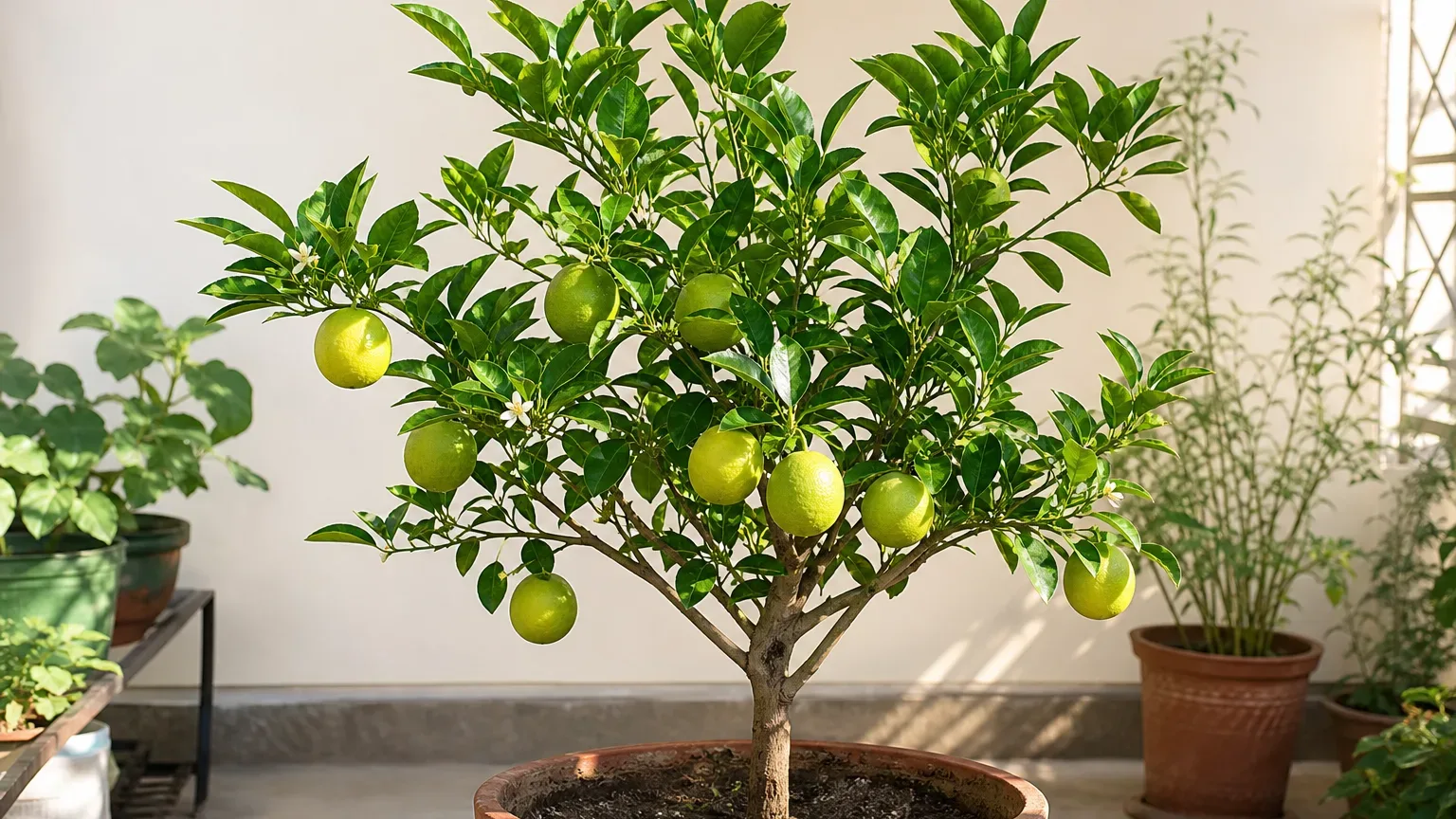
Mosambi Watering Guide for Pots & India
Mosambi Watering Guide for Pots & India
Mosambi watering is where many sweet-lime growers lose fruit before they ever taste it. Citrus limetta—mosambi, mousami, musambi—is a sun-loving evergreen fruit tree, not a desert succulent and not a moisture-loving foliage houseplant. It needs deep irrigation followed by partial drying in the upper root zone, steady moisture while flowers and young fruit develop, and fast drainage so roots never sit in stale, oxygen-starved mix. Get that rhythm wrong and you may see yellow leaves with wet soil, fragrant blooms that abort after a dry spell, or small, stressed fruit after weeks of neglect.
This guide is for growers in India and similar climates who keep sweet lime on terraces, in courtyards, or in frost-free garden beds. You will learn how to check dryness 3–5 cm down, how containers change the interval, how monsoon rain fits in, and what to do first when leaves wilt but you are not sure whether the problem is too much water or too little. Pair it with the Mosambi overview and the Mosambi soil guide when drainage—not timing—is the real issue.
The quick answer: water when the top 3–5 cm begins to dry
For a container Mosambi, push a finger or dry wooden skewer 3–5 cm (about 1–2 in) into the mix. Water when that layer feels dry and the pot feels noticeably lighter than right after a soak, then irrigate slowly until water runs from every drainage hole. Empty the saucer or cachepot so the root ball is not standing in runoff.
For an established in-ground tree, water deeply when the active root zone is drying—not because dusty surface soil looks pale at noon. UC IPM suggests that in hot summer climate zones, citrus often benefits from irrigation about every 7 to 10 days, with total summer demand around 4 to 6 inches of water per month divided across several applications depending on soil type. Treat that as a starting frame for prolonged dry heat, then shorten or lengthen based on pot size, wind, and how fast your mix drains.
Why Mosambi needs steady moisture—not soggy soil
Mosambi is a subtropical evergreen fruit tree cultivated across India for mild, low-acid sweet-lime fruit. PFAF lists Citrus limetta with a moisture preference of “Moist”—not waterlogged and not bone-dry for long stretches. That matches how citrus behaves in the landscape: regular hydration for leaf expansion, flowering, and fruit sizing, with roots that still need oxygen between drinks.
UC IPM is explicit that correct watering supports good fruit quality and helps trees resist fungal diseases, while overwatering predisposes citrus to root and crown rots such as Phytophthora. Underwatering, on the other hand, produces small fruit and fruit that tends to sunburn when sun exposure is strong. The useful mental model is not “keep it wet” or “let it crisp.” It is soak the full root profile, let the upper zone dry partially, repeat.
Sweet lime biology and shallow citrus roots
Citrus roots are shallow compared with many landscape trees. UC IPM advises placing drip emitters at the base of newly planted trunks to keep the root ball moist until roots grow into surrounding soil, then moving irrigation outward as the tree establishes. In a pot, that means wetting the entire root mass—not sprinkling the surface every morning while the core stays dry.
Mosambi shares this biology with lemon and other sweet oranges; it is not a special case that tolerates dim rooms and constantly wet compost. If your mix holds water for many days in warm weather, the fix is usually soil structure and pot drainage, not a smaller watering can. Strong light and correct watering work together on a sunny terrace.
How to check whether your Mosambi needs water
Leaf wilt alone is a poor timer. Midday droop on a hot terrace can be temporary stress, while roots in soggy mix can also wilt because damaged tissue cannot move water. Always confirm moisture before you add more.
Container and terrace checks
Use three signals together: dryness 3–5 cm down, pot weight, and whether drainage holes stay wet for days. A pale, cracked surface can hide a wet core in peat-heavy blends. A root-bound plant may feel light soon after watering because water races down the sides instead of wetting the ball—apply water in two slow passes a few minutes apart.
Lift the pot after a full soak and again daily until the weight drops clearly. Experienced growers often trust weight more than touch because it reflects moisture through the whole column. If the mix stays dark and cool for many days while growth stalls, stop watering and inspect drainage before the next drink.
In-ground and garden-bed checks
Scrape back mulch and test soil 10–15 cm deep under the canopy drip line, especially near the original root ball on a recently planted tree. Dry crust over cool, moist soil does not need irrigation. Dry root zone plus persistent morning wilt does.
After rain, dig a small inspection hole. A brief shower may wet only the top few centimetres, while heavy monsoon rain on compacted beds may puddle without soaking evenly. UF/IFAS Home Citrus recommends skipping manual watering for two days after ½ inch or more of rain in a single event, because natural rainfall has already moistened the soil.
How to water deeply without waterlogging roots
Apply water at soil level, slowly enough to wet the full root profile. For pots, continue until runoff appears from all holes, then discard standing water. For ground plants, wet a broad ring under the canopy rather than flooding only against the trunk collar, and keep the graft union and root flare above the soil line.
Morning checks are easiest: cooler air, clearer leaf signals, and time for wet foliage to dry. Where possible, keep flowers and developing fruit as dry as practical to reduce fungal pressure—basin or drip-style watering at the soil line beats overhead spraying on a daily schedule.
Mulch helps outdoor beds hold moisture between deep irrigations, but keep organic mulch a few centimetres away from the woody crown. In pots, decorative gravel that hides chronically wet mix is a liability. Never leave a container sitting in a full saucer through humid weeks.
Young trees versus established Mosambi
A newly planted grafted nursery tree has a small root system relative to its leafy canopy. UF/IFAS advises wetting at least the first 3 inches of soil at planting and watering 2 to 3 times per week for approximately 4 weeks while roots establish. Translate “frequent” into shorter check intervals and even moisture, not automatic daily flooding that never dries.
Once established, the same species becomes more forgiving of short dry spells, but fruiting plants still need regular irrigation for quality. UF/IFAS notes that well-watered trees respond better to fertilizer and other inputs—another reason to stabilize watering before increasing feeding. Young or small container Mosambi therefore need closer attention than a mature in-ground tree with a wide root system.
Flowering, fruit set, and harvest timing
From flowering through young-fruit development, aim for steady moisture without waterlogging. Irregular drought followed by a heavy soak stresses citrus and can contribute to blossom or young-fruit drop, undersized fruit, and quality problems near harvest. UC IPM links underwatering to small fruit and sunburn risk when fruit is exposed.
Home terrace growers rarely need commercial orchard math, but the principle holds: do not let a loaded container bake dry for a week and then “catch up” with one massive flood. If monsoon rains arrive after a dry spell, you cannot undo uptake physics, but you can keep the root zone from swinging wildly afterward by pausing irrigation and confirming drainage.
Mosambi watering by season in India
India is not one climate. Coastal humidity, Deccan heat, north Indian winter slowdown, and a windy high-rise balcony all dry pots at different speeds. Use the table as a decision framework, then verify with the finger or skewer test.
| Season or condition | Young or potted Mosambi | Established in-ground Mosambi |
|---|---|---|
| Hot, dry, windy weather | Check every 3–5 days; deep-soak when 3–5 cm is dry | Deep soak when root zone is drying; roughly 7–10 day frame in prolonged drought |
| Dependable monsoon | Pause routine watering; confirm pots drain | Usually pause irrigation; divert standing water |
| Flowering through fruit swell | Keep moisture even; avoid drought-to-deluge | Maintain regular deep irrigation if rain is absent |
| Cool season / slow growth | Water far less; wait for clear dryness | Reduce sharply when growth and evaporation drop |
| After transplant or repot | Keep root ball evenly moist 3–4 weeks | Same establishment care; see repotting guide |
Hot, dry summer
Expect the shortest intervals on sun-baked terraces. Small dark pots on concrete can dry in a day or two. Large ceramic pots in partial windbreak dry slower. Always soak thoroughly when you do water so salts and dry pockets do not build in the upper half of the mix. UC IPM summer guidance—about 4 to 6 inches per month split across applications—is a landscape-scale reference; a terrace pot may need more frequent checks even if each drink is smaller in volume.
Monsoon and humid months
Stop routine hose watering when rain or humidity keeps the root zone moist. Raise pots on feet, clear clogged drainage holes, and move containers out of roof-runoff streams. Warm, wet soil is where root stress rises fastest—good drainage and mix structure matter as much as the watering can. After significant rain, wait at least two days before resuming manual irrigation unless a dryness check says otherwise.
Cool winter and slow growth
Mosambi is evergreen, but growth and water use slow in cool, dim conditions. RHS advises allowing the surface of the compost to partially dry out before watering in winter, then watering thoroughly and letting excess drain—overwatering in winter is one of the commonest problems, so err on the dry side. Resume more frequent checks when new flush and warmer days return, alongside brighter placement described in the Mosambi light guide. Do not maintain a peak-summer schedule through a cool, cloudy month just because the calendar says December.
Container and balcony specifics
Terrace culture is how many Indian growers keep edible sweet lime in limited space. Containers have less soil volume, heat from all sides, and no deep groundwater buffer, so they need more frequent checks than garden beds even when the species is forgiving in the landscape.
Choose a heavy pot with open drainage holes and enough depth for woody roots. Water until runoff, then empty the tray. If you must use a cachepot, lift the grow pot out to drain after every soak. Root-bound plants dry unevenly and may need repotting rather than endless emergency watering.
Fertilizer salts concentrate faster in pots that dry and rewet often. If leaf edges burn while the mix still seems wet, review feeding in the Mosambi fertilizer guide and flush the pot with a thorough soak that exits freely. Wear gloves around thorny twigs when moving or checking large specimens.
Overwatering and underwatering warning signs
Overwatering often shows as persistent yellowing, weak or stunted new growth, a sour or swampy smell, and soil that never lightens between drinks. Growth can stall even though the mix looks wet because roots lack oxygen. UC IPM ties chronic excess moisture to root and crown rots. Stop irrigating, improve drainage, and only resume after the profile dries to a safe check depth.
Underwatering shows as curled or wilted leaves, dry crisp edges, flower or young-fruit drop, and undersized or sunburned fruit on exposed branches. An established tree can survive a short dry spell better than a small fruiting container plant can. Rehydrate with one full soak, let excess drain, then return to the partial-dry cycle—do not compensate with daily shallow splashes that keep the surface wet and the core stressed.
If you are unsure, perform a dryness check rather than guessing. A slightly late watering is usually safer than keeping roots wet through a humid week—unless the plant is already showing clear drought stress and the mix is bone dry at depth.
When to use this page vs other Mosambi guides
Use this watering page when you need timing, seasonal adjustments, container checks, or fruit-stage moisture logic. Switch to sibling guides when the limiting factor is not irrigation volume alone.
- Mosambi overview — whole-plant care map, habit, and what healthy establishment looks like.
- Mosambi light — sun hours and placement that drive both drying rate and flowering.
- Mosambi soil — drainage, acidic mix, and monsoon-safe structure.
- Mosambi fertilizer — feeding during growth without pushing soft, water-demanding flush on wet roots.
- Mosambi repotting — when a pot dries too fast or stays wet because roots are crowded.
- Mosambi propagation — moisture for cuttings and newly rooted plants.
- Mosambi pruning — structure and productive wood once watering is stable.
Related Mosambi guides
For the full cluster, start at the Mosambi plant hub, then move through overview, light, soil, fertilizer, repotting, propagation, and pruning as your next question shifts. Watering decisions become easier when sun, mix, and pot size are already correct.
Conclusion
Water Citrus limetta by the root zone: deep soak when the upper 3–5 cm begins to dry, drain freely, then wait. Keep moisture especially even from flowering through young-fruit development so the tree does not swing from drought to flood. In Indian summers, check terrace pots often; in monsoon, prioritize drainage and pause irrigation after real rain; in cool slow-growth months, water far less. Consistency—not constant wetness—is what Mosambi rewards with healthier roots, better fruit, and fewer rot problems.