Ants on Oxalis Triangularis: Causes, Checks & Fixes
Quick answer
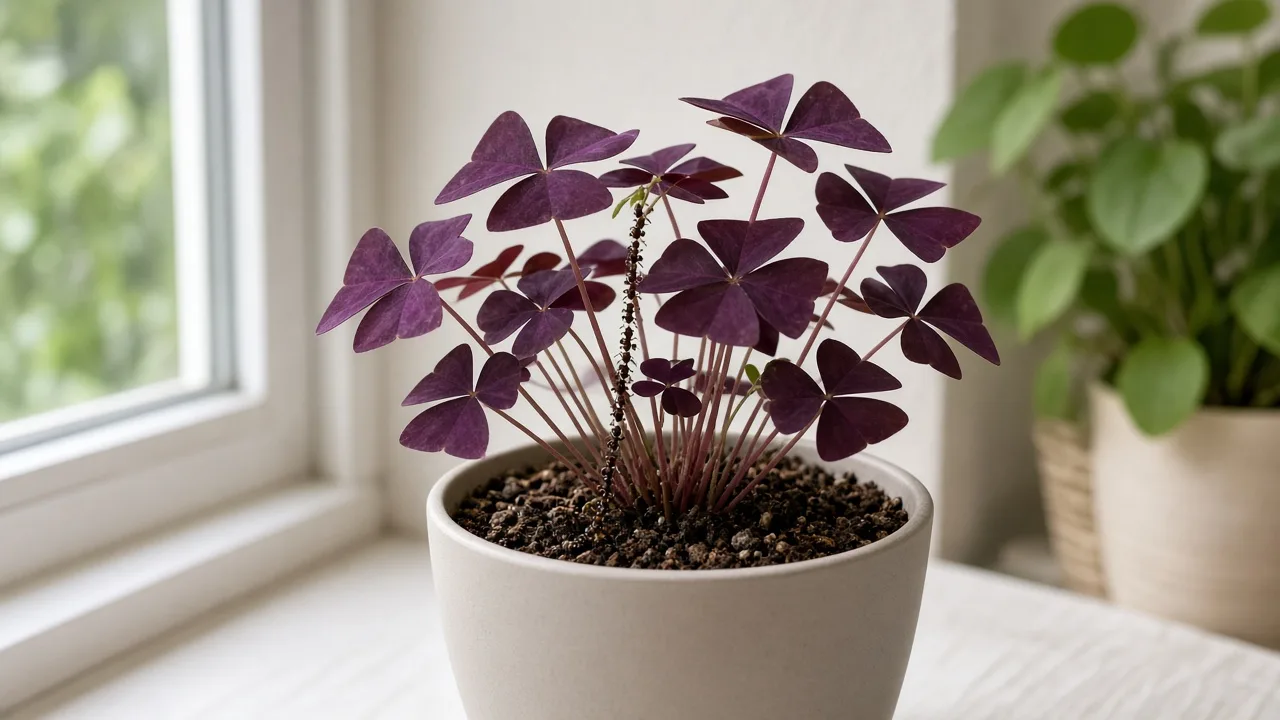
Ants on Oxalis triangularis indicate either mutualistic farming of honeydew-producing pests (aphids, mealybugs, scale) on petioles and leaf undersides, or an active ant colony nesting directly in porous potting soil around subterranean scaly corms. First step: isolate the plant and place enclosed borax or boric acid bait stations outside the pot along ant entry trails while keeping baits safely away from pets.
Ants on Oxalis Triangularis: Causes, Checks & Fixes
This guide covers ants on plant on Oxalis Triangularis. See also the general Ants on Plant guide, watering, and light pages for this plant.
Ants on Oxalis Triangularis: Causes, Checks & Fixes
Quick answer
Spotting ants marching across the deep violet foliage of purple shamrock (Oxalis triangularis) is a jarring sight, but ants rarely attack healthy plant tissue directly. Oxalis triangularis is a rhizomatous perennial that grows from subterranean scaly corms supporting slender, upright petioles topped by distinctive trifoliate leaflets. When ants colonize this plant, they are almost always driven by one of two distinct motivations: they are systematically tending sap-sucking phloem feeders like aphids and mealybugs to harvest their sugary honeydew excretion, or they have moved their entire colony into the light, aerated potting substrate surrounding the underground corms. For universal principles governing ant behavior in indoor containers, consult our global ants on plant guide.
On Oxalis triangularis, ant activity requires immediate, species-sensitive intervention. The plant’s succulent, thread-like petioles and delicate hinge mechanisms cannot tolerate aggressive chemical sprays or heavy physical disruption.
First step: isolate the pot immediately and deploy enclosed slow-acting borax or boric acid bait stations along established ant trails outside the container. Never spray aerosol insecticides onto the delicate foliage. Slow-acting baits allow foraging worker ants to carry the active ingredient back to the central nest, eradicating the queen and eliminating the colony without stressing the plant’s sensitive crown or underground corms.
What ants look like on Oxalis triangularis
Ants on purple shamrock range from tiny 1/16-inch dark rover or grease ants to larger 1/8-inch Argentine or odorous house ants. Unlike slow-moving scale insects or stationary mealybugs, ants move with purpose, creating distinct scent-marked commuting lines across your plant.
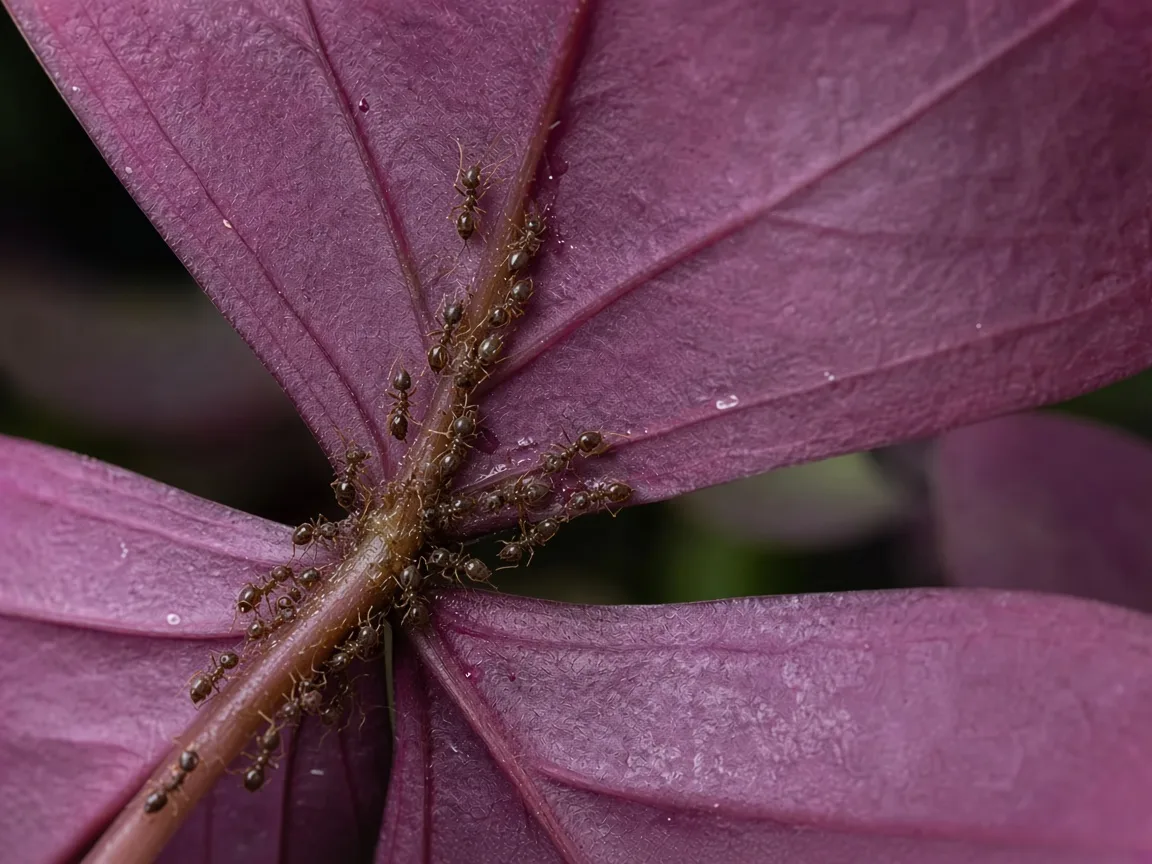
Ants trailing on the slender petioles and scaly corms of Oxalis triangularis - compare with pest-free tissue on the same plant.
Key visual clues and behavior patterns to look for include:
- Petiole highways: Workers travel in steady single-file lines up and down the long, slender leaf stalks. Because Oxalis produces many upright petioles emerging directly from the crown, ants use these stems as vertical ladders to reach high-value feeding sites.
- Congregation at petiolule joints: Ants gather in small clusters at the junction where the three triangular leaflets meet at the apex of the petiole. This hinge region is a primary feeding zone for phloem-feeding pests.
- Activity along flower scapes: The pale pink or white bloom stalks that rise above the purple canopy are especially attractive to sap-feeders, making them high-traffic ant corridors.
- Surface soil mounds and granules: Small piles of excavated peat, perlite, or pumice grains around the base of emerging petioles indicate subterranean tunneling around the corms.
- Sticky foliage sheen: A tacky, glistening residue on lower leaves or around the rim of the pot points to accumulated honeydew. In humid rooms, this residue can encourage dark, velvety sooty mold.
Why Oxalis triangularis attracts ants: nesting vs. pest farming
Ants do not consume Oxalis foliage, nor do they gnaw into the fibrous scales of healthy corms. Instead, an infestation represents an indirect relationship driven by shelter or food. Distinguishing between mutualistic pest farming and subterranean nesting dictates the appropriate treatment strategy.
Mutualistic pest farming (honeydew collection)
Ants farm sap-sucking insects by harvesting honeydew and protecting colonies from natural predators. Sap-sucking phloem feeders such as aphids, mealybugs, and soft scales tap into the pressurized vascular fluids of Oxalis triangularis. Because plant sap is rich in carbohydrates but poor in amino acids, these pests ingest large volumes of liquid and excrete the excess sugar as sticky honeydew.
Worker ants trail into indoor structures seeking water, warmth, or sweet food sources. When they discover honeydew on your purple shamrock, they establish continuous foraging trails. In exchange for this rich food supply, the ants actively protect the sap-feeders from predatory insects like lady beetles, lacewing larvae, and parasitoid wasps. They will even stroke the aphids with their antennae to stimulate honeydew secretion and physically transport nymphs to fresh, tender shoots emerging from the plant’s crown.
Subterranean corm and rhizome nesting
Ants occasionally establish satellite nests in the light, porous potting mix of container houseplants. A properly formulated Oxalis triangularis soil mix consists of peat or coco coir blended with 20% to 25% perlite or pumice to ensure sharp drainage and aeration around subterranean corms.
Unfortunately, this loose, well-aerated structure offers ideal excavating conditions for opportunistic ant species seeking warm, protected nesting sites indoors. The ants carve intricate tunnel networks and brood chambers around the cluster of scaly corms. While the ants do not eat the corms, their tunneling creates large air pockets that dry out delicate feeder roots, disrupt moisture uptake, and destabilize the plant’s physical anchoring.
Ant trailing mechanics along slender Oxalis petioles and petiolules
The unique morphology of Oxalis triangularis heavily influences how ants move and interact with the plant. Unlike woody shrubs or broad-stemmed aroids with thick bark or sturdy petioles, purple shamrock produces dozens of delicate, hollow, herbaceous leaf stalks originating from subterranean growing points.
Because each petiole is slender, ants have limited surface area to traverse. When multiple workers travel along the same stalk, their movement creates tactile vibrations that can irritate the plant. More importantly, the terminal junction—the petiolule—contains specialized motor cells (pulvini) that control nyctinastic movement.
When aphids or mealybugs congregate at this vulnerable juncture, ants crowd the pulvinus to tend them. This concentrated mechanical and chemical pressure compromises the motor tissue, leading to premature leaf droop, localized chlorosis, or leaflets that fail to expand fully during the day.
Subterranean corm and rhizome nesting vs. foliar pest farming
Understanding whether ants are merely visiting the foliage or living permanently within the root ball is vital for effective management.
| Diagnostic Factor | Foliar Pest Farming | Subterranean Nesting in Corms |
|---|---|---|
| Primary Ant Trajectory | Ants enter from outside the pot, climb the exterior wall, and head directly up petioles. | Ants emerge primarily from drainage holes, saucers, and soil crevices near the crown. |
| Presence of Phloem Feeders | Daylight inspection reveals aphids, mealybugs, or scale on stems and leaflet undersides. | Foliage may be completely pest-free; no aphids or sticky honeydew observed. |
| Response to Routine Watering | Ants continue orderly trailing along petioles; minor scurrying at the surface. | Hundreds of workers, accompanied by white oval pupae and larvae, erupt from the soil. |
| Root Zone Stability | Corms remain firmly anchored; soil structure remains uniform. | Soil feels loose or spongy; top layer sinks irregularly; corms wobble when touched. |
| Symptom Locus | Twisted new leaflets, sticky sheen, sooty mold, curling leaf margins. | Generalized dehydration, rapid wilting despite damp soil, desiccation of feeder roots. |
When ants nest around the scaly corms, they excavate the fine potting media and stack it around the crown. This subterranean disruption separates fine feeder roots from moist soil particles. Over several weeks, the root ball suffers chronic desiccation, mimicking the symptoms of severe underwatering even when the pot is watered according to standard Oxalis watering guidelines.
Daylight scouting and nyctinastic leaf fold challenges
Oxalis triangularis displays pronounced nyctinastic movements: its trifoliate leaflets fold downward along the petiole like closed umbrellas at dusk or in low-light environments, reopening when exposed to bright morning light.
This rhythmic movement creates a major diagnostic challenge for houseplant owners. In the evening, when many plant parents have time to inspect their indoor gardens, the folded leaflets conceal the petiolule joints, the underside surfaces, and the emerging flower scapes. Mealybugs and aphid colonies hide snugly between the compressed, folded leaf lobes, where worker ants tend them out of sight.
To accurately diagnose ant activity and their farmed partners, always perform inspections during mid-morning or midday when the plant is bathed in bright indirect light and the leaflets are expanded flat. In full daylight, angle the pot upward and inspect:
- The petiolule nexus where the three triangular leaflets meet.
- The pale, tender veins running along the deep purple underside of each leaflet.
- The base of tender flower scapes and developing flower buds.
- The soil line at the base of the crown for tiny sand-like excavated soil particles.
How to confirm the root cause
Before applying any treatment, execute a systematic diagnostic sweep to identify the exact ant species dynamics at play:
- Track the foraging trail: Follow the line of ants backward from the pot. Do they lead to an exterior windowsill, an electrical outlet, or a baseboard gap? If so, the nest is located within the building structure, and the plant is merely a feeding site.
- Perform the drainage tap test: Gently lift the pot and inspect the drainage holes. If ants are actively moving between the bottom saucer and drainage openings, set the container in a sink and run lukewarm water through the substrate. If workers swarm out carrying white brood (eggs, larvae, pupae), the colony has nested inside the potting mix.
- Inspect for sticky residue: Gently run your fingertips along the petioles and leaf undersides. If your fingers pick up a tacky, syrup-like coating, honeydew is present.
- Magnified pest inspection: Use a 10x hand lens or smartphone macro camera to inspect the leaflet undersides and crown. Look for soft, green or pink pear-shaped bodies (aphids) or white, powdery wax filaments nestled in stem axils (mealybugs).
- Assess corm stability: Lightly grasp the base of several petioles near the soil line and wiggle them gently. Firm resistance indicates intact roots; loose, free-floating movement indicates extensive tunnel excavation around the corms.
First fix for Oxalis triangularis
Isolate the plant and set out slow-acting borate bait stations along the trailing route outside the pot.
Do not reach for synthetic contact insecticides or commercial aerosol bug sprays. Contact sprays kill only the few foraging workers exposed to the mist, leaving thousands of nest-mates and the reproducing queen completely unaffected. Worse, aerosol propellants and harsh chemical solvents cause instant leaf burn and collapse on fragile Oxalis stems.
Instead, place enclosed liquid or gel ant bait stations containing slow-acting borate bait stations allow foraging worker ants to carry poison back to the queen. Worker ants consume the sweet, borax-laced syrup, store it in their crops, and return to the subterranean nest to share it with larvae and the queen through trophallaxis (food sharing). Within several days to two weeks, the entire colony collapses at its source.
Step-by-step eradication and recovery
Once the plant is isolated and bait stations are active outside the pot, follow these sequential steps based on your confirmed diagnosis:
Step 1: Eliminate foliar phloem feeders (if ants are farming pests)
If daylight inspection confirms aphids, scale, or mealybugs on the foliage:
- Lukewarm foliage rinse: Take the pot to a sink or shower. Using a gentle, room-temperature spray, thoroughly rinse the underside of the leaflets, petiolule joints, and flower scapes. This dislodges loose aphids, washes away sticky honeydew, and disrupts ant scent trails. Support the slender petioles with one hand to prevent snapping.
- Apply insecticidal soap: Once the foliage dries in indirect light, apply a commercial insecticidal soap containing potassium salts of fatty acids disrupt insect cell membranes on contact. Spray thoroughly, ensuring complete coverage of leaf undersides and the central crown.
- Avoid horticultural oils in high heat: While neem and mineral oils smother pests, Oxalis foliage is exceptionally thin. Oil films applied in warm conditions or under direct sunlight can cause severe phytotoxic leaf drop. Stick to gentle insecticidal soaps or dilute castile soap rinses.
- Repeat on a 5- to 7-day cadence: Because insecticidal soap has no residual action, repeat applications twice more over two weeks to kill newly hatched nymphs.
Step 2: Submerged pot soak (if ants are nesting in corms)
If the ant colony has constructed its nest inside the container potting soil, bait stations alone may take too long to prevent root desiccation. A submerged water soak provides rapid eradication:
- Prepare a submersion bath: Fill a deep bucket or tub with room-temperature water deep enough to submerge the plant’s container up to the soil line. Add 2 to 3 drops of mild liquid dish soap or insecticidal soap to lower surface tension.
- Submerge the pot: Slowly lower the potted Oxalis into the water until the soil surface is submerged by 1 inch. Keep the pot submerged for 15 to 20 minutes.
- Skim emerging ants: As water fills the subterranean tunnels, worker ants and brood will boil to the surface to escape drowning. Skim the floating ants off the water surface into a cup of soapy water.
- Drain completely: Lift the pot from the bath and allow it to drain freely for at least 30 minutes. Never leave the pot sitting in standing water in its decorative cachepot or saucer, as waterlogged conditions around resting corms quickly trigger fungal root rot.
- Top-dress or repot if tunneling was severe: If the soak reveals that half the potting mix was excavated, gently unpot the plant, shake away collapsed debris, inspect the scaly corms for firmness, and repot into fresh mix with 25% perlite following our Oxalis soil care recommendations.
Lookalike symptoms and what to rule out
Ants on Oxalis triangularis are visually distinct, but the damage they accompany can be confused with other common care disorders. Use this comparison table to differentiate overlapping symptoms:
| Observed Symptom | Confirmed Ants on Plant | Lookalike Issue to Rule Out | Key Distinguishing Check |
|---|---|---|---|
| Sticky leaf coating & sooty specks | Ants actively trailing along petioles toward honeydew producers. | Oedema or natural guttation from high humidity and overwatering. | Guttation produces clean water droplets along leaf margins that dry without stickiness; honeydew is tacky and attracts ants. |
| Sudden daytime drooping of petioles | Soil-nesting ants have excavated air pockets around corms, desiccating roots. | Underwatering, severe heat stress, or root rot. | Check pot weight. Underwatering shows a bone-dry, light pot; root rot produces mushy, foul-smelling corms; ant tunneling produces loose soil with active insects. |
| Leaflets tightly folded during midday | Heavy pest aggregation and ant mechanical irritation at the petiolule pulvinus. | Normal nyctinastic movement or intense light avoidance. | Check ambient light. If the plant is in bright indirect light and should be open, inspect the pulvinus for clusters of aphids or mealybug wax. |
| Fine granular debris on soil surface | Subterranean ant excavation forming small soil mounds near the crown. | Salt buildup from hard tap water or fertilizer salts. | Salt crusts are white, crystalline, and adhere to soil particles or pot rims; ant excavations are loose piles of substrate particles that scatter when blown gently. |
| Yellowing lower foliage with rapid dieback | Severe phloem depletion from ant-farmed aphid or mealybug colonies. | Natural seasonal dormancy induction. | Natural dormancy causes uniform, gradual yellowing across all stems without pests, stickiness, or ant trails. |
Mistakes to avoid
When dealing with ants on purple shamrock, improper treatments often inflict more harm than the ants themselves:
- Do not spray aerosol household bug sprays: Flying insect sprays contain harsh organic solvents and synthetic neurotoxins that instantly scorch Oxalis leaves and dissolve petiole tissues.
- Do not pour boiling water or undiluted vinegar into the soil: While popular online home remedies for outdoor anthills, boiling water cooks delicate Oxalis corms, and vinegar severely acidifies the root zone, causing irreversible root burn.
- Do not fertilize while an infestation is active: Applying high-nitrogen houseplant fertilizer stimulates soft, succulent vegetative flushes that provide ideal nourishment for phloem-feeding pests, worsening aphid and ant pressure.
- Do not repot aggressively into heavy, dense soil: If repotting after an ant infestation, avoid dense garden topsoil or moisture-retentive potting soils without adequate aeration amendments. Heavy soils retain excess moisture, rotting the corms.
- Do not forget to clean the surrounding area: Wiping down windowsills, plant shelves, and pot exteriors with a dilute vinegar or citrus solution erases the pheromone scent trails that guide outdoor ant colonies back to your plant.
Pet toxicity and safe treatment considerations
A primary concern when treating Oxalis triangularis in a household setting is pet safety. The ASPCA lists Oxalis species as toxic to dogs, cats, and horses due to soluble calcium oxalates.
Unlike the insoluble needle-shaped raphide crystals found in aroids like Monstera or Philodendron, Oxalis contains soluble oxalate salts and oxalic acid. When ingested in significant quantities, these compounds bind with systemic calcium in the animal’s bloodstream, potentially causing hypocalcemia, gastrointestinal distress (drooling, vomiting, diarrhea), tremors, and in severe cases, acute renal damage.
When managing ants on purple shamrock around curious pets, observe these strict safety protocols:
- Use tamper-resistant bait stations: Boric acid and borax are toxic to pets if consumed in large quantities. Always house ant bait in rigid, child- and pet-proof commercial plastic stations. Position them behind furniture or on elevated surfaces completely inaccessible to cats and dogs.
- Quarantine during foliar spraying: While insecticidal soaps have low mammalian toxicity once dry, wet runoff should not be ingested. Move your Oxalis into an enclosed bathroom or laundry room when spraying, and allow foliage to dry completely before returning it to its display location.
- Safely discard bath soak runoff: If you submerge your plant to drown an ant colony, promptly empty the drainage water down the drain. Do not leave buckets of soak water where pets can lap it up, as the liquid will contain dislodged soil particles, dissolved plant oxalates, and soap residues.
Recovery timeline and post-treatment monitoring
Recovering from an ant invasion depends on whether the issue was confined to foliar pest farming or involved root-zone tunneling.
- Days 1–3 (Initial knockdown): External ant trailing should decrease markedly as foragers carry borate bait back to the nest. After an initial foliage wash or submerged soak, active ants on the plant should drop by 90% or more.
- Days 4–7 (Pest clearance): Inspect leaflet undersides for residual aphids or mealybug crawlers. Apply a second insecticidal soap treatment if live pests remain. Any severely collapsed, broken, or yellowed petioles should be snipped cleanly at the soil line with sterilized scissors.
- Weeks 2–3 (Root re-anchoring & crown response): If corms were disrupted by tunneling, avoid overwatering while root hairs regenerate. Ensure the top 1 inch of substrate dries before adding moisture. Look for new, tightly coiled pink shoots unfurling from the crown.
- Weeks 4+ (Full foliage renewal): Purple shamrock grows vigorously from healthy corms. Within a month of resolving ant and pest pressure, a full canopy of deep purple, upright foliage will replace damaged tissue.
When to use this page vs other Oxalis Triangularis guides
- Oxalis Triangularis watering guide – Use when petioles droop uniformly without any sign of ants, pests, or excavated soil.
- Oxalis Triangularis soil guide – Use when rebuilding substrate aeration after drowning an ant colony or repotting disturbed corms.
- Aphids on Oxalis Triangularis – Use when green or black soft-bodied insects are the primary symptom on bloom stalks and petioles.
- Mealybugs on Oxalis Triangularis – Use when white, cottony wax masses appear in petiolule joints and crown axils.
- Oxalis Triangularis problems hub – Browse comprehensive diagnostic guidance for all recognized issues on this species.
Related Oxalis Triangularis guides
- Oxalis Triangularis overview
- Oxalis Triangularis watering
- Oxalis Triangularis light
- Oxalis Triangularis soil
- Aphids on Oxalis Triangularis
- Mealybugs on Oxalis Triangularis
- Root Rot on Oxalis Triangularis
- Oxalis Triangularis problems hub
Related tool
Use the Humidity Calculator to determine the ideal atmospheric vapor pressure deficit for your purple shamrock, ensuring rapid foliage drying after pest rinses while avoiding stagnant, pest-prone microclimates.