Brown Leaves on Peace Lily: Causes, Checks & Fixes
Quick answer
Whole brown leaves on peace lily usually mean severe drought, root failure, cold damage, or sun scorch—not cosmetic tip burn. First step: check whether mix at 3–5 cm is bone-dry or still damp, and whether stems are firm or soft at soil level.
Brown Leaves on Peace Lily: Causes, Checks & Fixes
This guide covers brown leaves on Peace Lily. See also the general Brown Leaves guide, watering, and light pages for this plant.
Brown Leaves on Peace Lily: Causes, Checks & Fixes
Quick answer
Brown whole leaves on peace lily are more serious than brown tips—they usually signal a major stress event: severe underwatering, root rot on wet mix, cold exposure, or direct sun scorch. One old lower leaf browning and drying while the crown stays green is often normal senescence; several leaves browning together on heavy wet soil is a root-zone emergency.
First step: Push a finger 3–5 cm into mix and press stem bases where petioles meet soil. Dry and light → drought recovery soak. Wet and heavy with soft stems → stop watering and inspect roots today.
For general whole-leaf browning mechanics, see our brown leaves guide. On peace lily, wide glossy blades brown fast once vascular flow fails—the same leaf that droops dramatically when dry can go fully necrotic within days if drought is ignored.
Route to yellow leaves when chlorosis precedes brown, and to wilting when leaves collapse before color change.
When to use this page vs other peace lily guides
| Pattern | Start here | Or route to… |
|---|---|---|
| Entire leaf tan or papery | This page | Underwatering if pot was dry |
| Only tip/margin necrosis | Brown tips | Low humidity |
| Yellow first, then brown | Yellow leaves | Overwatering |
| Brown with black spots | Black spots | This page if whole leaf fails |
| Mushy stem + wet soil | Root rot | This page for leaf-stage symptoms |
What brown leaves look like on Peace Lily
Peace lily leaves are large, glossy, and held on long petioles. Whole-leaf brown shows distinct patterns:
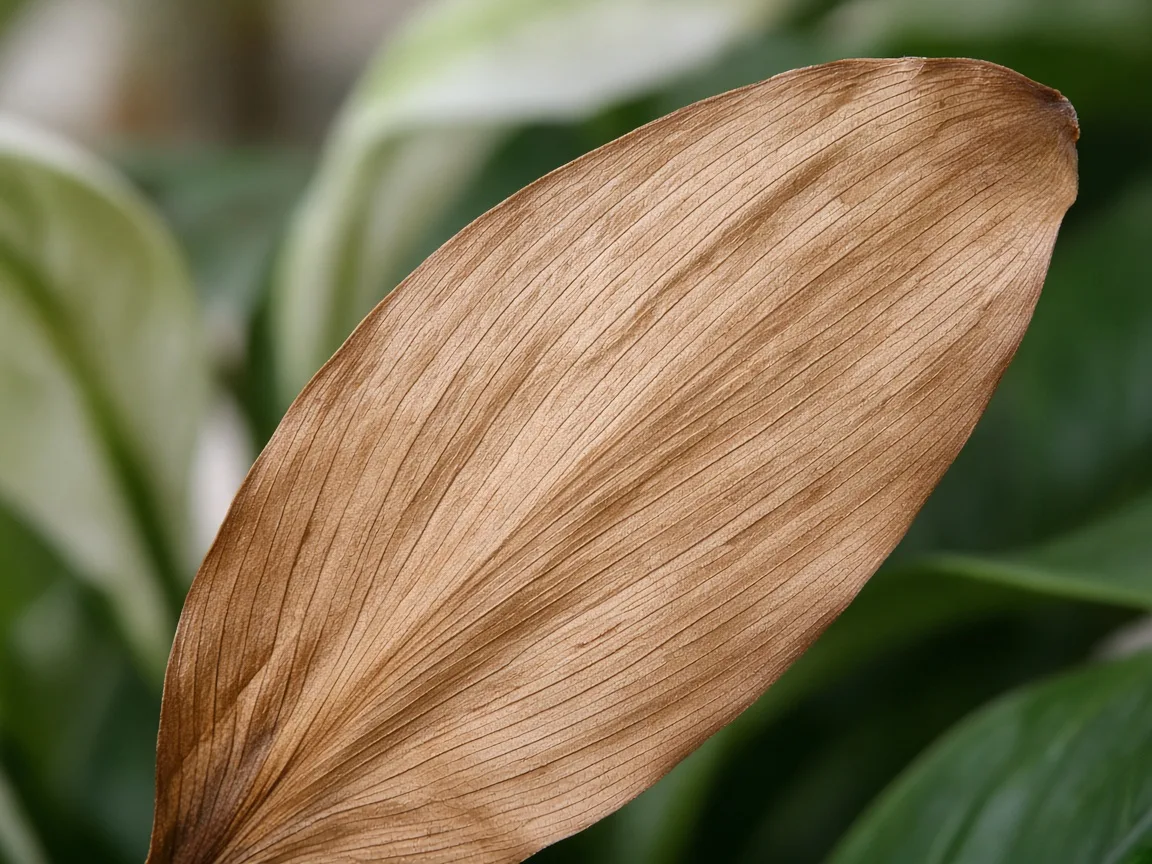
Uniformly tan, papery peace lily tissue—whole-blade necrosis after severe drought or failed vascular supply, not margin-only tip burn.
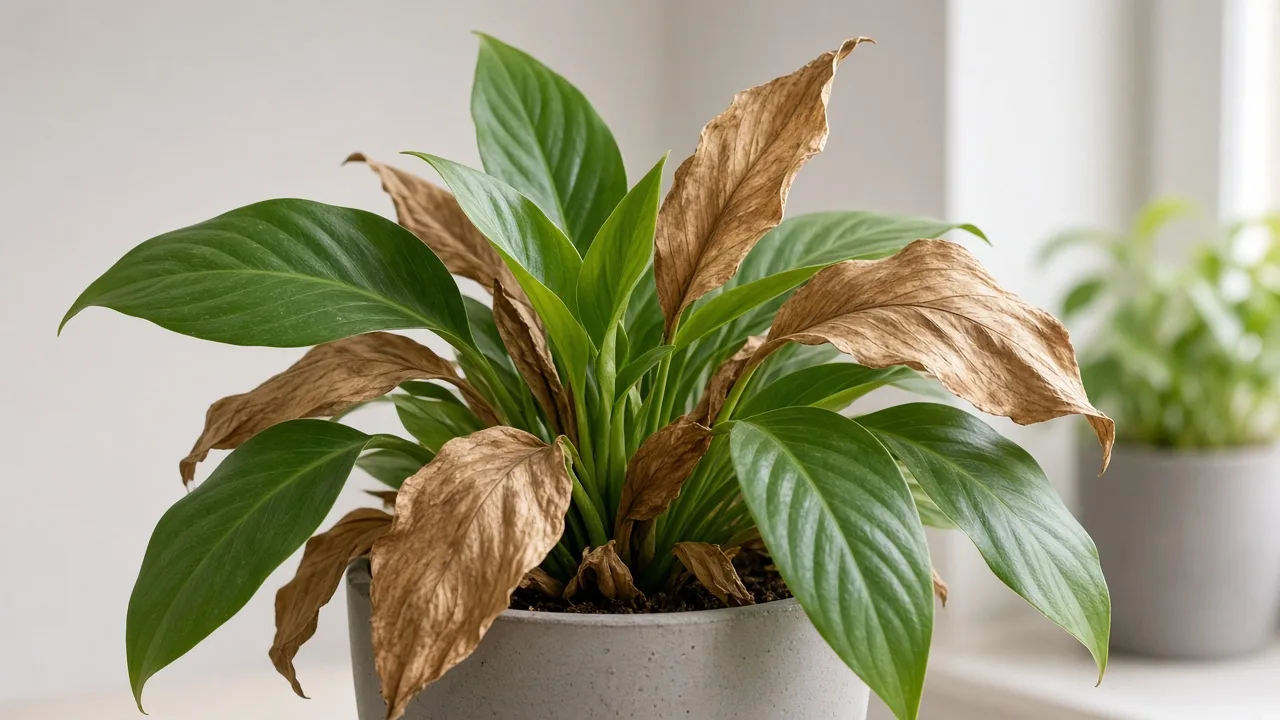
Drought necrosis — Leaves that were limp and curled first turn uniformly tan or brown, starting at tips and margins and spreading inward. Pot was light; mix was dry 3–5 cm down for days. RHS notes peace lilies can recover after prompt watering when roots are healthy—but tissue already brown stays brown.
Rot-linked brown — Leaves soften, yellow, then brown while mix stays wet. Stem bases may dent. Clemson links excess water to root and stem diseases on peace lily. Sour smell confirms escalation.
Sun scorch — Broad tan or bleached patches on the window-facing side, sometimes with crisp brown margins on exposed blades. Peace lily should not sit in direct sun.
Cold damage — Patchy brown or translucent areas after cold nights near glass or vents. Missouri Botanical Garden notes damage below 40°F.
Single aging leaf — One lower leaf browns gradually from the tip while new center growth stays green—normal senescence on a clumping aroid, not a crisis.
Wide-blade browning speed (peace lily only)
Because peace lily leaves have high surface area and thin margins, a missed drought episode can move from droop → curl → full blade necrosis faster than on smaller-leaved houseplants. Owners who return from travel often find several fully brown leaves but a still-firm crown—salvage is common if you soak promptly and roots were not previously waterlogged.
Diagnosis traps on peace lily
Brown tips vs whole leaf — Brown tips stay at margins while most of the blade stays green. This page is for large sections or the entire blade turning tan or mushy.
Watering after brown — Adding more water to an already-wet pot accelerates rot-linked brown. If stems soften at soil level, pause water and inspect roots—do not soak a heavy pot because leaves look dry.
One lower leaf aging — A single papery bottom blade on a plant with firm green center growth is normal senescence on a clumping aroid. Prune when fully dry; no emergency repot needed.
Why Peace Lily leaves turn brown
Severe underwatering deprives cells of water; tissue dies from the margins inward. Peace lily’s dramatic wilt is a warning—ignored wilt becomes permanent brown.
Chronic overwatering damages roots; leaves cannot hydrate despite wet soil and brown while still attached. Saturated mix deprives roots of oxygen.
Direct sun and heat destroy chlorophyll on exposed tissue faster than the plant can replace it.
Cold drafts slow metabolism and damage cell membranes—NC State warns cold below 40°F damages leaves, stems, and roots.
Natural aging sheds oldest lower leaves; this is gradual and isolated.
Confirm the cause in six checks
- Moisture depth: Dry 3–5 cm + light pot → drought. Damp 7+ days + heavy pot → root stress.
- Stem base firmness: Soft, dark crowns → unpot now per root rot.
- Leaf count: One old bottom leaf vs multiple blades browning together.
- Smell: Sour or rotten → root failure, not sun.
- Window exposure: Midday direct sun on affected side?
- Temperature history: Recent cold snap, AC blast, or winter glass contact?
First fix by confirmed cause
| Confirmed cause | First fix | Secondary (after 48–72 h) |
|---|---|---|
| Dry mix, firm stems | Thorough soak until excess drains | Adjust watering rhythm |
| Wet mix, firm stems | Stop watering; bright indirect light | Inspect if smell develops |
| Root rot signs | Unpot; trim mush only; repot airy mix | Root rot protocol |
| Sun scorch | Move to filtered light | Remove fully dead leaves only |
| Cold damage | Stable 65–85°F range; off vents | Wait for new growth before heavy prune |
| Single aging leaf | None required | Snip when fully papery—pruning |
Do not fertilize during acute browning. Fix water, light, and roots first.
Recovery timeline
| Phase | Timing | Improvement | Worsening |
|---|---|---|---|
| Post-soak (drought) | Hours 4–24 | Petioles firm; no new brown | More leaves brown on wet soil |
| Stabilization | Days 3–14 | Browning stops; new tip green | Crown softens |
| New foliage | Weeks 3–8 | Clean center leaves | No new growth after root trim |
Brown tissue does not revert to green. Judge by stopped spread and new crown leaves.
What not to do
- Do not keep watering a brown, wilted plant on already-wet mix.
- Do not repot every brown leaf—repot on root evidence, not one aging lower blade.
- Do not place recovering plants in direct sun to “dry them out.”
- Do not confuse tip burn with whole-leaf failure—see brown tips for margin-only cases.
How to prevent brown leaves on Peace Lily
- Water when 3–5 cm dries or leaves droop—RHS recommends top-dry between drinks.
- Keep bright filtered light, never direct midday sun.
- Empty saucers after every watering; avoid cachepots trapping runoff.
- Protect from cold below ~55°F for extended periods.
- Review soil and repotting when mix stays wet too long.
See peace lily overview and problems hub for baseline care.
Related Peace Lily guides
- Underwatering — drought necrosis and recovery soak
- Overwatering and root rot — wet-soil browning
- Brown tips — margin-only burn, not whole leaf
- Yellow leaves — chlorosis before necrosis
- Wilting — collapse before color change
- Peace lily watering — moisture rhythm hub
Conclusion
Brown leaves on peace lily demand wet-vs-dry triage first. Dry pot and firm crown → soak and adjust schedule. Wet pot and soft stems → pause water and inspect roots. Sun and cold leave directional or patchy patterns on wide blades. One papery lower leaf on a healthy crown is often aging. Route to sibling guides once you know the branch, and judge recovery by new center foliage—not old blades turning green again.
Related tool
Use the Plant Problem Diagnosis Tool to narrow causes for brown leaves on this plant before changing multiple variables at once.