Underwatering on Peace Lily: Causes, Checks & Fixes
Quick answer
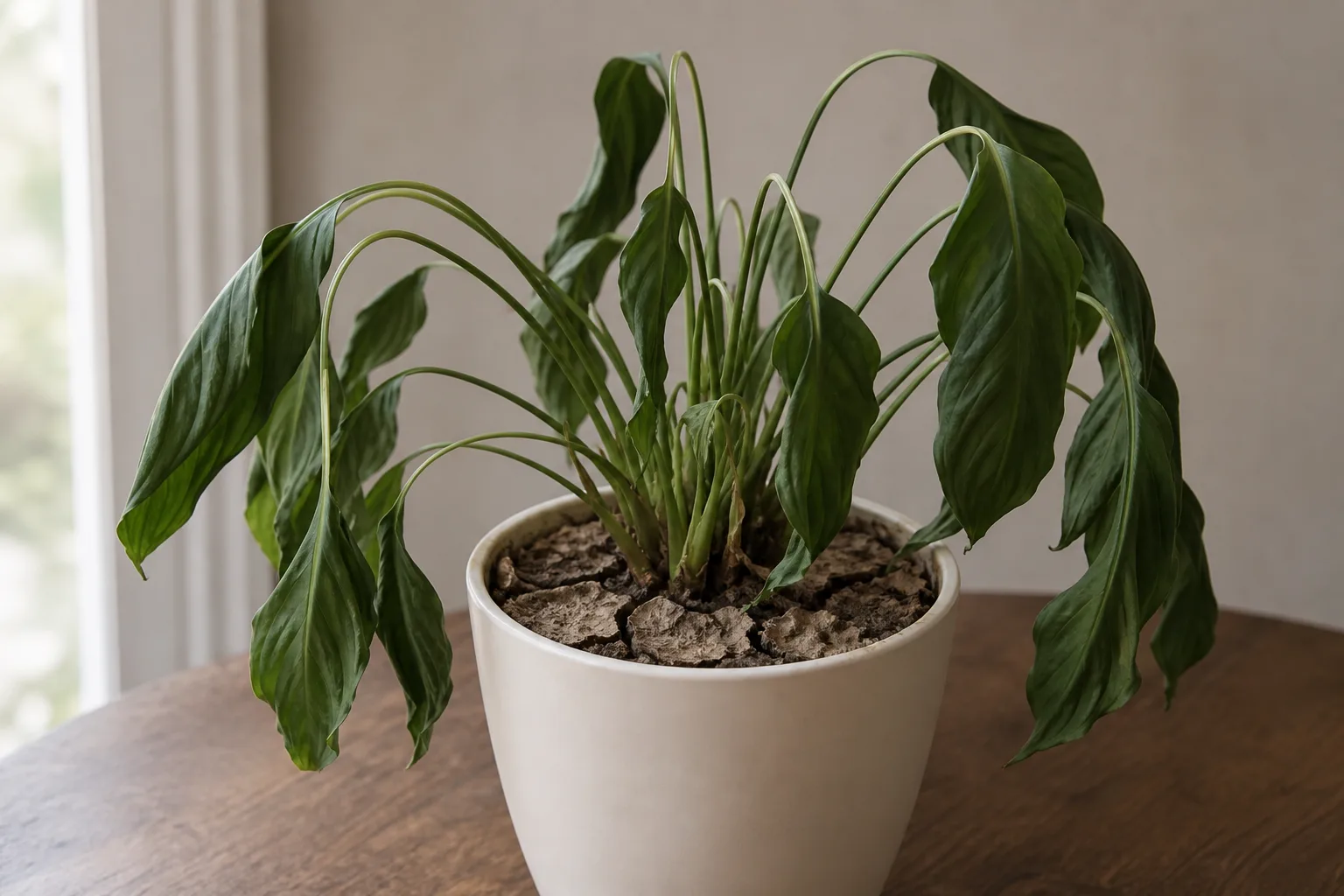
Underwatering on peace lily (*Spathiphyllum wallisii*) shows as dramatic leaf droop when the top 3–5 cm of mix is dry and the pot feels light. First step: probe soil depth before you pour-if dry, water thoroughly until drainage runs, then empty the saucer within 30 minutes.
Underwatering on Peace Lily: Causes, Checks & Fixes
This guide covers underwatering on Peace Lily. See also the general Underwatering guide, watering, and light pages for this plant.
Underwatering on Peace Lily: Causes, Checks & Fixes
Quick answer
Your peace lily collapsed over the weekend, leaves hanging flat like wet tissue-and you are not sure whether to pour or wait. On Spathiphyllum wallisii, that dramatic collapse usually means the root ball ran dry, but the same limp look on soggy mix means failing roots. Peace lilies are famous for dropping dramatically when thirsty, then perking up within hours after a good drink-which is why owners sometimes swing too far dry after a past overwatering scare.
First step: probe the top 3–5 cm of mix before you water. Dry at that depth with a light pot and firm stems → underwatering is likely. Wet at depth with limp foliage → stop-see overwatering or wilting instead.
| What you find at 3–5 cm | Pot weight | Stems | Likely cause | First action |
|---|---|---|---|---|
| Dust-dry | Light | Firm | Underwatering | Deep soak; drain saucer within 30 min |
| Dry but surface looks damp | Light | Firm | Hydrophobic mix | Bottom-water 20–30 min or double-soak |
| Wet or cool-moist | Heavy | Firm or soft | Overwatering / root failure | Do not water-inspect roots |
| Dry only in bright afternoon | Light by evening | Firm | Heat stress on dry mix | Deep soak + move off hot glass |
Use this page when drought is your main suspect. For the full wet-vs-dry wilt umbrella, see wilting. For simple thirst droop without chronic drought patterns, see drooping leaves. For everyday watering rhythm and water quality, use the peace lily watering guide.
Wet soil vs. dry soil - the peace lily wilt paradox
Peace lily thin leaves lose turgor fast when roots cannot supply water-but the failure can come from too little moisture in the mix or too much water killing roots. Both look like the same whole-plant collapse.
On dry soil, leaf cells deflate because fine roots have no water to pull up. Pour a thorough drink and turgor often returns within hours if roots are still white and firm.
On wet soil, saturated mix drives out oxygen; roots decline and cannot transport water even though the pot is heavy. Adding more water makes collapse worse. Clemson HGIC notes that wilting is not always a call to water-root injury from overwatering decreases uptake.
This underwatering guide assumes you have ruled out wet-soil wilt. If the probe reads moist at 3–5 cm, switch to root rot workflow before soaking again.
What underwatering looks like on Peace Lily
Healthy peace lily foliage is glossy, arching, and springy. Underwatering removes that stiffness across the crown-not just one old lower leaf.
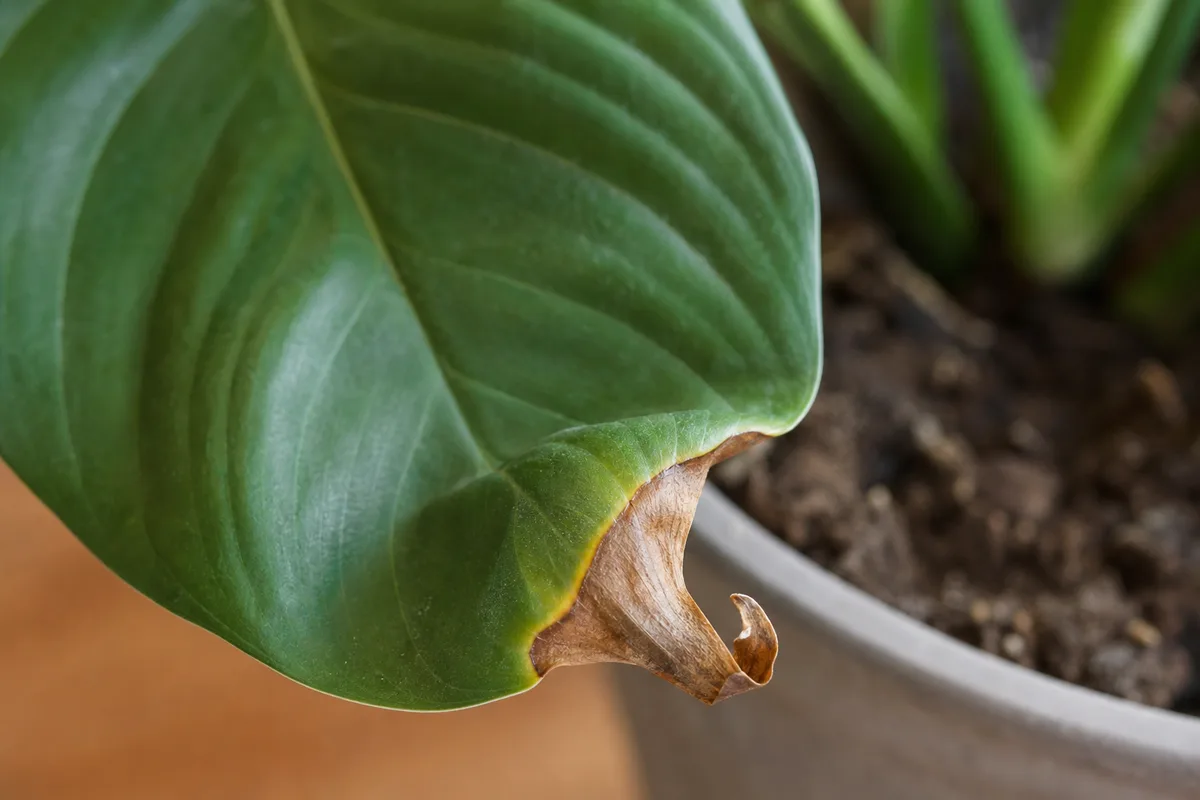
Underwatering symptoms on Peace Lily - compare with healthy tissue on the same plant.
Typical drought signals:
- Whole leaf blades and spathe stems hang straight down; the plant can look dead from across the room
- Mix is dry 3–5 cm down; pot feels noticeably light when lifted
- Dry peat may pull slightly away from the pot wall; surface color lightens
- Leaf edges and tips may brown or crisp on repeated drought cycles before full collapse
- Stems often rise within a few hours after one deep watering if roots are still healthy
Hydrophobic-mix drought (surface damp, roots dry):
- Top layer looks or feels slightly moist while the center of the root ball is dust-dry
- Water runs straight through drainage holes seconds after pouring
- Chronic limpness returns within a day or two of what felt like a “good” watering
What underwatering is not:
- Yellow lower leaves on constantly wet mix → overwatering
- Firm leaves with only brown tips, no whole-plant collapse → brown tips or low humidity
- Afternoon-only droop on otherwise moist soil → heat or draft stress (see wilting)
Peace lilies evolved as tropical forest-floor aroids with thin leaves that dehydrate faster than thick succulent foliage. A missed week in bright light can collapse the whole crown in a day-faster than many owners expect from a “low-light” reputation.
Why Peace Lily gets underwatered
Fear of overwatering after root rot. A past soggy spell teaches caution. Owners wait too long between drinks, and the peace lily’s dramatic droop becomes the only signal-by then fine roots may already be stressed. Soil should be kept moist but not soggy and allowed to dry out slightly between waterings-the gap between “slightly dry surface” and “bone-dry root ball” is narrow in small pots.
Small pots near heating vents and radiators. Warm air accelerates evaporation from thin leaves and peat mix. A peace lily on a desk above a radiator can dry in half the time it needs in a cool corner. Calendar watering that worked in October fails in January when the heat clicks on.
Hydrophobic peat-heavy mix after long drought. When peat dries completely, it repels water and holds less moisture than before it dried. Owners see water on the surface and assume the plant is watered while the core stays dry.
Calendar watering and travel gaps. Peace lilies in bright indirect light use more water than the same plant under fluorescents. A fixed weekly schedule ignores seasonal dry-down: NC State Extension recommends keeping soil moist but allowing it to dry between waterings-frequency follows the pot, not the day of the week.
Root-bound fast dry-down. Peace lilies tolerate being somewhat potbound, but a dense root ball in too little soil volume drinks the available moisture within a day. Water runs through without fully rewetting the center.
Case note: A 15 cm peace lily in a fluorescent-lit office was upright Thursday, collapsed flat by Friday afternoon after a long weekend was skipped. Probe at 4 cm: dust-dry. One deep soak in the sink until drainage ran free; saucer emptied after 20 minutes. Stems showed lift by late afternoon and stood fully upright by Monday morning. A new spathe bud appeared three weeks later once watering checks resumed twice weekly instead of on a fixed Monday schedule.
How to confirm underwatering (6-step checklist)
Work through these in order-do not water on droop alone:
- Finger or skewer at 3–5 cm - Dry at the second knuckle confirms drought at root depth. Water once the top few centimetres of compost have become dry. Moist or cool-wet at depth rules out simple thirst.
- Pot weight - Lift the container. A light pot with limp leaves fits underwatering. Heavy with limp leaves fits waterlogging-stop here and inspect roots.
- Stem firmness at the soil line - Press gently. Firm green stems on dry soil point to drought. Soft, darkening bases on wet soil point to rot.
- Surface and smell - Dry pull-away from pot sides and light-colored crusty surface support drought. Sour odor on wet mix supports saturation, not thirst.
- Droop response test - If steps 1–4 point to dry soil, water deeply once. If turgor returns within 2–6 hours on healthy roots, drought was the cause. No perk on wet soil after a soak → root failure.
- Hydrophobic check if water runs through fast - After a pour, probe the center. Still dry? Bottom-water 20–30 minutes or repeat soak after 30 minutes per Clemson double-watering guidance.
| Confirmed finding | Diagnosis |
|---|---|
| Dry 3–5 cm + light pot + firm stems + perk after soak | Underwatering |
| Dry core + water runs through + no perk after surface wet | Hydrophobic drought |
| Wet 3–5 cm + heavy pot + sour smell | Not underwatering-see overwatering |
| Dry soil + no perk 24 h after verified full soak | Root damage from past drought or rot-unpot and inspect |
First fix for Peace Lily
If the top 3–5 cm is dry and stems are firm: water thoroughly once until water runs from drainage holes.
Deep top-water protocol
- Move the nursery pot to a sink or tub-not a decorative cachepot that hides drainage.
- Use room-temperature water; filtered or settled water reduces tip burn on stressed leaves.
- Pour slowly until water exits all drainage holes. For very dry mix, wait 30 minutes and water again until the surface finally darkens and accepts moisture.
- Empty the saucer and any outer cachepot within 30 minutes. Never let the plant sit in saucer water-that shifts you from drought rescue into rot risk.
- Do not fertilize, mist heavily, or repot on day one. One correct drink solves simple thirst.
Bottom-water rescue for hydrophobic mix
When water races through and the center stays dry:
- Fill a sink tray with 2–3 cm of room-temperature water.
- Set the nursery pot in the tray for 20–30 minutes until the surface moistens.
- Lift, let drain fully, and confirm the center probe reads moist-not just the top crust.
- Resume top-watering on the next cycle once mix accepts water normally again.
Do not give repeated shallow sprinkles from a cup-they wet the surface while the root ball stays dry.
Recovery timeline
Hours 0–6: Noticeable stem lift often begins within 2–6 hours after a thorough soak on healthy roots. Severely flat plants may need until the next morning for full turgor.
Days 1–3: Limp green tissue firms up. Crispy brown tips and edges stay brown-they do not re-green.
Weeks 1–3: New leaves emerge clean from the center if watering rhythm stabilizes. Old drought-damaged leaves may yellow and drop while replacement growth tells you recovery is real.
When recovery stalls: If the plant perks briefly then collapses again within 24–48 hours on soil that dries fast, check for root-bound dry-down or hidden cachepot drought. If it stays limp on wet soil after a verified soak, roots failed-see root rot.
Let the soil dry between waterings, but do not allow to wilt as your routine signal-repeated collapse weakens thin peace lily leaves even when each episode looks reversible.
Lookalike symptoms to rule out
Overwatering / root rot - Same limp collapse on wet heavy soil with sour smell or soft stem bases. The paradox: plant looks desperately thirsty while mix is soggy. Do not soak-see overwatering.
Heat and draft stress - Afternoon droop on otherwise moist soil near radiators, vents, or hot south glass. Soil may read moist while leaves lose water faster than roots replace it. Move off heat load; see wilting for full heat branch.
Low humidity - Crisp leaf margins without whole-plant collapse. Rule out moisture at 3–5 cm first, then check low humidity.
Repot shock - Collapse within days after repotting on correctly moist fresh mix. Stems stay firm; roots have not re-established contact. Hold slightly dry top layer; avoid repeated deep soaks on fresh mix.
Simple thirst droop - Predictable perk after every soak with no chronic drought pattern. The narrower drooping leaves guide covers that lighter case.
Mistakes to avoid
Do not water every collapse without probing depth-wet-soil wilt needs drying and root inspection, not another drink.
Do not rely on droop alone as your only signal. Lack of water can cause alarming droop, but the same look on wet soil means root failure.
Do not leave the plant in full sun to “dry it out” after drought rescue. Thin leaves scorch quickly; use bright indirect light.
Do not use cold tap water on a stressed crown-room temperature reduces shock.
Do not let repeated wilt cycles become your watering schedule. Each crash stresses roots and browns leaf edges before the next soak.
Do not bottom-water indefinitely without ever top-watering-salt buildup needs occasional flush-through drainage.
Peace Lily care cross-check
Underwatering often exposes a mismatch between your routine and the plant’s current spot:
- Light - Bright indirect light dries mix faster than a dim office corner. Match check frequency to your light level, not a generic weekly rule.
- Pot size and root bind - Snug root balls drink available moisture in a day. Upsize only in spring if roots circle densely-see repotting.
- Cachepots - Decorative outer sleeves hide dry mix and trap drain water. Lift the inner pot to probe and empty standing water.
- Season - Reduce watering slightly in winter when growth slows, but do not let heating-season evaporation catch you off guard in small pots.
- Water quality - Fluoride in tap water can brown leaf tips on recovering plants; filtered water helps new growth.
How to prevent underwatering next time
Check soil at 3–5 cm depth-or lift pot weight-on a schedule tied to your room, not the calendar. Bright warm rooms may need checks twice weekly; dim cool corners may need only weekly.
Water when the top layer dries or leaves first droop, whichever comes first, then drain fully every time.
Learn your pot’s light weight at thirst so you notice dry-down before full collapse.
In winter, heating air dries small pots faster even when growth slows-do not stretch intervals blindly.
After vacation dryness, run the hydrophobic rescue once, then return to normal top-watering.
Align long-term rhythm with the peace lily watering guide for probe depth, seasonal shifts, and water quality.
When to worry
Treat as urgent when:
- Stems soften or darken at the base after drought rescue
- The plant does not perk within 24 hours after confirmed dry-soil deep soak
- Leaves collapse on wet soil-you may be treating overwatering as thirst
- More than half the leaf surface is crispy brown after repeated drought cycles
Less urgent but fix soon: single weekend collapse that perks after one soak; hydrophobic mix that responds to bottom-water; root-bound pot that dries within a day of watering.
Contact your local extension office if the plant stays limp after corrected watering and root inspection three weeks out-advanced root damage may need professional diagnosis.
When to use this page vs. the watering guide
| Question | Start here | Use watering guide |
|---|---|---|
| Plant collapsed; is soil dry? | Yes - confirmation + first soak | After rescue, for ongoing rhythm |
| How often should I water in winter? | No | Yes - seasonal framework |
| Dry vs. wet droop paradox | Brief table here | Full section + crash-and-recovery |
| Hydrophobic mix rescue | Yes - bottom-soak protocol | Mentions double-watering |
| Tap water / fluoride tips | Light cross-check | Full water-quality detail |
| Chronic wilt on wet soil | Rule out here, then link | Overwatering section |
Related peace lily guides
- Peace lily overview - species basics and care hub
- Watering - depth probe, seasonal schedule, water quality
- Wilting - full dry-vs-wet diagnostic umbrella
- Drooping leaves - simple thirst droop when drought is obvious
- Overwatering - wet-soil failure before rot advances
- Root rot - trim, repot, and salvage when soak does not help
- Brown tips - edge damage after drought stress
- Low humidity - margin crisping without full collapse
Conclusion
Underwatered peace lilies telegraph thirst louder than most houseplants-but the same collapsed look on wet soil means stop, not soak. Probe 3–5 cm depth, lift the pot, and confirm firm stems before you pour. One deep drink with full drainage fixes most drought collapse within hours; hydrophobic mix needs bottom-wicking or a double soak. Match checks to how fast your mix dries in your light, not to how dramatically the leaves hang at first glance.