Drooping Leaves on Peace Lily: Causes, Checks & Fixes
Quick answer
Drooping leaves on peace lily (*Spathiphyllum wallisii*) usually signal a water mismatch-dry soil thirst or roots failing in wet mix. First step: probe the top 3–5 cm of mix and lift the pot before you pour.
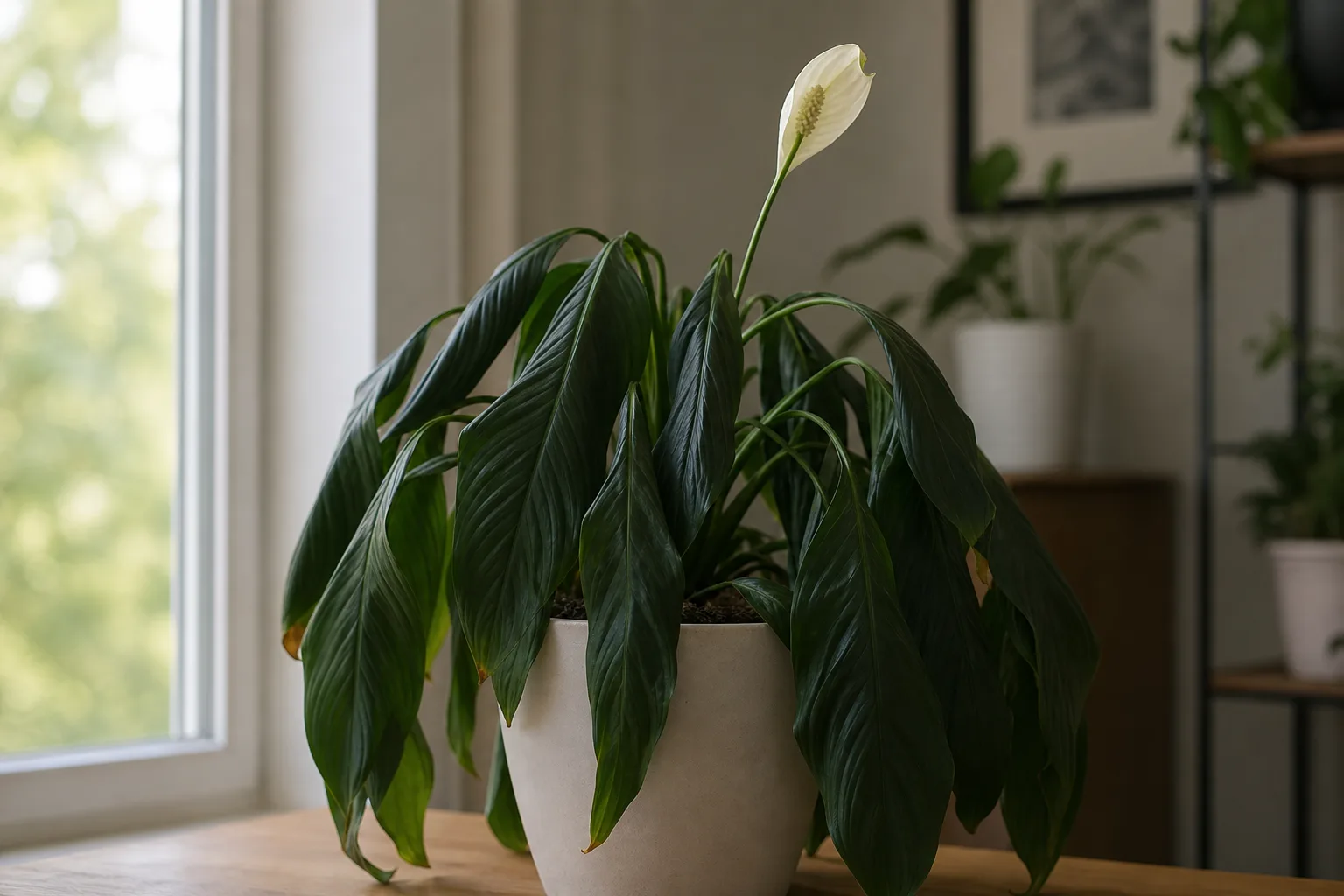
Drooping Leaves on Peace Lily: Causes, Checks & Fixes
This guide covers drooping leaves on Peace Lily. See also the general Drooping Leaves guide, watering, and light pages for this plant.
Drooping Leaves on Peace Lily: Causes, Checks & Fixes
Quick answer
Drooping leaves on peace lily (Spathiphyllum wallisii) mean leaf cells have lost turgor-the internal pressure that keeps foliage arching upright. On this aroid, that limp hang is often the plant’s first thirst telegram, but the same look on soggy mix means failing roots. First step: probe the top 3–5 cm of mix and lift the pot before you pour.
Peace lilies are unusual among houseplants: plants can droop dramatically when they need watering, but soon perk up after a good drink. Treat droop as a diagnostic cue, not automatic panic-and never water on droop alone without checking whether the root ball is actually dry.
| What you find at 3–5 cm | Pot weight | Likely cause | First action |
|---|---|---|---|
| Dry, pulling slightly from pot wall | Light | Underwatering / thirst droop | Deep soak until drainage runs; empty saucer |
| Wet or clinging moisture for days | Heavy | Overwatering / root stress | Stop watering; see overwatering |
| Dry top, wet bottom (skewer test) | Mixed | Hydrophobic mix or uneven watering | Bottom-soak 30–45 min, then drain fully |
| Moist, afternoon-only droop | Normal | Heat or draft stress | Move away from radiator, vent, or hot glass |
| Recently repotted, firm stems | Moderate | Repot shock | Hold water slightly; bright indirect light |
Use this page when leaves start hanging and you need the wet-vs-dry droop paradox resolved fast. For full collapse, smell checks, and root-trim workflows, see wilting. For ongoing watering rhythm after thirst is confirmed, see the watering guide.
Wet soil vs. dry soil - the peace lily droop paradox
The hardest part of peace lily care is that underwatering and overwatering can look identical from across the room. Entire leaves hang limp; spathe stems may fold; the plant appears desperate for water. The fix depends entirely on what the mix is doing at the roots.
Thirst droop arrives with soil allowed to dry out excessively-the plant will wilt, and the pot feels light when lifted. Water thoroughly and most plants show visible improvement the same day.
Rot droop arrives with mix that stays wet or heavy several days after watering, often with yellow lower leaves and a sour smell. Damaged roots cannot transport water upward, so leaves collapse despite moisture. Adding more water deepens the failure.
One office scenario illustrates the dry side: a 15 cm peace lily in a fluorescent-lit cubicle may go ten to twelve days between drinks in winter but only five to seven in summer. By Friday afternoon the whole crown can lie flat while the top 4 cm is dust-dry. A slow deep soak at the sink-with water running freely from drainage holes-and an emptied saucer often brings stems upright by Monday morning. The same limp silhouette on wet, heavy mix after a well-meaning coworker watered twice in one week means inspect roots, not pour again.
What drooping looks like on Peace Lily
Healthy peace lily leaves are glossy, lance-shaped, and arch outward from the crown with visible spring in the petioles. Drooping changes the silhouette before full wilt sets in.
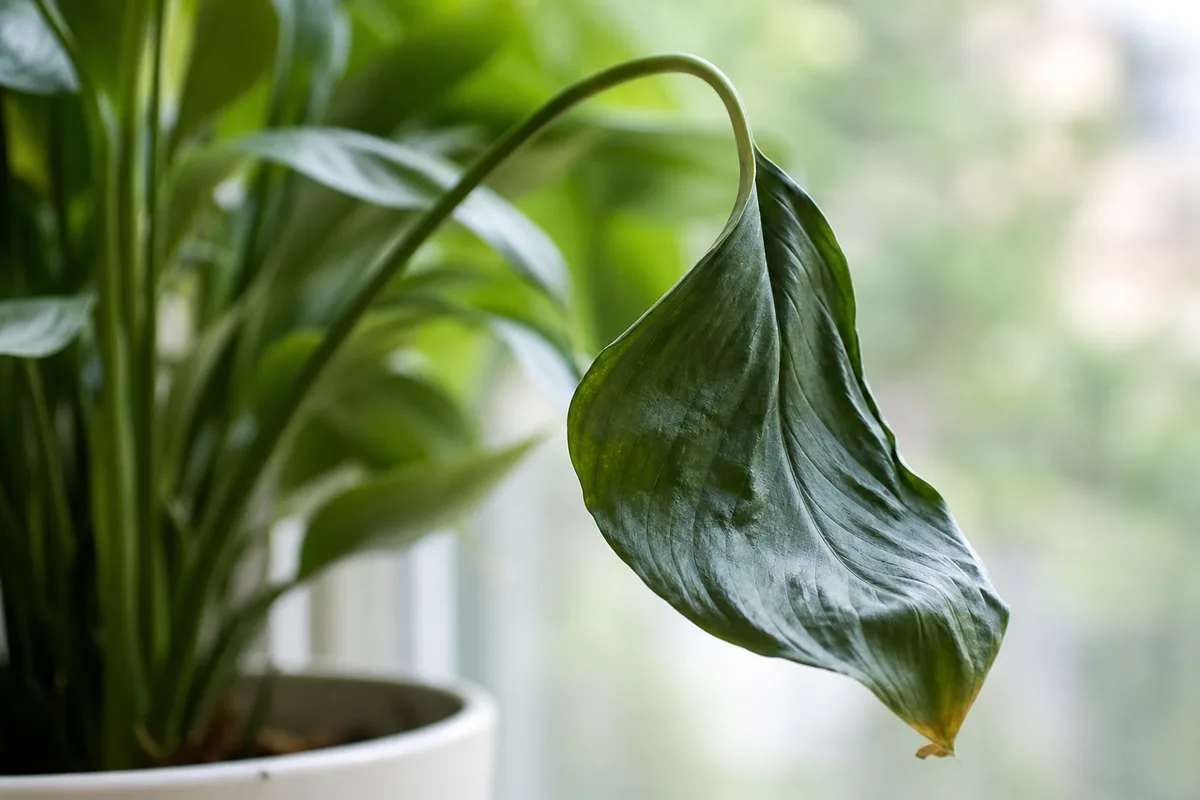
Drooping Leaves symptoms on Peace Lily - compare with healthy tissue on the same plant.
Early thirst droop:
- Leaf blades angle downward instead of arching; tips may point toward the floor
- Petioles lose stiffness but stems at the soil line stay firm
- Mix is dry 3–5 cm down; pot feels noticeably lighter than after a recent drink
- Whole-plant pattern-not just one old lower leaf fading
Rot-related droop:
- Limp leaves may yellow from the bottom up while soil stays damp
- Pot feels heavy; surface may look deceptively dry while the bottom stays saturated
- Softening or darkening at the stem base on advanced cases
- Sour or musty smell when you disturb the top inch
Environmental droop:
- Slight afternoon hang on otherwise moist soil in bright, warm rooms
- One-sided droop near a heating vent or cold draft while the rest of the crown looks fine
- Temporary limpness within days after repotting or a sudden move
Compare with yellow leaves: drooping can precede yellowing in both drought and rot, so color alone does not separate the causes. Soil depth, pot weight, and smell do.
Why Peace Lily leaves droop
Peace lilies evolved on tropical forest floors where soil stays damp but never waterlogged. Indoors they telegraph water stress more dramatically than most foliage plants-and let the soil dry between waterings, but do not allow to wilt is the long-term goal even though occasional thirst droop is common.
Underwatering is the most frequent cause. Fine roots dry out; cells lose turgor; thin leaves collapse faster than thick succulent foliage. Small pots in bright windows dry quickly. Root-bound plants in snug containers also dry faster-water may run through the channel without rewetting the center, leaving droop on mix that looks recently watered at the surface.
Overwatering and root failure produce the same visual droop through the opposite mechanism. Soil should be kept moist but not soggy and allowed to dry out slightly between waterings. Chronic saturation suffocates roots; root and stem diseases are usually associated with over-watering practices. Peace lily owners often misread droop as thirst and water again-accelerating rot while leaves stay limp.
Cold drafts and heat stress damage cells and increase water loss. Peace lilies prefer warm daytime temperatures between 68 and 85 °F and suffer when heat or air-conditioning vents blow directly on the plants. Cold, and drafty conditions in the between 55-40°F will slow growth considerably on Spathiphyllum.
Repot shock temporarily reduces root uptake. Fresh, wet mix right after repotting adds stress while roots re-establish-expect a few days of soft posture even when care is correct.
Low humidity rarely causes droop alone on a well-watered peace lily, but dry winter air can crisp margins while a separate moisture problem droops the whole leaf. Rule out soil first, then check low humidity if edges brown on otherwise correct watering.
How to confirm the cause
Work through these checks in order-each step narrows the diagnosis before you treat:
- Moisture at 3–5 cm (1–2 inches) - Insert a finger or wooden skewer. Bone-dry material that pulls from the pot wall favors thirst. Clinging wetness for days favors root stress. Keep the soil moist, but not soggy; allow it to dry between waterings.
- Pot weight - Lift the container right after watering once to learn the heavy baseline. A light pot with drooping leaves strongly favors drought. A heavy pot with limp foliage on wet soil favors root failure.
- Stem firmness at soil line - Press crowns gently. Firm green stems with dry soil point to thirst. Soft, darkening bases on wet mix warrant an unpot check.
- Perk test (dry cases only) - If soil is dry, water thoroughly until drainage runs free, then recheck in 4–6 hours. Thirst droop on healthy roots often improves the same day.
- Smell and yellowing pattern - Sour odor plus yellow lower leaves on damp soil points to root rot. Dry soil with green limp leaves points to underwatering.
- Recent events - Repot within two weeks, a move to harsh sun, or placement beside a heating register explains temporary droop without disease.
| Pattern | Likely cause | Next step |
|---|---|---|
| Dry 3–5 cm, light pot, firm stems | Thirst | Deep soak; empty saucer |
| Wet depth, heavy pot, sour smell | Root failure | Stop water; unpot and trim mushy roots |
| Dry surface, wet skewer tip | Hydrophobic or uneven watering | Bottom-soak, then reset rhythm |
| Moist soil, heat-of-day droop only | Heat stress | Relocate; check overnight recovery |
| Water runs straight through | Root-bound fast dry-down | Plan spring repotting |
First fix for Peace Lily
Probe the top 3–5 cm and lift the pot-do not water by habit.
- If dry: Water slowly at the sink until the full root ball saturates and excess runs from drainage holes. Empty the saucer or cachepot within thirty minutes. After watering, never let the plant sit in a saucer of excess water. Use filtered or rainwater on recovering leaves if your tap causes tip burn.
- If wet: Do not add water. Move to bright indirect light with good airflow to help the mix dry. Plan a root inspection if droop persists beyond 48 hours on damp soil.
- If repot shock: Keep soil lightly moist-not saturated-and avoid direct sun until posture returns.
This single moisture check prevents the most common mistake: watering an already-wet drooping peace lily, which deepens rot while leaves stay limp.
Step-by-step recovery
After the first fix, follow the path that matches your diagnosis:
For underwatered peace lily:
- Water until the entire root ball is moist-not just the surface splash.
- If peat repelled water and ran down the sides, bottom-soak the pot in a few inches of water for thirty to forty-five minutes, then drain fully.
- Wait 4–6 hours, then recheck. Stems should regain lift; leaves that stayed limp more than a week may not fully re-angle.
- Resume rhythm: water when the top 3–5 cm dries-see the watering guide for seasonal checks.
For overwatered or root-stressed peace lily:
- Stop watering until the top half of the mix dries-unless stems are soft and black at the base (then unpot immediately).
- Unpot, rinse roots, and trim brown mushy tissue until only firm roots remain.
- Repot into fresh, airy mix with drainage holes. Do not fertilize until new center growth appears.
- Withhold heavy watering for about a week, then water lightly when the top inch dries.
For environmental droop:
- Move away from heating vents, AC blasts, and cold window glass.
- Keep daytime temperatures in the 68–85 °F range peace lilies prefer.
- If you recently moved the plant to much brighter light, shift back slightly and acclimate over a week.
Recovery timeline
Mild thirst droop on healthy roots often improves within 2–6 hours after a thorough soak; most plants stand upright by the next morning. Severe dehydration in a root-bound pot may take a full day for the whole crown to lift.
Root-failure droop is slower. Expect several days to see firmness return after you stop watering a mildly stressed plant; repotted rot cases may need one to three weeks before new root tips and upright leaves confirm success.
Repot or relocation droop usually resolves within three to seven days if care stays stable and you avoid drowning the plant during adjustment.
Judge recovery by new growth and stem firmness-not whether every old leaf re-arches perfectly. Brown or yellow tissue does not re-green; recovery means the problem stops spreading and new leaves emerge clean.
Lookalike symptoms
Drooping vs. wilting: Drooping is the visible limp hang-often the first signal before full collapse. Wilting is severe same-day crash across the crown. The moisture check is identical; see wilting when the plant has fully flattened.
Leggy growth vs. droop: Long thin petioles with small leaves in a dim corner mean insufficient light, not turgor loss. Leggy plants may hang from reach but individual leaves stay firm. See leggy growth after you rule out moisture.
Brown tips vs. droop: Tip burn from fluoride or low humidity affects margins while the leaf blade still arches. Droop affects the whole leaf posture. Fluoride in tap water can damage foliage-switch water source for new growth, not for droop alone.
Not enough light stall: A peace lily in deep shade may droop between infrequent waterings because transpiration is low and roots still dry unevenly. Cross-check not enough light if soil dries very slowly but droop keeps returning.
Mistakes to avoid
- Watering on droop alone - The leading cause of worsening droop on peace lilies; always check depth and pot weight first.
- Leaving the pot in a full saucer or cachepot - Standing water keeps the bottom anaerobic and mimics overwatering even when the surface looks fine.
- Misting instead of watering roots - Surface moisture does not restore turgor in leaf tissue.
- Repotting on day one - Only unpot when wet droop persists, stems soften, or roots smell sour; dry droop rarely needs repotting.
- Fertilizing limp plants - Feed only after firmness returns and new growth appears; peace lilies need very little fertilizer.
- Repeated crash-and-recovery cycles - Letting the plant droop fully every week stresses roots even when it perks up after each soak.
Peace Lily care cross-check
Droop is often a symptom of a wider care mismatch. After you fix the immediate moisture issue, verify:
- Light: Bright, indirect light supports steady transpiration; deep shade slows dry-down and can mask overwatering.
- Pot and drainage: Peace lilies tolerate being somewhat potbound, but exhausted roots in a too-small volume cause fast, uneven dry-down.
- Water chemistry: Filtered or settled water reduces tip burn on recovering foliage.
- Season: Reduce watering frequency in winter when growth slows and soil stays wet longer.
How to prevent drooping leaves next time
Build habits that catch thirst before full collapse:
- Learn your pot’s weight after each thorough watering-that baseline tells you when the root ball is genuinely dry without waiting for dramatic droop.
- Check the top 3–5 cm on a schedule tied to room light, not a calendar. Bright rooms dry faster; office fluorescents slow the rhythm.
- Water when the surface dries slightly, not only when leaves hang-do not allow to wilt as a routine care strategy.
- Empty saucers and cachepots after every drink.
- Match pot size to the plant-oversized pots stay wet too long; root-bound pots dry unevenly.
When to worry
Escalate beyond basic correction if:
- Drooping continues more than 48 hours on wet, sour-smelling soil after you stopped watering
- Stems soften and darken at the soil line
- Leaves yellow rapidly across the plant while mix stays damp
- The plant perks up after watering, then droops again within one to two days-failed roots often mimic thirst on the first drink
In those cases, unpot and inspect roots. Contact your local extension office if droop persists after corrected watering and root trim.
When to use this page vs. the watering guide
| Your situation | Start here |
|---|---|
| Leaves hanging; unsure if soil is dry or wet | This drooping-leaves page - wet-vs-dry table and checklist |
| Plant fully collapsed; need smell, root trim, heat-shock branches | Wilting |
| Thirst confirmed; need long-term rhythm, tap-water tips, seasonal schedule | Watering guide |
| Wet soil, yellow lower leaves, mushy roots | Overwatering and root rot |
Related peace lily guides
- Peace lily overview - care hub and species context
- Watering - soil checks, crash-and-recovery, filtered water
- Underwatering - chronic drought patterns
- Overwatering - wet-soil mistakes
- Root rot - trim and repot workflow
- Wilting - full collapse diagnosis