Pale Leaves on Peace Lily: Causes, Checks & Fixes
Quick answer
Pale peace lily leaves usually mean too little light for the plant's growth rate, early nitrogen shortage, or root stress slowing chlorophyll production—not a mystery disease. First step: compare older leaves to newest center leaves and note whether the plant leans toward the brightest window.
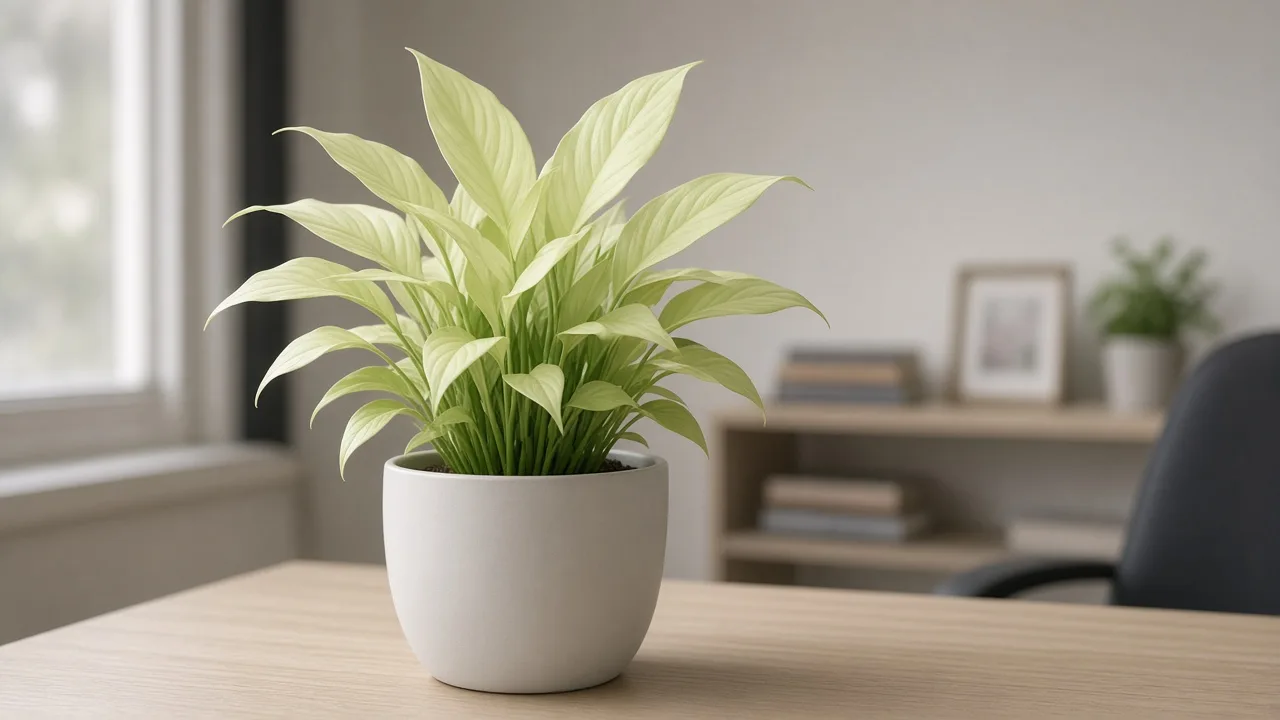
Pale Leaves on Peace Lily: Causes, Checks & Fixes
This guide covers pale leaves on Peace Lily. See also the general Pale Leaves guide, watering, and light pages for this plant.
Pale Leaves on Peace Lily: Causes, Checks & Fixes
Quick answer
Pale leaves on Spathiphyllum mean chlorophyll is under-produced—most often because the plant is not getting enough usable light for its current growth, roots are struggling on wet mix, or nutrients are low after long years in the same pot. Peace lilies in offices under only fluorescent light often stay alive but look washed-out and slow compared to the same plant in a bright filtered window.
First step: Compare oldest leaves to the newest center spear. All leaves evenly pale in a dim room → light. New leaves pale while old leaves stay dark green → recent stress or nutrient drift. Pale with wet heavy pot → root zone first.
For general pale-foliage mechanics, see our pale leaves guide. On peace lily, the contrast between deep forest-green mature blades and pale, smaller new growth in low light is one of the most reliable species-specific signals indoors.
Route to not enough light for stretch and bloom failure, yellow leaves for chlorosis advancing to yellow, and nitrogen deficiency when older leaves yellow first while veins stay green.
When to use this page vs other peace lily guides
| Pattern | Start here | Or route to… |
|---|---|---|
| Washed-out light green, firm | This page | Not enough light |
| Yellowing, especially lower leaves | Yellow leaves | Nitrogen deficiency |
| Pale new leaves, dark old leaves | This page | Light or recent repot stress |
| Pale with wet soil, wilt | Overwatering | Root rot |
| Leggy stems, long petioles | Leggy growth | Not enough light |
What pale leaves look like on Peace Lily
Healthy peace lily foliage is deep glossy green. Pale stress shows as:
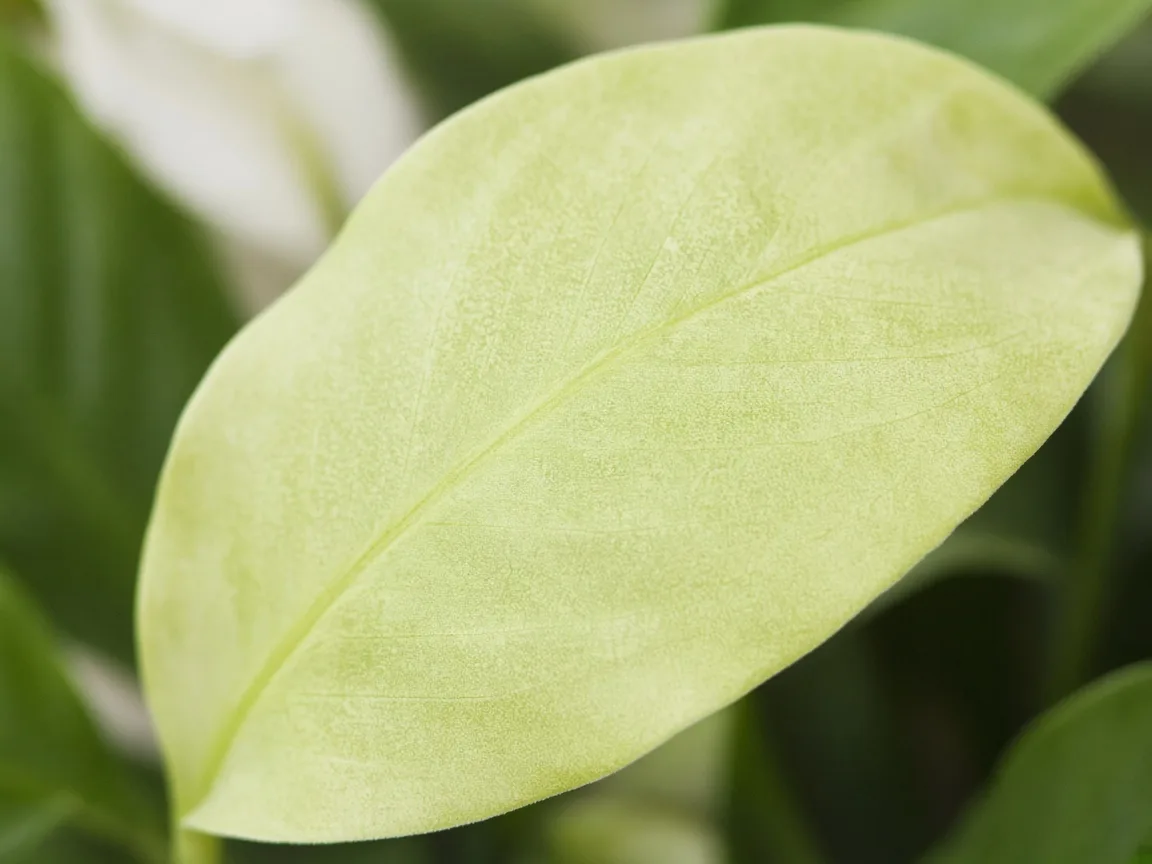
Washed-out light green on a peace lily blade—low chlorophyll from dim light or weak root uptake, not yet advanced yellow senescence.
Low-light washout — Entire plant lighter than expected; new leaves smaller and yellow-green; plant leans toward the brightest source. May still flower weakly or not at all. RHS notes peace lilies need bright indirect light for strong growth; Missouri Botanical Garden lists bright filtered light as preferred.
Nutrient pale — Older leaves lighten or yellow first while veins may stay greener—see nitrogen deficiency. Clemson notes magnesium deficiency can yellow tissue between veins on peace lily. Iron issues hit new growth—iron deficiency.
Root-stress dullness — Leaves lose gloss and look matte pale; may accompany wilt on wet soil. Clemson links overwatering to yellowing and browning leaves.
Post-repot fade — Temporary pale 1–2 weeks after root disturbance in dim spot—usually recovers if light is adequate.
Office fluorescent pale (peace lily only)
Peace lily is a common office plant because it tolerates lower light—but tolerance is not optimal color. Under ceiling fluorescents alone, blades often stay lighter green and smaller than window-grown siblings on the same watering schedule. The tell is uniform pallor without wet-soil wilt: every leaf is the same washed tone, growth is slow, and spathes are rare. Fixing placement to bright filtered light—not direct sun—usually deepens the next leaf generation within weeks.
Diagnosis traps on peace lily
Pale vs yellow — Pale blades stay firm and light green; yellow leaves are further along stress or senescence, often soft on wet soil. Pale uniform color in a dim corner is usually light, not nitrogen—move the plant before fertilizing.
New-only pale vs whole plant — Iron issues hit newest spears while old leaves stay dark. Uniform pallor on every leaf at once points to room light, not a single nutrient.
Gloss loss on wet mix — Matte dull blades with damp soil for days mean root stress mimicking pale-from-light. Dry down before adding fertilizer or brighter sun.
Why Peace Lily leaves turn pale
Insufficient light for growth rate is the top indoor cause. NC State places peace lily in partial to deep shade outdoors but notes indoor performance needs appropriate light—too dim indoors limits photosynthesis.
Nitrogen and magnesium drift in old, leached potting mix after years without feed or refresh.
Root damage from overwatering reduces nutrient and water uptake—leaves pale before turning yellow.
Cold slow-down in winter reduces chlorophyll production when light is already low—stacked stress.
Confirm the cause in five checks
- Light at midday: Can you read comfortably by the plant without a lamp? If not, likely dim for peace lily.
- Leaf age pattern: All leaves pale → light. Lower leaves yellowing → nitrogen. New leaves only → iron or recent stress.
- Moisture: Wet 7+ days at 3–5 cm → root stress before fertilizer.
- Pot history: Same mix 2+ years, never fed → nutrient possible after light is ruled out.
- Lean direction: Plant points to window → light hunger signal.
- Gloss test: Matte dull blades on wet mix → roots; glossy but light → light or nutrients.
First fix by confirmed cause
| Confirmed cause | First fix | After 3–4 weeks |
|---|---|---|
| Low light | Move to brightest filtered spot | See not enough light |
| Wet mix, dull foliage | Stop watering; improve light | Inspect roots if no improvement |
| Nitrogen pattern | Quarter-strength feed if roots healthy | Fertilizer guide |
| Iron on new leaves only | Confirm pH and feeding | Iron deficiency |
| Post-repot | Hold feed; stable light | Wait for next clean leaf |
One action first: improve light placement before fertilizing—most pale office peace lilies are light-limited.
Recovery timeline
| Phase | Timing | Improvement | Worsening |
|---|---|---|---|
| After light move | Weeks 2–4 | Darker new spears | Still pale + wet soil |
| After feed (if needed) | Weeks 4–6 | Older leaves may not fully green | Tip burn → too much feed |
| Root recovery | Weeks 4–8 | Gloss returns | Yellow spread → root rot |
Judge by next two center leaves, not old blades.
What not to do
- Do not fertilize pale plants on soggy mix.
- Do not move directly into hot sun—filtered light only.
- Do not assume pale means more water—check dryness first.
- Do not repot and fertilize the same week—stacking stress blurs diagnosis.
How to prevent pale leaves on Peace Lily
- Grow in bright indirect light—see light guide.
- Water when 3–5 cm dries so roots stay aerobic.
- Feed lightly spring–summer at quarter strength per Clemson peace lily guidance.
- Refresh potting mix every 1–2 years—repotting.
- Rotate pot quarterly so all sides get light—RHS tip on turning peace lily pots.
See peace lily overview and problems hub.
Related Peace Lily guides
- Not enough light — pale + stretch + weak blooms
- Leggy growth — long petioles in dim rooms
- Yellow leaves — chlorosis advancing past pale
- Nitrogen deficiency — older leaves first
- Iron deficiency — new growth pale
- Peace lily fertilizer — when feed is appropriate
Conclusion
Pale peace lily leaves are usually a light-or-roots question before they are a fertilizer problem. Washed-out uniform color in a dim room → brighter filtered placement. Dull matte leaves on wet mix → dry down and inspect roots. Nutrient pale comes after light and moisture are ruled out. Watch the next center spears for richer green—that is your recovery scorecard.
Related tool
Use the Plant Problem Diagnosis Tool to narrow causes for pale leaves on this plant before changing multiple variables at once.