Nitrogen Deficiency on Peace Lily: Causes, Checks & Fixes
Quick answer
Nitrogen deficiency on peace lily shows as pale or yellowing older lance leaves while new foliage from the crown stays small or slow on otherwise firm stems. First step: confirm yellowing starts on lower, older leaves—not new center tips—and check whether you have skipped fertilizer for several months.
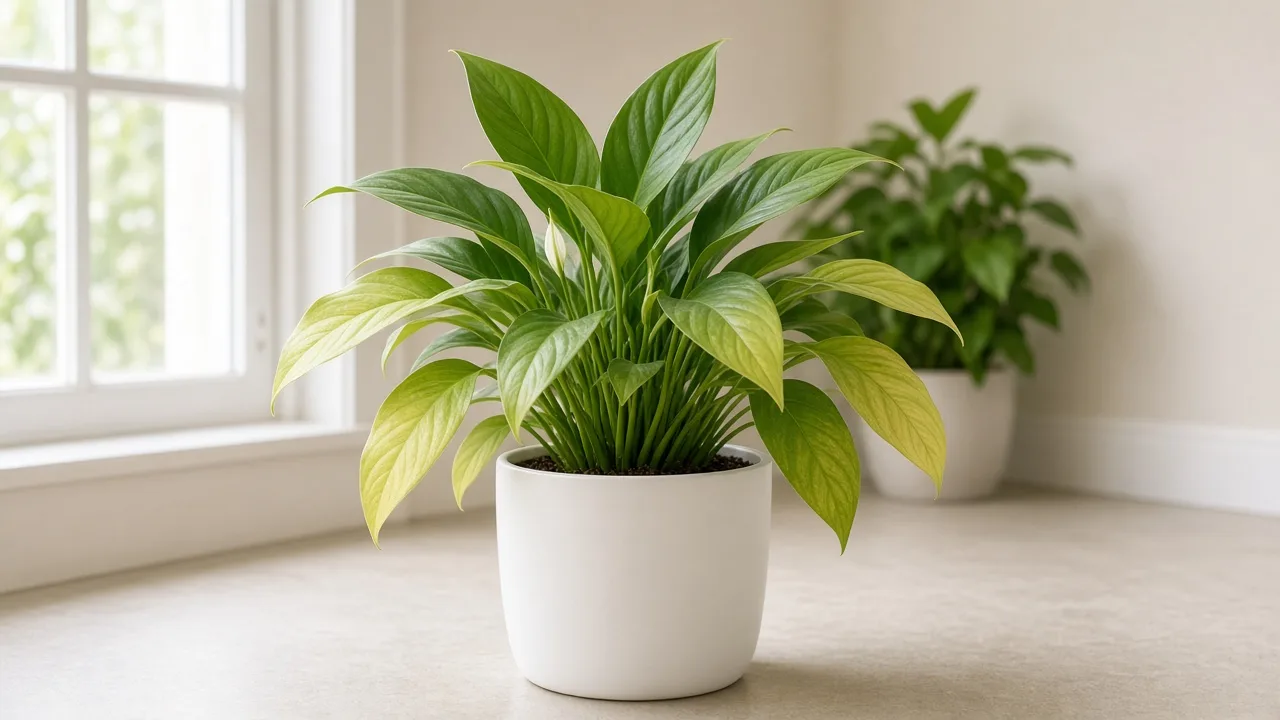
Nitrogen Deficiency on Peace Lily: Causes, Checks & Fixes
This guide covers nitrogen deficiency on Peace Lily. See also the general Nitrogen Deficiency guide, watering, and light pages for this plant.
Nitrogen Deficiency on Peace Lily: Causes, Checks & Fixes
Quick answer
Nitrogen deficiency on peace lily (Spathiphyllum wallisii) shows as pale green to yellow older lance leaves on the outer rosette while new foliage from the crown stays small or slow. Nitrogen is mobile in plants—when supplies run low, Spathiphyllum moves nitrogen from old glossy blades to new shoots and spathes.
See our nitrogen deficiency guide for general nutrient mechanics. On peace lily, watch the oldest outer lance leaves lowest on the rosette first—they pale before the center tip leaf if nitrogen is the issue.
First step: confirm older outer leaves pale first, not new center growth or all leaves at once, and review feeding history.
When to use this page vs other Peace Lily guides
| Pattern | Read next |
|---|---|
| Oldest outer lance leaves pale first, new crown small | Nitrogen deficiency (this page) |
| New center leaves yellow, green veins | Iron deficiency |
| All leaves yellow on wet soil, soft crown | Overwatering |
| Dramatic limp on dry soil, perks after water | Drooping leaves |
| Washed-out entire plant in dim room | Pale leaves |
| General yellowing, mixed causes | Yellow leaves |
What nitrogen deficiency looks like on peace lily
Peace lily carries deep glossy lance leaves on upright petioles from a tight basal rosette. Nitrogen stress shows on mature outer blades that have been green for months—not on the newest center spear first.
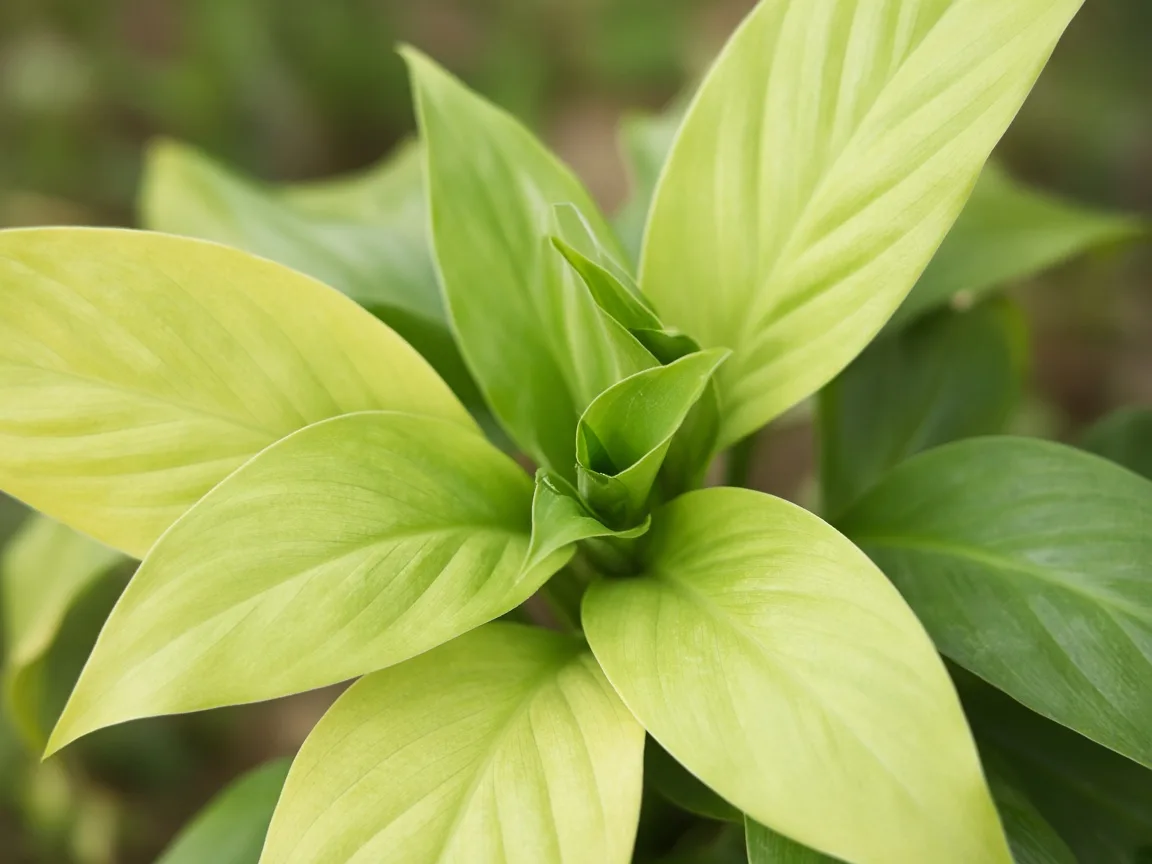
Pale older lance leaves on the outer peace lily rosette—compare with smaller but still green new growth at the crown center.
Typical signs:
- Uniform pale green or yellow on oldest outer lance leaves lowest on the rosette
- Smaller new lance leaves emerging from the crown center
- Slow or weak spathe development when nitrogen is very low
- Light green cast spreading inward across the rosette in moderate cases
- Firm petioles and stems unlike mushy overwatered peace lily
Not nitrogen deficiency:
- Yellow new leaves with green veins — iron deficiency
- Brown crispy tips only — brown tips or fluoride from tap water
- Dramatic droop on dry soil that recovers within hours of watering — drooping leaves thirst signal
- One lower leaf yellowing while center stays vigorous — often normal aging; see yellow leaves
Droop before yellow on glossy lance leaves
Peace lily is famous for wilting dramatically when thirsty—long before nitrogen pale shows on older tissue. That droop-then-recover cycle is one of the most peace-lily-specific diagnostic traps indoors.
When soil dries, glossy lance leaves lose turgor and fold along the midrib within hours. A thorough drink usually perks the plant back the same day. Nitrogen pale does not work that way. Outer leaves stay limp-looking or washed-out even after watering, and the pattern creeps up the rosette over weeks.
Do not confuse thirst droop with nitrogen deficiency:
- Thirst: Whole plant limp, pot light, top 3–5 cm dry, recovery within hours of watering
- Low nitrogen: Outer leaves pale or yellow while stems stay firm, mix dries normally, droop does not fully explain the color loss
If you have been responding only to droop without feeding for a year or more in bright office light, depleted nitrogen is a likely second layer once watering rhythm is correct.
Why peace lily gets nitrogen deficiency
Peace lily is a moderate grower that pushes new lance leaves and white spathes when given bright filtered light. Months without fertilizer, exhausted peat-based mix, or a root-bound plant in the same pot for years show up as pale lower foliage—even though the plant still looks alive and may still droop on schedule.
Peace-lily-specific causes:
- Skipped feeds during growth season — Owners under-feed fearing burn on moisture-loving plants. Peace lilies need very little fertilizer indoors, but zero feeding for many months still depletes nitrogen in a small pot.
- Depleted moisture-retaining mix — Peace lily mix holds water but loses nutrients over time; roots circle a pot that no longer supplies nitrogen.
- Leaching from frequent watering — Regular thorough watering without replacement feeding washes nitrogen from peat-based mix, especially under bright light where the plant grows steadily.
- Bright office fluorescent light — Growth continues year-round under constant light, burning through pot nitrogen faster than a dim-corner plant that barely pushes new leaves.
- Confusion with overwatering — Both can yellow leaves; overwatering adds soft stems, sour soil, and a heavy pot that stays wet. See overwatering or root rot before feeding a waterlogged plant.
Do not diagnose nitrogen deficiency on wet sour soil with soft crowns—that is root failure, not hunger.
Outer rosette vs crown center: nitrogen on Spathiphyllum
Peace lily is a basal rosette aroid—new lance leaves and spathes emerge from the crown center while older blades ring the outside on lengthening petioles. Nitrogen deficiency symptoms show on lower leaves first because mobile nitrogen is recycled upward into new shoots.
That pattern is the mirror image of iron deficiency, which hits the newest center leaf with green veins while outer mature blades may stay deep green. Magnesium issues often show interveinal yellowing on lower leaves too—see magnesium deficiency when veins stay green on old tissue.
Spathe stall is a peace-lily-only clue: a nitrogen-starved plant may hold glossy green outer leaves longer than expected while new lance spears stay undersized and flower stems fail to form white sails—even in adequate light. Once feeding resumes, watch for the next crown flush: larger lance blades and a spathe on the same stem are stronger recovery signals than old outer leaves re-greening.
Lookalike symptoms
| Pattern | Check | Likely cause |
|---|---|---|
| Old outer leaves pale, new small | Feeding history, firm roots | Nitrogen deficiency (this page) |
| New leaves yellow, green veins | Tap water, wet mix | Iron deficiency |
| All yellow, wet soil, soft crown | Sour smell, heavy pot | Overwatering |
| Whole plant limp, dry soil | Perks after water | Drooping leaves |
| Entire plant washed out, dim room | Leans to window | Pale leaves or not enough light |
| Brown tips only | White soil crust | Over-feeding, not deficiency—see fertilizer guide |
How to confirm
- Leaf age pattern — Pale or yellow tissue on oldest outer lance leaves first, moving inward over weeks.
- Feeding history — No balanced fertilizer for six or more months during active growth, or only plain water for a year.
- Root check — White and firm when you slide the plant partly out of the pot; brown mush means fix roots before feeding.
- Soil age — Same peat mix for three or more years in a root-bound pot.
- Watering cross-check — Mix at 3–5 cm depth dries between drinks; chronic wetness points to overwatering, not nitrogen.
- Light cross-check — Bright filtered or office fluorescent supports steady growth that depletes nitrogen; dim corners may show pale leaves on the whole plant instead.
First fix for peace lily
One dilute balanced liquid fertilizer at half label strength after confirming healthy roots and normal soil moisture.
Apply to moist—not dry—mix per the peace lily fertilizer guide. NC State recommends fertilizing at one-quarter of label strength and flushing soil between applications; half strength once is a safe first correction when deficiency is confirmed. One measured feed—not repotting plus triple fertilizer the same week.
If white crust rings the pot or tips are already brown, flush with plain water first and wait two weeks before resuming feed at quarter strength.
Mistakes to avoid
- Do not heavy-feed a droopy, waterlogged, or recently repotted peace lily—fix moisture and roots first.
- Do not mistake thirst droop for nitrogen hunger; confirm pale color on outer leaves persists after a normal watering cycle.
- Do not expect old yellow lance leaves to re-green—judge recovery on the next crown flush.
- Do not stack repotting, pruning, and fertilizer on the same week; change one variable at a time.
- Do not use high-nitrogen feed repeatedly—over-fertilizing burns peace lily tips and roots.
Step-by-step recovery
- Apply one half-strength balanced liquid feed to moist soil; resume monthly half-strength feeds through active growth per fertilizer guide.
- Flush the pot with plain water if salt crust shows on the soil rim.
- Repot into fresh mix in spring if roots fill the pot and pale leaves persist after two measured feeds.
- Trim fully yellow outer leaves that pull away easily with a gentle tug.
- Monitor new crown lance leaves for size, gloss, and spathe formation.
Recovery timeline
Correct feeding shows deeper green, larger new crown lance leaves within two to four weeks when roots are healthy. Old pale outer blades rarely return to full forest green—they senesce and can be removed once fully yellow.
Spathe production may lag one flush behind foliage recovery. If new leaves stay small after two feeds with firm roots, reassess light per the light guide before increasing fertilizer strength.
Prevention
- Feed lightly with balanced houseplant fertilizer during spring and summer—see fertilizer guide.
- Flush soil between fertilizer applications to prevent salt buildup that blocks uptake.
- Refresh depleted mix at repotting every two to three years for actively growing specimens.
- Match feeding to growth rate: bright office light needs more consistent light feeding than a dim corner plant.
- Do not confuse occasional single lower-leaf yellow in low light with nitrogen deficiency across most of the rosette.
Related Peace Lily guides
- Peace lily overview
- Peace lily fertilizer
- Peace lily watering
- Peace lily light
- Iron deficiency
- Peace lily problems hub
Conclusion
Pale older lance leaves on a firm-stemmed peace lily usually mean depleted nitrogen in an otherwise healthy root zone—not thirst, not iron, and not automatic root rot. Confirm the outer-rosette pattern, give one measured feed, and judge recovery on the next crown flush.