Wilting on Philodendron Birkin: Causes, Checks & Fixes
Quick answer
Wilting on Philodendron Birkin means the pinstriped leaves lost turgor-either the mix is too dry or roots cannot move water despite wet soil. First step: lift the pot and check soil moisture 3–5 cm down before you add any water.
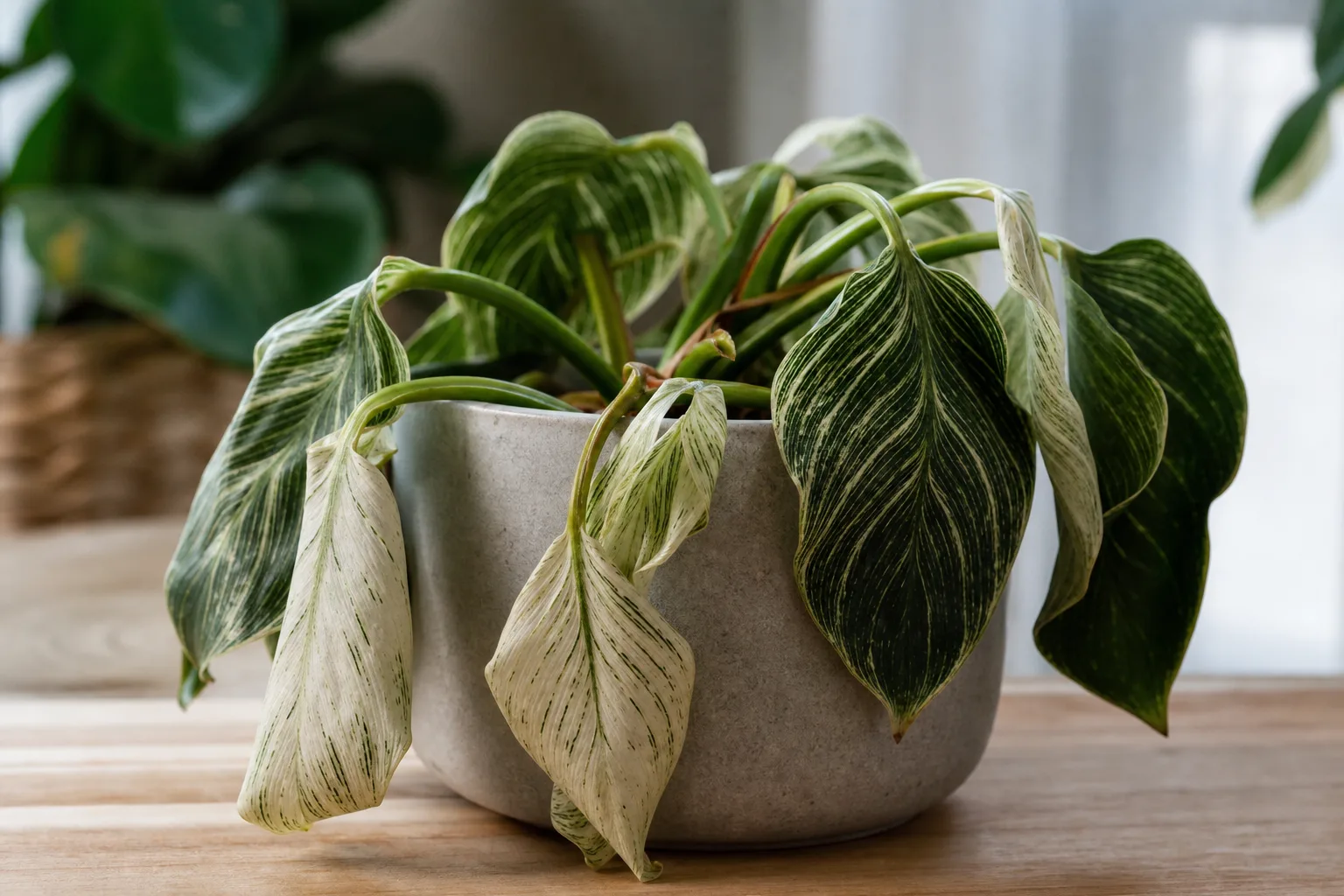
Wilting on Philodendron Birkin: Causes, Checks & Fixes
This guide covers wilting on Philodendron Birkin. See also the general Wilting guide, watering, and light pages for this plant.
Wilting on Philodendron Birkin: Causes, Checks & Fixes
Quick answer
Wilting on Philodendron Birkin is a loss of turgor-the thick upright stems and glossy pinstriped leaves go limp because water is not reaching leaf cells. The trap is that the same collapsed look comes from opposite problems. Bone-dry mix causes wilt from dehydration; saturated mix causes wilt when damaged roots cannot take up water even though the soil feels wet.
First step: lift the pot and check soil moisture 3–5 cm down before you water. A light, dry pot with firm stems needs a drink. A heavy, wet pot with limp foliage needs water withheld and roots inspected-not another soak.
What wilting looks like on Philodendron Birkin
Birkin wilts through its compact rosette of variegated leaves. Because growth is erect and self-heading-not trailing-the whole crown can look suddenly collapsed rather than just a few hanging stems.
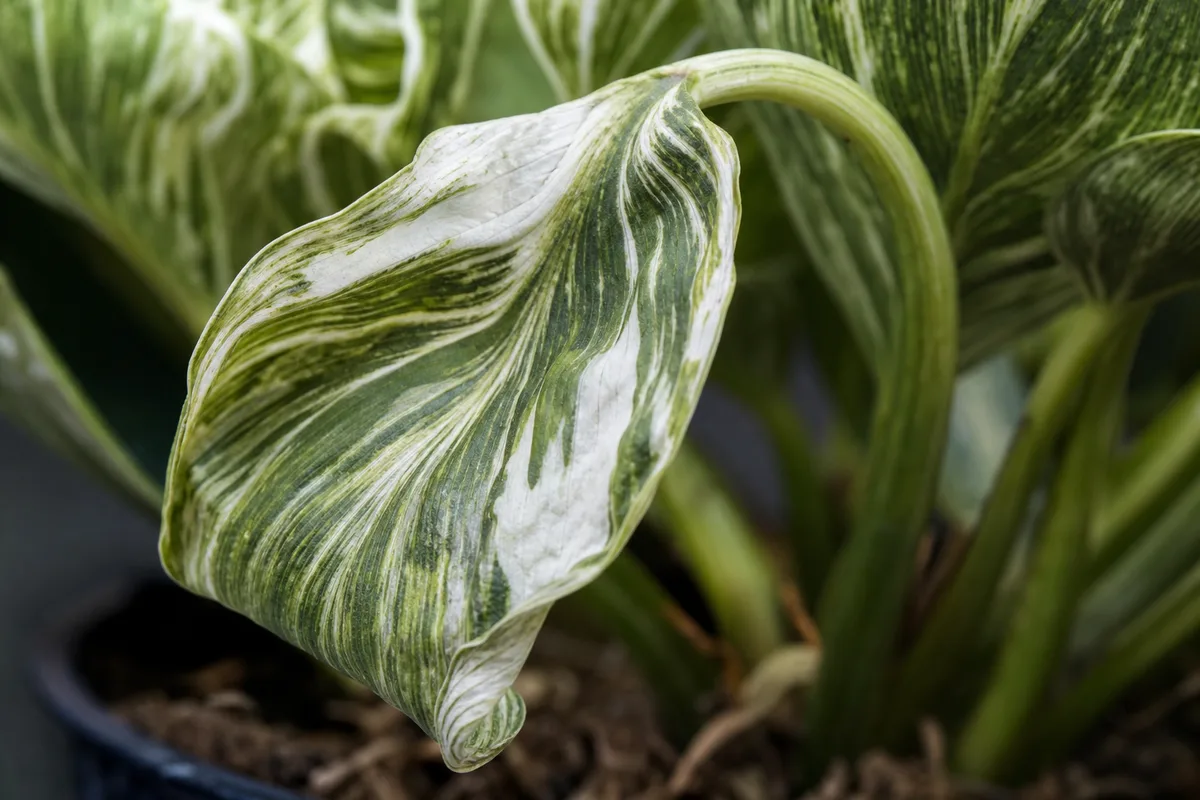
Wilting symptoms on Philodendron Birkin - compare with healthy tissue on the same plant.
Dry wilt signs:
- Pinstriped leaves hang limp but stems stay firm and green
- Mix is dry 3–5 cm down; pot feels noticeably light
- Leaf edges may curl inward or feel papery before full collapse
- Wilting often follows a missed watering during warm, bright weather
- Recovery is fast after a thorough soak if roots are healthy
Wet wilt signs:
- Leaves limp and sometimes yellow despite damp or soggy mix
- Pot stays heavy for days after the last watering
- Lower pinstriped leaves yellow first, then upper foliage collapses
- Sour or swampy smell from the mix
- Stem base softening at soil line-a late but serious rot clue
- Fungus gnats or white mold on the soil surface under the leaf crown
Birkin’s white or cream pinstripes may look dull on stressed leaves. New growth with weak or faded striping often appears alongside chronic wilt when light is too low and soil stays wet too long.
Fully yellow leaves will not re-green. Judge recovery by stem firmness, predictable dry-down between waterings, and new leaves with crisp pinstripes-not by old collapsed foliage standing back up.
Why Philodendron Birkin gets wilting
Birkin is a slow-growing, self-heading aroid that wants moist, well-drained soil and bright filtered light. Wilting happens when the water pathway breaks-either roots are too dry to absorb, or too damaged to function.
underwatering on Philodendron Birkin is the straightforward cause. When mix dries through the root zone, decreased turgor pressure makes the plant wilt. Birkin tolerates brief dry spells better than constant wet feet, but repeated drought shrinks fine roots and makes the next wilt episode harder to reverse.
overwatering on Philodendron Birkin and root rot on Philodendron Birkin produce the deceptive wilt. Overwatering decreases oxygen available for root growth and favors rot fungi. Decayed roots cannot transport water, so pinstriped leaves collapse while mix stays wet. NC State notes overwatering can cause root rot and yellowing leaves on philodendrons-Birkin’s compact crown sitting above chronically damp peat is a common indoor setup for this failure.
Birkin-specific factors that raise wilt risk:
- Compact crown, slow dry-down. Leaves cluster above the pot with little airflow through the rosette. The top layer and root zone stay wet longer than on a trailing philodendron.
- Slow growth, lower winter demand. Birkin drinks less in dim or cool months, but many owners keep the same weekly schedule-soil stays saturated and roots suffocate.
- Dense store-bought mix. Birkin is often sold in heavy peat without enough perlite or bark. That mix holds water like a sponge around thick upright stems that expect drainage.
- Low light reducing uptake. Insufficient light slows transpiration. The plant uses less water, soil dries slower, and the same volume becomes chronic overwatering with wilt as a late symptom.
- Heat or draft stress. Sudden heat near a window can spike water loss faster than roots supply. Cold drafts below Birkin’s comfortable range also stress tissue and can cause limp leaves with otherwise normal moisture.
How to confirm the cause
Work through these checks in order-do not water until you finish step one and two:
- Soil moisture at depth - Stick your finger 3–5 cm into the mix. Dry and warm suggests thirst. Cold-damp or soggy suggests root stress or rot.
- Pot weight - Lift the pot. Light and dry confirms underwatering. Heavy days after watering confirms slow dry-down and possible overwatering.
- Stem firmness - Press the base above soil line. Firm green stems point to reversible water stress. Soft, mushy tissue means inspect roots immediately.
- Leaf pattern - Uniform limp crown on dry mix is thirst. Yellow lower leaves plus limp upper pinstripes on wet mix fits root failure.
- Smell and drainage - Sour odor, blocked drainage holes, or a cache pot holding runoff water support wet-wilt diagnosis.
- Recent changes - New pot, moved window, heat wave, or skipped winter watering each narrow the cause without guessing.
- Root spot-check - If soil is wet and stems are softening, slide the plant out. Healthy aroid roots are firm and pale; rotted roots are brown, mushy, and may smell bad.
The combination of wet mix + limp leaves + yellowing confirms you should not add water. The combination of dry mix + light pot + firm stems confirms a soak is the right first response.
First fix to try
Lift the pot, check moisture 3–5 cm down, and only then decide whether to water.
This single diagnostic pause prevents the most common Birkin mistake: watering a plant that is already too wet because wilt looks like thirst. If the mix is dry and stems are firm, water thoroughly until excess drains from the bottom, then empty the saucer within 30 minutes. If the mix is wet, stop all watering, move Birkin to brighter filtered light-not direct afternoon sun-and plan a root inspection within 24 hours if limp leaves persist.
Do not mist, fertilize, or repot on day one unless the stem base is already soft or the mix smells sour.
Step-by-step recovery
Dry wilt path: confirmed dry mix, firm stems
- Water thoroughly until water runs from drainage holes.
- If peat repelled water and ran down the pot sides, bottom-soak for 20–30 minutes, then drain completely.
- Place in bright filtered light so the plant uses water steadily.
- Recheck moisture at 3–5 cm depth before the next watering-do not resume a calendar schedule automatically.
- Remove leaves that stay fully collapsed and papery after 48 hours; they will not recover.
Mild dry wilt often shows improvement within hours. Stems should feel firm and at least some pinstriped leaves should lift by the next morning.
Wet wilt path: damp mix, limp leaves, or sour smell
- Stop watering immediately.
- Move to Philodendron Birkin light guide and ensure drainage holes are open. Empty any cache pot water.
- If wilt persists 24–48 hours with wet soil, unpot and inspect roots.
- Trim all brown, mushy roots with clean scissors. Rinse away old saturated soil.
- Repot into fresh mix: standard potting soil plus 20–25% perlite and 10% orchid bark, in a pot sized to the trimmed root ball with drainage holes.
- Water lightly once to settle mix, then let the top 3–5 cm dry before the next drink.
- Hold fertilizer until new growth with crisp pinstripes appears.
Wear gloves when cutting-Birkin sap can irritate skin, and philodendron tissue contains calcium oxalate crystals toxic to pets if chewed.
Heat-stress wilt: firm stems, even moisture, afternoon collapse
- Filter harsh direct sun-too much sun will scorch Birkin pinstripes.
- Ensure soil is evenly moist but not soggy; heat increases transpiration demand.
- Move away from heating vents or hot glass until foliage firms up.
- If wilt clears by evening and returns only in midday heat, adjust placement rather than increasing watering volume.
Recovery timeline
Dry wilt: Mild dehydration often corrects within hours to one day after proper watering. Leaves that were only slightly limp typically stand back up quickly. Heavily drought-stressed plants may need one to two weeks to push a new pinstriped leaf.
Wet wilt: Root recovery is slower. Expect four to eight weeks before new growth looks normal on Birkin’s slow schedule. One firm new leaf with defined stripes is a solid recovery sign. If the stem base keeps softening or soil never dries between waterings despite corrected care, rot may still be advancing.
Heat wilt: Temporary afternoon droop that resolves overnight may need no root work-only better light placement and stable moisture.
Lookalike symptoms
Drooping without full turgor loss - Slight leaf hang on an otherwise healthy plant in low light may be weak growth habit, not acute wilt. Check soil and stem firmness before treating as emergency.
Overwatering as the underlying issue - Chronic wet soil eventually produces wilt. If yellowing and fungus gnats appeared before collapse, the root zone has been stressed for weeks.
Underwatering with crispy edges - Very dry mix plus brown, crunchy leaf margins is drought, not rot. Soak once; do not trim living tissue until the plant rehydrates.
Transplant shock - Recent Philodendron Birkin repotting guide can cause temporary wilt while roots re-establish. Keep lightly moist in stable bright light; avoid fertilizer for three to four weeks.
Pest-related wilt - Heavy spider mite or mealybug feeding damages leaves and weakens the plant. Look for stippling, webbing, or cottony clusters on stems-not just limp pinstripes.
Natural senescence - One old bottom leaf yellowing while the crown stays firm and soil dries normally is not wilt crisis.
Mistakes to avoid
- Watering wilted leaves without checking soil - Wilting is not always a need for water; wet-soil wilt gets worse with more water
- Assuming one thorough soak fixes wet wilt - Saturated roots need dry-down and often trimming, not drowning
- Moving to direct sun to dry soil faster-scorches Birkin variegation
- Repotting into a much larger pot after wilt-excess wet mix stalls recovery
- Fertilizing stressed plants hoping to push new leaves
- Misting instead of fixing root moisture-wet foliage can spot and does not repair rotted roots
- Ignoring a soft stem base while focusing only on leaf droop
Birkin care cross-check
Wilt recovery holds only when the wider setup matches Birkin’s needs:
- Light: Bright filtered or indirect light most of the day. Too dark slows drying and fades pinstripes; too much direct sun burns leaves.
- Water: Every 7–10 days in active growth when top 3–5 cm is dry; every 10–14 days in winter.
- Soil: Well-draining aroid mix with perlite and bark-not straight heavy peat.
- Humidity: 50 to 60% humidity supports leaf quality but does not replace drainage.
- Temperature: Stable 18–26°C (65–79°F). Avoid cold drafts-Birkin is not frost-tolerant.
How to prevent wilting next time
Water on dry-down, not on calendar autopilot. Use the finger test at 3–5 cm depth or compare pot weight after you learn how it feels properly hydrated versus ready for water.
Use pots with drainage holes and empty saucers within 30 minutes. If Birkin sits in a decorative cover pot, lift the inner pot to water and drain before returning it.
Match watering to season and light. A Birkin in a bright east window in summer dries faster than the same plant in a dim winter room-adjust frequency, not volume, unless the root ball has shrunk after a trim.
Refresh dense store mix with perlite and bark before problems start, not only during emergency repots.
Scout weekly: firm stems, predictable dry-down, and crisp new pinstripes mean the water pathway is healthy.
When to worry
Treat wilting as urgent when:
- Mix is wet and stems are softening at the base
- Leaves collapse rapidly across the whole crown while soil is saturated
- Soil smells sour or roots are brown and mushy on inspection
- Yellowing spreads to multiple pinstriped leaves within a week
- No improvement 48–72 hours after correct dry-wilt watering, or after dry-down for wet wilt
The plant may not be saveable if the entire root system is mushy, the stem base has collapsed, and no firm tissue remains. Take a healthy stem cutting with a node before discarding if any firm section still exists.
Conclusion
Wilting Birkin leaves demand diagnosis before action. The pinstriped rosette collapses when roots cannot supply water-whether from dry mix or from roots dying in wet, oxygen-poor soil. Lift the pot, read moisture at depth, and feel the stem base before you water. Dry and firm gets a soak; wet and limp gets a pause and likely root work. Predictable dry-down, firm upright stems, and one new crisp pinstriped leaf are the signs your Birkin’s water pathway is healthy again.
When to use this page vs other Philodendron Birkin guides
- Philodendron Birkin watering guide - Use for routine moisture checks before assuming wilting is the main issue.
- Philodendron Birkin problems hub - Browse all 42 common issues on this species.
- Underwatering on Philodendron Birkin - Different entry point when symptoms overlap with wilting.
- Overwatering on Philodendron Birkin - Different entry point when symptoms overlap with wilting.
- Root Rot on Philodendron Birkin - Different entry point when symptoms overlap with wilting.