Drooping Leaves on Philodendron Brasil: Causes, Checks &
Quick answer
Drooping on Philodendron Brasil usually means roots cannot supply water-either the mix is too dry or too wet and roots are failing. Lift the pot and check soil moisture 3–5 cm deep before you change anything.
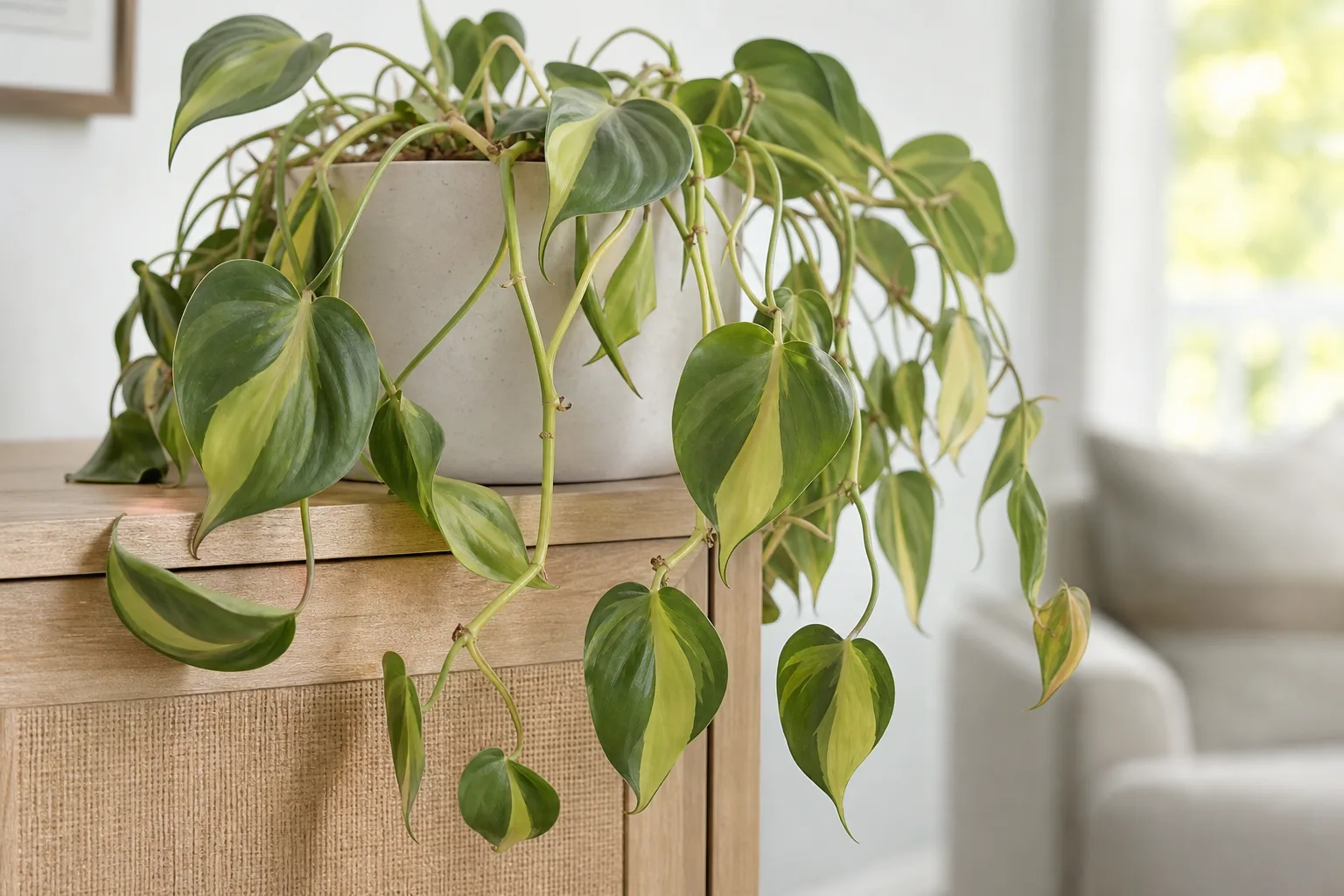
Drooping Leaves on Philodendron Brasil: Causes, Checks & Fixes
This guide covers drooping leaves on Philodendron Brasil. See also the general Drooping Leaves guide, watering, and light pages for this plant.
Drooping Leaves on Philodendron Brasil: Causes, Checks & Fixes
Quick answer
Drooping on Philodendron Brasil (Philodendron hederaceum ‘Brasil’) looks dramatic on long trailing vines, but it is usually a water-balance signal-not a mystery disease. Heart-shaped leaves lose rigidity when cells lose turgor pressure, which happens when roots cannot move enough water upward.
First step: lift the pot and check soil moisture 3–5 cm deep before you water. A light, dry pot with firm green stems means thirst. A heavy, wet pot with softening stems means damaged roots-even though the soil is wet. Treating both the same way is the fastest way to make drooping worse.
What drooping looks like on Philodendron Brasil
On this vining heartleaf cultivar, droop shows up as limp heart-shaped leaves hanging from thin petioles, often starting at the tips of the longest trailing stems. The lime-and-green variegation may look dull, but the leaves can stay green in early stages-unlike yellowing from chronic overwatering on Philodendron Brasil, which usually hits lower leaves first.
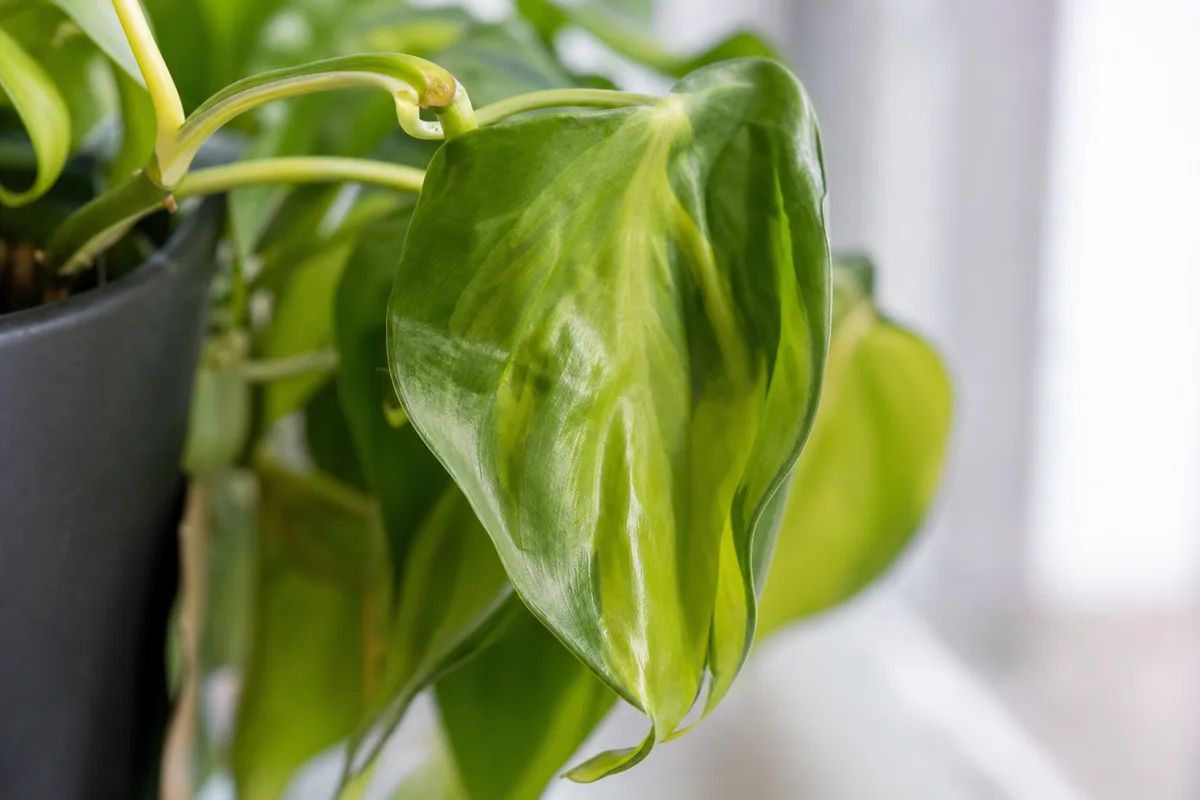
Drooping Leaves symptoms on Philodendron Brasil - compare with healthy tissue on the same plant.
Typical patterns:
- Thirst droop: Pot feels light, mix is dry several centimeters down, leaf edges may curl slightly inward, stems still firm at the soil line
- Root-stress droop: Pot feels heavy, mix stays wet for days, vines limp despite moisture, lower leaves may yellow, stems soften near the base
- Shock droop: Starts within a day or two after Philodendron Brasil repotting guide or moving to a hotter window; moisture normal, stems firm, no sour smell
- Heat droop: Afternoon limpness in a hot south window that recovers overnight when temperatures drop
Because Brasil grows as a cascading vine, the outermost leaves show stress first. A plant in a hanging basket can look fine near the pot crown while the lowest trailing stems hang limp-that uneven pattern is normal for thirst on long vines.
Why Philodendron Brasil leaves droop
underwatering on Philodendron Brasil
Brasil is not a succulent, but its thin heart leaves and long vines lose water quickly in bright light and warm rooms. When the mix dries too far, roots cannot refill leaf cells fast enough and turgor drops. Summer growth accelerates water use; a weekly schedule that worked in winter may leave the pot bone-dry by midweek.
Hanging baskets and small pots dry faster than floor pots. The top may look slightly dry while the center is parched, or the reverse if water runs down the sides without soaking the root ball.
Overwatering and root failure
This is the confusing case: drooping with wet soil. Philodendrons prefer evenly moist but not soggy soil. When roots sit in saturated mix, they cannot absorb the oxygen needed to function normally. Damaged roots cannot take up water, so leaves droop even though the pot is heavy.
Fast summer growth and dim winter corners both trigger overwatering mistakes-more water when the plant is actively growing, or the same frequency when growth slows and the mix stays wet longer.
Environmental shock
Recent repotting disturbs fine roots and can cause temporary droop until the plant re-establishes. Moving from a stable shelf to a hot west window increases transpiration faster than roots adjust. Cold drafts from AC vents slow root function and can cause limp vines even when moisture is adequate.
Less common causes
Spider mites, mealybugs, and scale sap enough moisture to cause limp foliage, but you usually see stippling, webbing, or white cottony clusters on stems first. Severe root rot on Philodendron Brasil from long-term overwatering is more common than pest-related droop on healthy Brasil pots.
How to confirm the cause
Work through these checks in order:
- Pot weight - Lift the pot. Light and dry suggests thirst; heavy and wet suggests root stress.
- Soil moisture at depth - Push your finger 3–5 cm into the mix, not just the surface. Dry at depth with firm stems confirms underwatering. Wet several days after watering confirms overwatering.
- Stem firmness - Pinch the main stem at the soil line. Firm and green is reassuring; soft, mushy, or collapsing tissue means root rot until proven otherwise.
- Smell and drainage - Sour or swampy odor from the pot, blocked drainage holes, or a saucer holding standing water all support overwatering.
- Recent changes - Repot, fertilizer spike, or window move within the last week? Temporary droop with normal moisture and firm stems often resolves with stable care.
- Pest scan - Inspect leaf undersides and stem joints on limp vines. No insects or sticky residue makes pests unlikely as the primary cause.
If the pot is light, mix is dry throughout, and stems are firm, underwatering is the working diagnosis. If the pot is heavy, mix is soggy, and stems are softening, stop watering and plan a root inspection-do not add more water hoping leaves perk up.
First fix to try
Lift the pot. If it is light and the mix is dry 3–5 cm down, water thoroughly once until water runs from the drainage holes, then empty the saucer.
That single action fixes most Brasil droop caused by simple thirst. Use room-temperature water and soak until the entire root ball rewets-not a quick splash on the surface. If the mix has pulled away from the pot sides and water runs straight through, bottom-soak the pot in a basin for 20–30 minutes, then let it drain fully.
Do not water if the pot is heavy and the mix is wet. Do not fertilize, repot, or prune heavily on day one. Confirm the cause first, then act once.
Step-by-step recovery
For underwatering
- Water deeply once, as above.
- Recheck in 4–6 hours. Most heartleaf philodendron vines perk within hours when thirst was the only issue.
- If the mix was severely dry, bottom-soak once, then return to normal top watering when the top 3–5 cm dries.
- Adjust your rhythm for the season-Brasil may need water more often in bright summer growth and less in cooler winter months.
For overwatering and root stress
- Stop watering immediately.
- Move to Philodendron Brasil light guide so the mix dries faster without scorching variegated leaves.
- If drooping continues after the top 3–5 cm has been dry for several days, or stems soften, unpot and inspect roots.
- Trim mushy brown roots back to firm white tissue. Repot into fresh well-drained mix with 20–25% perlite.
- Wait until the top of the new mix dries before the next drink. Recovery depends on how much healthy root remains.
For shock droop
- Keep light, temperature, and watering stable for two weeks.
- Avoid repotting again, moving between rooms, or feeding until new growth looks normal.
- Maintain even moisture without keeping the mix soggy.
Recovery timeline
Simple thirst droop often improves within 6–24 hours after proper watering. Shock droop from repotting or relocation usually resolves within 1–2 weeks if care stays consistent.
Root-related droop takes longer-days to several weeks-and only after damaged tissue is removed and the plant grows new roots. Judge progress by firm new lime-streaked leaves and stable stem tissue at the base, not by old limp leaves that may never fully stiffen again.
Lookalike symptoms
Wilting vs drooping: On Brasil these terms describe the same limp-vine appearance. The diagnostic split is wet pot versus dry pot, not the word you use.
Yellow lower leaves: Often chronic overwatering rather than acute droop. Yellowing plus limp vines on wet soil means root stress; yellowing on a dry pot may follow prolonged underwatering.
Leggy plain-green growth: Low light causes sparse vines with smaller leaves, but stems stay firm unless water is also wrong. Move for brighter indirect light-drooping from thirst in a dim corner is common.
Curling leaf edges: Tight inward curl on dry mix usually means thirst. Curl on wet mix with soft stems suggests roots cannot take up water.
Mistakes to avoid
Do not water automatically when leaves droop-check moisture first.
Do not let a wet, drooping Brasil sit in a full saucer hoping it recovers.
Do not repot on day one unless roots are clearly mushy; unnecessary repotting adds shock.
Do not mist expecting droop to fix itself-surface moisture does not restore root-zone water balance.
Do not fertilize a stressed drooping plant; wait until new growth is firm and regular.
Do not prune every limp leaf immediately-some perk up after the root issue is corrected.
Philodendron Brasil care cross-check
Brasil performs best with bright to medium indirect light, well-draining potting mix amended with perlite, and watering when the top 3–5 cm dries. Humidity around 40–60% is comfortable; Philodendron Brasil overview tolerates average home air better than many tropicals but still droops faster when soil and light are mismatched.
Trailing pots need the same depth check as tabletop plants-long vines do not mean the root ball needs less attention. If the pot stays wet more than a week between waterings in moderate light, the mix may be too dense, the pot too large, or light too low.
How to prevent drooping next time
Water based on pot weight and finger checks, not a fixed calendar. Empty saucers after every drink. Use pots with open drainage holes and avoid sizing up before roots fill the current container.
Keep Brasil in stable bright indirect light rather than swinging between a dim corner and a hot window. When you repot, do it during active growth and water once thoroughly afterward-not on a schedule that keeps the mix constantly wet.
Scout weekly during summer when vines push new growth quickly; that is when watering errors show up as droop within a day.
When to worry
Treat as urgent when drooping persists more than 48 hours after correcting dry soil, when wet soil pairs with soft stems or sour smell, or when yellowing spreads to new growth on a heavy pot. Those patterns point to advancing root rot from overly wet soil, not a one-day thirst event.
A dry pot with firm stems and mild afternoon droop in summer heat is less urgent-deep water once and reassess. Replace or heavily trim a Brasil only when more than half the root mass is mushy and stems collapse at the base; otherwise trimmed roots and fresh mix often produce new trailing growth within weeks.
Conclusion
Drooping Philodendron Brasil leaves almost always trace to a root-zone water problem-too dry, too wet, or roots too damaged to drink. Lift the pot, check moisture at depth, and match your first action to what you find. That one diagnostic step separates a quick recovery from weeks of worsening limp vines.
When to use this page vs other Philodendron Brasil guides
- Philodendron Brasil watering guide - Use for routine moisture checks before assuming drooping leaves is the main issue.
- Philodendron Brasil problems hub - Browse all 46 common issues on this species.
- Underwatering on Philodendron Brasil - Different entry point when symptoms overlap with drooping leaves.
- Overwatering on Philodendron Brasil - Different entry point when symptoms overlap with drooping leaves.
- Root Rot on Philodendron Brasil - Different entry point when symptoms overlap with drooping leaves.