Drooping Leaves on Philodendron Imperial Red: Causes
Quick answer
Drooping leaves on Philodendron Imperial Red usually trace to water stress, damaged roots, or heat-often with wet heavy soil or a bone-dry pot behind the same limp burgundy petioles. First step: lift the pot, check moisture at 3–5 cm depth, and make one correction before repotting or feeding.
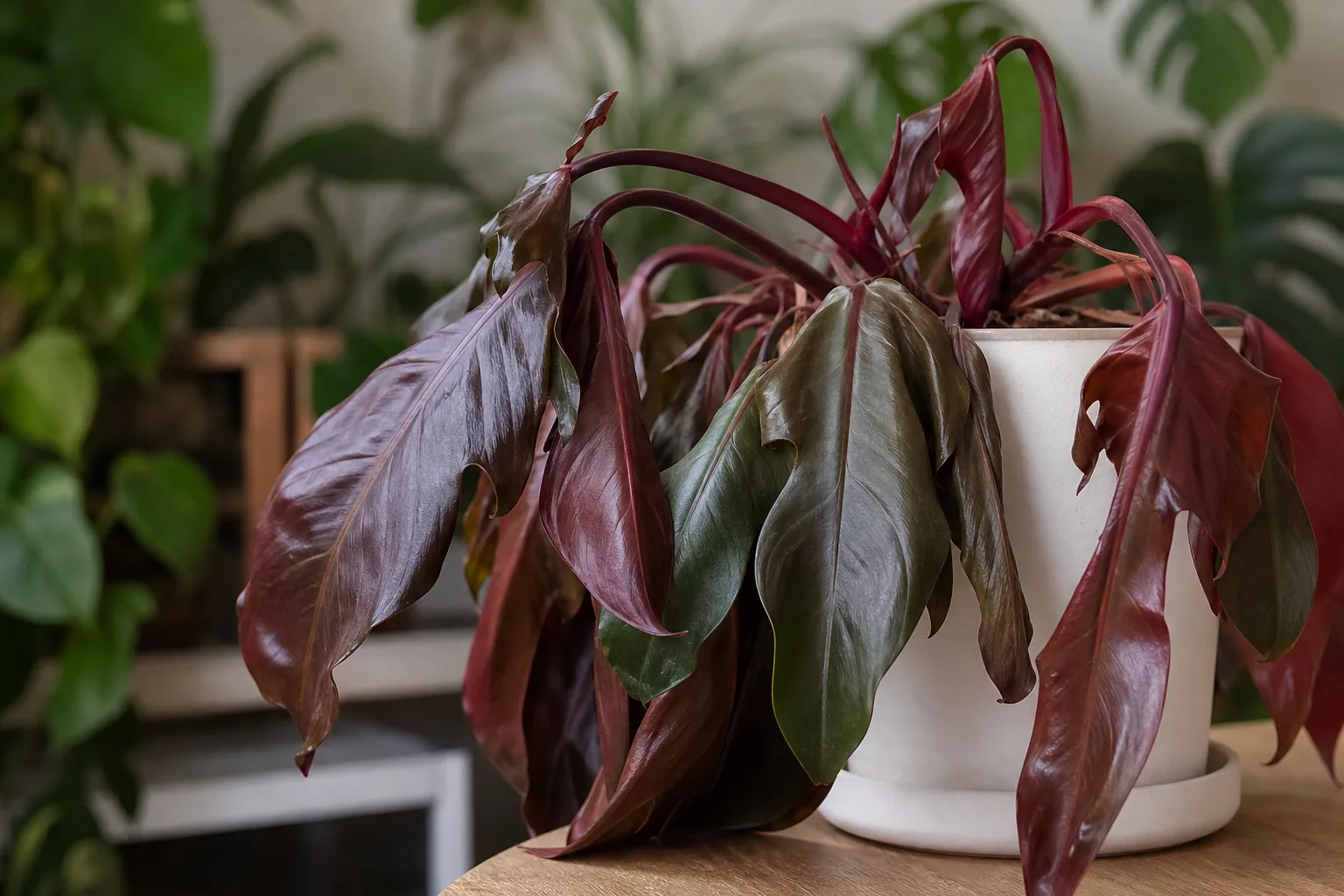
Drooping Leaves on Philodendron Imperial Red: Causes, Checks & Fixes
This guide covers drooping leaves on Philodendron Imperial Red. See also the general Drooping Leaves guide, watering, and light pages for this plant.
Drooping Leaves on Philodendron Imperial Red: Causes, Checks & Fixes
Quick answer
Drooping leaves on Philodendron Imperial Red usually trace to water stress, damaged roots, or heat-often with wet heavy soil or a bone-dry pot behind the same limp burgundy petioles. First step: lift the pot, check moisture at 3–5 cm depth, and make one correction before Philodendron Imperial Red repotting guide or feeding.
Philodendron erubescens ‘Imperial Red’ is a self-heading philodendron with thick burgundy petioles and red-bronze new leaves that mature darker. Unlike vining heartleaf types, it holds moisture in a compact crown and reacts to root-zone problems at the whole rosette level. When roots cannot move water-whether from rot, drought, or cold-impaired uptake-petioles lose turgor and the upright bush looks suddenly tired. The trap is that overwatered and underwatered Imperial Red both droop; the fix depends on soil condition, not leaf posture alone.
Why Philodendron Imperial Red gets drooping leaves
Overwatering and root damage are the most common indoor triggers. Clemson Extension notes that symptoms of over-watering and underwatering are similar-both lead to poor root health-so a limp Imperial Red is easy to misread. When self-heading roots sit in saturated mix, oxygen drops out of the soil, fine roots fail, and the plant wilts despite wet soil because damaged roots cannot supply the crown. Imperial Red in an oversized decorative pot on a dim shelf may stay damp for two weeks after one watering, especially in winter when growth slows.
Underwatering produces the same visual slump with the opposite soil story. NC State Extension describes Philodendron erubescens as preferring moist, well-drained soil rich in organic matter-not bone-dry peat for weeks. When the top 3–5 cm and deeper mix go dry, fine roots lose function and broad leaves outpace water delivery. Fear of overwatering after a past rot scare is a common reason growers wait too long; perlite-amended mix in terracotta or bright light can flip from ideal to drought within days.
Heat and temperature swings stress uptake even when watering looks correct. NC State notes that philodendrons prefer temperatures between 65 and 85 degrees F and are very sensitive to cold-drafts should be avoided. Clemson HGIC lists ideal philodendron ranges as 65–70 °F at night and 75–85 °F during the day. Imperial Red placed beside a heating vent, on a sun-baked windowsill, or in the path of AC blast can droop as roots absorb water more slowly while leaves lose moisture faster. A plant moved outdoors for summer and brought in after a cold night may show crown-wide limpness before any soil change.
Low light compounds water mistakes. Without enough bright filtered light, the rosette uses less water while the pot stays heavy. Yellowing of lower leaves on philodendrons overlaps with overwatering and insufficient light; on Imperial Red, several yellow lower leaves plus limp burgundy petioles on damp soil usually mean root stress, not a single thirsty afternoon.
What drooping leaves look like on Philodendron Imperial Red
Drooping on this cultivar is a posture change across the self-heading crown-not always a single sad leaf. Watch for these patterns together:
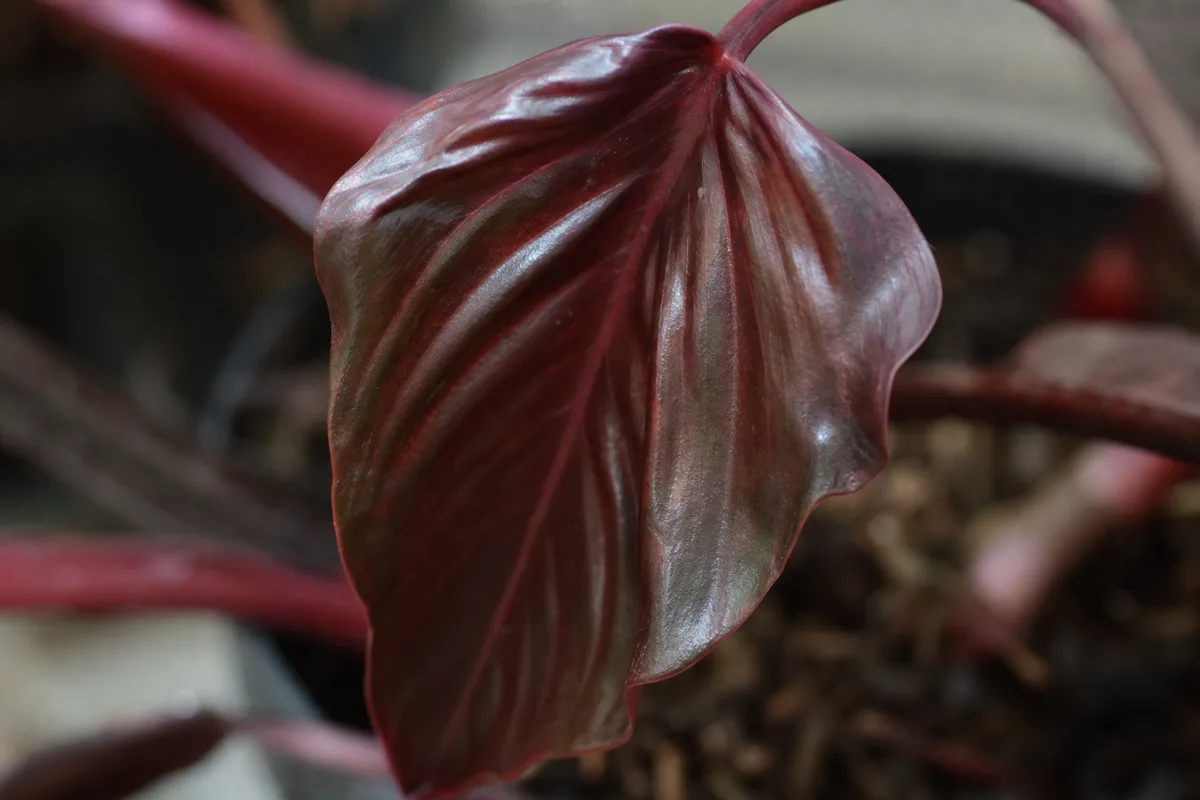
Drooping Leaves symptoms on Philodendron Imperial Red - compare with healthy tissue on the same plant.
- Burgundy petioles hanging lower than usual while leaf blades still feel thick, not papery
- The whole rosette leaning or losing its upright symmetry, especially at the newest red-bronze tier
- Lower leaves yellowing while petioles stay limp-not the gradual greening of one aging leaf
- New leaves stalling, emerging small, or collapsing before they harden off
- Soft, heavy leaf feel with wet mix; or dry crispy edges with a lightweight pot
- Drooping that appears within hours after a heat spike or cold draft near the plant
On Imperial Red, do not mistake normal color darkening on maturing leaves for stress droop. Healthy firm petioles with gradual burgundy-to-green hardening are fine. Problem droop pairs with wrong soil moisture, smell, temperature clues, or stalled new growth.
How to confirm the cause
Do not treat from one limp petiole. Use this inspection order:
- Pot weight and surface moisture - Lift the pot. Heavy days after watering suggests saturation; noticeably light with dusty dry surface suggests drought.
- Depth check at 3–5 cm - Probe with a finger or chopstick. Damp deep mix with limp leaves points away from simple thirst; dry throughout supports underwatering.
- Leaf and petiole feel - Squeeze a drooping leaf gently. Soft and limp on wet soil fits overwatering or root damage; dry and papery with crispy edges fits drought.
- Petiole bases - Press where burgundy petioles meet the crown. Firm tissue with dry soil means water thoroughly; soft wet tissue on damp soil means stop watering and inspect roots.
- Environment scan - Note heating vents, AC paths, radiators, and windows that bake the pot in afternoon sun. NC State’s draft avoidance guidance applies directly to sudden crown limpness with neutral soil.
- Smell and drainage - A sour odor from the drainage hole strongly suggests decaying roots. Confirm saucers are not holding standing water.
If wet heavy soil, sour smell, and soft petiole bases align, treat as root stress-not drought. If the pot is light, mix is dry top to bottom, and roots would be firm on a spot check, treat as underwatering first.
Lookalike symptoms to rule out
root rot on Philodendron Imperial Red overlaps heavily with overwatering droop-see wet soil, mushy roots, and sour smell. Normal old-leaf senescence usually drops one or two lowest leaves while the crown and new red growth stay firm. Spider mites or low humidity can curl and dull leaves but petioles often stay relatively firm and soil moisture looks normal. Recent repot shock causes temporary wilt for several days with firm roots and evenly moist-not soggy-mix.
First fix for Philodendron Imperial Red
Make one correction based on what the pot tells you-do not stack repot, prune, feed, and move on the same day.
If the mix is dry and the pot is light: Water thoroughly until excess runs from the drainage hole, then empty the saucer so the plant is never standing in water. Check perk-up within a few hours. If leaves stay limp on now-moist soil, probe deeper-hydrophobic dry peat can shed water around a still-dry root ball.
If the mix is wet and the pot is heavy: Stop watering immediately. Move the plant to medium Philodendron Imperial Red light guide with airflow so the top 3–5 cm can dry. If petiole bases feel soft or the mix smells sour, unpot the same day, rinse roots, trim mushy tissue, and repot into fresh airy mix-same rescue path as root rot.
If soil moisture looks normal but the plant sits near heat or cold: Move it 1–2 m away from vents, radiators, and drafty doors. Hold watering steady for one week-temperature-stressed roots absorb slowly, and extra water risks overwatering on top of environmental shock.
Do not fertilize a drooping Imperial Red before the root zone and placement are stable.
Step-by-step recovery
After the first targeted correction:
- Track daily pot weight for one week rather than watering on a calendar.
- Resume dry-down watering only when the top 3–5 cm feels dry-roughly every 7–10 days in summer and 10–14 days in winter in typical homes with bright indirect light.
- Remove leaves that collapse completely, but leave mostly green foliage until new growth appears.
- If you repotted for root damage, wait one week before the first drink so cut tissue can callus.
- Watch for firm burgundy petioles and clean red-bronze new leaves over the next two to four weeks.
If droop worsens on wet soil despite dry-back, unpot and inspect roots rather than waiting for leaves to recover on their own.
Recovery timeline
Single-event underwatering often shows visible perk within hours of a thorough soak. Mild overwatering stress may stabilize in one to two weeks once the mix dries and roots regain function. Root damage with mushy tissue needs four to eight weeks before you can trust new red-bronze growth. Heat-stress droop usually eases within several days after moving off the vent-if soil was not already wet.
Old limp or yellowed leaves rarely return to perfect form. Use firm petioles, neutral-smelling pot, and active new burgundy leaves as recovery markers.
What not to do
- Do not water automatically because petioles look limp-check soil first.
- Do not withhold water from a heavy wet pot hoping droop will pass.
- Do not fertilize, repot larger, or move to harsh direct sun while the crown is stressed.
- Do not leave the plant beside heating vents or in cold draft paths while troubleshooting moisture.
- Do not handle cut root tissue without gloves; philodendrons contain calcium oxalate crystals that irritate skin.
How to prevent drooping leaves next time
Match watering to how fast your pot dries, not a fixed schedule. For most indoor Imperial Red plants, check the top 3–5 cm before every drink. Use a pot only slightly larger than the root mass, bright indirect light so the mix breathes between waterings, and perlite-amended mix for drainage.
Keep room temperatures in the 65–85 °F range and away from vents. Pour away saucer runoff, reduce frequency in winter or dim rooms, and glance at pot weight weekly while problems are still small.
When to worry
Treat drooping as high severity on Imperial Red when:
- Multiple petioles collapse at the crown while soil stays wet
- The mix smells sour even after you stop watering
- New red-bronze leaves fail repeatedly over two weeks
- Drooping spreads through the whole rosette within seven to ten days
- The plant declines after a thorough correct watering on dry soil-possible root loss from past drought or rot
If one correction matches the soil story and firm new growth returns within two weeks, odds are good. If the crown softens with wet anaerobic mix, shift to root-rot rescue rather than repeated top watering.
Conclusion
Drooping leaves on Philodendron Imperial Red are a signal, not a diagnosis. Wet heavy soil with limp burgundy petioles means root stress; light dry pots with crispy edges mean drought; stable moisture with vent-side collapse means heat or cold. Confirm with pot weight, a 3–5 cm moisture check, and petiole-base firmness, then make one correction. Prevent it by dry-down watering, drainage, stable temperatures, and enough light for this self-heading rosette to use water steadily. Judge success by firm new burgundy growth-not by old leaves snapping upright again.
When to use this page vs other Philodendron Imperial Red guides
- Philodendron Imperial Red watering guide - Use for routine moisture checks before assuming drooping leaves is the main issue.
- Philodendron Imperial Red problems hub - Browse all 10 common issues on this species.
- Root Rot on Philodendron Imperial Red - Different entry point when symptoms overlap with drooping leaves.