Drooping Leaves on Philodendron Lemon Lime: Causes, Checks
Quick answer
First check soil before watering: if the top 3-5 cm is dry and the pot feels light, water deeply; if the mix is still wet and the plant droops, pause watering and inspect roots for stress.
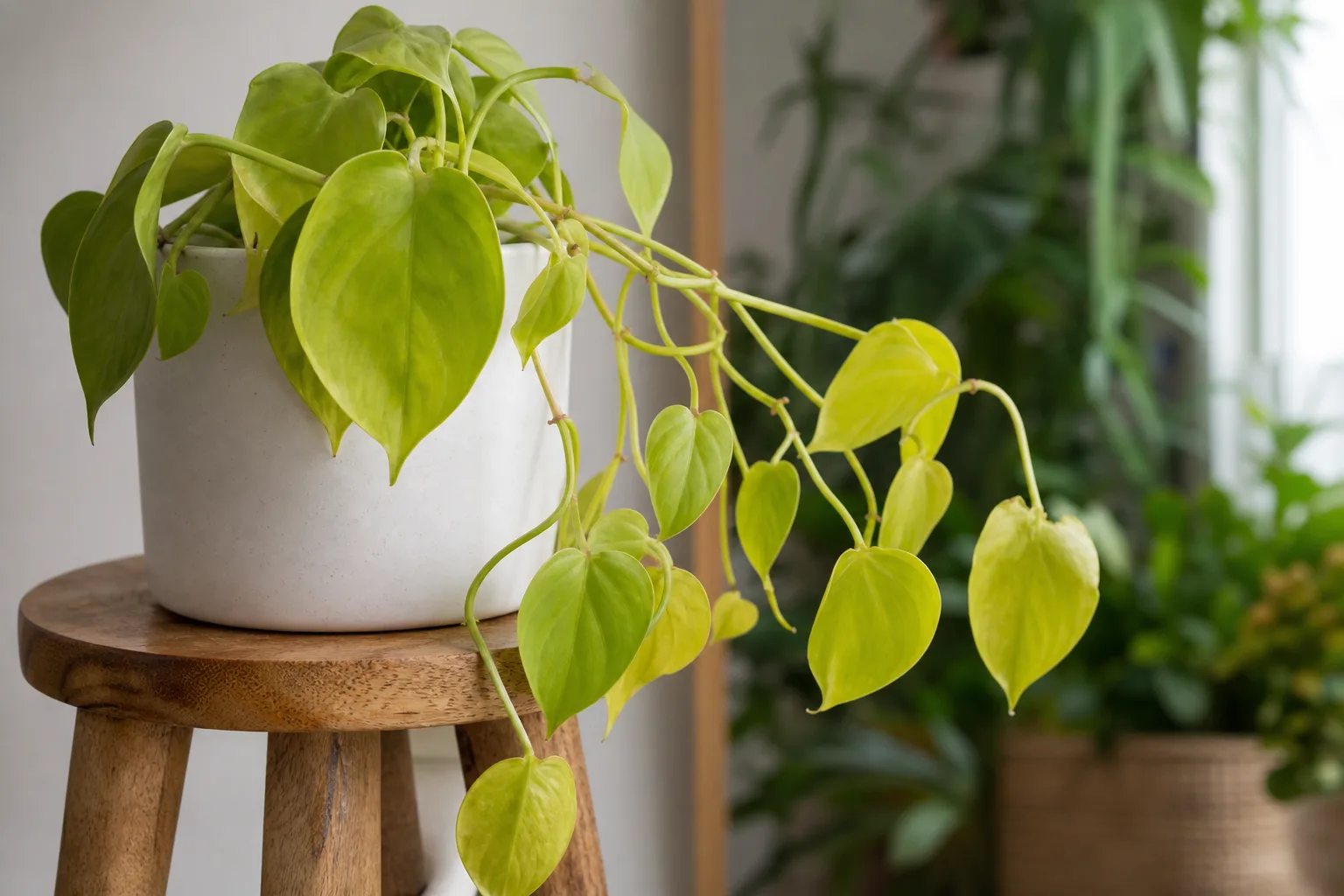
Drooping Leaves on Philodendron Lemon Lime: Causes, Checks & Fixes
This guide covers drooping leaves on Philodendron Lemon Lime. See also the general Drooping Leaves guide, watering, and light pages for this plant.
Drooping Leaves on Philodendron Lemon Lime: Causes, Checks & Fixes
Quick answer
Drooping leaves on Philodendron Lemon Lime usually mean roots are not moving water to the leaves. The most important first step is to check moisture before watering. If the top 3-5 cm is dry and the pot feels light, water deeply and let excess drain. If the mix is still wet and the plant is drooping, do not add more water; inspect for root stress instead.
Heartleaf philodendron cultivars, including Lemon Lime, are grown for vining growth and thin leaves that lose firmness when water balance is off Missouri Botanical Garden Plant Finder. Both drought and waterlogged roots can create the same hanging look, so the soil condition and pot weight are your best first differentiators.
For related Philodendron Lemon Lime care, see Philodendron Lemon Lime watering, Philodendron Lemon Lime soil, Philodendron Lemon Lime problems, Brown Tips on Philodendron Lemon Lime.
For related Philodendron Lemon Lime care, see Ants on Plant on Philodendron Lemon Lime.
When to use this page
Use this guide when leaves and petioles look limp and vines sag. If your main issue is yellowing, black spots, or obvious pests, use the related problem guides for those topics. For watering-specific overlap, start here, then branch to /plants/philodendron-lemon-lime/underwatering/ or /plants/philodendron-lemon-lime/overwatering/ once you identify dry vs. wet soil conditions.
What drooping looks like on Philodendron Lemon Lime
On Lemon Lime, droop often appears as soft chartreuse leaves that hang downward along the vine instead of holding a gentle, forward-facing arch. Outer trailing tips may sag first because they are farthest from the root system and lose turgor quickly during moisture stress. In thirst cases, leaves often look duller and thin; in wet-soil stress, lower leaves may yellow while the whole vine still looks limp.
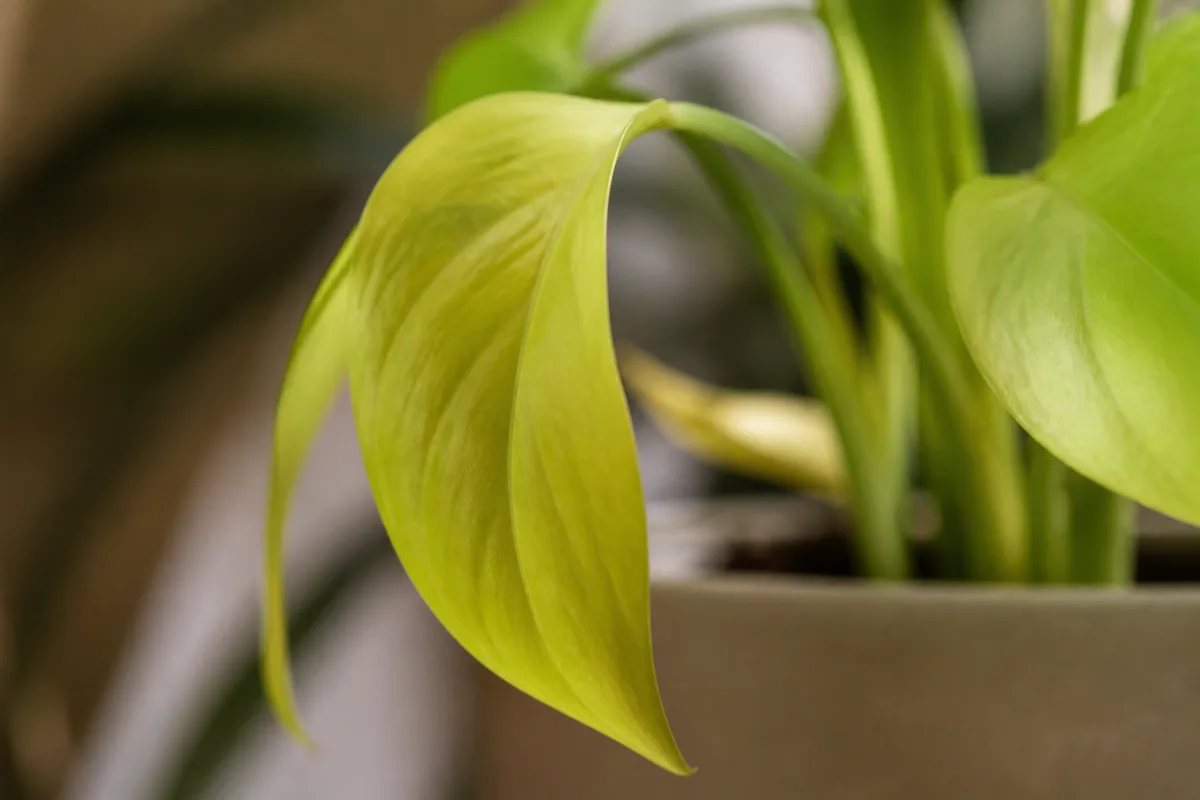
Drooping Leaves symptoms on Philodendron Lemon Lime - compare with healthy tissue on the same plant.
Dry-soil vs wet-soil checks
- Dry + light pot: likely underwatering. Give a full soak, let excess water drain, and reassess firmness in a few hours.
- Wet + heavy pot: likely root stress from overwatering or poor aeration. Pause watering and check roots if droop continues beyond 24-48 hours.
- Dry top but dense wet core: likely uneven wetting in compacted mix. Rehydrate gradually, then improve mix structure at next safe repot.
- Normal moisture but sudden droop after repot/move: likely shock, light shift, or temperature stress.
Why Philodendron Lemon Lime gets drooping leaves
Underwatering and hydrophobic dry pockets
Missed watering cycles are common for trailing philodendrons, especially in warm rooms and bright exposure. Dry substrate pulls less water into roots, so leaf pressure drops and vines slump. Peat-heavy mixes can also become hydrophobic when very dry, so water may run down the pot edge without fully rewetting the root ball.
Overwatering and root oxygen loss
Roots need oxygen as well as moisture. When substrate stays wet too long, root function declines and plants wilt even though soil is moist Penn State Extension. NC State also notes heartleaf philodendron is vulnerable to root rot on Philodendron Lemon Lime in persistently wet conditions NC State Extension.
Light, temperature, and humidity stress
Lemon Lime performs best in bright indirect conditions and can struggle when light is too low or when hot direct sun drives excess water loss Missouri Botanical Garden Plant Finder. Low indoor humidity can intensify droop during warm periods because leaves lose moisture faster than stressed roots can replace it NC State Extension.
Repot and handling shock
Temporary droop after Philodendron Lemon Lime repotting guide can occur if roots were disturbed. This usually improves once root-to-soil contact stabilizes and watering is consistent. If droop worsens instead of improving, reassess moisture and root condition.
Pest lookalikes
Spider mites and mealybugs can weaken leaves and mimic water stress by reducing vigor. If moisture checks do not explain droop, inspect leaf undersides, nodes, and petiole junctions for active pests before changing watering again.
How to confirm the cause (6-step checklist)
- Check soil depth: insert a finger or moisture probe 3-5 cm down.
- Lift the pot: compare with how it feels right after thorough watering.
- Review recent watering: repeated small sips can leave a dry root core.
- Inspect leaf pattern: thirst often starts with limp but otherwise clean foliage; wet-stress often pairs with yellowing lower leaves.
- Check environment: verify Philodendron Lemon Lime light guide and no cold/hot draft placement.
- Inspect roots if needed: if soil is wet and droop persists 24-48 hours, unpot and assess root firmness and smell.
The first fix to try
Pick one branch, then wait and observe before stacking treatments.
- If dry: water deeply until excess drains from the pot bottom. Discard runoff and do not fertilize the same day.
- If wet: stop watering, improve airflow, and inspect roots if no lift in firmness within 24-48 hours.
This single-branch approach prevents the most common mistake: watering a wilted plant with already-wet soil.
Step-by-step recovery
If drought is confirmed
Water thoroughly, allow full drainage, then place the plant back in stable bright indirect light. Many drought cases begin to perk the same day, but fully flattened older leaves may stay slightly creased even after hydration.
If wet-soil stress is confirmed
Reduce moisture load first. If roots are brown, soft, or foul-smelling, trim non-viable roots with clean tools, repot into an airy mix, and resume watering only after slight dry-down. Judge progress by firmer new growth rather than immediate reversal in damaged leaves.
Recovery timeline
- Thirst droop: early improvement often appears within hours after full rehydration.
- Wet-soil root stress: visual recovery is slower, often days to weeks, and depends on root recovery plus new leaf production.
- Shock-related droop: usually improves within several days if light, moisture, and temperature are stabilized.
If droop is unchanged after one full correction cycle, reassess for root disease or pests.
Mistakes to avoid
- Watering again before checking soil depth and pot weight.
- Fertilizing a stressed plant before turgor returns.
- Repotting repeatedly in a short period.
- Leaving roots in constantly saturated media.
- Assuming all limp leaves are underwatering.
How to prevent drooping next time
Water by observation, not by calendar: check the top layer and pot weight each time. Keep Lemon Lime in bright indirect light and avoid abrupt temperature swings Missouri Botanical Garden Plant Finder. Use a well-aerated potting mix and drainage holes so roots cycle between moisture and oxygen.
If pets may contact fallen leaves during cleanup, remember heartleaf philodendron is listed as toxic to cats and dogs ASPCA. Remove dropped foliage promptly and keep troubleshooting tools and plant debris out of reach.
When to worry
Escalate quickly if you see wet soil plus ongoing droop, soft stem bases, sour root-zone odor, or rapid yellowing. Those signs suggest deeper root problems and justify same-day root inspection. If most roots are non-viable, focus on stabilizing healthy cuttings from live vine sections.
Conclusion
For Philodendron Lemon Lime drooping, moisture status decides the path: dry soil needs rehydration, wet soil needs root-first correction. Start with the soil check, take one targeted first action, then track recovery by new, firm growth.