Drooping Leaves on Philodendron Melanochrysum: Causes
Quick answer
Drooping leaves on Philodendron Melanochrysum are usually caused by water stress, weak vine support, or root trouble-not normal growth. First step: check whether the pot is wet or dry, then adjust watering or retie the vine to a moss pole before repotting.
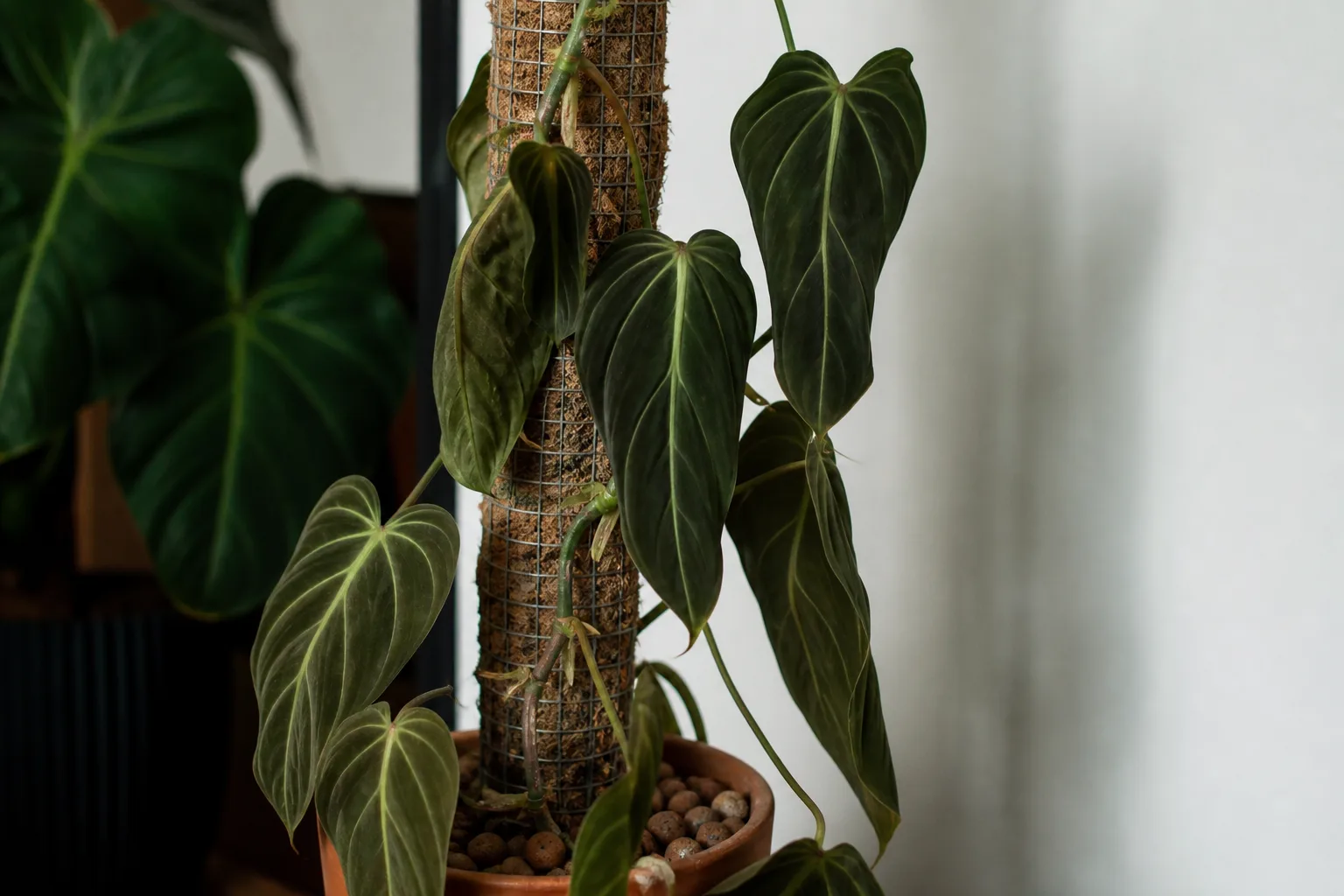
Drooping Leaves on Philodendron Melanochrysum: Causes, Checks & Fixes
This guide covers drooping leaves on Philodendron Melanochrysum. See also the general Drooping Leaves guide, watering, and light pages for this plant.
Drooping Leaves on Philodendron Melanochrysum: Causes, Checks & Fixes
Quick answer
Drooping leaves on Philodendron Melanochrysum are usually caused by water stress, weak vine support, or root trouble-not normal growth. First step: check whether the pot is wet or dry, then adjust watering or retie the vine to a moss pole before Philodendron Melanochrysum repotting guide.
Philodendron Melanochrysum produces striking heart-shaped velvety leaves up to three feet long on a climbing stem. Those heavy blades droop when turgor drops-from drought, failed roots in wet mix, or a vine segment hanging without aerial root support. Clemson HGIC notes that either over- or under-watering can cause leaf drop and related stress symptoms on philodendrons; drooping leaves are often the stage before yellowing or shedding on Melanochrysum.
Why Philodendron Melanochrysum leaves droop
Water imbalance is the leading cause. RHS guidance says to let the compost surface dry between waterings and never leave philodendrons standing in water-yet waiting too long after that dry point leaves large velvet leaves unable to support their own weight. Iowa State Extension recommends keeping philodendrons evenly moist but not wet; Melanochrysum punishes both extremes more visibly than small-leaved types because each leaf has more surface area to lose water.
root rot on Philodendron Melanochrysum from chronic overwatering produces the confusing pattern: drooping leaves with damp mix. Penn State Extension describes root rot as a cause of wilting with damaged roots-even when you keep watering because leaves look limp. On Philodendron Melanochrysum overview, lower leaves droop first while the tip still looks dark, which growers often misread as thirst.
Support failure is uniquely common on Melanochrysum. Clemson HGIC states that leaves will not reach full size unless the plant is trained vertically for several years. A long vine past its moss pole droops from weight and poor aerial root contact even when the pot is correctly moist. RHS recommends tying climbing philodendrons onto a moss pole kept moist so they root in and climb-unsupported sections dry and droop unevenly.
Low humidity below 50% can make velvet leaves lose rigidity at the edges, but whole-blade droop still traces back to root moisture or support in most cases. Heat, shipping shock, and tight plant ties produce localized droop on one section only.
What drooping leaves look like on Philodendron Melanochrysum
Drooping differs from normal juvenile posture-young leaves may hang softly before hardening off. Problem droop looks like this:
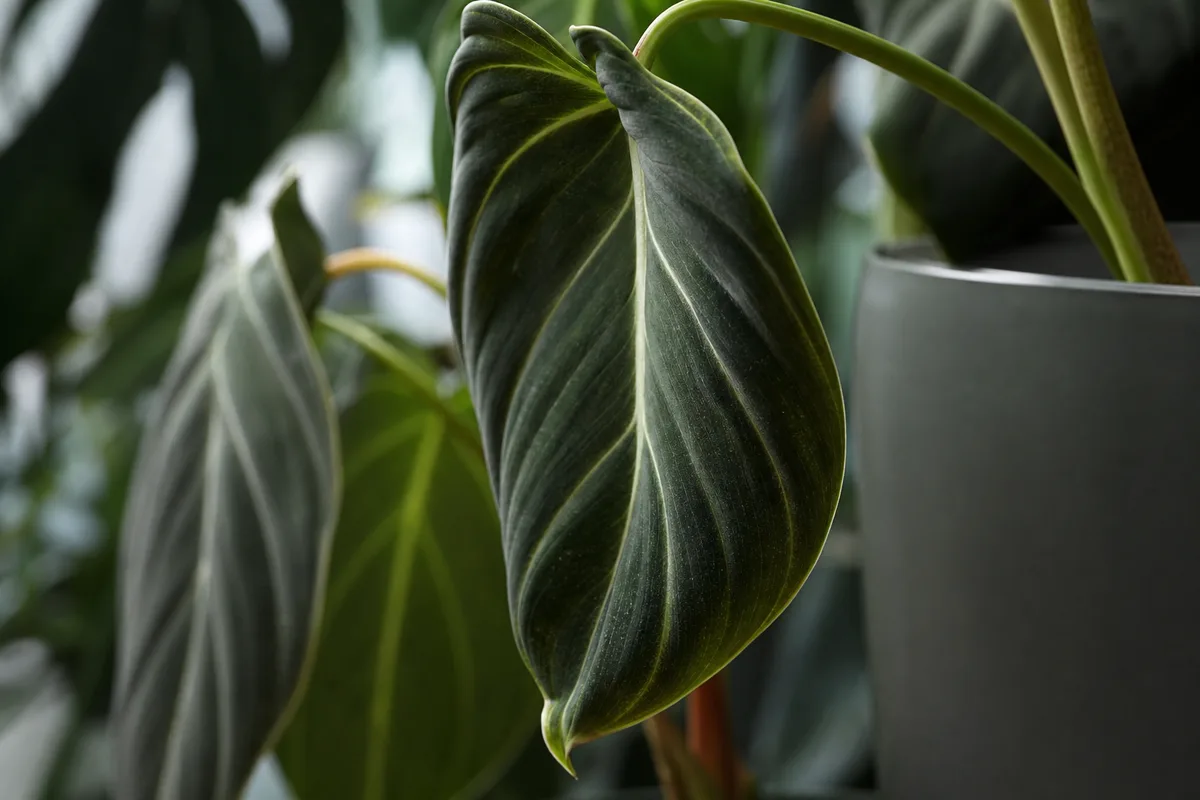
Drooping Leaves symptoms on Philodendron Melanochrysum - compare with healthy tissue on the same plant.
- Mature velvet blades hanging straight down from firm petioles
- Lower third of the vine drooping while upper leaves still point outward
- Leaf surface looking thinner or less velvety than usual
- Petioles bending downward at a sharp angle near the stem
- New leaves drooping before fully unfurling
- One long unsupported vine section drooping while the base looks fine
Yellowing usually follows if the cause is wet roots; crispy edges follow if the cause is dry air plus drought. Tip collapse with dark wet mix is the highest-risk pattern on this plant.
How to confirm the cause
Read the vine from base to tip before changing care. Use this order:
- Pot weight and depth moisture - Light and dry confirms drought; heavy and cool confirms excess moisture.
- Which leaves droop - Lower leaves only often means underwatering or normal aging; tip plus lower together means systemic root stress.
- Moss pole and ties - Sections beyond the pole or pinched by tight velcro droop locally; retie and observe for twenty-four hours.
- Stem and soil smell - Firm stems and neutral smell narrow to moisture balance or support; mushy base with sour smell means rot.
- Recent care changes - Repotting, shipping, or moving to brighter light can droop leaves temporarily without rot.
- Root check if mixed signals - Partially unpot when wet soil and drooping leaves persist after a week of dry-back.
Lookalike symptoms to rule out
Wilting and drooping overlap; both need wet-vs-dry checks. Normal senescence drops the lowest leaf while the rest stay firm. Overwatering yellows before extreme droop; underwatering dulls the whole blade quickly. Spider mites cause stippling, not sudden pendant leaves on healthy green tissue.
First fix for Philodendron Melanochrysum
Pick the fix that matches confirmation, not the scariest symptom.
Dry light pot: Soak thoroughly, drain fully, and recheck ties so drooping sections are not kinked.
Wet heavy pot: Stop watering until the top 3–5 cm dries. If drooping spreads over seven to ten days, unpot, trim mushy roots, repot dry into chunky mix.
Unsupported vine: Extend or replace the moss pole, mist the pole surface lightly, and loosely tie nodes with aerial roots facing the support. RHS notes climbers root into a moist moss pole over time-give existing aerial roots contact within hours.
Low humidity plus correct moisture: Raise humidity to 60–70% with a humidifier while keeping the root zone on a proper dry-down schedule-do not compensate with extra watering alone.
Make one change at a time before repotting, fertilizing, or pruning heavily.
Step-by-step recovery
After the first fix:
- Place the plant in Philodendron Melanochrysum light guide with steady humidity and airflow.
- Water only when the top 3–5 cm of chunky aroid mix is dry if you corrected overwatering; do not let the entire pot go dust-dry if you corrected drought.
- Add pole height before leaf size outgrows support-Melanochrysum leaves enlarge for years on a stable climb.
- Remove fully yellow or mushy leaves; keep firm drooping blades until new growth proves stability.
- Expect new velvet leaves to hold horizontal or upward once turgor and support are restored-often two to six weeks.
If drooping localizes to one tied section, cut the tie, reposition, and wait before cutting the leaf.
Recovery timeline
Single drought droop often corrects within hours after soaking. Support-related droop may improve within one to three days after retieing. Root rot droop can need four to eight weeks and some leaf loss before new firm foliage appears. Leaves that stayed drooped through multiple wet-dry cycles usually will not straighten cosmetically.
What not to do
- Do not stake leaves individually with toothpicks-fix roots, water, or pole support instead.
- Do not water a heavy wet pot because leaves hang down.
- Do not hang the whole vine from a ceiling hook without aerial root contact along the length.
- Do not fertilize to stiffen leaves on a stressed root system.
- Do not remove every drooping leaf immediately; they may recover turgor after one correct soak.
How to prevent drooping leaves next time
Install a tall moss pole while the plant is still manageable and retie as internodes lengthen. Water when the top 3–5 cm dries, use drainage holes, empty saucers, and keep bright indirect light so mix dries evenly. Maintain 60–70% humidity for velvet texture without saturating roots.
Check weekly: pot weight, pole ties, lowest leaf health, and new unfurling leaves. After shipping or repotting, support the vine and monitor moisture daily for two weeks. Keep plants away from pets; philodendron parts are toxic to cats and dogs.
When to worry
Escalate drooping leaves when:
- The growing tip droops while soil is wet and sour-smelling
- Stem bases soften at soil level
- New leaves brown before unfurling across multiple cycles
- The whole vine droops within a week despite corrected watering
- Retieing and soaking do not restore turgor within forty-eight hours
Localized droop on one old leaf with firm roots and stable new growth is low urgency. Systemic droop from base to tip with root symptoms is not.
Conclusion
Drooping leaves on Philodendron Melanochrysum are a structural and moisture signal on a heavy velvet climber-not a reason to panic-prune. Check wet vs dry, then support: soak or dry-back roots, extend the moss pole, and stabilize humidity. Prevent droop by training early, watering to mix dryness, and never letting long vines carry large leaves without aerial root contact. Success means new firm velvet foliage-not every old blade standing at attention again.
When to use this page vs other Philodendron Melanochrysum guides
- Philodendron Melanochrysum watering guide - Use for routine moisture checks before assuming drooping leaves is the main issue.
- Philodendron Melanochrysum problems hub - Browse all 10 common issues on this species.
- Root Rot on Philodendron Melanochrysum - Different entry point when symptoms overlap with drooping leaves.