Mealybugs on Philodendron Melanochrysum: Causes, Checks &
Quick answer
Mealybugs on Philodendron Melanochrysum hide in petiole crevices, moss pole joints, and aerial root clusters, sucking sap from the climbing vine. First step: isolate the plant, dab visible cottony clusters with a 70% alcohol swab, then spray insecticidal soap on stems and leaf undersides; repeat weekly for several weeks.
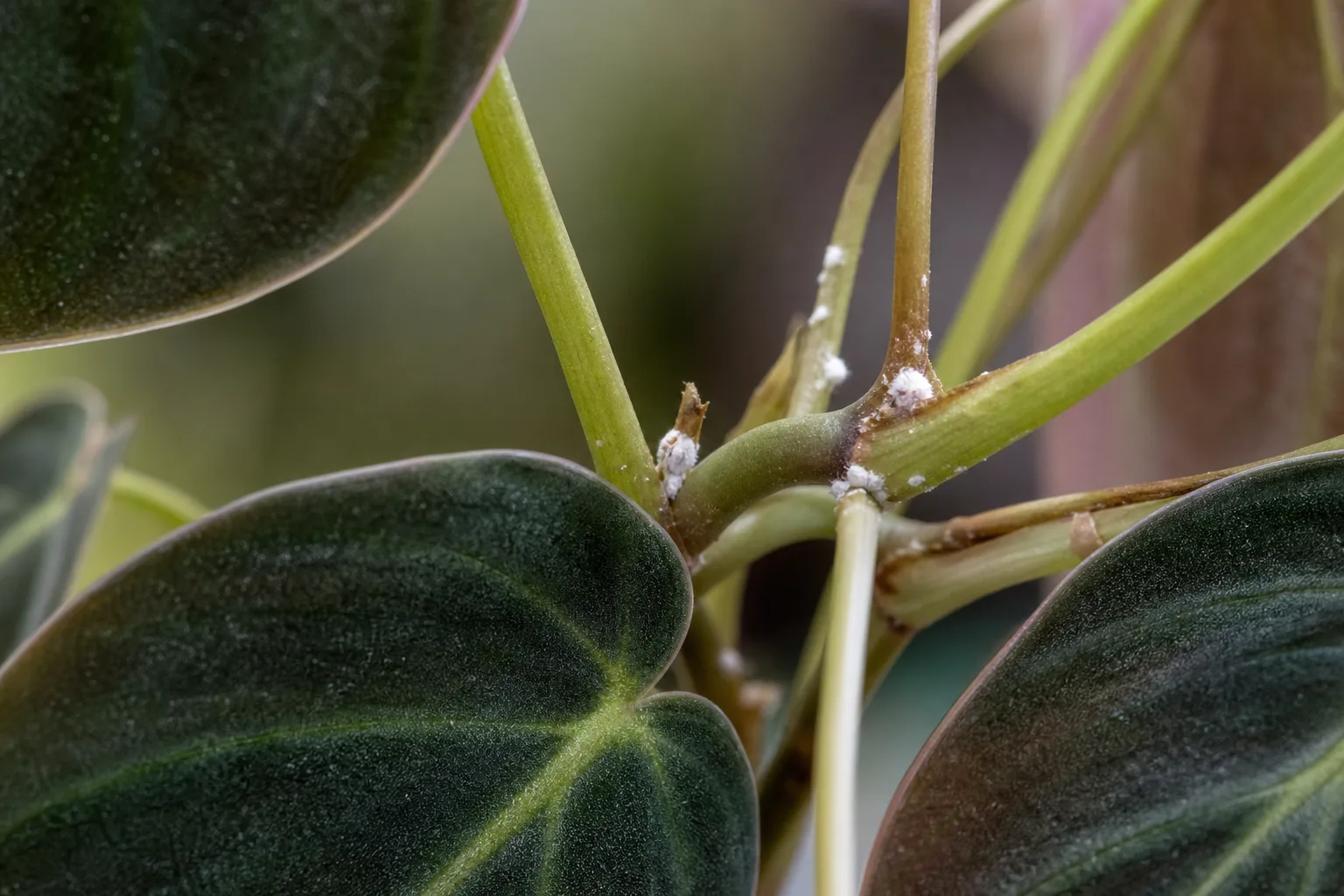
Mealybugs on Philodendron Melanochrysum: Causes, Checks & Fixes
This guide covers mealybugs on Philodendron Melanochrysum. See also the general Mealybugs guide, watering, and light pages for this plant.
Mealybugs on Philodendron Melanochrysum: Causes, Checks & Fixes
Quick answer
Mealybugs on Philodendron Melanochrysum hide in petiole crevices, moss pole joints, and aerial root clusters, sucking sap from the climbing vine. First step: isolate the plant, dab visible cottony clusters with a 70% alcohol swab, then spray insecticidal soap on stems and leaf undersides; repeat weekly for several weeks.
Philodendron melanochrysum is a velvet climber grown on moss poles in warm, humid conditions - exactly the kind of protected, moist micro-habitats where mealybugs settle on indoor plants. They move slowly, but their waxy coating makes them harder to eradicate than aphids in a single treatment.
Why Philodendron Melanochrysum gets mealybugs
Mealybugs are introduced, not created by humidity. They hitchhike on new plants, cuttings, or tools, then exploit melanochrysum’s growth habit. University of Maryland Extension notes that mealybugs damage plants by sucking sap, which can yellow leaves, stunt vines, and weaken aerial roots trying to attach to the pole.
Melanochrysum-specific risk factors include:
- Moss pole architecture - Damp coco or sphagnum fiber, stem ties, and aerial root forks create pockets where adult females lay eggs out of sight.
- Velvet leaf undersides - Cottony masses blend against dark foliage until honeydew or sooty mold gives them away.
- High humidity trays and tents - Humidity that keeps cataphylls healthy also slows drying in crevices where mealybugs persist.
- Chunky aroid mix - Organic bark and moss in the pot can harbor root mealybugs below the surface while the vine looks only lightly affected above.
- Collector shelves - Grouped philodendrons let crawlers move pot to pot over weeks.
A healthy, well-fed melanochrysum can still host mealybugs. Do not assume the problem means you are underwatering or failing on humidity - assume insects are present until you inspect crevices.
What mealybugs look like on Philodendron Melanochrysum
Mealybugs are small, oval, soft-bodied insects covered in white wax. On Philodendron Melanochrysum overview, watch for:
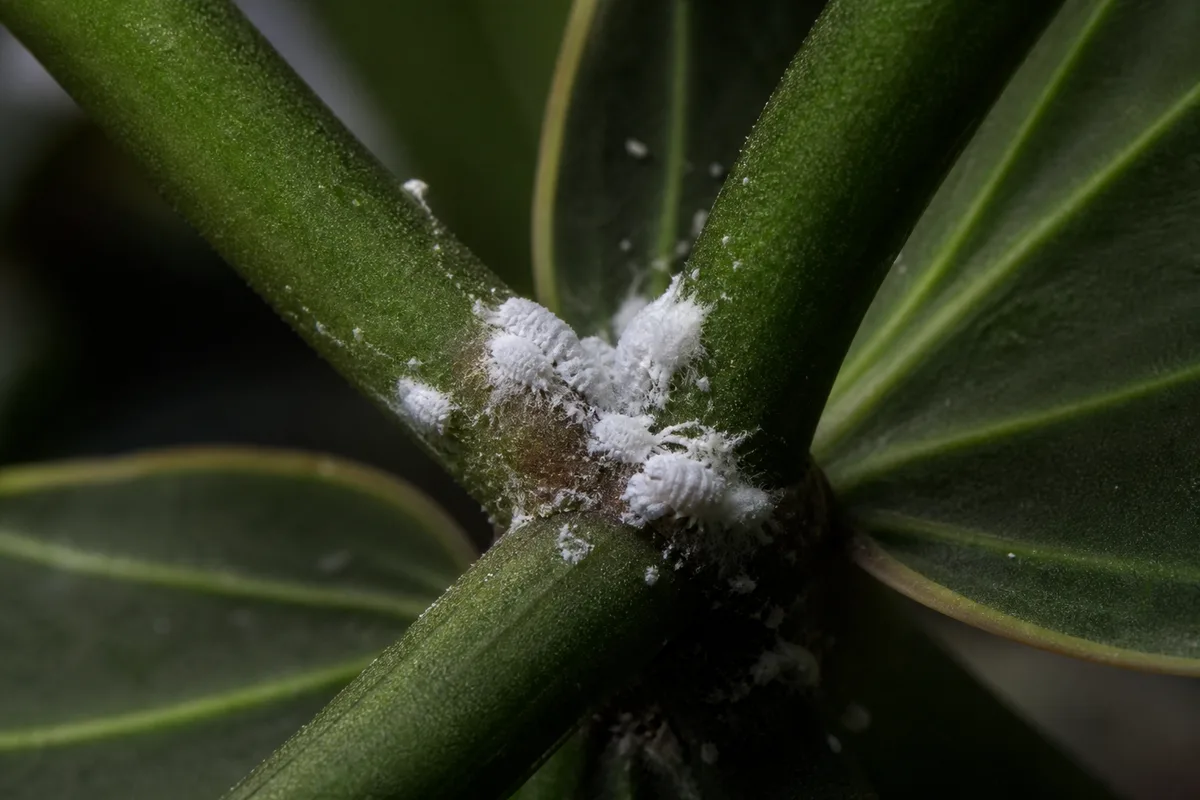
Mealybugs symptoms on Philodendron Melanochrysum - compare with healthy tissue on the same plant.
- Cottony white clusters at petiole bases and stem nodes along the climbing vine
- Waxy filaments along leaf midribs or where aerial roots meet the moss pole
- Honeydew shine on velvet blades beneath infested nodes
- Sooty black mold on honeydew-coated leaves
- Yellowing or stunted new leaves at the growing tip while lower leaves still look dark green
- Ant activity on the pole, pot rim, or shelf near the plant
Root mealybugs may show only as gradual decline, pale new growth, or white residue in drainage holes - with little visible cotton above soil. If the vine wilts despite moist mix and good humidity, unpot and inspect roots.
How to confirm the cause
Mealybugs are visible, but melanochrysum growers often miss them until populations build. Confirm with direct inspection, not guesswork from yellow leaves alone.
- Petiole joints - Pull each petiole gently away from the stem and look for cottony masses in the angle.
- Moss pole scan - Run a cotton swab or toothpick along pole fiber and stem ties; wax residue confirms presence.
- Aerial roots - Check where roots attach; mealybugs often start on soft root tips.
- Pot exterior - Inspect rim, saucer, and drainage holes for white fuzz or crawlers.
- Root check if needed - If foliage decline does not match watering, unpot and look for white cotton on roots and outer mix.
Lookalike symptoms to rule out
Mineral or hard-water residue forms flat white crust on leaf surfaces, not cottony tufts in crevices. Fungus gnat activity means tiny flying adults, not waxy stationary clusters. Powdery mildew (uncommon indoors) appears as flat white film on leaf faces, not segmented insects in stem joints. Normal dried cataphyll fibers are papery brown, not waxy white with live insects inside. Scale insects are hard brown bumps that do not wipe away as cotton.
First fix for Philodendron Melanochrysum
Isolate the plant immediately. UC IPM guidance recommends dabbing individual mealybugs with a 70% isopropyl alcohol swab on houseplants - effective for light infestations and a good first step on visible clusters.
On melanochrysum:
- Test alcohol on one hidden leaf section first; velvet can react to solvents more than smooth philodendron leaves.
- Dab every visible cluster at nodes, petioles, and the pot rim until insects turn light brown.
- Follow with a thorough insecticidal soap spray on stems, leaf undersides, and moss pole fiber.
- Repeat weekly for at least four weeks; UMD Extension notes that multiple applications are usually necessary.
For root mealybugs, shake off old mix, rinse roots gently, treat with labeled soap or soak per product directions, and repot into clean container with fresh chunky aroid mix. Do not reuse contaminated moss pole fiber if cotton was embedded in it - replace or steam-clean the top layer.
Make one major stress event at a time. Do not repot, prune half the vine, and apply systemic insecticide simultaneously unless the infestation is severe.
Step-by-step recovery
After the first alcohol-and-soap pass:
- Keep melanochrysum quarantined in Philodendron Melanochrysum light guide with steady 60–70% humidity so new leaves can still unfurl.
- Inspect nodes every three to four days with a light; dab any new cotton immediately.
- Wipe honeydew from velvet leaves with a barely damp cloth once insects are controlled.
- Replace sooty mold-coated leaves only if they are mostly nonfunctional; otherwise clean the surface and wait for new growth.
- Monitor drainage holes and pot exterior weekly - mealybugs often reinfest from hidden rim colonies.
Expect three to six weeks of active treatment for moderate cases. Heavy root mealybug infestations may need a full repot and eight or more weeks before you trust the vine is clean.
Recovery timeline
Single-node light infestations can clear in two to three weeks with weekly alcohol dabs and soap. Multi-node colonies along a moss pole commonly need four to six weeks because eggs hatch on a rolling schedule. Root mealybug cases may show above-ground recovery only after six to ten weeks, once new aerial roots attach cleanly to the pole.
Older yellowed leaves will not fully green again. Success means wax-free nodes and clean new cataphylls.
What not to do
- Do not spray full-strength alcohol across entire velvet leaves without testing; phytotoxicity shows as pale scorched patches.
- Do not stop after one soap spray - mealybug eggs survive and hatch later.
- Do not return the plant to a philodendron shelf before four weeks clean.
- Do not compost infested moss pole fiber or top dressing; discard or sterilize.
- Do not confuse slow melanochrysum growth in winter with pest clearance; still inspect crevices monthly.
- Do not rely on misting alone to dislodge wax-protected adults.
How to prevent mealybugs next time
Inspect new plants and cuttings in quarantine for three to four weeks, focusing on stem crevices. Minnesota Extension recommends inspecting and cleaning plants before introducing them to the rest of the collection - critical when melanochrysum shares humidity tents with other aroids.
During weekly care, check petiole bases and moss pole nodes when you mist or adjust ties. Keep modest airflow between pots even in humid setups. Remove fallen cataphylls from moist pole surfaces. If one philodendron in a group shows cotton, isolate it the same day and scan neighbors.
When to worry
Mealybugs are medium severity on melanochrysum - slow-moving but persistent. UMD Extension states that heavily infested plants should be discarded when control fails, to protect the rest of a collection.
Escalate if:
- Cottony masses return every week after four or more thorough treatments
- Ants and sooty mold cover multiple nodes
- New leaves fail to unfurl while clusters spread downward
- Root inspection shows dense white wax on most roots
- The plant shares a humid cabinet with rare collector aroids
Consider a labeled systemic houseplant insecticide applied to roots only after soap and alcohol cycles fail, still keeping the vine isolated. Discard when the growing tip, roots, and pole are all heavily infested and no clean tissue remains for recovery.
Conclusion
Mealybugs on Philodendron Melanochrysum exploit the same crevices that make this moss-pole climber thrive. Confirm cottony wax at petiole bases and aerial root nodes, not from yellow leaves alone. First action: isolate, alcohol-dab visible insects, and follow with repeated insecticidal soap. Prevention is weekly crevice inspection in humid growing setups - catch wax early, before honeydew coats your velvet leaves.
When to use this page vs other Philodendron Melanochrysum guides
- Philodendron Melanochrysum watering guide - Use for routine moisture checks before assuming mealybugs is the main issue.
- Philodendron Melanochrysum problems hub - Browse all 10 common issues on this species.
- Ants on Plant on Philodendron Melanochrysum - Different entry point when symptoms overlap with mealybugs.
- Yellow Leaves on Philodendron Melanochrysum - Different entry point when symptoms overlap with mealybugs.
- Slow Growth on Philodendron Melanochrysum - Different entry point when symptoms overlap with mealybugs.
Related Philodendron Melanochrysum guides
- Philodendron Melanochrysum overview
- Philodendron Melanochrysum watering
- Philodendron Melanochrysum light
- Philodendron Melanochrysum soil
- Ants on Plant on Philodendron Melanochrysum
- Yellow Leaves on Philodendron Melanochrysum
- Slow Growth on Philodendron Melanochrysum
- Leaf Drop on Philodendron Melanochrysum
- Philodendron Melanochrysum problems