Wilting on Philodendron Melanochrysum: Causes, Checks &
Quick answer
Wilting on Philodendron Melanochrysum is usually caused by root stress from too much or too little water, not temperature alone. First step: lift the pot-if heavy and wet, stop watering; if light and dry, soak thoroughly and empty the saucer.
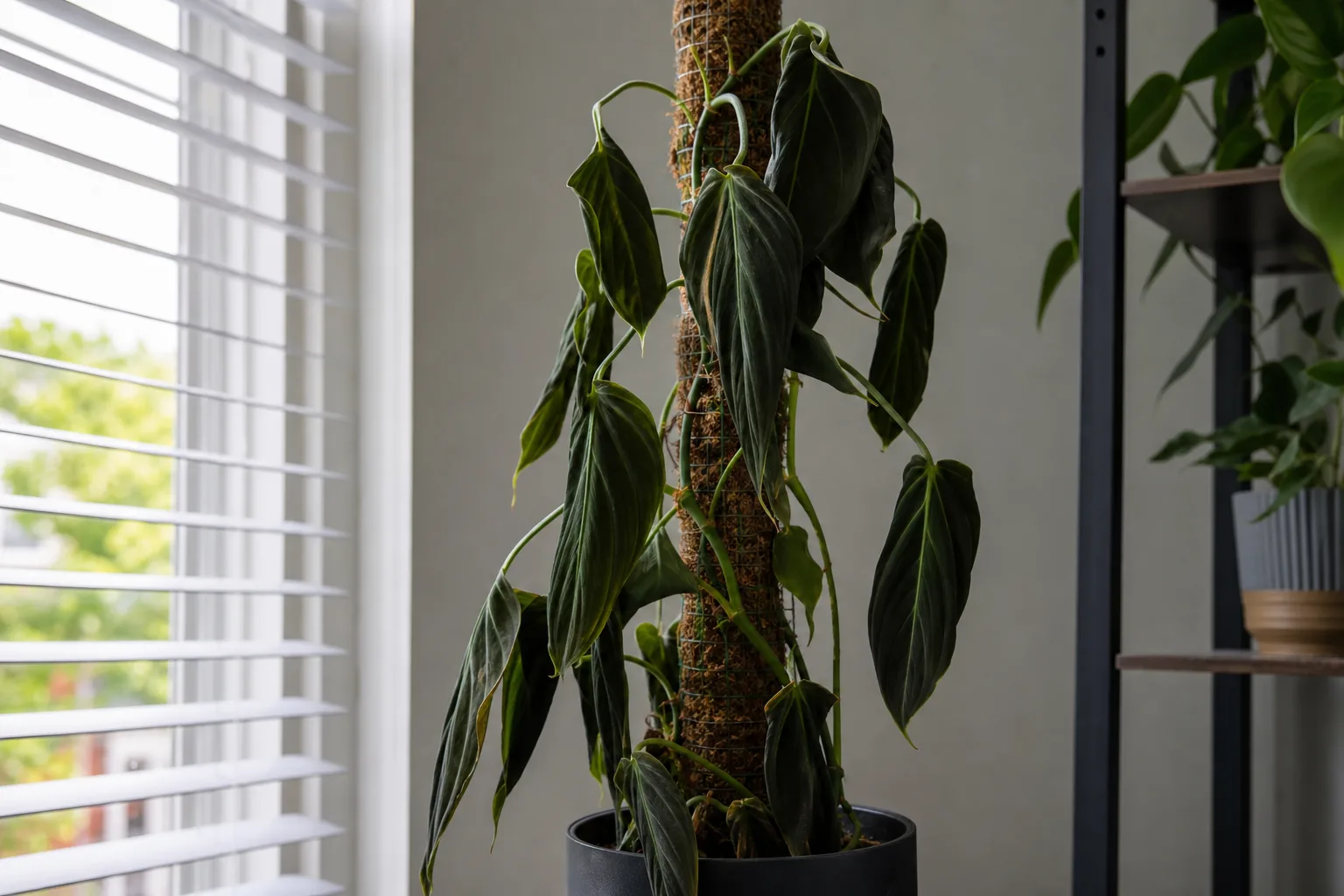
Wilting on Philodendron Melanochrysum: Causes, Checks & Fixes
This guide covers wilting on Philodendron Melanochrysum. See also the general Wilting guide, watering, and light pages for this plant.
Wilting on Philodendron Melanochrysum: Causes, Checks & Fixes
Quick answer
Wilting on Philodendron Melanochrysum is usually caused by root stress from too much or too little water, not temperature alone. First step: lift the pot-if heavy and wet, stop watering; if light and dry, soak thoroughly and empty the saucer.
Philodendron Melanochrysum is a climbing velvet philodendron whose large dark leaves wilt when roots cannot supply water-or when rotted roots cannot function despite wet soil. Clemson HGIC lists wilting among symptoms of too much water, excess water, root rot, and underwatering. On Melanochrysum, pot weight is the fastest way to pick the right branch of that list.
Why Philodendron Melanochrysum wilts
Overwatering kills roots first, then leaves wilt while mix stays damp. Penn State Extension notes that root rot causes wilting with blackened, mushy roots-a pattern common on philodendrons kept in saturated compost or standing water. Velvet aroids in oversized pots, low light, or winter overcare are especially vulnerable because large leaves still look dramatic while underground roots fail.
Underwatering is the other major cause. Iowa State Extension says philodendrons prefer evenly moist but not wet soil. When the entire root zone dries, fine roots die and large velvet leaves lose turgor fast along the lower vine. Chunky aroid mix, Philodendron Melanochrysum light guide, and a long climbing stem all speed dry-down if you skip checks.
Physical stress adds confusion. A newly shipped Melano may wilt from transit shock and dry mix together. Unsupported vine sections beyond the moss pole can wilt from weak aerial root contact even when the main pot is moist. Very low humidity crisps edges but rarely collapses the whole vine unless water stress is also present.
Heat spikes near glass or radiators increase transpiration suddenly. The plant wilts in afternoon sun even with moderate soil moisture-check placement before Philodendron Melanochrysum repotting guide or pruning.
What wilting looks like on Philodendron Melanochrysum
Wilting on Philodendron Melanochrysum overview is obvious because firm velvet blades hang soft and downward. Watch for these patterns:
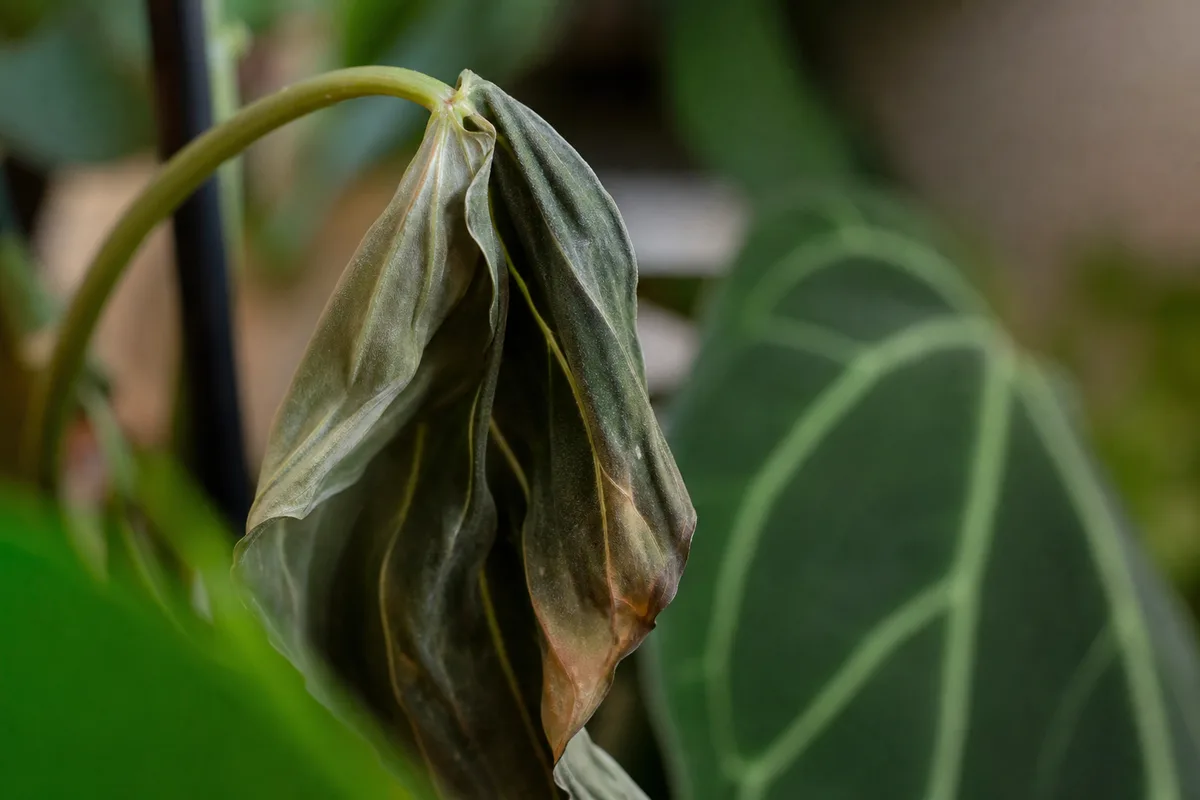
Wilting symptoms on Philodendron Melanochrysum - compare with healthy tissue on the same plant.
- Whole leaf blade limp, not just the tip-petiole may still be firm
- Lower leaves wilting first while the growing tip still looks dark
- Leaves dulling from their usual plush sheen
- Slight upward curl along leaf margins before full collapse
- New leaves stuck half-unfurled and limp
- Vine sections farthest from the root ball wilting before the base
Pair leaf look with pot signals. Wet heavy pot plus wilt equals root failure from excess moisture. Light dry pot plus wilt equals drought. Wet heavy pot plus firm leaves does not fit-look at heat, shock, or physical breakage instead.
How to confirm the cause
Never treat wilting without a wet-vs-dry check. Use this order:
- Pot weight - Heavy and cool at depth points to saturation; feather-light points to drought.
- Soil smell - Sour odor with wilting strongly suggests rot; neutral dusty smell suggests dry mix.
- Stem base - Mushy tissue at soil level confirms advanced root trouble; firm bases narrow the cause to moisture balance or environment.
- Watering history - Recent frequent soaks with no dry-back point to overwatering; two or more weeks without a full soak point to drought.
- Root sample if stuck - Partially unpot and feel roots: firm and pale support rehydration or dry-back; brown slippery roots need rot rescue.
- Placement - Direct sun, cold draft, or dry heater airflow can wilt turgid plants in hours-note recent moves.
Lookalike symptoms to rule out
Overwatering and underwatering both wilt leaves, but pot weight separates them. Pest damage-especially spider mites on dark velvet undersides-causes stippling and gradual decline, not overnight whole-leaf collapse. Normal post-shipping leaf drop affects older leaves one at a time while roots stay firm. Stem constriction from tight ties can wilt only the section above the band.
First fix for Philodendron Melanochrysum
Choose one path based on pot weight, not leaf appearance alone.
If the pot is light and mix is dry: Soak thoroughly until water runs from drainage holes, then empty the saucer. Check again in twelve to twenty-four hours; healthy roots usually restore turgor quickly.
If the pot is heavy and mix is wet: Stop watering immediately. Let the top 3–5 cm dry fully before the next drink. If wilting spreads over seven to ten days despite dry-back, unpot, trim mushy roots, and repot into fresh dry chunky mix.
If placement caused heat wilt: Move to bright indirect light out of direct sun and mist the moss pole lightly-without soaking leaves so long that axils stay wet.
Make one correction at a time. Do not fertilize, repot, and drench on the same day.
Step-by-step recovery
After the first targeted fix:
- Keep the plant in bright indirect light with 60–70% humidity and gentle airflow.
- Retie the vine to a moss pole so wilted sections are supported and aerial roots can reattach.
- Resume watering only when the top 3–5 cm of mix is dry if you were overwatering; do not let the pot go bone-dry throughout if you were underwatering.
- Remove leaves that turn fully crispy or mushy; keep firm blades until new growth shows.
- Watch for a new velvet leaf unfurling turgid over two to six weeks.
If wilting persists after correct watering for two cycles, unpot and inspect roots regardless of prior assumptions.
Recovery timeline
Drought wilt often corrects within hours to one day after a full soak if roots are intact. Mild overwatering wilt may take two to three weeks of dry-back before new growth looks normal. Root rot with widespread mushy tissue may need six to eight weeks and partial vine loss before stable new leaves appear.
Wilted tissue rarely returns to perfect velvet sheen. Judge success by firm stem bases, neutral-smelling mix, and new dark leaves-not by old blades standing upright again.
What not to do
- Do not water automatically because leaves look limp-check pot weight first.
- Do not keep a wet pot on a schedule because you fear drought.
- Do not mist heavily as a substitute for fixing root moisture.
- Do not fertilize wilted plants before they stabilize.
- Do not cut the whole vine back unless stems are mushy; healthy nodes can recover.
How to prevent wilting next time
Wilting prevention is root-zone stability. Check the top 3–5 cm of chunky mix regularly, water thoroughly when dry, and always empty saucers. Give bright indirect light so the mix dries predictably, maintain 60–70% humidity for large velvet leaves, and train the plant on a moss pole early so the vine does not dry unevenly.
Reduce watering frequency in low light and winter, but do not abandon checks. After repotting or shipping, monitor daily for the first two weeks. Keep plants away from pets; philodendrons are toxic if ingested.
When to worry
Treat wilting as high severity when:
- Stem bases soften at soil level with sour-smelling mix
- The entire vine collapses within a week
- Wilting persists twenty-four hours after a confirmed correct soak or dry-back
- More than one-third of roots are mushy on inspection
- New leaves brown before opening repeatedly
If pot weight and roots match a simple dry or wet correction and the plant perks within a day, urgency drops. If weight and symptoms disagree-wet soil, limp leaves, firm roots-suspect heat, ties, or shock and fix environment before unpotting.
Conclusion
Wilting on Philodendron Melanochrysum is a water-movement problem on a large-leaved velvet climber, not a mystery disease. Lift the pot first: dry means soak, wet means stop. Confirm with smell, stem firmness, and roots; recover with one targeted fix and stable humidity, light, and moss pole support. Prevent it by timing water to how the mix dries in your home-not by reacting to limp leaves alone.
When to use this page vs other Philodendron Melanochrysum guides
- Philodendron Melanochrysum watering guide - Use for routine moisture checks before assuming wilting is the main issue.
- Philodendron Melanochrysum problems hub - Browse all 10 common issues on this species.
- Root Rot on Philodendron Melanochrysum - Different entry point when symptoms overlap with wilting.
- Yellow Leaves on Philodendron Melanochrysum - Different entry point when symptoms overlap with wilting.