Drooping Leaves on Philodendron Micans: Causes, Checks &
Quick answer
Drooping leaves on Philodendron Micans usually mean the roots are too dry or too wet to support the trailing vine. First step: lift the pot-if it is light and the top 3–5 cm is dry, soak deeply; if it is heavy and wet, stop watering and inspect drainage.
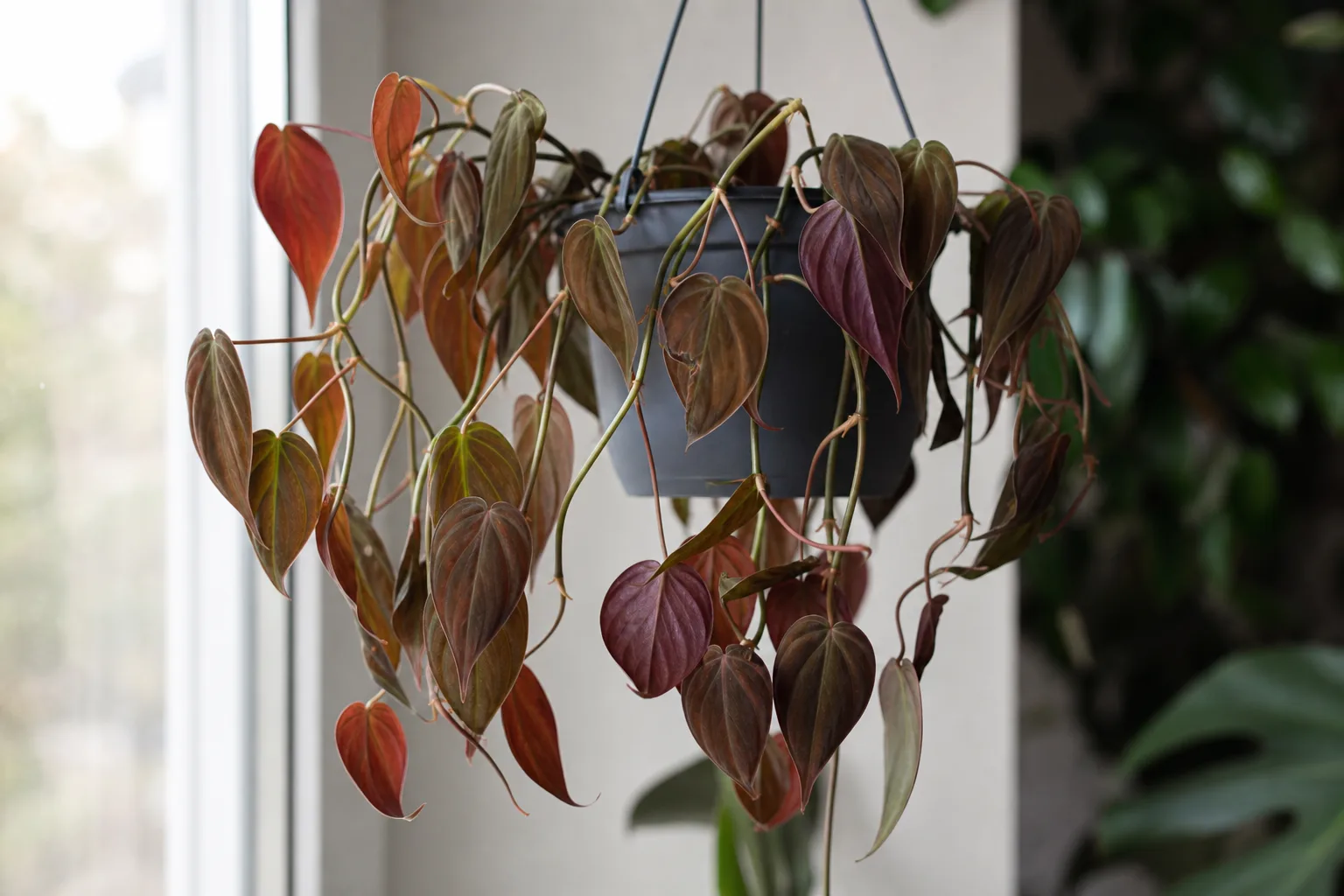
Drooping Leaves on Philodendron Micans: Causes, Checks & Fixes
This guide covers drooping leaves on Philodendron Micans. See also the general Drooping Leaves guide, watering, and light pages for this plant.
Drooping Leaves on Philodendron Micans: Causes, Checks & Fixes
Quick answer
Drooping leaves on Philodendron Micans usually mean the roots are too dry or too wet to support the trailing vine. First step: lift the pot-if it is light and the top 3–5 cm is dry, soak deeply; if it is heavy and wet, stop watering and inspect drainage.
Drooping is how Micans shows water stress before leaves turn yellow or crispy. As a cascading philodendron vine, long stems carry velvet leaves farther from the root ball-tips and outer nodes droop first when moisture runs short. South Dakota State Extension states that both overwatering and underwatering tend to make philodendron leaves droop, so the fix depends on soil evidence, not leaf angle alone.
Why Philodendron Micans leaves droop
Underwatering pulls the most common droop. When the top 3–5 cm stays dry too long, turgor pressure drops and velvet blades hang at sharper angles. Trailing growth at the pot rim or hanger hook often droops before inner leaves because it is last in line for water. Iowa State Extension recommends watering philodendrons when the top of the soil is dry and never letting them sit in saucers of water-the dry side of that range produces droop.
Overwatering and root decline produce the deceptive opposite: wet soil, heavy pot, yet drooping leaves because damaged roots cannot transport water. Clemson HGIC notes that too much or too little water plus insects are the main philodendron problems, and root rot on Philodendron Micans from poor drainage is a frequent underlying cause of persistent droop.
Low light weakens petioles and stems over time. Micans tolerates lower light than many aroids but grows thin, soft stems that sag under the weight of velvet foliage. NC State lists heartleaf philodendron as tolerating low light but preferring medium conditions-chronic dim placement produces leggy, droopy trailers rather than firm cascading growth.
Low humidity below 50% does not usually droop Micans alone but makes drought droop look worse and slows recovery on sensitive velvet surfaces. Clemson describes Micans as a velvet-textured cultivar that shows stress on leaf texture faster than glossy types.
Physical weight on unsupported long vines can angle leaves downward without any care error-especially on mature hangers with several feet of growth.
What drooping leaves look like on Philodendron Micans
Healthy Micans holds leaves at a gentle downward angle along trailing stems. Problem droop shows sharper collapse:
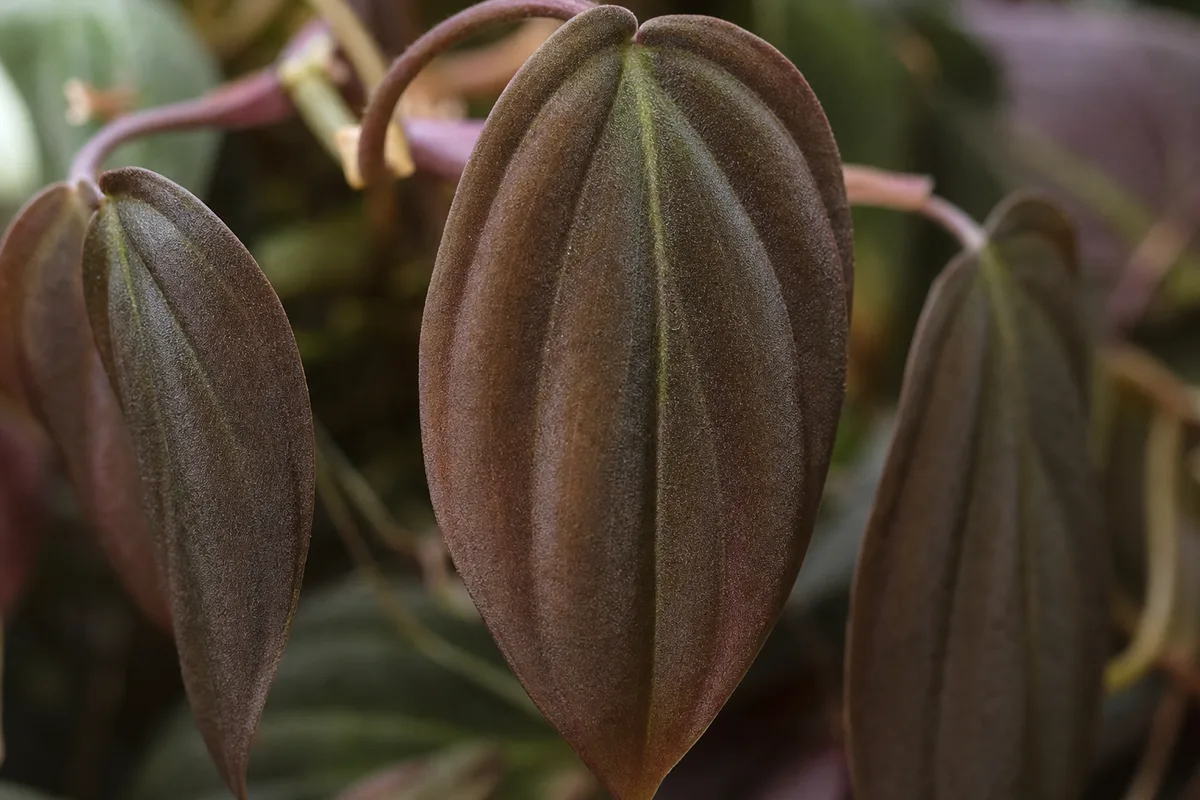
Drooping Leaves symptoms on Philodendron Micans - compare with healthy tissue on the same plant.
- Leaf blades fold or hang vertically from petioles
- Outer vine sections droop while inner growth still looks normal
- Velvet surface looks dull or thin rather than iridescent bronze-green
- New leaves stay furled or emerge smaller
- Paired with dry, light pot (drought) or wet, heavy pot (root stress)
Temporary evening droop on well-watered plants often corrects by morning-check again after the pot has sat overnight before treating.
How to confirm the cause
- Morning pot-weight check - Light and dry: drought. Heavy and wet: excess moisture or root damage.
- Soil probe to 3–5 cm - Finger-test to about two inches before deciding.
- Droop location - Tip-heavy outer vine droop with dry soil fits underwatering. Whole-plant droop on wet soil fits roots.
- Stem firmness - Soft bases on moist mix warrant unpotting.
- Light audit - Leggy internodes plus chronic sag suggest insufficient Philodendron Micans light guide.
- Support check - Long unsupported vines may need a slim trellis or higher hanger hook.
Lookalike symptoms to rule out
Wilting is closely related but often means more severe turgor loss-same diagnostic split applies. Normal aging drops one old leaf while the vine stays firm. Pest droop from spider mites comes with stippling and fine webbing. Heat wilt after a vent blast resolves when temperature stabilizes if soil moisture was adequate.
First fix for Philodendron Micans
Dry pot, dry top 3–5 cm: Soak until water runs from drainage holes, then empty the saucer. Expect noticeable firming within several hours.
Heavy wet pot: Stop watering until the top 3–5 cm dries. If yellowing spreads on moist soil or smell turns sour, unpot and inspect roots the same day.
Low-light droop: Move gradually to brighter indirect light over one to two weeks-avoid direct sun that scorches velvet leaves.
Make one correction first; do not repot, fertilize, and relocate simultaneously.
Step-by-step recovery
- Identify wet-soil vs dry-soil path using pot weight.
- Dry path: deep soak, raise humidity toward 50–60%, resume top 3–5 cm dry checks.
- Wet path: dry-back, prune rot if present, repot into perlite-amended aroid mix if needed.
- Light path: shift to bright indirect exposure; rotate pot weekly for even growth.
- Support long trailers on a moss pole or slim trellis to reduce node stress.
- Remove only fully collapsed brown leaves after the plant stabilizes.
- Monitor new velvet leaves for the next two to four weeks.
Recovery timeline
Drought droop often corrects within hours to one day after soaking. Low-light recovery takes two to six weeks as new growth firms up on brighter stems. Root-damage droop may need four to eight weeks; some old leaves never re-angle and should be judged against new foliage.
What not to do
- Do not water a heavy, wet pot because leaves droop-confirm dryness first.
- Do not give daily sips instead of a full soak on dry plants.
- Do not hang Micans where long vines are brushed constantly-velvet leaves mark easily.
- Do not move suddenly into direct sun to “strengthen” sagging growth.
- Do not fertilize drooping plants before fixing water and light balance.
How to prevent drooping leaves next time
Water when the top 3–5 cm dries, using bright indirect light so the pot dries at a predictable rate. Use well-draining aroid mix with 20–25% perlite and optional orchid bark. Target 50–60% humidity for best velvet posture. UF/IFAS notes heartleaf philodendron tolerates low household humidity but thrives with adequate water and light balance. Support trailing length before stems kink at hanger hooks.
When to worry
Escalate if droop worsens on wet soil despite a dry-back period, stems soften at the base, or the plant loses multiple leaves within a week. Chronic droop with wet soil and sour smell is rot until proven otherwise. Simple dry-soil droop that fails to recover after a deep soak suggests hydrophobic mix or root-bound stress.
Conclusion
Drooping leaves on Philodendron Micans are a water-and-support signal on a trailing velvet vine. Confirm with pot weight and top 3–5 cm moisture; soak if dry, stop and inspect if wet. Add brighter indirect light and humidity when posture stays weak on otherwise correct watering. Success is firm new growth along the vine-not every older leaf returning to its former angle.
When to use this page vs other Philodendron Micans guides
- Philodendron Micans watering guide - Use for routine moisture checks before assuming drooping leaves is the main issue.
- Philodendron Micans problems hub - Browse all 10 common issues on this species.
- Root Rot on Philodendron Micans - Different entry point when symptoms overlap with drooping leaves.