Mealybugs on Philodendron Micans: Causes, Checks & Fixes
Quick answer
Mealybugs on Philodendron Micans usually arrive on new plants or hide in leaf axils and stem nodes along trailing vines. First step: isolate the plant, inspect every joint and leaf underside for white cottony clusters, dab visible bugs with rubbing alcohol on a cotton swab, then follow with insecticidal soap on a repeat schedule.
Mealybugs on Philodendron Micans: Causes, Checks & Fixes
This guide covers mealybugs on Philodendron Micans. See also the general Mealybugs guide, watering, and light pages for this plant.
Mealybugs on Philodendron Micans: Causes, Checks & Fixes
Quick answer
Mealybugs on Philodendron Micans usually arrive on new plants or hide in leaf axils and stem nodes along trailing vines. First step: isolate the plant, inspect every joint and leaf underside for white cottony clusters, dab visible bugs with rubbing alcohol on a cotton swab, then follow with insecticidal soap on a repeat schedule.
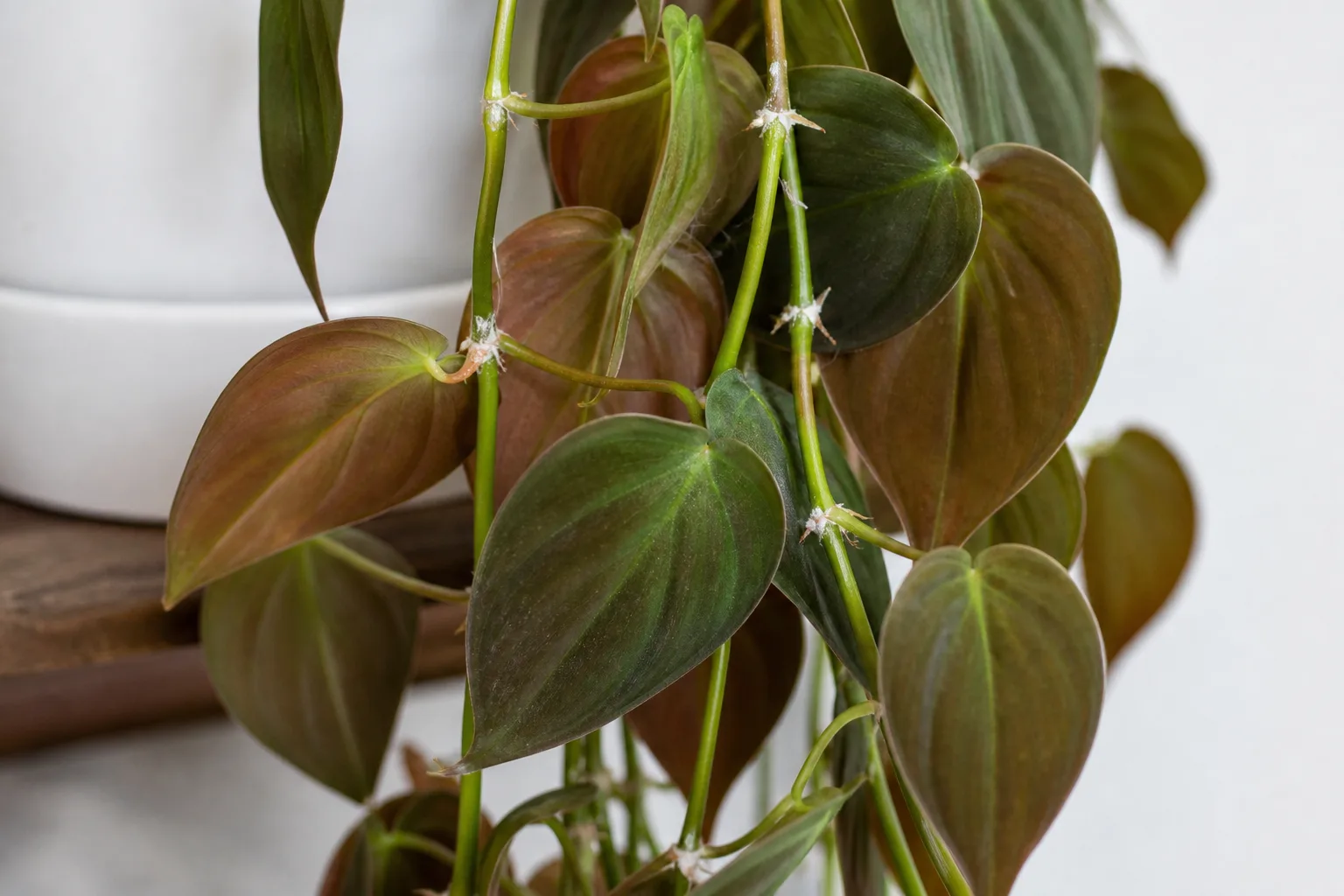
Philodendron Micans is a velvet-leaf cultivar of Philodendron hederaceum that grows as a fast trailing vine when conditions are right. Mealybugs are soft-bodied insects that feed on sap and protect themselves with a white, waxy coating. On Micans, they are easy to miss until honeydew dulls the iridescent leaf surface or cottony clumps appear where stems fork.
Why Philodendron Micans gets mealybugs
New plants are the most common entry point. Missouri Botanical Garden advises isolating newly acquired plants for two to three weeks before mixing them indoors-especially relevant for Micans bought from big-box shelves where mealybugs hide in dense hanging baskets.
Trailing growth creates perfect hiding spots. Mealybugs gather in leaf axils, at stem nodes, and on leaf undersides-exactly where Micans vines overlap in hanging pots. The waxy coating repels water and pesticides, which is why light infestations become heavy ones when undersides are not checked.
Overly soft, succulent growth from heavy nitrogen feeding can attract sap feeders. Missouri Extension notes that mealybugs, like aphids and scale, thrive on overly succulent growth often linked to high nitrogen. Micans is not a heavy feeder; monthly dilute fertilizer in spring and summer is enough when light and watering are balanced.
UF/IFAS lists mealybugs among pests that can infest heartleaf philodendron indoors. Micans shares that susceptibility with smoother-leaf philodendrons, but velvet texture makes honeydew and sooty mold more visible once feeding is established.
What mealybugs look like on Philodendron Micans
Mealybug damage on velvet philodendron follows a recognizable pattern:
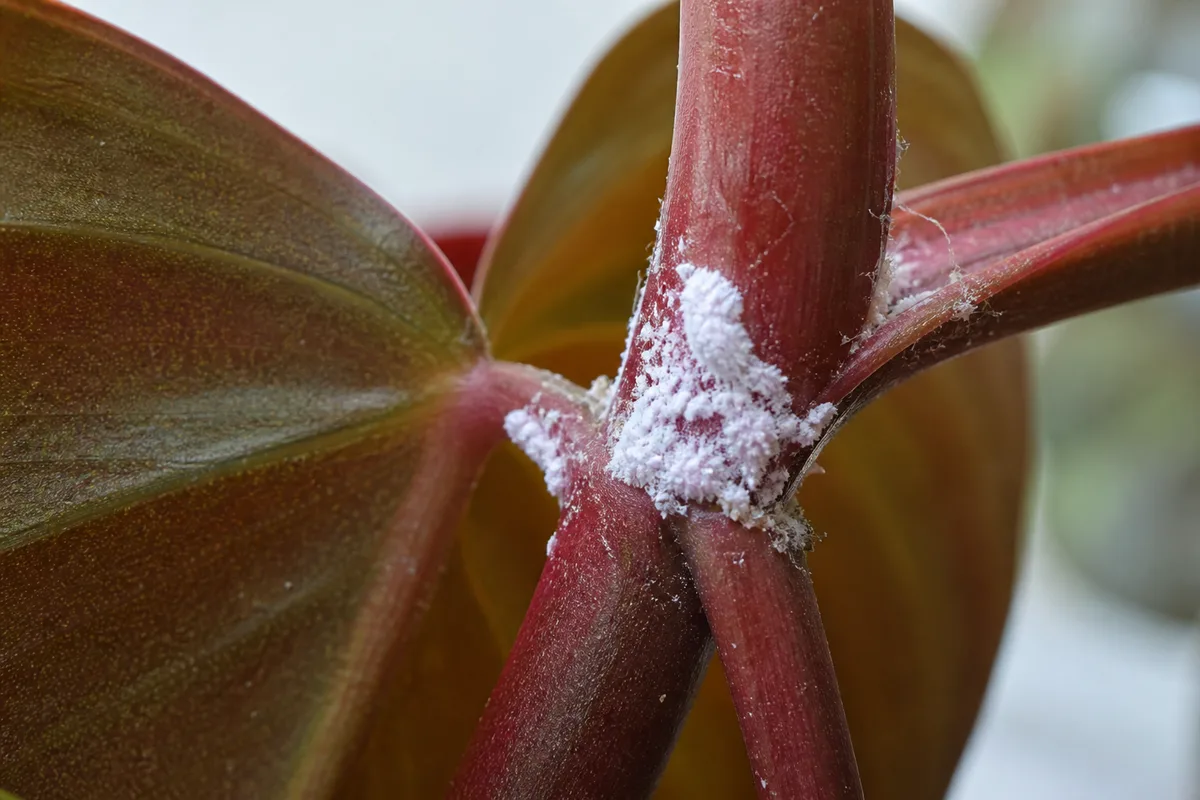
Mealybugs symptoms on Philodendron Micans - compare with healthy tissue on the same plant.
- White cottony masses - Waxy clumps at leaf axils, stem joints, and leaf undersides; may look like tiny bits of cotton or mold.
- Sticky honeydew - Shiny, tacky residue on velvet leaves that attracts dust and sooty mold.
- Stunted new growth - Emerging leaves stay small, curl, or fail to unfurl cleanly at the vine tip.
- Yellowing along infested stems - Leaves above heavy clusters may pale or drop prematurely.
- Slow-moving insects - If you poke the cotton, pale pink or gray bodies appear underneath.
Root mealybugs are possible on any philodendron in the same pot for years. If foliage looks fine but the plant wilts despite moist soil, unpot and inspect roots for white waxy patches-especially before Philodendron Micans repotting guide Micans into a shared moss pole with other plants.
How to confirm the cause
Use this inspection order before spraying broadly:
- Isolate - Move Micans away from pothos, syngoniums, and other soft-leaf plants mealybugs favor.
- Axil and node check - Follow each vine and open every leaf joint toward the light.
- Underside scan - Tilt leaves up; mealybugs often sit on the fuzzy backs near the midrib.
- Honeydew trace - Sticky spots on velvet leaves point back to the nearest cluster.
- Neighbor and history review - Note new plants, shared tools, or recent nursery purchases.
Lookalike symptoms to rule out
Dried mineral or water spots on Micans feel hard and flat, not cottony. Mold on soil surface is fuzzy gray or green, not clustered at stem nodes. Scale insects form flat brown or tan bumps glued to stems without cottony filaments. Powdery mildew is a thin white dust on leaf faces, not waxy masses in axils.
First fix for Philodendron Micans
Isolate and physically remove every visible mealybug the day you find them. University of Maryland Extension recommends dabbing individual bugs with household alcohol on a cotton swab for light infestations-effective on Micans nodes where clusters are easy to reach.
Work systematically:
- Dip a cotton swab in 70% isopropyl alcohol and touch each cottony mass until it turns light brown.
- Avoid soaking velvet leaf faces with alcohol; target the pest, not the whole leaf.
- Follow with a thorough spray of insecticidal soap labeled for houseplants, covering stems, axils, and leaf undersides.
- Repeat every five to seven days for at least three applications; the waxy coat protects eggs and nymphs missed on the first pass.
Missouri Botanical Garden notes that insecticidal soaps used frequently can control mealybugs when coverage is complete. Make one change at a time-do not repot, prune heavily, and spray on the same day.
Step-by-step recovery
After the first alcohol dab and soap spray:
- Quarantine two to three weeks - Keep Micans separate while monitoring nodes weekly.
- Treat on schedule - Calendar repeats matter; skipping a week lets nymphs mature under wax.
- Inspect the collection - Check pothos and philodendrons that shared the same room or plant stand.
- Wipe honeydew - Once pests stop spreading, gently clean sticky velvet leaves with a damp cloth.
- Hold fertilizer - Resume feeding only when new leaves unfurl clean and cottony masses are gone.
For heavy infestations on multiple stems, Clemson HGIC notes that mealybugs are about ⅛ to ¼ inch long with a waxy coating that makes control difficult-honest salvage may mean discarding the worst plant to protect the rest of the collection.
Recovery timeline
Small clusters on one or two nodes often clear within two weeks of alcohol dabs plus two soap sprays. Moderate infestations along a trailing vine may need three to four weeks and four or more treatments. Root mealybugs slow recovery until the root zone is cleaned or the plant is repotted into fresh mix after pest removal.
Old leaves dulled by honeydew may stay slightly matte. Success means no new cottony masses, clean new growth, and stable vine extension-not perfect restoration of every stippled leaf.
What not to do
- Do not assume one spray fixes mealybugs; the waxy coat protects survivors.
- Do not return Micans to a mixed basket before two clean weekly inspections.
- Do not over-fertilize hoping to outgrow damage-soft growth attracts more sap feeders.
- Do not reuse pots or stakes from infested plants without scrubbing and drying.
- Do not ignore a single cotton speck at one node; mealybugs spread slowly but steadily.
- Do not skip quarantine on new trailing plants-you cannot see axils clearly in dense shop baskets.
How to prevent mealybugs next time
Prevention on Micans is inspection-heavy: quarantine new plants, check leaf axils weekly, and keep humidity and light in the range where the vine grows steadily without excess nitrogen. Penn State Extension describes mealybugs as tiny spots of white cotton on stems and leaf undersides-exactly where Micans vines should be checked before plants join your main collection.
Inspect every node when watering, isolate purchases for two to three weeks, and avoid letting trailing stems rest on floors or pet-accessible shelves where pests hitchhike from other rooms. Clean tools between plants when pruning Micans for propagation.
When to worry
Escalate or consider discarding the plant if:
- Cottony masses cover most nodes on multiple stems
- Root mealybugs appear when you unpot
- Ants trail to the plant-often a sign of heavy honeydew production per UC IPM guidance on sap-sucking pests
- Three or more treatment rounds fail to reduce live insects
- The infestation spreads to several neighboring plants within a month
If the vine is salvageable, take a clean stem cutting from the tip after treatment, root it in water, and start fresh once the cutting shows new roots and no pests. Wear gloves when cutting-Micans sap can irritate skin.
Conclusion
Mealybugs on Philodendron Micans hide in the same leaf axils and velvet undersides that make the plant beautiful. Confirm white cottony clusters and sticky residue; act by isolating, dabbing with alcohol, and repeating insecticidal soap on schedule. Prevent them with quarantine, weekly node checks on trailing vines, and moderate feeding so Micans grows clean new velvet leaves-not soft, pest-attracting tissue.
When to use this page vs other Philodendron Micans guides
- Philodendron Micans watering guide - Use for routine moisture checks before assuming mealybugs is the main issue.
- Philodendron Micans problems hub - Browse all 10 common issues on this species.
- Ants on Plant on Philodendron Micans - Different entry point when symptoms overlap with mealybugs.
- Yellow Leaves on Philodendron Micans - Different entry point when symptoms overlap with mealybugs.
- Leaf Drop on Philodendron Micans - Different entry point when symptoms overlap with mealybugs.