Overwatering on Philodendron Micans: Causes, Checks & Fixes
Quick answer
Overwatering on Philodendron Micans happens when the top 3–5 cm stays wet too long or roots sit in soggy aroid mix. First step: stop watering immediately, empty any standing saucer water, and do not water again until the top layer is dry throughout.
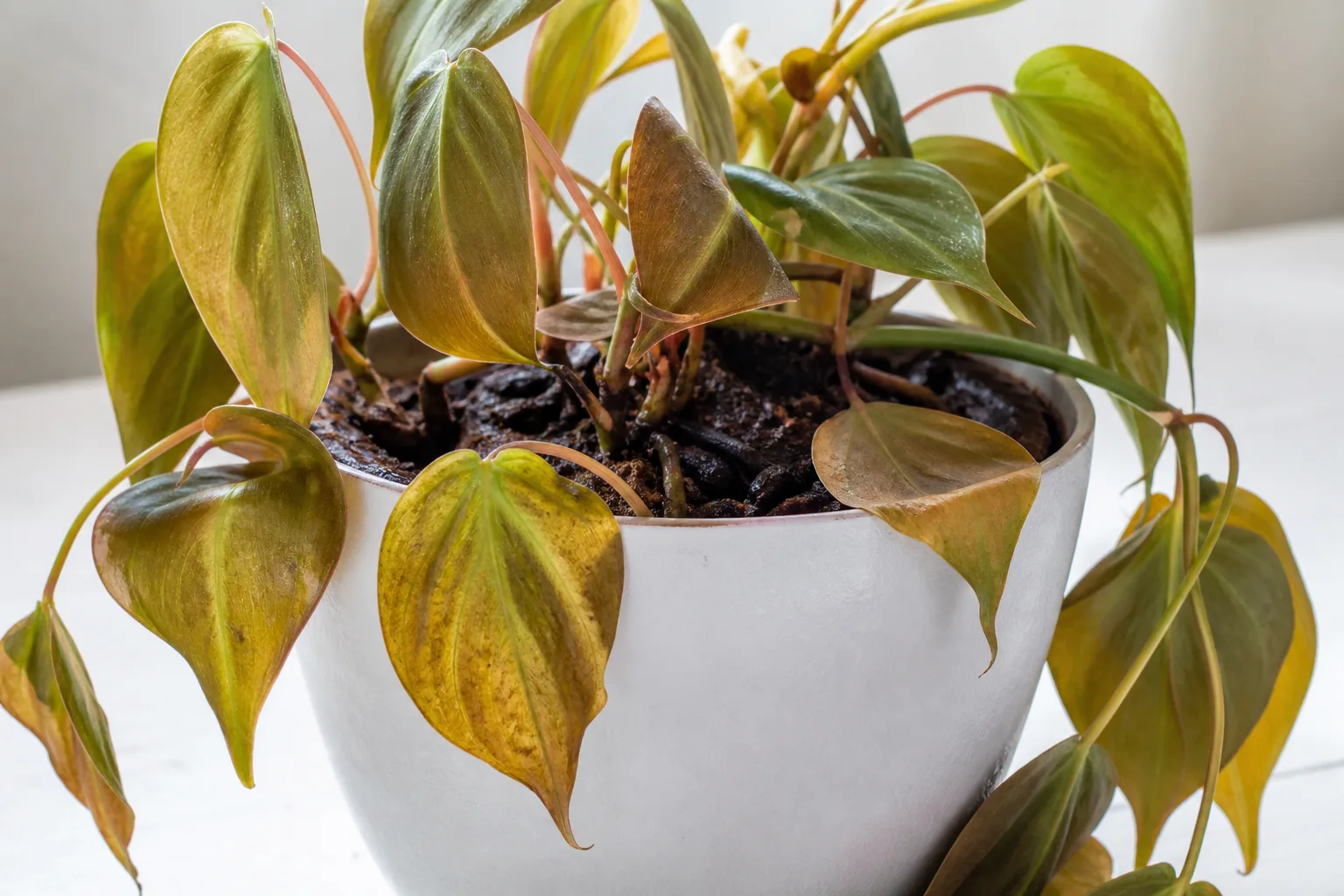
Overwatering on Philodendron Micans: Causes, Checks & Fixes
This guide covers overwatering on Philodendron Micans. See also the general Overwatering guide, watering, and light pages for this plant.
Overwatering on Philodendron Micans: Causes, Checks & Fixes
Quick answer
Overwatering on Philodendron Micans happens when the top 3–5 cm stays wet too long or roots sit in soggy aroid mix. First step: stop watering immediately, empty any standing saucer water, and do not water again until the top layer is dry throughout.
Philodendron Micans is a velvet-leafed form of Philodendron hederaceum, a trailing hemi-epiphytic aroid that wants evenly moist roots-not constantly saturated mix. When oxygen drops out of wet soil, fine roots fail first, and the plant may droop or yellow even though the pot feels heavy. Overwatering is among the most common causes of houseplant decline, and on Micans it often precedes root rot on Philodendron Micans, yellow velvet leaves, and fungus gnat outbreaks.
Why Philodendron Micans gets overwatered
Calendar watering is the top mistake. Micans typically needs water every 7–10 days in active summer growth when the top 3–5 cm dries, and every 10–14 days in winter-but that interval shifts with humidity, pot size, and light. Watering weekly year-round because “tropical plants need lots of water” keeps roots saturated when growth slows in a cool, dim room.
Dense or peat-heavy mix without enough perlite and orchid bark holds water for days. Philodendrons prefer evenly moist but not soggy soil, and Iowa State Extension is explicit: do not let plants sit in soggy soils or saucers of water. Standard potting soil alone dries too slowly for a hanging Micans in low light.
Low light and cool rooms compound the pattern. When transpiration drops, the same watering volume that worked near a bright east window becomes excessive in a hallway or winter windowsill. Clemson HGIC notes that yellowing of lower leaves can be caused by too little light or overwatering-both slow dry-down on Philodendron Micans overview.
Oversized pots, blocked drainage holes, and decorative cachepots that trap runoff also mimic good care while roots stew below. Micans in a pot much larger than its root mass is especially prone to staying wet too long.
What overwatering looks like on Philodendron Micans
Watch for combined signals rather than one yellow leaf:
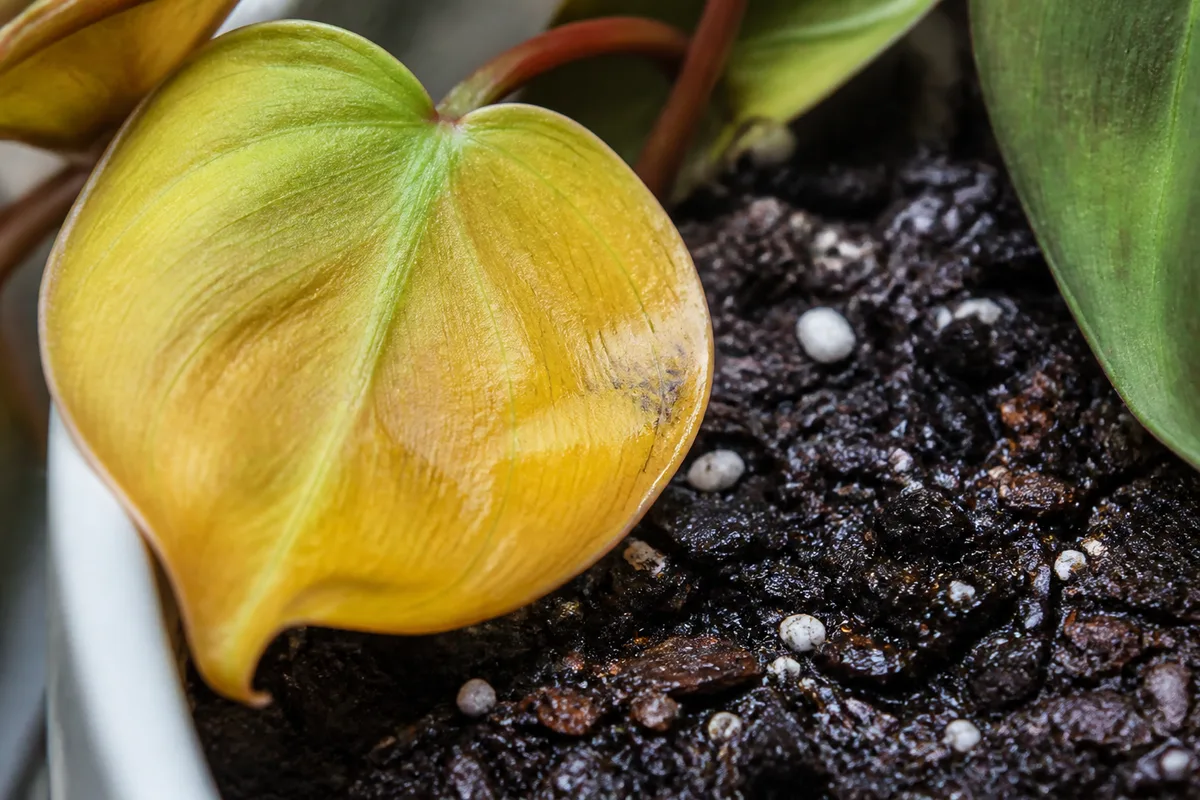
Overwatering symptoms on Philodendron Micans - compare with healthy tissue on the same plant.
- Top mix stays dark and cool to the touch for many days after watering
- Pot feels heavy; saucer holds water repeatedly
- Lower velvet leaves turn yellow or pale bronze while soil is still moist
- New leaves stall before unfurling or emerge smaller and thin
- Fungus gnats hovering at the soil surface
- Sour smell from the drainage hole in advanced cases
- Soft stems at soil level when rot has started
On Micans, overwatering can look like thirst because limp, drooping velvet leaves may appear while soil is wet-damaged roots cannot move water upward. That split symptom is why pot weight and root-zone moisture matter more than leaf posture alone.
How to confirm the cause
Use this inspection order:
- Finger or probe to 3–5 cm depth - Test soil to about two inches before assuming the plant needs water. If it stays constantly wet several days after the last drink, overwatering is confirmed.
- Pot weight - Lift the pot. Heavy days after watering points to saturation; light and dusty dry throughout suggests underwatering instead.
- Drainage test - Water once and confirm free runoff within minutes. Blocked holes mimic overwatering.
- Leaf pattern - Yellowing from the lowest leaves upward with moist soil fits excess water better than tip crisping from drought.
- Rot check if smell turns sour - Unpot to distinguish simple overwatering from active root decay.
If soil is dusty dry throughout and the pot is light, you are dealing with underwatering, not this page’s primary diagnosis.
Lookalike symptoms to rule out
Underwatering causes limp leaves with a light, dry pot and sometimes crispy velvet margins. Normal aging yellows one old leaf at a time while the rest of the vine and root zone stay stable. Low humidity alone browns tips without keeping soil wet. Cold drafts can wilt new growth overnight without a sour soil smell.
First fix for Philodendron Micans
Stop all watering until the top 3–5 cm is dry throughout. Empty standing water from saucers and cachepots the same day. If soil smells sour or stems feel soft at the base, unpot immediately, trim mushy roots, and repot into dry well-draining aroid mix. If tissue is still firm and smell is neutral, a dry-back period alone may suffice-often one to two weeks in winter, less in active growth.
Make one correction at a time. Do not fertilize, repot into a larger pot, and move rooms on the same day.
Step-by-step recovery
- Halt watering; improve airflow around the trailing pot.
- If rot is suspected: unpot, prune all mushy roots, repot dry with standard potting mix plus 20–25% perlite and optional orchid bark.
- If no rot: allow the full top 3–5 cm to dry before the next soak.
- Resume watering only when that layer is dry; soak until runoff, then empty the saucer.
- Place in Philodendron Micans light guide so the mix dries predictably between drinks.
- Add yellow sticky traps if fungus gnats appeared-then fix the moisture that attracted them.
- Monitor new velvet leaves over the next two to four weeks.
Adjust winter frequency downward even if you run a humidifier. Growth rate drives water use more than air moisture alone.
Recovery timeline
Mild overwatering without decay often stabilizes within one to two dry-down cycles-roughly one to three weeks depending on season. Cases with trimmed rot may need four to eight weeks before new growth looks confident. Old yellow or limp leaves will not fully recover; use firm roots, neutral-smelling mix, and clean new foliage as your markers.
What not to do
- Do not water because velvet leaves droop while mix is still wet.
- Do not fertilize to “boost” a waterlogged plant.
- Do not repot into an even larger pot to “dry it out”-extra soil volume holds more water.
- Do not mist heavily as a substitute for fixing drainage; Micans shows water spots on velvet surfaces.
- Do not assume 50–60% humidity requires more watering-humidity and soil moisture are separate variables.
How to prevent overwatering next time
Use the top 3–5 cm dry rule every time, not a calendar. Plant in a pot only slightly larger than the root mass with drainage holes and airy aroid mix. Keep Micans in bright indirect light so the root zone breathes between waterings. Reduce watering when growth slows in autumn and winter. Weekly glance checks-pot weight, soil smell, firm stems-catch trouble while rescue is still straightforward.
When to worry
Escalate to root-rot protocol if smell turns sour, stems soften at soil level, or multiple leaves yellow within days. Mild overwatering without decay often corrects with one dry cycle and adjusted habits. If more than one-third of roots are mushy on inspection, treat the case as advanced.
Conclusion
Overwatering on Philodendron Micans is a Philodendron Micans watering guide and drainage problem, not bad luck with velvet foliage. Confirm with persistently wet top mix, heavy pots, and yellow lower leaves on moist soil; fix by stopping water, drying the root zone, and Philodendron Micans repotting guide if decay is present. Prevent with dry-top checks, well-draining aroid mix, bright indirect light, and seasonal adjustment. Success is firm roots and predictable dry-down between soaks-not old leaves returning to perfect bronze-green velvet.
When to use this page vs other Philodendron Micans guides
- Philodendron Micans watering guide - Use for routine moisture checks before assuming overwatering is the main issue.
- Philodendron Micans problems hub - Browse all 10 common issues on this species.
- Root Rot on Philodendron Micans - Different entry point when symptoms overlap with overwatering.
- Yellow Leaves on Philodendron Micans - Different entry point when symptoms overlap with overwatering.