Wilting on Philodendron Micans: Causes, Checks & Fixes
Quick answer
Wilting on Philodendron Micans is usually underwatering if the pot is light and dry, or root damage from overwatering if soil is wet and heavy. First step: check pot weight and the top 3–5 cm of mix before watering or withholding water.
Wilting on Philodendron Micans: Causes, Checks & Fixes
This guide covers wilting on Philodendron Micans. See also the general Wilting guide, watering, and light pages for this plant.
Wilting on Philodendron Micans: Causes, Checks & Fixes
Quick answer
Wilting on Philodendron Micans is usually underwatering if the pot is light and dry, or root damage from overwatering if soil is wet and heavy. First step: check pot weight and the top 3–5 cm of mix before watering or withholding water.
Wilting is a water-transport symptom, not a diagnosis by itself. On this velvet trailing philodendron, leaves lose turgor when roots cannot deliver moisture-whether because soil is too dry or because rotted roots cannot function in wet mix. Illinois Extension notes that wilting can indicate a need for water but sometimes signals over-watering. That ambiguity makes pot weight the first test, not leaf angle.
Why Philodendron Micans wilts
Underwatering is the straightforward cause. Thin trailing stems and large velvet leaf surface area lose water quickly in Philodendron Micans light guide. When the top 3–5 cm stays dry too long, cells collapse and leaves hang limp. UF/IFAS recommends watering heartleaf philodendron when the top inch dries-the same dry-down logic applies to Micans.
Overwatering with root damage is the confusing mirror image. Saturated mix drives out oxygen; fine roots die and cannot take up water. The pot feels heavy, soil is moist, yet leaves wilt as if thirsty. Clemson HGIC states that root rot usually results from soil that does not drain quickly or overly frequent watering on philodendrons-and wilt on wet soil is a classic sign.
Heat, drafts, and recent Philodendron Micans repotting guide add short-term wilt. Heat above 29°C (85°F) or cold below 18°C (65°F) increases transpiration stress. Fresh repotting disturbs roots for one to two weeks even when watering is correct.
Low humidity below 50% rarely wilts Micans alone but worsens drought wilt and slows recovery on velvet foliage. High humidity is ideal for philodendron growth, though the genus tolerates average home levels.
What wilting looks like on Philodendron Micans
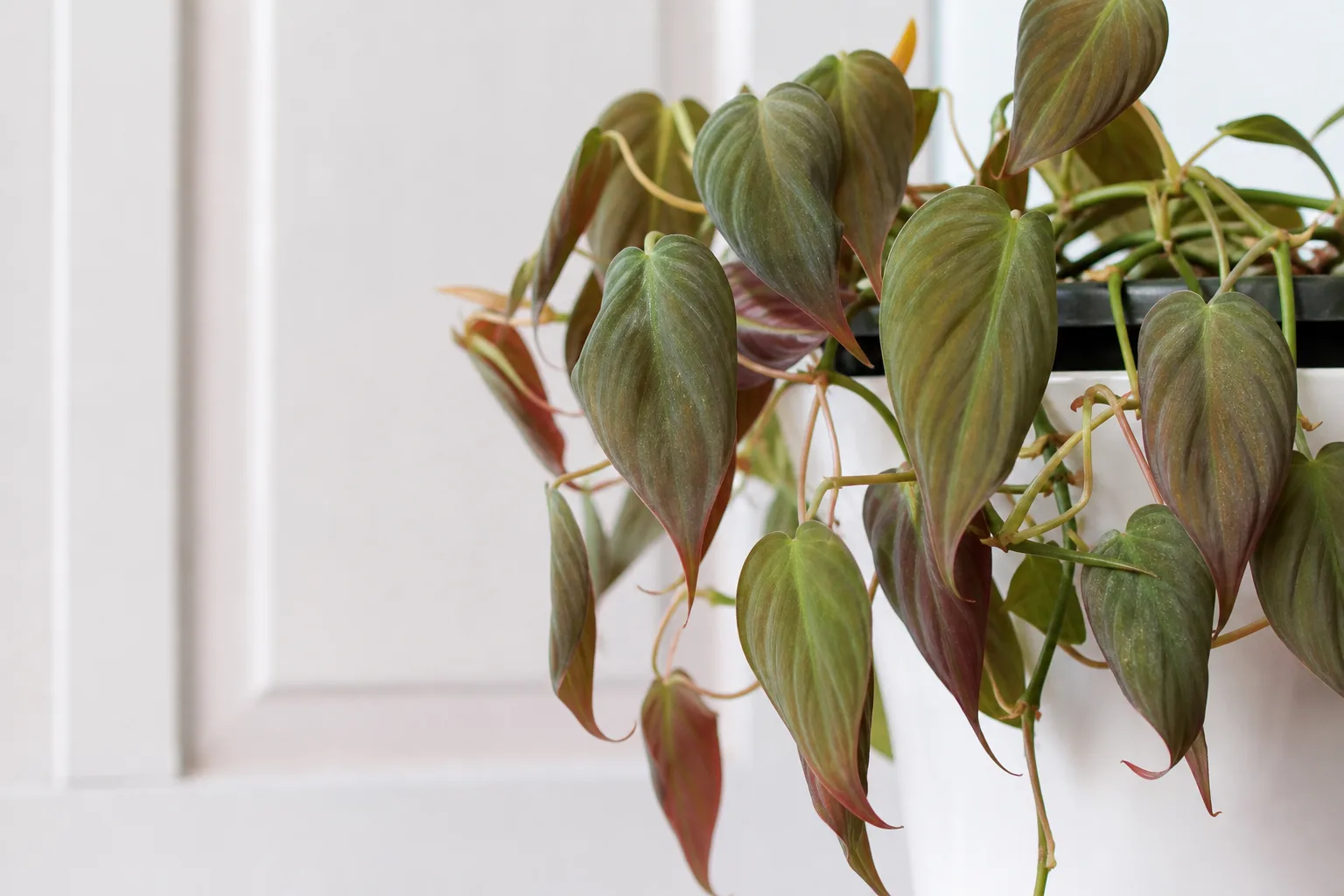
Early wilt on velvet leaves shows as soft, drooping blades that lose their usual bronze-green sheen. Stems may bend at nodes on long trailers. The pattern differs by cause:
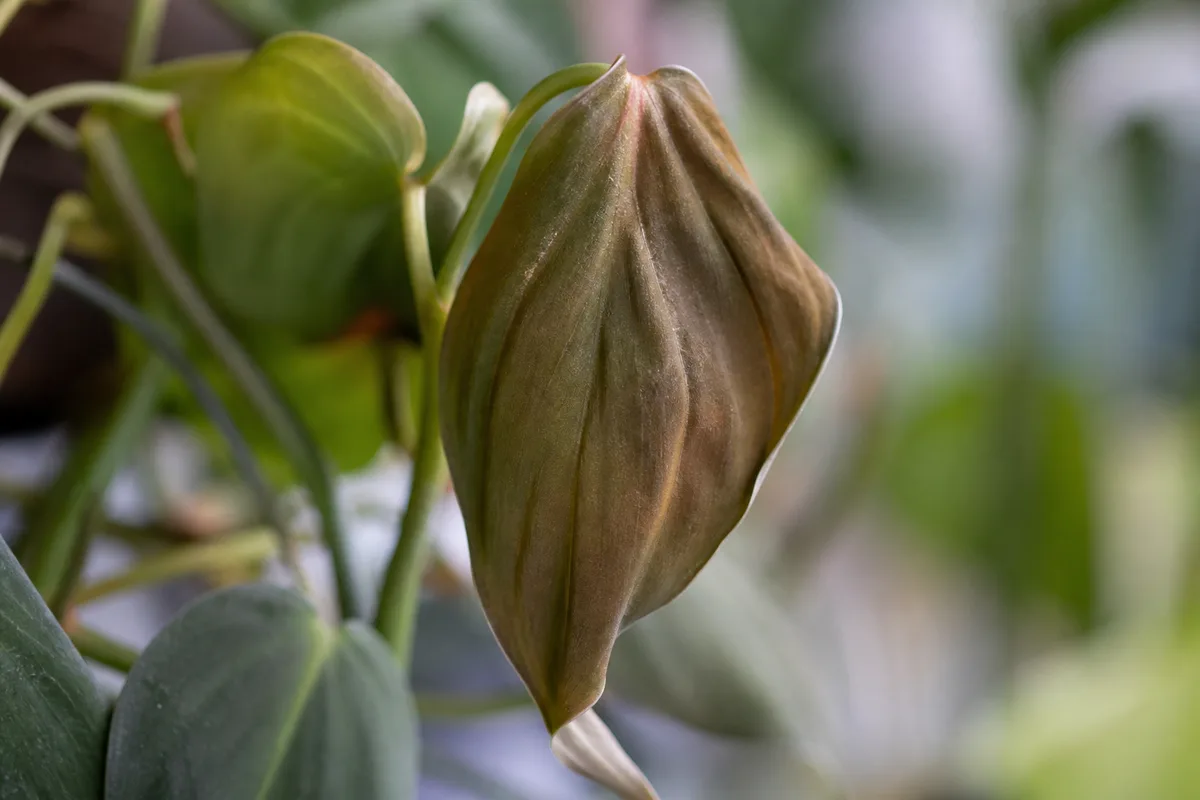
Wilting symptoms on Philodendron Micans - compare with healthy tissue on the same plant.
- Dry-soil wilt: Light pot, dusty dry top 3–5 cm, leaves perk up within hours after soaking
- Wet-soil wilt: Heavy pot, cool moist mix, possible yellow lower leaves, slow or no recovery after watering
- Rot-associated wilt: Sour smell, soft stem bases, blackening tissue at soil line
- Environmental wilt: Sudden after heat blast or repot; soil moisture otherwise normal
On Micans, wilt often appears on the longest trailing sections first because they are farthest from the root zone and lose water fastest.
How to confirm the cause
Use this decision path:
- Lift the pot - Light and dry: lean toward underwatering. Heavy and wet: lean toward overwatering or root damage.
- Probe top 3–5 cm - Test soil depth before acting.
- Smell the drainage hole - Sour odor on wet soil suggests rot, not drought.
- Press stem bases - Firm is reassuring; soft or collapsing tissue is urgent.
- Recovery trial - If dry, soak deeply and watch for perk-up within several hours. If wet, do not add more water-consider unpotting if wilt persists forty-eight hours on moist mix.
Lookalike symptoms to rule out
Drooping alone on a well-watered plant in evening light can be normal temporary posture on long vines-check again in morning. Pest stress from spider mites shows stippling and webbing, not sudden whole-vine collapse. Leggy growth from low light produces thin weak stems that sag-but soil moisture is usually stable.
First fix for Philodendron Micans
If pot is light and top 3–5 cm is dry: Soak thoroughly until water runs from drainage holes, then empty the saucer. Do not sprinkle small amounts.
If pot is heavy and soil is wet: Stop watering. Let the top 3–5 cm dry. If stems are soft or soil smells sour, unpot the same day, trim mushy roots, and repot in dry well-draining aroid mix.
Pick one path based on soil evidence-not leaf appearance alone.
Step-by-step recovery
Dry-soil wilt path:
- Deep soak or bottom-water until root ball is evenly moist.
- Raise humidity toward 50–60% to reduce further velvet stress.
- Resume top 3–5 cm dry checks; expect firm leaves within hours to one day.
Wet-soil wilt path:
- Halt watering; improve airflow around the pot.
- If rot signs present: unpot, prune decay, repot dry with perlite-amended mix.
- Place in bright indirect light so future dry-down is predictable.
- Wait two to four weeks for new growth before judging success.
Do not fertilize until wilt resolves and new leaves appear.
Recovery timeline
Simple drought wilt often corrects within hours after one good soak. Environmental wilt from repotting or heat usually stabilizes within three to seven days once conditions normalize. Root-damage wilt may need four to eight weeks and sometimes never fully restores old leaves-track firm roots and new velvet foliage instead.
What not to do
- Do not water automatically because leaves look limp-confirm soil moisture first.
- Do not withhold water from a dry, light pot hoping wilt will self-correct.
- Do not move to direct sun while wilted; velvet leaves burn easily.
- Do not stack repot, prune, and fertilize on the same day as wilt correction.
- Do not assume wilting means pests without checking soil and roots.
How to prevent wilting next time
Match watering to how fast your pot dries: top 3–5 cm dry in summer active growth, slower in winter. Use well-draining aroid mix and bright indirect light so roots stay healthy between drinks. SDSU Extension notes both over- and underwatering tend to make philodendron leaves droop-the prevention is consistent moisture checks, not a fixed schedule. Keep humidity near 50–60% and avoid heat vents that spike water loss on trailing growth.
When to worry
Treat wet-soil wilt with soft stems or sour smell as high severity-unpot immediately. Dry-soil wilt that does not recover within twenty-four hours after soaking suggests hydrophobic mix or damaged roots. Multiple nodes collapsing at once on moist soil is rot until proven otherwise.
Conclusion
Wilting on Philodendron Micans demands a split diagnosis: dry soil means soak; wet soil means stop and inspect roots. Confirm with pot weight, depth moisture, and smell before acting. Prevent with top 3–5 cm dry checks, airy aroid mix, and stable bright indirect light. Recovery is firm stems and new velvet leaves-not waiting for every wilted blade to rise again.
When to use this page vs other Philodendron Micans guides
- Philodendron Micans watering guide - Use for routine moisture checks before assuming wilting is the main issue.
- Philodendron Micans problems hub - Browse all 10 common issues on this species.
- Root Rot on Philodendron Micans - Different entry point when symptoms overlap with wilting.
- Yellow Leaves on Philodendron Micans - Different entry point when symptoms overlap with wilting.